Showing posts with label Jewish community. Show all posts

October 03, 2023

We Belong Here

Written by Frieda Wishinsky
Illustrated by Ruth Ohi
North Winds Press (Scholastic Canada)
978-1-4431-9403-7
32 pp.
Ages 6-8
October, 2023  
 
Eve Bloom hated being called a greenhorn especially since, although she'd been born in another country, she'd lived here since she'd been little. She often found solace, and the privacy to cry, at a special place on a high rock in the park.
From We Belong Here, written by Frieda Wishinsky, illustrated by Ruth Ohi
When a new boy, Mark Nakamura, comes to her school, he is ridiculed for being Japanese. Eve goes to his defense to stop the bullies and takes him to her special rock. In gratitude, he gives her a small turtle he'd carved. Together the two enjoy imaginative storytelling and talk about their families. They became fast friends, spending time at the back of Eve's parents' store, Bloom's Delicious Foods, and at Mark's apartment. 
From We Belong Here, written by Frieda Wishinsky, illustrated by Ruth Ohi
But then Mark's father, a craftsman with wood, loses his job at the factory because a customer didn't want a Japanese man to make his furniture. Moreover, Eve's parents are shaken when a faulty shelf almost injures a customer who threatens that no one will shop there with a new market opening nearby. By bringing their families together, both the Blooms and the Nakamuras get what they need: support, work, customers, and the welcome that says they are appreciated in their community.
From We Belong Here, written by Frieda Wishinsky, illustrated by Ruth Ohi
We Belong Here may seem like a simple story of children and families of two different cultures, Jewish and Japanese, helping each other to be accepted by their community. But, because of Frieda Wishinsky and Ruth Ohi's back stories, We Belong Here is a much bigger story and one of great historical and contemporary relevance. The need to belong and be accepted is universal. And to not be accepted because of arbitrary qualities like place of birth, religion, language, physical differences, and such is unacceptable. But, differences are what create us and bond us. They improve our lives by opening our minds and our hearts. And with that comes understanding, compassion, and harmony. When Frieda Wishinsky and Ruth Ohi brought Eve and Mark and their families together, they could confront the prejudice both head on and discreetly. Whether challenging those who mistreat a classmate or supporting someone by hiring them for a work project, these efforts remind everyone that strength and courage come with compassion, not force.

This is a story borne of deeply personal stories. As readers will learn tomorrow in my interview with Frieda Wishinsky and Ruth Ohi, their connections are very real and make the story even more personal. But the way they tell the story, readers will not be left with remembering the nastiness but instead smell the rugelach in Eve's family's store, feel the smoothness of Mark's carvings, and appreciate the coming together of people to shop, to work, to play. Through Frieda Wishinsky's sincere words, I hear friendship, and through Ruth Ohi's art, I see kindness in a different time. Together they are melded into one story, one lesson in compassion, and one to uplift and reassure that intolerance can be overcome.
 
• • • • • • •
 
For a little something extra about We Belong Here, check back tomorrow for my interview with author Frieda Wishinsky and illustrator Ruth Ohi.
• • • • • • •

April 03, 2023

Afikomen

Written by Tziporah Cohen
Illustrated by Yaara Eshet
Groundwood Books
978-1-77306-606-6
32 pp.
Ages 3-6
March 2023
 
Soon the Jewish community will be celebrating Passover (April 5-13 this year) and many non-Jews know little of the traditions or stories that accompany the holiday. With no words, Afikomen invites us to attend a Passover Seder and witness Tziporah Cohen's family's traditions, but it also transports readers to ancient Egypt via time slip to witness Moses' beginnings.
From Afikomen by Tziporah Cohen, illus. by Yaara Eshet
As the family gathers at the table to read the Haggadah, the guidebook to the Passover Seder, i.e., the Passover religious service and dinner, the three matzah breads rest in front of the host. He takes the middle one, breaks it in half, and places the larger piece in a special bag to become the afikomen. The afikomen will be the last food eaten at the seder meal but, depending on the traditions of the family, the afikomen will play a big role before that end. In this family, the children "steal" the afikomen, and will return it for small gifts. First, though, these three children and their dog, hide beneath the table skirt and are transported to ancient Egypt.
From Afikomen by Tziporah Cohen, illus. by Yaara Eshet


There they become part of the Jewish story of the Exodus from Egypt, the basis for Passover. As Pharaoh had decreed that all Jewish baby boys were to be killed, Moses' mother saved him by placing him in a wicker basket and sending him down the Nile. The contemporary children witness this, and like Moses' sister who watches over him as he travels down the river, they ensure that he is safe from calamity like getting stuck in the reeds, taken by playing Egyptian boys, or accosted by a crocodile, so that he might be found by the Pharaoh's daughter and saved. It is only at this point that the children return to their own time and deliver the afikomen–with an unexpected twist–to end the Seder.
From Afikomen by Tziporah Cohen, illus. by Yaara Eshet
I knew so little of the story of Passover and nothing of the afikomen, so I am grateful to Toronto's Tziporah Cohen for giving us a wordless story and an extensive Author's Note to help educate. While a time slip story is unusual for a picture book and especially one with a non-fiction element, Tziporah Cohen makes it work. Not only did I learn about the afikomen and the Passover Seder, but I also learned that Jews of different origins, e.g., Ashkenazic and Sephardic, may differ in their traditions regarding the afikomen. 
 
Moreover,  I learned that even a holy celebration with a sombre history can have joy, and even playfulness. That comes through in Yaara Eshet's watercolour and ink illustrations which show us family who come together. The table laden with wine, the Seder plates, and texts, and the extended family members of varying ages makes for a colourful and textured display. With the expressive kids and dog, registering both the fun of stealing the afikomen and their surprise once dropped in ancient Egypt, as well as the bright landscapes of flowing water, golden sand, and lush riparian vegetation, Yaara Eshet gives a richness to the wordless story. Tziporah Cohen may give us story without words, but Yaara Eshet gives the content colour and texture, and together they give us a visual narrative that teaches and captivates.

November 04, 2022

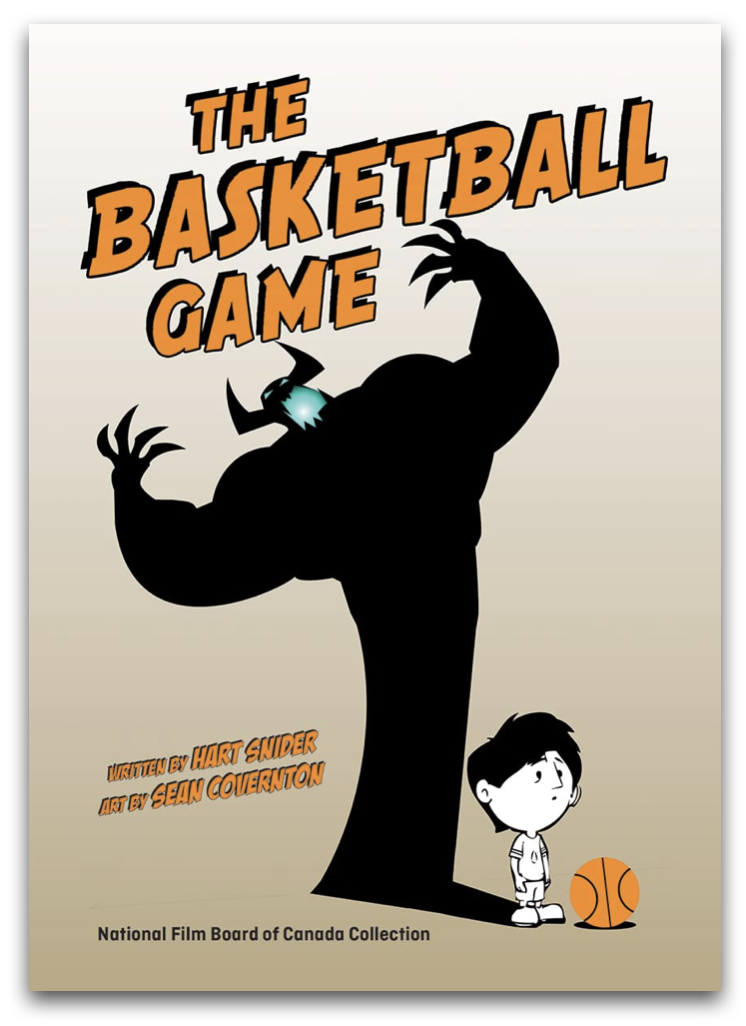
The Basketball Game

Written by Hart Snider
Illustrated by Sean Covernton
Firefly Books
978-0-2281-0391-2
87 pp.
Ages 12+
October 2022

Although hate speech has been around since time immemorial, there seems to have been a deluge of it in recent years with the news inundated with misinformation, fake news, and bigotry. Sadly, with social media, the dissemination of hate speech has been especially facile. But hate seems to always be there, sometimes overt and sometimes less conspicuous, until it isn't. In 1983, one Alberta teacher who denied the Holocaust in his social studies teaching and promoted hatred of the Jewish people was called out by a parent, leading to dismissal, charges and more. And a basketball game.

Author Hart Snider was just a child in Edmonton when the story of teacher Jim Keegstra of Eckville, Alberta was headline news. However, he was a Jewish child who was attending Camp BB in Pine Lake when his world and that of the news came together. This story, based on a National Film Board of Canada animated short film of the same title, is his camp story from the summer of 1983.
From The Basketball Game by Hart Snider, illus. by Sean Covernton
It was Hart's first summer at Camp BB, and he was just as happy to sit under a tree and read comic books. But, distractedly, he signs up with a pretty camp counsellor for a "social mixer to encourage cultural understanding." When Bill, the larger-than-life camp director, tells them that their day of fun and fellowship, which would include a picnic and a basketball game, would be with Jim Keegstra's former Eckville students, Hart and others wonder how these kids would approach them. And when one boy asks Hart if he actually has horns, Hart wonders if the Jewish kids are all seen as demonic supervillains with horns, or global banking conspirators, or maybe even magical wizards. But then he looks at the Eckville kids and sees them as being no different from skinheads, Nazis or the KKK. Ultimately, it's just a basketball game between a bunch of kids, Jewish or not, having fun.

From The Basketball Game by Hart Snider, illus. by Sean Covernton

The Basketball Game may be a personal graphic memoir of Hart Snider, but it's also a compelling reminder of the impact of hate on children. From Jim Keegstra's antisemitic teachings, which coerced young people to adopt his opinions in order to pass, to the children of Camp BB who enjoyed the familiarity of their Jewish community but anticipated conflict because of it, the story of The Basketball Game is a sobering reminder how vulnerable they are to fake news, misinformation and worse. The stereotypes were embedded in their learning and, with no other basis, it's all they had to go on. The camp boys who are depicted as monstrous members of a blue team must compete against the equally scary members of the Eckville red team. Like the fear they pose, the team members are frightening and powerful. (And fully coloured.) In reality, they are a bunch of young boys, drawn in black-and-white, still open to colour and ideas and not quite grounded in themselves. Canadian animator Sean Covernton contrasts the innocent with the horrific, making the expected far scarier than the reality and reminding us that young children are open to suggestion and vulnerable to those who might mislead them with hateful opinions. He also shows them as kids who want to make friends, read comic books, play basketball, and enjoy the positive traditions of their community.

There is a warning that prefaces the book, cautioning the reader about hateful language and depictions of antisemitism. However, though the book is intended for those twelve years of age and older, The Basketball Game may offer an opportunity for discussion with younger kids with the right approach. (Discussion questions are appended to the story.) It helps children see that not all adults are right, that questioning and discussing difficult topics is worthwhile to ensure understanding, and that kids are kids, no matter what their backgrounds.
From The Basketball Game by Hart Snider, illus. by Sean Covernton

September 21, 2022

The Book of Elsie (Orca Currents)

Written by Joanne Levy
Orca Book Publishers
978-1-4598-3424-8
160 pp.
Ages 9-12
RL 2.8
August 2022

With the upcoming Jewish holiday of Purim–that commemorates the salvation of the Jewish people against the evil Haman in 5th c. BCE  Persia, as told in the Book of Esther–Elsie Rose-Miller is buzzing with excitement. For her synagogue's Purim party, she's planning on going as the fierce Queen Esther. Abba, her father, is a theatre costume designer and he's helping with her dress. But when her other dad who is on the temple's board learns that the party will have to be cancelled because of finances, Elsie jumps into action, emulating the strong Queen Esther, determined to save the party and the synagogue.

Rallying Rabbi Alisha and members of their Sunday school, Elsie suggests selling tickets to the Purim party and extending sales beyond their temple. It would seem that everyone is on board and sales are going well, especially with some hamantaschen cookies (recipe appends the book!) to accompany the tickets. But community outreach becomes a little tricky, particularly when approaching strangers, and Elsie and her best friend Grace must contend with antisemitism and racism respectively. Worse yet, when a hate crime is perpetrated against the synagogue, a cancelled Purim party may be the least of their worries.

Joanne Levy has written several middle grade novels where she enlightens young readers about Jewish traditions and the community (e.g., Sorry For Your Loss, The Sun Will Come Out) but this may be the first in which she tackles antisemitism and hate crimes against the Jewish community. That's a heavy topic but Joanne Levy embeds it in a story about courage and communities rather than focusing on the violence or the brutality of offensive remarks. Both Elsie, a Jewish child, and Grace, a person of colour, are exposed to the hate but their histories with that hate are different and, as such, their immediate responses may be different. They both recognize the ignorance involved; however, as part of communities of caring individuals, they see beyond the fear and sadness–"Hate has never solved any problems" (pg. 130)–and work to make things better. 

The story line is strong, encompassing social justice and Jewish traditions, tolerance and inclusivity. But the writing is persuasive, especially as Joanne Levy has written it as a hi-lo (high interest-low reading level) book, thereby reaching a wider audience with her story. As part of the Orca Currents series, The Book of Elsie may be geared to middle graders who are reading below grade level but it's actually opened up the opportunity for younger readers, middle graders and even teens who are striving to read to get a compelling story with a contemporary theme. In a time when hatred is voiced openly on social media and threatens many communities, The Book of Elsie reminds us that there is goodness out there and, with a little courage and determination, it can overcome everything.

October 04, 2021

Sorry For Your Loss

Written by Joanne Levy
Orca Book Publishers
978-1-4598-2707-3
250 pp.
Ages 8-13
October 2021 

Yes, Sorry For Your Loss is about death and grief. But it's also about respect and honour, life and support, and friendship and family. It's about being there for people, both the living and the dead.
"...being there for people in their time of need is an honor." (pg. 32)
During the summer between her Grade 7 and Grade 8 school years, 12-year-old Evie Walman is working part-time at her family's funeral home, Walman Memorial Chapel. She replenishes supplies like toilet paper and paper towels, ensures visitors have a ready supply of tissues, and does general tidying and vacuuming. She doesn't mind. She wants to be a funeral director like her dad and intends to learn all she can from him and her mother whose counselling background makes her a full partner in the family business. Evie has learned much about the Jewish funeral traditions and how to be respectful but sometimes her chattiness gets the better of her. However, that talkativeness may be just what is needed when she meets Oren Katzman.

After a terrible car accident which killed his parents and left him with bruises and in stitches, as well as an arm cast, Oren no longer speaks. Evie meets Oren while his uncle, Jared Silver, makes arrangements at Walman's, but, though she tries to help, she ends up feeling like she says all the wrong things. She does put her craft skills to work creating a paper quilling project for Oren to represent him and his parents but it's not until a chance meeting at the cemetery has Oren spending days at the Walman's house with Evie while his uncle is at work that the two really learn about each other. They're not going to become friends–Evie is determined not to have friends–but they form a seemingly tenuous bond based on grief, compassion, and their common need for support.

Though I know author Joanne Levy is no longer of middle-grade age, she easily gets into the head of any twelve-year-old who wants to fit in and be liked, and who experiences loss and doesn't know how to ask for help. At first glance, the silent Oren and talkative Evie might seem like complete opposites with Oren having lost his parents and Evie's family still intact. But the two kids are more complementary of each other, giving what the other needs, even if they don't know it. Their relationship is crafted on small things like watching TV, eating ice cream and paper quilling, but founded in loss and hurt that both are experiencing. Through the exploration of the Jewish traditions, from the tahara to the shiva, Oren and Evie search for understanding with the help of the other, and create something new for themselves and those around them, easing the grief a little bit at a time.

May 01, 2021

The Sun Will Come Out

Written by Joanne Levy
Orca Book Publishers
978-1-4598-2587-1
281 pp.
Ages 9-12
April 2021

If the title of Joanne Levy's newest middle grade novel has you singing the song "Tomorrow" from the musical Annie, then you know what 11-year-old Bea Gellman is wishing for when she has to attend her first summer sleepover camp without her best friend Frankie. All Bea's plans for a fabulous summer at Camp Shalom go out the window when Frankie is accepted to attend an expensive horse camp. Bea knows it won't be the same, even if her crush, Frankie's 14-year-old brother Jeremy, will be there as a counselor-in-training. But all Bea's dad can tell her is to look for the silver lining. 

Very quickly Bea makes a friend of Regan, a girl from Ireland, whose grandparents live locally and wish her to meet some Jewish friends. But also in Cabin 17 are mean girls Carly and Samantha who make Bea the butt of their jokes after she breaks out in hives. And with every new embarrassment, whether it's mistaking the mess tent for the arts and crafts area, seeing Jeremy, or being pushed into him for a kiss, Bea is reduced to hives that send her to the infirmary. There she meets Harry, the thirteen-year-old son of the camp directors, who helps out rather than participating in camp activities because of the meanness of some campers about his appearance. Because Harry has progeria, a rare genetic disorder that is characterized by a number of unusual physical traits including small stature, a large head and no hair, he is happiest helping out in the infirmary and staying behind the scenes.
 
Since Harry is delighted to have some company his own age and Bea appreciates being able to avoid her cabin, especially after learning that Regan and Jeremy were seen kissing after a rehearsal for the camp musical of Annie, the two young people become fast friends, bonding over video games and movies including that of the very musical set to be performed. But while they share a need to cocoon in the comfort of their new friendship, they realize that they're both running away from things that scare them. Harry recognizes that courage may require doing something that is frightening, but...
...even if something doesn't turn out the way you hope, that's not failing. Not trying at all because you're scared is failing. (pg. 235)
At Camp Shalom, there are days of rain and sun, friendships and bullies, and times of angst and glory, and Joanne Levy takes us there for every moment. Of course it has everything that kids experience through the school year, when they are faced with new challenges and people, learning to get by and get along and rise above. There's still much laughter and tears, camaraderie and struggles, but with Camp Shalom as the setting for Bea's newest chapter, Joanne Levy introduces a distinct world of Shabbat services, hamotsi, and ometz lev. But whether they can speak Hebrew or are looking forward to their bat mitzvahs or just figuring out friendships, Joanne Levy has created characters as real as those who may be currently struggling with virtual schools and missing their friends and looking for more.
 
The sun will come out tomorrow, or perhaps the day after, but Joanne Levy helps us see that, with a little humour, a dab of courage and the recognition of a silver lining to most things, almost anything can be endured and even transformative. Most of all, there will be notable moments in our lives when new people come into them, perhaps for only a short time, to offer the kind of friendships that teach us more about ourselves.

January 30, 2019

A Cage Without Bars

Written by Anne Dublin
Second Story Press
978-1-77260-069-8
160 pp.
Ages 10-14
September 2018

The Lord is with me. I have no fear of what man can do to me.      (pg. 1)

In 1492, the king and queen of Spain signed the Edict of Expulsion, giving the Jews of Spain the choice of converting to Catholicism or leaving the country. Many fled to Portugal where their refuge was short-lived. A Cage Without Bars is the story of Joseph, a twelve-year-old Jewish boy, who escapes from Spain with his parents and ten-year-old sister Gracia only to be enslaved by the Portuguese and shipped with other children to the island of São Tomé off the coast of West Africa.
They did not need ropes or chains to restrain us. We were bound by our grief and terror. (pg. 23)
Though Captain Caminha had been expecting a hundred African slaves promised by the king, he is surprised to be delivered of a large group of Jewish children, including Joseph and Gracia, as well as the group of convicts (degredados), who are to be put to work on establishing a settlement and farming cane to make sugar. As horrific as the ship's journey is for the children, with seasickness, poor food, minimal drinking water, dirty quarters, lashings, and Friar Escobar's regular lectures about Christianity, new horrors await them upon the island. When the Portuguese settlers who had received land grants choose their child slaves to work their land in exchange for food, clothing and shelter, Joseph is selected with six others by Dom Pereira, the expert on growing sugar cane. The Jewish child slaves live in huts behind their master's house and begin the hard work of clearing plants and trees. Gracia, on the other hand, who had been chosen to work for the captain's wife Dona Maria while still on the ship, remains by her mistress's side, tending to her clothing and hair and begins to adopt the Christian ways.

Many children lose their lives on the ship, mostly from bloody flux (dysentery), but now the remaining children begin to fall victim to tertian fever (malaria) and accidents including attacks by snakes and crocodiles. The slaves' numbers are augmented with a shipload of African slaves who are a tremendous help in clearing the land and preparing the soil, as well as planting and weeding. Because Joseph sees that they are all slaves, he doesn't always recognize the Jewish children and Africans as different. Even after he is enlisted to learn all he can about making sugar from books after Dom Pereira dies, Joseph begins to befriend the Africans, teaching a boy Tomás his letters–a punishable action–and partaking in their food and storytelling.
Most of us decided to do the best we could; to cling to life; to survive. There was no other choice. (pg. 96)
A tale of slavery cannot have a happy ending, though Anne Dublin does give Joseph a settling of the story that is bittersweet. But she makes sure that it is not contrived or impossible to believe. Perhaps that's to give the reader some hope that from such terrible historical circumstances some resolution could still occur. Still A Cage Without Bars is a very different story about slavery by recounting the historical events that resulted from the Spanish Edict of Expulsion in the fifteenth century. It's evident from author Anne Dublin's writing and historical notes, which include extensive footnotes, a glossary and references for further reading, that this was a difficult story to learn about and to tell. Still, she tells it well by embedding Joseph's story in the big picture of history, making it personal and real, not just bleak in tone and facts, and exposing a new story from the past that needs to be acknowledged in order to further our understanding and extend our compassion, all in the effort to replace ignorance and discrimination.

January 10, 2018

Don't Tell the Enemy

Written by Marsha Forchuk Skrypuch
Scholastic Canada
978-1-4431-2839-1
184 pp.
Ages 10-14
January 2018

The Soviets have oppressed the Ukrainian homeland of twelve-year-old Krystia Fediuk for centuries but their occupation since 1939 has been a reign of terror for the Ukrainians, Poles and Jews in the town of Viteretz with appropriation of homes, imposed hunger, deportation to slave camps and execution.  With the Germans marching into Ukraine in 1941 and the Soviets fleeing, there are initial hopes and even proclamations of Ukrainian independence.  But the good spirits that come with the egress of their oppressors and the bestowing of food, as well as the opening of the church, are soon suspended as the Nazis begin to show their true objectives.

Krystia, her younger sister Maria and their mother Kateryna live amongst a diverse neighbourhood of Jewish, Ukrainian and Polish families of both modest and wealthier means and a Catholic church with resident priest, surrounded by farms.  Some residents are already gone, whether deported to Siberian slave camps, executed by trigger-happy Soviets or in hiding from the Soviet secret police, the NKVD, like Krystia's Uncle Ivan.  Regardless of atrocities, life must go on, and that includes taking their cow Krasa to pasture daily, tending to the garden, feeding the chickens and fetching water, always keeping their heads down to avoid suffering the wrath of the Soviets.  But when the Germans roll in, their community begins to change in different ways.  In addition to the Nazis, refugees from Germany as well as Volksdeutsche–ethnic Germans from Slav countries–begin to flood the area and force the displacement of residents.  Then the summons from Commandant Hermann begin, first naming a hundred Jewish men and declaring them to be murderers of those imprisoned by Soviets. The community is stunned when the men are shot and amassed in a single grave. 

The terror of the Nazis escalates with their acceptance of Aryan, German and Volksdeutsche as The Master Race and all others as subhuman, with particular targetting of the Jewish people, both in mass executions and then segregation into a Jewish Ghetto.  After her Auntie Iryna goes to live with the insurgents in their forest encampment, Krystia takes on the role of courier of photos and falsified documentation.  With food rationed to starvation levels, fines imposed for random acts and their Jewish friends in danger of imminent death, Krystia and her mother take increasing risks to survive and help their friends and family. 
...that the way to honor our family and friends was to be strong and to live and to tell their stories. (pg. 177)
Based on the true story of Kateryna Sikorska and her daughter Krystia Korpan, Don't Tell the Enemy reveals the often overlooked position of Ukraine during World War II when the terrorism historically imposed by the Soviets escalated to horrors which many believed would be appeased by the Germans.  But invasion is invasion and oppression is still that.  The shift from the Soviets persecuting all in their community to the brutality levelled by the Nazis against the Jewish people and those who might help them is especially tragic.  A simple life of family and work now becomes an exercise in survival and even more perilous with the pitting of groups of people.  No one should have to choose.  While some appear to do so easily and heartlessly, there are others like Krystia and her family who demonstrate incredible courage and resilience in the face of death and fear.  Marsha Forchuk Skrypuch in her author's notes mentions that she almost wrote this as a piece of non-fiction but chose to tell it as a fictionalized account to do the story justice.  She chose well and admirably tells a story that needs to be read to appreciate the circumstances of those living in western Ukraine during World War II when enemies were plentiful, dangers ubiquitous, survival precarious and a few good people could make all the difference.

≥≤≥≤≥≤≥≤≥≤≥≤≥≤≥≤≥≤

Marsha Forchuk Skrypuch launches Don't Tell the Enemy next week in Brantford Ontario.  The author is a passionate speaker and sure to captivate attendees with her reading and sharing of writing this new book.  Details about the launch are provided here.

August 26, 2016

Sammy and the Headless Horseman

by Rona Arato
Fitzhenry & Whiteside
9781554552696
156 pp.
Ages 9-11
May/September 2016

Yes, I know summer is almost over but here's one last summer hurrah for readers to enjoy a 1920s Catskill Mountains resort and solve a mystery with 11-year-old Sammy Levin and his cohort of young sleuths.

Sammy has been invited by his Aunt Pearl to travel with her and his cousins, Joshua and Leah, to the Liebman’s summer resort to get him away from his gang in New York City and to give Sammy’s father some time with his new wife Martha.  But upon his arrival Sammy learns she has arranged for him to work at the resort while she and her family enjoy the benefits of being guests.  Although initially chagrined at this turn of events–as are his Uncle Milton and his father when they visit–Sammy realizes soon enough that he enjoys the work and palling around with other teens who work at the hotel, especially fourteen-year-olds Adam Van Dorn and the owner’s daughter Shayna Liebman, and even performing with the hotel’s entertainer, Moishe.
It was exhilirating and nerve-wracking, but Sammy never felt more like he belonged. (pg. 80)
But there seem to be ghostly forces at work creating havoc at the Liebman’s hotel and on the property of the nearby Hermit, a former slave, including broken dishware, a trampled vegetable garden, a ceiling light falling, and a fire at the Hermit’s chicken coop.  Mrs. Leibman is convinced it’s her dead grandmother expressing her annoyance at the hotel owner’s use of her recipes, but that doesn’t explain the headless horseman (“Some fool hidin’ his head in a black cape and ridin’ a horse”; pg. 44) whom the Hermit witnesses and who later makes appearances at the hotel.  Sammy, who recalls the terrorizing of his Polish village by soldiers, is determined to stop good people like the Hermit and the Liebmans from experiencing further distress and damage.  Together with Adam and Shayna and the annoying Joshua–who always makes sure to clarify to others that “I’m a guest” (pg. 43)–Sammy pursues the mystery of the headless horseman and does a little ghost-busting.

There’s a mystery to be solved and Rona Arato, award-winning writer of The Last Train (Owlkids, 2013), sets up all the clues for the kids to discover the solution and make things right.  Sammy and the Headless Horseman is a Jewish Hardy Boys for the middle-grade set.  But it’s the setting and atmosphere with which Rona Arato infuses her plot that makes the story all the better (and she provides historical notes and photographs to enhance her story).  Sammy and Headless Horseman takes you back to a time when a mountain resort and swimming in a pool and a lake and playing cards and hanging with your peers was summertime bliss.  But by saturating the story with the foods, vocabulary and culture of a Jewish community of the 1920s, many of whom recall their emigration from the old country to the States, Rona Arato has ensured that Sammy and the Headless Horseman is seasoned with a distinctive flavour and ambiance that leaves the reader and the characters feeling good.

>>>>>>>>>>>>>>>>>>>>>>>>>>>>>>>>

If you're in the Toronto area, don't miss the opportunity to get a signed copy from Rona Arato this Sunday, August 28, 2016 at Indigo Yorkdale.  Details here

June 30, 2015

The End of the Line

by Sharon E. McKay
Annick Press
978-1-55451-658-2
128 pp.
Ages 8-11
August, 2014

When the Germans occupied Amsterdam in May 1940, not everyone, and certainly not elderly brothers, Hans and Lars Gorter, were adversely affected immediately.  The two Dutch bachelors, both in their 60’s, continued to live in the home they had once shared with their mother in a quiet cul-de-sac across the road from her friend, Mrs. Vos, now 80.  They continued to work on a city tram, Hans driving it and Lars collecting tickets.  And they continued to keep to themselves and their routines, though they were becoming perplexed by the hatred being directed at the Jewish people and the Nazis insistence that suspicious behaviour of any sort be reported.

But in 1942 when a woman on the tram separates herself from the little girl accompanying her and is taken away by the Nazis, Lars claims the young girl as his niece and, with a quick release of the hand brake, Hans distracts the Nazi who leaves without the girl.  Hours later, the two men, befuddled as to what to do with the child, take her home.  That simple act, including taking her hands to walk her across the street, has Lars and Hans becoming unofficial uncles to little Beatrix.
To Lars it was as if the curl of a wave had come to rest in his palm To Hans it felt as if the gentlest creature on earth–a baby bird, perhaps–had nestled in his hand.  In that moment both felt the intense pride that comes with great responsibility as they guided the child safely across the street. (pg. 22-3) 
The brothers and Mrs. Vos raise her as Beatrix Gorter and have her schooled in Catholicism. Neighbours are encouraged into silence with polite threats of secrets to be revealed, and a new neighbour, the young Mrs. Lieve van der Meer, taking a special role in Beatrix’s education and upbringing.  And as Beatrix grows, and the persecution of the Jews escalates, and food shortages and strikes make life virtually impossible, the years pass, Beatrix ever hopeful that her mother will return.

This could have been another story of surviving the Holocaust but Sharon E. McKay doesn’t do the same as everyone.  It’s not about escaping or surviving.  It’s the story about naively opening one’s home and one’s heart to a stranger and finding both enriched in unexpected ways. The End of the Line is such a simple story about two unlikely and even reluctant heroes who jump in to help a little girl and find their lives changed forever.  What makes the story all the more poignant is the way in which Beatrix’s unofficial adoption creates a lovely new family of anomalous individuals.  And even with the horrors of Nazism and the persecution of the Jewish people and the Dutch under occupation, Sharon E. McKay is able still to provide moments of sweet tenderness and a reassuring ending that will fill one’s heart with gladness and one’s eyes with tears.  

October 20, 2014

Playing with Matches

by Suri Rosen
ECW Press
978-1-77041-182-1
256 pp.
Ages 11+
September, 2014

Forgive me my ignorance but I have to share my silly prediction about Playing with Matches before I read the book. When I first read the title, I thought the book must deal with arson and lighting fires.  Wrong!  But, though Playing with Matches doesn't have anything to do with fire, teen narrator Raina Resnick learns pretty quickly that you can still get burned with romantic matches!

With her older sister Leah getting married in a few months to Ben and starting their new life together in Toronto, Raina is sent to live with her Aunt Mira and Uncle Eli in Toronto to provide some stability from her parents' regular migrations for her dad's work and to be there for her sister prior to the marriage.  But when Ben calls off the wedding because of Raina's behaviour and Leah blames Raina for ruining her happiness, Raina feels completely friendless.  Not surprising she befriends a woman, Tamara, with whom she regularly sits on the bus to school.  In fact, learning that Tamara is single and desperate to find a life partner, Leah arranges for her to meet Jeremy, the thirty-ish Jewish man who boards with Aunt Mira and Uncle Eli.

This is the beginning of Matchmaven.com, the site Raina uses to communicate anonymously and arrange the match between Tamara and Jeremy which is a hit. (Though not so much for Leah whom Aunt Mira had planned to set up with Jeremy!)  But when Tamara shares the site with her friends, including Leah, Raina is left wondering whether she actually has a gift for matchmaking or if it was just luck.

Meanwhile, Raina is being watched very carefully at home and at school to ensure she's not up to her old antics.  Taking care of her grandmother, Bubby Bayla, Raina finds the older woman has great spirit and skill for getting into her own trouble, but she is supportive of Raina.  Then a fortuitous mistake (while running an errand for her aunt) introduces Raina to a Professor Kellman, a lonely widower with a computer which he allows her to use for her matchmaking, unknowingly.  And the pairing of Raina at school with a geeky girl, Dahlia Engel, to help Raina with her school work brings a tech wizard and friend to Raina finally.

The complexity and hilarity of Raina attempting to control her matchmaking enterprise, which continues to blossom through word of mouth, while trying to make things right with Leah (including finding Leah her own partner) and keeping up her school work and resolving the trouble that caused her to leave her last school and humiliate her family will keep the reader eager to turn the page and learn what else can go wrong or perhaps right. Raina has much to worry about, including the possibility of "matchmaking malpractice" (pg. 146) but with her growing maturity and good heart, Raina has all of the best intentions and is less negligent with her actions and voice.

Playing with Matches is a fabulously unique story–formal matchmaking is definitely not a regular theme in YA–that embeds all the angst of falling in love and growing up and doing right by your family and yourself all under one cover.  I believe that the story will definitely resonate more for Jewish readers who may understand the cultural nuances of dating, dress, and relationships better than I could.  Having grown up in Toronto, I couldn't understand how the only people Raina met were Jewish, or how she happens to enter the wrong house far from home and it be the unlocked home of a Jewish man that her aunt knows, or that her sister's fiancé would break off the wedding because of something inconsiderate Raina did (not murderous, just inconsiderate).  Those inexplicable questions kept me from buying wholeheartedly into the story.

But Suri Rosen can turn a phrase well and get me laughing with the antics of her characters, who are definitely larger than life, and undoubtedly has a plethora of stories to tell if Playing with Matches is any indication of the experiences with which she is well versed. I look forward to reading more from this author (though I hope she will recognize that not all her readers are Jewish and may need a bit more background to understand the full story).