Showing posts with label Holocaust. Show all posts

June 01, 2026

Looking at the Sky: How Dr. Janusz Korczak Fought for Children's Rights

Book cover of "Looking at the Sky: How Dr. Janucz Korczak Fought for Children's Rights," written by Amanda West Lewis, illustrated by Abigail Rajunov
Written by Amanda West Lewis
Illustrated by Abigail Rajunov
Kids Can Press
978-1-5253-1024-9
80 pp.
Ages 8–12
June 2026 
 
Illustration from "Looking at the Sky: How Dr. Janucz Korczak Fought for Children's Rights" with a quote from Dr. Korczak
From Looking at the Sky: How Dr. Janucz Korczak Fought for Children's Rights, written by Amanda West Lewis, illustrated by Abigail Rajunov
In the early 1920s, Izaak Dembinski is living with his Mama, and sisters Chana, Zofia and Sara in Warsaw, Poland. Izaak's father was a soldier who'd died before Izaak was born. The family's life is one of austerity but there are moments of togetherness that brings respite from everything. But when Mama dies from tuberculosis, seven-year-old Izaak goes to Dom Sierot (which means Home for Orphans), while his sisters go to work at a laundry and a store. 
Illustration from "Looking at the Sky: How Dr. Janucz Korczak Fought for Children's Rights" showing family's life in 1922 Warsaw
From Looking at the Sky: How Dr. Janucz Korczak Fought for Children's Rights, written by Amanda West Lewis, illustrated by Abigail Rajunov
Unlike the orphanages of many fictionalized stories, Dom Sierot gives Izaak opportunities. Under the directorship of Dr. Korczak, Izaak is able to receive health care, schooling, time for play, and safety. He gets food with meat which he hadn't had for ages and he is allotted a bed and a small dresser. He learns the value of doing chores and about justice at the weekly children's court. Compared to his sisters, whom Izaak gets to visit on weekends, and who work so hard for so little, Izaak is experiencing a childhood of stability, of care, and of learning.
 
When he is released from Dom Sierot at age fourteen and is anxious about what he will do next, Dr. Korczak advises him that... 
We can give you only one thing: hope. Hope of a better life, a life of truth and justice. (pg. 47)
Regardless of how difficult their lives have been, Izaak's sisters have saved carefully so that he might travel to Canada to stay with their mother's sister and to continue his schooling and get a good job. With the life lessons he has learned from Pan Doctor and matron Pani Stefa, Izaak has learned how to work hard and how to deal with people, and succeed. But when Hitler invades Poland in 1939, Izaak finds it near impossible to keep connected them and his sisters.
Illustration from "Looking at the Sky: How Dr. Janucz Korczak Fought for Children's Rights" shows life in the orphanage
From Looking at the Sky: How Dr. Janucz Korczak Fought for Children's Rights, written by Amanda West Lewis, illustrated by Abigail Rajunov
Looking at the Sky is based on the remembrances of a former Dom Sierot child whom Amanda West Lewis befriended. While Izaak and the other children in the story are fictional, their experiences would have been very real. And Dr. Janusz Korczak, a man who founded several orphanages in Warsaw, one Catholic and one Jewish, published stories for children, had a national radio program, and gave hope to many through his good  work, was quite authentic. Looking at the Sky tells his story through that of a child who might have been at Dom Sierot and who may have been blessed with the caring and life lessons extended to him there. By telling Dr. Korczak's story from the perspective of one who benefited from his kindness and compassion, Amanda West Lewis makes Looking at the Sky less of a biography and more of a tribute to an extraordinary man.
Illustration from "Looking at the Sky: How Dr. Janucz Korczak Fought for Children's Rights" shows life in the orphanage
From Looking at the Sky: How Dr. Janucz Korczak Fought for Children's Rights, written by Amanda West Lewis, illustrated by Abigail Rajunov
Abigail Rajunov is an American illustrator who embeds the mood of Izaak and Dr. Korczak's story through her use of colour and line. Her palette is very limited and subdued. It is primarily sepia tones for a hard but routine life. Blacks and greys are reserved for the worst of situations—like travel to Treblinka—while bits of blue bring the infrequent joys of cheerful skies, new clothes, or a fresh bed. Abigail Rajunov makes us feel Izaak's story, not just show us it.
 
Perhaps Looking at the Sky gives us but a glimpse into the remarkable legacy of Dr. Korczak—his reputation as a pediatrician, author, educator, and children's rights advocate could fill books—but it is a personal and tender look at how the man influenced and inspired others with his warmheartedness and his insight. And, with Amanda West Lewis's appended note and bibliography, young readers can look beyond to learn more about this great man.

November 04, 2022

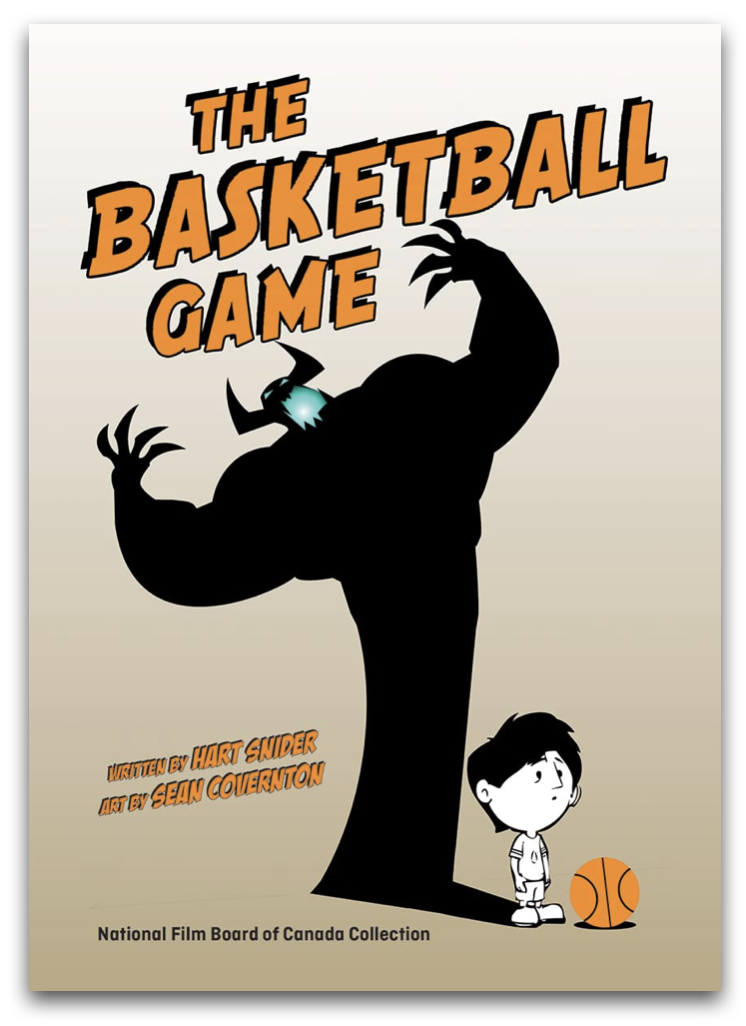
The Basketball Game

Written by Hart Snider
Illustrated by Sean Covernton
Firefly Books
978-0-2281-0391-2
87 pp.
Ages 12+
October 2022

Although hate speech has been around since time immemorial, there seems to have been a deluge of it in recent years with the news inundated with misinformation, fake news, and bigotry. Sadly, with social media, the dissemination of hate speech has been especially facile. But hate seems to always be there, sometimes overt and sometimes less conspicuous, until it isn't. In 1983, one Alberta teacher who denied the Holocaust in his social studies teaching and promoted hatred of the Jewish people was called out by a parent, leading to dismissal, charges and more. And a basketball game.

Author Hart Snider was just a child in Edmonton when the story of teacher Jim Keegstra of Eckville, Alberta was headline news. However, he was a Jewish child who was attending Camp BB in Pine Lake when his world and that of the news came together. This story, based on a National Film Board of Canada animated short film of the same title, is his camp story from the summer of 1983.
From The Basketball Game by Hart Snider, illus. by Sean Covernton
It was Hart's first summer at Camp BB, and he was just as happy to sit under a tree and read comic books. But, distractedly, he signs up with a pretty camp counsellor for a "social mixer to encourage cultural understanding." When Bill, the larger-than-life camp director, tells them that their day of fun and fellowship, which would include a picnic and a basketball game, would be with Jim Keegstra's former Eckville students, Hart and others wonder how these kids would approach them. And when one boy asks Hart if he actually has horns, Hart wonders if the Jewish kids are all seen as demonic supervillains with horns, or global banking conspirators, or maybe even magical wizards. But then he looks at the Eckville kids and sees them as being no different from skinheads, Nazis or the KKK. Ultimately, it's just a basketball game between a bunch of kids, Jewish or not, having fun.

From The Basketball Game by Hart Snider, illus. by Sean Covernton

The Basketball Game may be a personal graphic memoir of Hart Snider, but it's also a compelling reminder of the impact of hate on children. From Jim Keegstra's antisemitic teachings, which coerced young people to adopt his opinions in order to pass, to the children of Camp BB who enjoyed the familiarity of their Jewish community but anticipated conflict because of it, the story of The Basketball Game is a sobering reminder how vulnerable they are to fake news, misinformation and worse. The stereotypes were embedded in their learning and, with no other basis, it's all they had to go on. The camp boys who are depicted as monstrous members of a blue team must compete against the equally scary members of the Eckville red team. Like the fear they pose, the team members are frightening and powerful. (And fully coloured.) In reality, they are a bunch of young boys, drawn in black-and-white, still open to colour and ideas and not quite grounded in themselves. Canadian animator Sean Covernton contrasts the innocent with the horrific, making the expected far scarier than the reality and reminding us that young children are open to suggestion and vulnerable to those who might mislead them with hateful opinions. He also shows them as kids who want to make friends, read comic books, play basketball, and enjoy the positive traditions of their community.

There is a warning that prefaces the book, cautioning the reader about hateful language and depictions of antisemitism. However, though the book is intended for those twelve years of age and older, The Basketball Game may offer an opportunity for discussion with younger kids with the right approach. (Discussion questions are appended to the story.) It helps children see that not all adults are right, that questioning and discussing difficult topics is worthwhile to ensure understanding, and that kids are kids, no matter what their backgrounds.
From The Basketball Game by Hart Snider, illus. by Sean Covernton

October 22, 2022

The Brass Charm


Written by Monique Polak
Illustrated by Marie Lafrance
North Winds Press (Scholastic Canada)
978-1-4431-5758-2
32 pp.
Ages 5-9
September 2022
 
Everyone has troubles in their lives sometime. Some are horrific and life-changing, some are temporal but seem overwhelming.  Most of us cannot see past our own issues when we're immersed in them. It's that bubble of now. It is probably especially the case for young children many of whom, thankfully, have not had to endure great hardships. So, when the roof of their home is destroyed in a storm, Tali is devastated.
From The Brass Charm by Monique Polak, illus. by Marie Lafrance
As the family heads to stay with Oma while repairs may be undertaken, Tali's mother reminds her that "People survive worse" and to "Think of Oma." Tali knows her grandmother survived World War II but she never talks about it. Still Tali is "too sad to think of anyone" but herself, even when she meets a little neighbour girl who obviously craves some company. That is, until her Oma shows her a tiny brass charm of a monkey man and shares a memory of her own hardship.

From The Brass Charm by Monique Polak, illus. by Marie Lafrance
Telling her story in the third person, Oma tells of a girl forced to leave home and sent to a prison called Terezin. The people kept there were worked tirelessly and fed very little and on the day of her birthday, the child was overcome with how her life had changed for the worse. A woman, hearing her cry, bestows upon her a small brass charm of a monkey man that a stranger gave her when her own life had seemed stormy. Now Oma remembers that lady whose own life had been difficult and could still find "it in her heart to be kind to a stranger."
 
In a message of paying it forward, Monique Polak has Tali sharing the story of the brass charm with Elodie, the little neighbour girl, bolstering them both through their challenges.
From The Brass Charm by Monique Polak, illus. by Marie Lafrance
In a story within a story, Montreal author Monique Polak is actually telling her mother's own history of surviving Terezin as a child and receiving the charm. Because of Terezin's history and its common role as a transit camp for those moved onto other concentration camps, as Monique Polak's Afterword details, the woman who shared that charm was never seen again. Yet the kindness she extended in such trying circumstances, just as Tali's Oma did for her grandchild, speak to a strength of character beyond the typical. It speaks to empathy and compassion and feeling beyond self. And for Tali to listen and learn and then apply that lesson to another makes that small brass charm a greater gift than any gold or diamond trinket could replace.
From The Brass Charm by Monique Polak, illus. by Marie Lafrance
There is a lesson from history here with Tali's Oma remembering Terezin and an experience from World War II. But it is in the context of connecting with others and a grandmother-granddaughter relationship. Not surprising that, even with a story that includes both historical and contemporary scenes, Marie Lafrance whose artwork was rendered with graphite on paper before digitally coloured and texturized via collage, is able to meld the two time periods by focusing on the child in each. It's Tali's experience and then her oma's when she was a child. It is from their perspective: what they see, what they feel, how they respond. So when the two come together in the present, as elderly woman and young child, they are feeling and understanding as the same. And Marie Lafrance gives the two similarities in their physical appearances, with the golden curls of their hair and delicate chins and ears, and makes it clear they are related. But she also gives a softness to a hard story, a story of destruction and hatred, loss and generosity. By keeping the dark grey tones for the camp and the storm and using soft colours of blues and rose and such for everything else, Marie Lafrance emphasizes the tenderness of being there for others, not the damage of the negative.

I can't think of a gentler way to introduce children to the Holocaust and Nazi concentration camps than a reading and discussion of The Brass Charm, though its story is far greater than those historic concepts. Read for a memorial day such as the International Holocaust Remembrance Day (January 27) but also for lessons about empathy and the goodness of paying it forward. The best acts of kindness do not require recompense or recognition. They come from making someone's life a little easier, whether during storms, times of trouble or now.

• • • • • •

Author Monique Polak will be launching her new book on November 20, 2022 at 2 PM at the Gelber Conference Centre, Musée de l'Holocauste Montréal / Montreal Holocaust Museum. Reserve your free tickets at Eventbrite here

October 19, 2020

Trapped in Hitler's Web

Written by Marsha Forchuk Skrypuch
Scholastic
978-1-338-67258-9
240 pp.
Ages 8-12
October 2020
 
Marsha Forchuk Skrypuch first addressed the impact of World War II on Ukraine and its people by the Soviets and then the Nazis in her series which included Stolen Child, Making Bombs for Hitler and Underground Soldier. With Don't Tell the Enemy (alternate title Don't Tell the Nazis), she began a different story, one of protecting Jewish friends in the Ukrainian village of Viteretz after the Nazis began to show their true colours. In Trapped in Hitler's Web, Marsha Forchuk Skrypuch takes us beyond Viteretz, following Maria and Nathan after they've run away in the effort to keep Nathan's Jewish identity hidden and survive.

When the occupying Nazis started killing Jews in their village, eleven-year-old Maria Fediuk leaves her mother and older sister Krystia, whose story is told in Don't Tell the Enemy, to save her friend Nathan Segal from imminent death. Using the identity papers of a boy killed by the Soviets, Nathan becomes Bohdan Sawchuk, and the two sign up for work in the Reich, believing the promises of pay, food and shelter. Heading to Austria with others who'd been captured as slave labourers, their hope for safety is shattered when the two are separated in Salzburg, Nathan taken for bridge building while Maria is sent to the Huber farm near Innsbruck. 

The Huber farm is currently run by Frau Huber and her parents, Frau and Herr Lang. Frau Huber's husband and son are both fighting for the Reich and her fourteen-year-old daughter Sophie is a staunch Hitler Girl. Soon enough Maria learns that she and Bianka, a Polish girl captured two years earlier, are little more than slave labourers, sleeping in the barn and allotted minimal food, though not as badly off as the Ukrainians labelled as Ostarbeiters who return to a slave camp nightly. Though Frau Huber and her parents show kindness when they can, they are very cautious as their harvest is monitored, their actions are regularly scrutinized by Blockleiter Doris Schutt and they fear that the inexorable Sophie might betray them.

Realizing that her plan to help Nathan escape and to send money home to her mother and sister has failed, Maria does what she must to survive, knowing that she may be better off than some, but that she must find a way to make things right for Nathan and her family. Coming to realize that there are many trapped in Hitler's organization of cruelty and propaganda, from the Jewish people, to slave labourers, farmers, and even soldiers, Marie watches and listens and learns what she must to persevere and help those she cares about do the same.

As historical fiction, Trapped in Hitler's Web, like its companion novel Don't Tell the Enemy, is tragically honest and heartbreaking. The story is even more anguished as it is inspired by real events and people. But it is a telling story, from the perspective of a brave child who endured excruciating physical and emotional hardship, driven by hope to help those dear to her. It's also revelatory about the many victims of the Reich, borne in a manufactured hierarchy of discrimination. Hearing Maria and others referred to as "subhumans" and starved and abused is crushing. Still Marsha Forchuk Skrypuch writes to reveal another story of WWII, specifically about Ukrainians, and she does so with much heart and compassion, reminding us that there are sometimes more than two sides to a story and to war itself.
 
• • • • • • • 

Don't forget the virtual book launch coming up for Trapped in Hitler's Web.  Teachers and their classes are encouraged to attend for an opportunity to listen to Marsha Forchuk Skrypuch speak about her newest book of historical fiction. Register for this free event at the Brantford Public Library.

June 11, 2018

The Promise

Written by Pnina Bat Zvi and Margie Wolfe
Illustrated by Isabelle Cardinal
Second Story Press
978-1-77260-058-2
32 pp.
Ages 7-10
April 2018

The cover of The Promise is all encompassing. Within that single graphic, the reader knows the darkness and sobriety of a story told in a concentration camp during World War II, an impenetrable bond, and a smidgen of hopeful blue sky. This is The Promise.

When Rachel and Toby's parents are taken away by the Nazis, the two sisters are given three gold coins, hidden in a shoe paste tin, to help save their lives and asked to promise to always stay together. 
"...above all, stay together.  This is how you will both survive." (pg. 5)
From The Promise by Pnina Bat Zvi and Margie Wolfe, illus. by Isabelle Cardinal
When the two girls are taken to Auschwitz, slaving away at mindless work and starved with meagre food rations, they show courage in small acts of heroism and defiance.  But when Rachel falls ill, all is put at risk. Though Toby begs to work double for her sister, she returns to find Rachel gone from their barrack.  Knowing this could mean the worst, Toby uses the gold coins to bribe an inmate acting as guard at the barrack of the sick to allow her access and an opportunity to sneak Rachel out.  However, the next day Rachel's unauthorized return is noted by their Nazi guard who punishes Toby for her actions though, in a miraculous turn, allows Rachel to remain with her sister.
From The Promise by Pnina Bat Zvi and Margie Wolfe, illus. by Isabelle Cardinal
Against all odds, Rachel and Toby, the mothers of authors Pnina Bat Zvi and Margie Wolfe respectively, honoured their parents by staying together.  Though it was Toby who held onto those coins for years until the time came to use them, both young women showed extraordinary fortitude in everyday acts of courage and endurance such that they were able to survive a camp from which over a million never returned.  Likewise, Pnina Bat Zvi and Margie Wolfe honour their parents with the retelling of this story, told with admiration and candour. 
From The Promise by Pnina Bat Zvi and Margie Wolfe, illus. by Isabelle Cardinal
To add to the story's power, artist Isabelle Cardinal uses digital collage to blend reality with illustrations.  The horrors she needed to convey–hunger, illness, fear, cold and more–are evoked in the photos of faces but tempered with the sombre drawings of stark colours and textures. The art, like the story, is commanding and yet subtle. 

Based on a true story, The Promise reveals just one significant but uncelebrated act of heroism during a time and place of brutality. It's a story that needs to be recognized and its characters acclaimed for their survival.

March 23, 2018

Fania's Heart

Written by Anne Renaud
Illustrated by Richard Rudnicki
Second Story Press
978-1-77260-057-5
32 pp.
Ages 7-10
March 2018

When a little girl finds an old heart-shaped book wrapped in a lace handkerchief hidden in her mother's dresser, she could not have imagined the horrors her mother would share and the joy and courage that decades old keepsake memorialized.

Words have power.
There are words that injure and words that heal.
Then there are words that can save your life. 
From Fania's Heart by Anne Renaud, illus. by Richard Rudnicki

When a young Sorale discovers that small fabric-covered booklet of heart-shaped pages that open like wings, her mother finally tells the child the truth about the number tattooed on her arm and the origins of the keepsake.  Her mother, Fania Landau Fainer, reveals that she was a prisoner at the Auschwitz concentration camp and that the heart was a birthday gift constructed by the young women who were like sisters to her.  Fania tells Sorale of the horrific life in the camp, including the near starvation, the grim living conditions, the forced labour and the mistreatment.  And she tells her what happened for her 20th birthday.
"...I told my friends I would soon be an old lady, since my twentieth birthday was fast approaching." 
"But twenty is not old," I said.
"Twenty can be a lifetime.  We were all so worn and rope-thin.  People did not live to be old in that place," said my mother.
From Fania's Heart by Anne Renaud, illus. by Richard Rudnicki
In a small cake of scraps of bread rations, Fania's friends hide the special heart-shaped booklet in which they wrote messages of encouragement and wishes for freedom outside of the camp.
"Their words saved me."
Fania's Heart is a true story.  It is Sorale's story of learning at about age 9 (in 1955) about her mother's incarceration at Auschwitz and an act of defiance and love that gave Fania the courage and determination to survive.  That solitary memento is now an exhibit at the Musée Holocauste Montréal (Montreal Holocaust Museum) which will host the book launch for Fania's Heart this weekend.  Not since Second Story Press's publication of Hana's Suitcase (named the Ultimate Silver Birch Book in 2014) will a story of a historical artifact of the Holocaust touch readers with such sadness and humanity.  Author Anne Renaud who effortlessly weaves stories based on history (including the recently reviewed Mr. Crum's Potato Predicament) reveals so much about a mother's relationship with her child and her past, as well as about her own courage and fortitude that Fania's Heart could be envisioned as an illustrated documentary, not just a piece of creative non-fiction to inform and enlighten. Like the little heart that represents so much more than the few words inscribed on pages created out of sacrifice and secrecy, Fania's Heart is a token of appreciation, realistically but emotionally illustrated by Richard Rudnicki, from a time of war atrocities and a time of familial safety.
From Fania's Heart by Anne Renaud, illus. by Richard Rudnicki

March 22, 2018

Fania's Heart: Book launch (Montreal, QC)

The Montreal Holocaust Museum
(current home of the historic object highlighted in the book) 

and 

Second Story Press

host

the book launch 

for 

Fania's Heart
Written by Anne Renaud
Illustrated by Richard Rudnicki
Second Story Press
978-1-77260-057-5
32 pp.
Ages 7-10
March 2018

on

Sunday, March 25, 2018

2 p.m. Guided tour of museum
3 p.m. Reading by author Anne Renaud and book signing

at

The Montreal Holocaust Museum
5151 ch. de la Cote-Ste-Catherine
Montreal, QC


Here is the blurb about this lovely illustrated true story–which I will review tomorrow–as posted on the publisher's website:

A tiny birthday card, crafted against all odds within the confines of Auschwitz.

Ten-year-old Sorale discovers a tiny heart-shaped book among her mother’s belongings. Its pages are shaped like four-petaled flowers, upon which are written words in languages Sorale does not understand. Who wrote these words? Where did the heart come from? Why has her mother never mentioned this tiny book before? 

Fania’s Heart reveals the true story of the crafting of the heart, against all odds, within the confines of Auschwitz, and of the women of immeasurable resilience, courage, and loyalty who risked their lives for Sorale’s mother, their friend.

Retrieved from https://secondstorypress.ca/kids/fanias-heart on March 21, 2018.

December 28, 2017

Don't Tell the Enemy: Book launch (Brantford, ON)

Author

Marsha Forchuk Skrypuch


who has dazzled middle grade readers
with her historical fiction and non-fiction books
including picture books,

is back with her newest


Don't Tell the Enemy
Written by Marsha Forchuk Skrypuch
Scholastic Canada
978-1-4431-2839-1
184 pp.
Ages 10-14
January 2018

on

Tuesday, January 16, 2018

at 

7 p.m.

at

Braemar House School
36 Baxter Street
Brantford, ON
(Map here)


⥐⥐⥐⥐⥐


Marsha Forchuk Skrypuch 
will speak about the real mother and daughter 
who risked their lives to hide three Jewish friends 
during the Holocaust.


This is their story (from the blurb on Scholastic Canada website:
How much would you do for a friend? Krystia’s family hides Jews from the Nazis at immense risk to their own lives.

Life is becoming dangerous for Krystia. It’s 1941 and her town in Ukraine is now occupied by the Soviets. Some members of her family are harassed, while others are arrested and killed. When the Nazis liberate the town, they are welcomed with open arms. But Krystia’s best friend Dolik has doubts. His family is Jewish and rumours are that the Nazis are even more brutal than the Soviets.

When the Nazis discover a mass grave of Soviet prisoners, they use it as an excuse and blame the slaughter on the Jews. Soon after, the Nazis establish ghettoes and begin public execution of Jews. Krystia can’t bear to see her friends suffer, so she smuggles food in for them. When word gets out that the ghetto will be cleared and Jews will be exterminated, Krystia must make an impossible decision. Will she risk her own family’s safety to save her friends?
on December 14, 2017.


Book sales and signing will follow the author's presentation.
(Proceeds will go to the Scholarship Fund of CFUW Brantford)

Light refreshments will be served.


September 06, 2014

The Magician of Auschwitz

Written by Kathy Kacer
Illustrated by Gillian Newland
Second Story Press
978-1-927583-46-3
32 pp.
Ages 7+
For release September 5, 2014

Yesterday, Second Story Press added a unique title to its auspicious collection of Holocaust remembrance books: The Magician of Auschwitz by Kathy Kacer, illustrated by Gillian Newland.  As befits a picture book recounting any event that would take place in one of World War II's most horrific concentration camps, The Magician of Auschwitz is dark and sombre in tone and atmosphere, both in its text and its graphics.

A young boy, Werner, is delivered to the Auschwitz concentration camp, alone, separated from his mother and sister.  In the cramped barracks and overcrowded bunks, Werner learns quickly enough that only the strong will survive. This makes him even more curious about Herr Levin, a gentle, soft-spoken, middle-aged man with whom Werner shares the uppermost bunk.

The physical and emotional hardships of the days at the concentration camp are only accentuated by the dark nights of fear-filled sleep.  When guards come in the night and demand that Herr Levin do his magic, Werner anxiously watches as his bunkmate performs card tricks for the guards' entertainment.  There are more nights when they are awoken and Herr Levin works his magic, with cards, string and coins.  And, though Werner believes Herr Levin will benefit from his entertaining acts for the soldiers, Herr Levin makes it clear that, "This is not a game, and it is not a show." (pg. 16) He was performing for his life.

Kathy Kacer's notes, titled How it Happened, explain the real story behind The Magician of Auschwitz.  In Auschwitz, Werner Reich, the young boy, met Herbert Levin, a man who had been the well-known magician Nivelli the Magician.  There the gentle man shared his tricks with Werner and his compassion and strength of spirit in a horrific situation.
"Someone had cared about him and given him some hope.  There was enough real magic in that for Werner to hold on to." (pg. 24)
Kathy Kacer emphasizes the connection between the boy and magician and their unique relationship based in respect and magic while in the camp.  But the details of their later lives, very separate but still connected, complete their stories so appropriately. And Gillian Newland touches upon the heart of their relationship, a sliver of brightness, among the dark grey-browns of the heartless concentration camp, where survival is everything. There are few splashes of colour in the camp, only the playing cards and a swastika armband.  The power of both is clear. Only in a final illustration of an older Werner Reich with his two sons do warmer tones of orange, olive and turquoise appear.  The message in the words and the illustrations are quite clear.  From the darkness with few lights of hope came brighter lives, though still muted by earlier events that stole much family, hope and life from so many. The Magician of Auschwitz is an important book of accepting hope wherever possible in the most hopeless of situations and from the most surprising of sources.

A touching book trailer for The Magician of Auschwitz may be viewed here.

January 25, 2013

International Holocaust Memorial Day: Book List II


To commemorate the International Holocaust Memorial Day, January 27, CanLit for LittleCanadians has compiled a list of picture books, novels, young adult fiction, and non-fiction that focus on the victimization of millions of people during World War II.  This second book list includes only non-fiction related to the Holocaust.  As stated in the previous book list, let us support this very simple but profound intent:
 
   Never again  


Non-fiction

Faces of Courage: Young Heroes of World War II
Written by Sally M. Rogow
Granville Island Publishing
162 pp.
Ages 11-15
2003

Resistance

Faye the Freedom Fighter
Written by Sharon Jennings
Second Story Press
200 pp.
Ages 9-15
2011

Poland, resistance
Hana's Suitcase
Written by Karen Levine
Second Story Press
120 pp.
Ages 9-12
2002


Terezin, Auschwitz, Holocaust education, Hana Brady

 
Hana's Suitcase Anniversary Album (A Holocaust Remembrance Series for Young Readers)
Written by Karen Levine
Second Story Press
176 pp.
Ages 9-13
2012


Hiding Edith: A True Story (A Holocaust Remembrance Series for Young Readers) 
Written by Kathy Kacer
Second Story Press
151 pp.
Ages 9-11
2006

Escape, France

Rescuing the Children: The Story of the Kindertransport
Written by Deborah Hodge
Tundra Books
64 pages
Ages 10+
2012

Kindertransport, rescue


To Hope and Back: The Journey of the St. Louis (A Holocaust Remembrance Series for Young Readers) 
Written by Kathy Kacer
Second Story Press
204 pp.
Ages 9-13
2011

Refugees

The Underground Reporters (A Holocaust Remembrance Series for Young Readers) 
Written by Kathy Kacer
Second Story Press
155 pp.
Ages 9-13
2004

Czech Republic, underground newspapers, ghettos

 
What is the Pink Triangle?
Written by Ken Setterington
Second Story Press
196 pp.
April, 2013

Persecution

Whispers from the Camps
Written by Kathy Kacer and Sharon E. MacKay
Puffin Canada
151 pp.
Ages 10-15
2009

Narratives, survivors
Whispers from the Ghettos
Written by Kathy Kacer and Sharon E. MacKay
Puffin Canada
134 pp.
Ages 11+
2009

Narratives, survivors living in Canada, ghettos

Whispers in Hiding
Written by Kathy Kacer and Sharon E. MacKay
Puffin Canada
173 pp.
Ages 11+
2009

Narratives, survivors living in Canada


January 24, 2013

International Holocaust Memorial Day: Book List I

During World War II, the Nazis persecuted and killed millions of people belonging to groups they deemed inferior or dangerous.  Six million victims of the Holocaust were Jews and an additional eleven million victims were Poles, Russians, Ukrainians, Romas, the mentally and physically disabled, homosexuals and transexuals, and religious dissidents.

In 2005, the United Nations General Assembly designated January 27 as International Holocaust Remembrance Day.  January 27 coincides with the liberation of the concentration camp Auschwitz-Birkenau in 1945. To help enlighten young Canadian readers to the nature of the Holocaust, for the sole purpose of preventing such bigotry and hatred from ever occurring again, I offer two book lists to support the teaching of the tragedy of the Holocaust.

As we often note on Remembrance Day (November 11), let us support this very simple but profound intent:

   Never again.   

Picture Books

The Secret of the Village Fool
Written by Rebecca Upjohn
Illustrated by Renée Benoit
Second Story Press
32 pp.
Ages 8-10
2012

Poland, kindness, hiding, courage


Juvenile Fiction

After the War
Written by Carol Matas
Scholastic Canada

144 pp.
Ages 12-14
1996

Post-war migration


Clara's War (A Holocaust Remembrance Book for Young Readers)
Written by Kathy Kacer
Second Story Press
198 pp.
Ages 12-14
2001 

Terezin

Daniel's Story
Written by Carol Matas
Scholastic Canada

144 pp.
Ages 9-12

1993

Germany, Poland, resistance
The Diary of Laura's Twin (A Holocaust Remembrance Book for Young Readers)
Written by Kathy Kacer
Second Story Press
202 pp.
Ages 11-14
2008

Poland, bat mitzvah, memories

Goodbye, Marianne: A Story of Growing Up in Nazi Germany
Written by Irene Watts
Tundra Books
105 pp.
Ages 9-12
1998 

Berlin, Kindertransport, Hitler Youth


Goodbye, Marianne
Written by Irene N. Watts
Illustrated by Kathryn E. Shoemaker
Tundra Books
128 pp.
Ages 9-12
2008

Graphic novel, Berlin, Kindertransport, Hitler Youth


Greater than Angels
Written by Carol Matas
Scholastic Canada

144 pp.
Ages 11-14

1998

France, deportation, refugee camp

Guardian Angel House
Written by Kathy Clark
Second Story Press
228 pp.
Ages 10-14
2009

Budapest, refugees
Hero
Written by Martha Attema
Orca Book Publishers
131 pp.
Ages 7-10
2003

Netherlands, refugees

Honey Cake
Written by Joan Betty Stuchner
Illustrated by Cynthia Nugent
Tradewind Books
92 pp.
Ages 8-10
2007

Denmark, resistance, Underground

In My Enemy's House
Written by Carol Matas
Scholastic Canada
168 pp.
Ages 11-14
1999

Poland, disguise
The Night Spies (A Holocaust Remembrance Book for Young Readers)
Written by Kathy Kacer
Second Story Press
197 pp.
Ages 10-13
2003

Czechoslovakia, resistance 

The Old Brown Suitcase: A Teenager's Story of War and Peace
Written by Lillian Boraks-Nemetz
Ben-Simon Publication
148 pp.
Ages 10-15
1994

Poland, post-war migration to Canada

The Orphan Rescue
Written by Anne Dublin
Illustrated by Qin Leng
Second Story Press
124 pp.
Ages 9-12
2010

Poland, orphans, factory work


Pieces of the Past : The Holocaust Diary of Rose Rabinowitz, Winnipeg, Manitoba, 1948 (Dear Canada)
Written by Carol Matas 
Scholastic Canada
168 pp.
Ages 9-12
Feb 01, 2013 

Memories, refugees, Poland


Remember Me
Written by Irene Watts
Tundra Books
184 pp.
Ages 10-15
2000 

Kindertransport, England

The Righteous Smuggler (A Holocaust Remembrance Book for Young Readers)
Written by Debbie Spring
Second Story Press

160 pp.
Ages 10-12
2005

Netherlands, deportation, smuggling, resistance

The Secret of Gabi's Dresser
Written by Kathy Kacer
Second Story Press
128 pp.
Ages 9-12
1999 

Czechoslovakia, memories, hiding

Stolen Child
Written by Marsha Forchuk Skrypuch
Scholastic Canada
154 pp.
Ages 8-12
2010

Ukrainians, Lebensborn, memories
Making Bombs for Hitler
Written by Marsha Forchuk Skrypuch 
Scholastic Canada
186 pp.
Ages 8-12
2012

Ukrainians, Ostarbeiter, persecution
Tell No One Who You Are: The Hidden Childhood of Régine Miller
Written by Walter Buchignami
Tundra Books 
185 pp.
Ages 9-13
2008

Belgium

Turned Away: The World War 11 Diary of Devorah Bernstein, Winnipeg, Manitoba, 1941 (Dear Canada)
Written by Carol Matas
Scholastic Canada
199 pp.
Ages 10-14
2005

Escape, immigration to Canada

We Are Their Voice: Young People Respond to the Holocaust (A Holocaust Remembrance Book for Young Readers)
Edited by Kathy Kacer
Second Story Press
232 pp.
Ages 10-13
2012


Young Adult

Kanada
Written by Eva Wiseman
Tundra Books
264 pp.
Ages 13 +
2006

Auschwitz

My Canary Yellow Star
Written by Eva Wiseman
Tundra Books
232 pp.
Ages 14+
2001

Hungary, Raoul Wallenberg

Flames of the Tiger
Written by John Wilson
Kids Can Press
176 pp.
Ages 11-17
2003


Germany, Hitler Youth, propaganda
The Thought of High Windows
Written by Lynne Kositsky
Kids Can Press

175 pp.
Ages 11-14
2004

Germany, escape, Underground


A second book list  for International Holocaust Memorial Day will be posted tomorrow.