Showing posts with label antisemitism. Show all posts

November 04, 2022

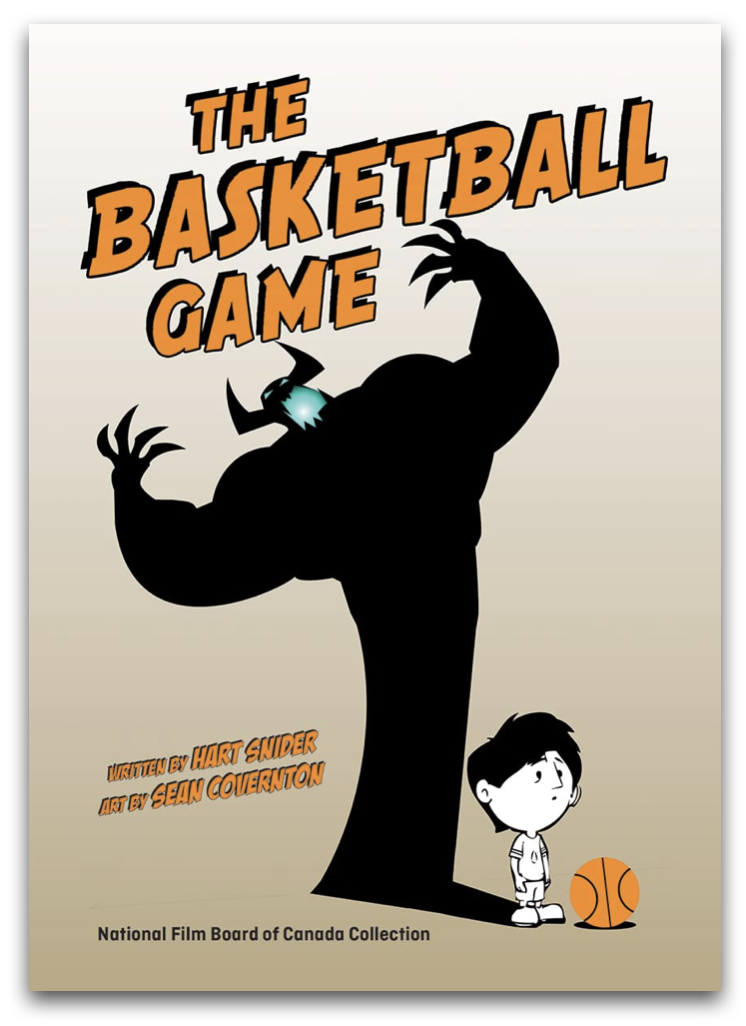
The Basketball Game

Written by Hart Snider
Illustrated by Sean Covernton
Firefly Books
978-0-2281-0391-2
87 pp.
Ages 12+
October 2022

Although hate speech has been around since time immemorial, there seems to have been a deluge of it in recent years with the news inundated with misinformation, fake news, and bigotry. Sadly, with social media, the dissemination of hate speech has been especially facile. But hate seems to always be there, sometimes overt and sometimes less conspicuous, until it isn't. In 1983, one Alberta teacher who denied the Holocaust in his social studies teaching and promoted hatred of the Jewish people was called out by a parent, leading to dismissal, charges and more. And a basketball game.

Author Hart Snider was just a child in Edmonton when the story of teacher Jim Keegstra of Eckville, Alberta was headline news. However, he was a Jewish child who was attending Camp BB in Pine Lake when his world and that of the news came together. This story, based on a National Film Board of Canada animated short film of the same title, is his camp story from the summer of 1983.
From The Basketball Game by Hart Snider, illus. by Sean Covernton
It was Hart's first summer at Camp BB, and he was just as happy to sit under a tree and read comic books. But, distractedly, he signs up with a pretty camp counsellor for a "social mixer to encourage cultural understanding." When Bill, the larger-than-life camp director, tells them that their day of fun and fellowship, which would include a picnic and a basketball game, would be with Jim Keegstra's former Eckville students, Hart and others wonder how these kids would approach them. And when one boy asks Hart if he actually has horns, Hart wonders if the Jewish kids are all seen as demonic supervillains with horns, or global banking conspirators, or maybe even magical wizards. But then he looks at the Eckville kids and sees them as being no different from skinheads, Nazis or the KKK. Ultimately, it's just a basketball game between a bunch of kids, Jewish or not, having fun.

From The Basketball Game by Hart Snider, illus. by Sean Covernton

The Basketball Game may be a personal graphic memoir of Hart Snider, but it's also a compelling reminder of the impact of hate on children. From Jim Keegstra's antisemitic teachings, which coerced young people to adopt his opinions in order to pass, to the children of Camp BB who enjoyed the familiarity of their Jewish community but anticipated conflict because of it, the story of The Basketball Game is a sobering reminder how vulnerable they are to fake news, misinformation and worse. The stereotypes were embedded in their learning and, with no other basis, it's all they had to go on. The camp boys who are depicted as monstrous members of a blue team must compete against the equally scary members of the Eckville red team. Like the fear they pose, the team members are frightening and powerful. (And fully coloured.) In reality, they are a bunch of young boys, drawn in black-and-white, still open to colour and ideas and not quite grounded in themselves. Canadian animator Sean Covernton contrasts the innocent with the horrific, making the expected far scarier than the reality and reminding us that young children are open to suggestion and vulnerable to those who might mislead them with hateful opinions. He also shows them as kids who want to make friends, read comic books, play basketball, and enjoy the positive traditions of their community.

There is a warning that prefaces the book, cautioning the reader about hateful language and depictions of antisemitism. However, though the book is intended for those twelve years of age and older, The Basketball Game may offer an opportunity for discussion with younger kids with the right approach. (Discussion questions are appended to the story.) It helps children see that not all adults are right, that questioning and discussing difficult topics is worthwhile to ensure understanding, and that kids are kids, no matter what their backgrounds.
From The Basketball Game by Hart Snider, illus. by Sean Covernton

September 21, 2022

The Book of Elsie (Orca Currents)

Written by Joanne Levy
Orca Book Publishers
978-1-4598-3424-8
160 pp.
Ages 9-12
RL 2.8
August 2022

With the upcoming Jewish holiday of Purim–that commemorates the salvation of the Jewish people against the evil Haman in 5th c. BCE  Persia, as told in the Book of Esther–Elsie Rose-Miller is buzzing with excitement. For her synagogue's Purim party, she's planning on going as the fierce Queen Esther. Abba, her father, is a theatre costume designer and he's helping with her dress. But when her other dad who is on the temple's board learns that the party will have to be cancelled because of finances, Elsie jumps into action, emulating the strong Queen Esther, determined to save the party and the synagogue.

Rallying Rabbi Alisha and members of their Sunday school, Elsie suggests selling tickets to the Purim party and extending sales beyond their temple. It would seem that everyone is on board and sales are going well, especially with some hamantaschen cookies (recipe appends the book!) to accompany the tickets. But community outreach becomes a little tricky, particularly when approaching strangers, and Elsie and her best friend Grace must contend with antisemitism and racism respectively. Worse yet, when a hate crime is perpetrated against the synagogue, a cancelled Purim party may be the least of their worries.

Joanne Levy has written several middle grade novels where she enlightens young readers about Jewish traditions and the community (e.g., Sorry For Your Loss, The Sun Will Come Out) but this may be the first in which she tackles antisemitism and hate crimes against the Jewish community. That's a heavy topic but Joanne Levy embeds it in a story about courage and communities rather than focusing on the violence or the brutality of offensive remarks. Both Elsie, a Jewish child, and Grace, a person of colour, are exposed to the hate but their histories with that hate are different and, as such, their immediate responses may be different. They both recognize the ignorance involved; however, as part of communities of caring individuals, they see beyond the fear and sadness–"Hate has never solved any problems" (pg. 130)–and work to make things better. 

The story line is strong, encompassing social justice and Jewish traditions, tolerance and inclusivity. But the writing is persuasive, especially as Joanne Levy has written it as a hi-lo (high interest-low reading level) book, thereby reaching a wider audience with her story. As part of the Orca Currents series, The Book of Elsie may be geared to middle graders who are reading below grade level but it's actually opened up the opportunity for younger readers, middle graders and even teens who are striving to read to get a compelling story with a contemporary theme. In a time when hatred is voiced openly on social media and threatens many communities, The Book of Elsie reminds us that there is goodness out there and, with a little courage and determination, it can overcome everything.

June 16, 2021

The Good Fight

Written by Ted Staunton
Illustrated by Josh Rosen
Scholastic Canada
978-1-4431-6383-5
224 pp.
Ages 10-13
June 2021 

The 1930s were a difficult time. It was the Great Depression, Nazism was growing in Germany and elsewhere, and people were looking to blame others for their hardships. With antisemitism on the rise and prejudice against immigrants a perennial vocation for many, the city of Toronto was primed for a fiasco in the heat of the summer of 1933. It got one.
From The Good Fight by Ted Staunton, illus. by Josh Rosen
Sid Klein and his friend Plug Venditelli have been recruited by Tommy Ryan to be part of his whiz mob, a pickpocket gang. Tommy, who'd been taught by his uncle, would chose their mark and steal from him while Plug, as the stall man, distracted him, before Tommy passed the money on to Sid, the duke man. Though he was full of bravado about his Irish heritage, Tommy was actually Tadeusz Lepofsky and scoffed at Sid and Plug whose heritages–Jewish and Italian– might mark them on the streets of Toronto. Still, with the desperate times, the boys are willing to do what they could to provide extra coins for their families, including selling newspapers, running errands, collecting cockroaches, or stealing.
From The Good Fight by Ted Staunton, illus. by Josh Rosen
But when Sid pockets a swastika pin and learns more about efforts by the Swastika Club and local Nazi sympathizers to stop Jews from using the boardwalk on Balmy Beach, Sid is warned to watch himself. Still Christie Pits, a popular place to watch the city's ball teams play, including the championship games between the Harbord Playground and St. Peter's Church teams, is too inviting to avoid as a location to pick a pocket or two. When the trio of boys is picked up and threatened with jail unless they help the Red Squad–police tasked with putting away union agitators, anarchists and communists whom they believe are all immigrants and Jews–Sid and Plug find themselves caught up in trying to save themselves and protect their families on the night of the infamous Christie Pits riot of August 16, 1933.

From The Good Fight by Ted Staunton, illus. by Josh Rosen
Ted Staunton has penned a number of picture books, early readers, and middle grade and young adult novels including those as part of The Almost Epic Squad and Seven series, but I believe this is his first venture into historical fiction. Still, with his familial connection–his grandfather was the mayor of Toronto at the time of the Christie Pits riot–he ably links a story of the past to issues of prejudice and discrimination and helps us see how those injustices have been perpetrated. From the vile name-calling, violent skirmishes and exclusionary tactics, Toronto was not unconditionally welcoming to all its communities and not the mosaic it was purported to be. And during the Depression, desperation fuelled those prejudices, sparking abominable behaviour and attitudes throughout. But communities like Sid and Plug's overcame and even thrived, making opportunities for themselves, as the epilogue to the main story shares. 
 
By focusing on Sid's story with Plug and their families, Ted Staunton gives us multiple perspectives: that of children, those of immigrant families, and those struggling financially. And, of course, those targeted by hatred. The Good Fight tells us how they felt, how they managed, how they fought. Illustrated by Toronto's Josh Rosen, the story is gritty and distressing, and I suspect young readers will be hopeful that Sid and Plug don't go to jail, that their families aren't thrown out on the streets, that their Jewish and Italian friends will not be attacked, and that those responsible for the Christie Pits riot are brought to justice. From newspaper stories, accurate depictions of the clothing and speech of the day, and social conditions, The Good Fight gives parents and teachers a wonderful opportunity to talk about the past and the need to ensure atrocities such as the Christie Pits riot aren't repeated.

For a time, Toronto was known as Toronto the Good but, like anything, Toronto is neither all good nor all bad. It has moments in history of which is should be immensely proud and others, like the Christie Pits riot, which are a stain on the city's reputation. Making it right begins with telling those stories so that learning might happen and social justice prevail.

June 22, 2012

The Baby Experiment

by Anne Dublin
Dundurn
978-1459701359
150 pp.
Ages 11-15
2012

When fourteen-year-old Johanna Eisen answers an ad for orphanage workers, she presents herself as Johanna Richter.  With Jews in Hamburg being accused of poisoning the water and spreading the plague (did I mention this story takes place in the early 1700s?), and having much prejudice levied against them, Johanna recognizes that she must keep her Jewish background hidden if she is to get the job.  Hired, Johanna agrees to care for the infants, always adhering to the strict rule of not speaking to the children or providing any comforts beyond the basics needed to survive.

Johanna and the other two caregivers, Cecile and Monica, are each assigned a section with a number of babies aged one to three months old.  As the weeks pass, several of the babies die.  Learning from Monica that the orphanage is actually an experiment being run by Professor Gottfried Leibniz, and overhearing the visiting Dr. Keller telling the Professor that his experiment is denying the children their emotional needs, Johanna decides to conduct her own experiment on Rebecca, one of the babies in her care.  Disregarding her instructions when away from prying eyes, Johanna cuddles, hugs, sings to, and kisses Rebecca, helping the baby to thrive, while sadly other children die.  Taking a lesson from the story of Moses, Johanna decides to escape with Rebecca, now nine months old, and travel to Amsterdam where Jews are treated more fairly.  But, a simple plan becomes an ordeal with Johanna enlisting the help of those who may harbour antisemitic views, confronting the dreaded plague, being assaulted by bandits, and ultimately revealing her true Jewish nature.

While I could not find any historical references to such experimentation, it is evident that antisemitism was pervasive in 18th century Europe, just as it is in The Baby Experiment, and this prejudice would have dominated all of Johanna's experiences.  Everything from her home to travel, work, friends and purchases, was affected, perhaps banned, restricted or impossible, due to the antisemitism of the time.  Having Johanna endure the masquerade of being non-Jewish (e.g., eating non-kosher food) and deny her heritage, even with friends, demonstrates her fortitude and resolve to manage in that prejudicial society.  Anne Dublin writes of Johanna's escape to Amsterdam as a grave undertaking, though it reads like an adventure, rife with obstacles and unexpected stumbling blocks, with the occasional advantage and luck tossed in to mitigate the oppressive nature of the times.  In The Baby Experiment, Anne Dublin has created a perfect story at the reading level for the middle grades but with the maturity appreciated by those readers slightly older, all in a historical setting brimming with atmosphere.  Young readers will appreciate Johanna's dangerous endeavour while The Baby Experiment spurs discussions of evolving social justice.