Showing posts with label camp. Show all posts

April 13, 2026

A Friend is a Friend is a Friend

Written by Sara O'Leary
Illustrated by Qin Leng 
Groundwood Books
978-1-77946-026-4
32 pp.
Ages 3–6
April 2026 
 
A concern for many children entering a new situation, whether a new school, a new sports activity, or even a new neighbourhood, is whether they'll make any new friends. For this child, heading off to camp, the worry is very real, but she's hopeful of learning some new strategies from her peers.
From A Friend is a Friend is a Friend, written by Sara O'Leary, illustrated by Qin Leng
Without ever asking a question—or does she?—a little girl gets different perspectives from other children. As the diverse and colourfully dressed children play on a massive tree, they are quoted about their friends and the basis for those friendships. The first piece of advice is about asking questions because that's how you learn if you have things in common with others. It might be a birthday, a favourite colour, or the need for quiet.
From A Friend is a Friend is a Friend, written by Sara O'Leary, illustrated by Qin Leng
The variety of their experiences is rich, as are the friends they have. For one child, their best friend is their grandfather because they share stories. It could be a friend who supports you or one that you appreciate for the type of person they are. There are children who don't speak the same language but understand each other just the same. There is a child whose friend was a he and is now a she and that's okay since they still like doing the same things. There is a shy child, lifelong friends, and one who has an invisible friend. There are so many children, and they all make friends differently and make different friends. The richness of their experiences is only matched by the individuality of their friendships.
From A Friend is a Friend is a Friend, written by Sara O'Leary, illustrated by Qin Leng
Sara O'Leary, author of A Family is a Family is a Family (2016) and A Kid is a Kid is a Kid (2021), gets to the heart of friendships by showing children that there is no right way to make a friend and be a friend. Her message is one of joy in the diversity of who we are and how we make friends. Without telling kids how they can make friends, she allows children to express their own feelings about their processes, giving them voice. (All responses by children to the unasked question of making friends are placed in quotation marks.) By giving them voice, Sara O'Leary lets young readers take what they want from the guidance of their peers, perhaps to help them make their own friends. And, with the wisdom of a compassionate adult, she reminds readers that, "It turns out that the best way to make a friend is to be one." (pg. 29)
From A Friend is a Friend is a Friend, written by Sara O'Leary, illustrated by Qin Leng
A Friend is a Friend is a Friend has been illustrated by Qin Leng, as in the earlier books in this collection. Qin Leng's art, created with ink, marker, and watercolour, are distinct, both light in marks and bright in mood. She does well with stories with young children, giving them innocence, playfulness, and wonder. By making all the children unique in their demeanours and expressions, and by keeping them joyful and natural in the familiarity of play, Qin Leng helps reflect Sara O'Leary's emphasis on diversity and individuality.
  
There will always be those children who make friends very easily, never worrying about how to do it or if they can do it. But there are others for whom it is an uncertainly and even a fear, and A Friend is a Friend is a Friend will help them. Best of all, it's a sweet story without being a contrived teaching tool. And if your little one is heading to summer camp, or to kindergarten or a new school this fall, or you're planning on moving house, A Friend is a Friend is a Friend will reassure those for whom finding a friend may be more of a challenge. It reminds them that they can do it.
 
 
A Family is a Family is a Family (2016)
A Kid is a Kid is a Kid (2021)
A Friend is a Friend is a Friend (2026)

November 04, 2022

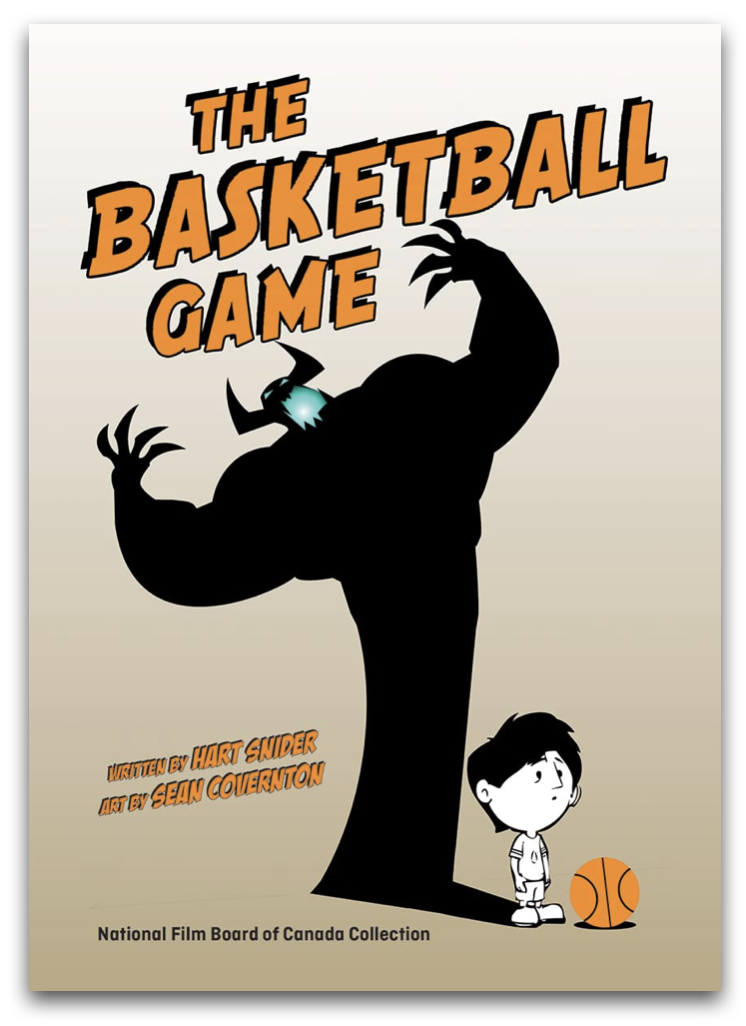
The Basketball Game

Written by Hart Snider
Illustrated by Sean Covernton
Firefly Books
978-0-2281-0391-2
87 pp.
Ages 12+
October 2022

Although hate speech has been around since time immemorial, there seems to have been a deluge of it in recent years with the news inundated with misinformation, fake news, and bigotry. Sadly, with social media, the dissemination of hate speech has been especially facile. But hate seems to always be there, sometimes overt and sometimes less conspicuous, until it isn't. In 1983, one Alberta teacher who denied the Holocaust in his social studies teaching and promoted hatred of the Jewish people was called out by a parent, leading to dismissal, charges and more. And a basketball game.

Author Hart Snider was just a child in Edmonton when the story of teacher Jim Keegstra of Eckville, Alberta was headline news. However, he was a Jewish child who was attending Camp BB in Pine Lake when his world and that of the news came together. This story, based on a National Film Board of Canada animated short film of the same title, is his camp story from the summer of 1983.
From The Basketball Game by Hart Snider, illus. by Sean Covernton
It was Hart's first summer at Camp BB, and he was just as happy to sit under a tree and read comic books. But, distractedly, he signs up with a pretty camp counsellor for a "social mixer to encourage cultural understanding." When Bill, the larger-than-life camp director, tells them that their day of fun and fellowship, which would include a picnic and a basketball game, would be with Jim Keegstra's former Eckville students, Hart and others wonder how these kids would approach them. And when one boy asks Hart if he actually has horns, Hart wonders if the Jewish kids are all seen as demonic supervillains with horns, or global banking conspirators, or maybe even magical wizards. But then he looks at the Eckville kids and sees them as being no different from skinheads, Nazis or the KKK. Ultimately, it's just a basketball game between a bunch of kids, Jewish or not, having fun.

From The Basketball Game by Hart Snider, illus. by Sean Covernton

The Basketball Game may be a personal graphic memoir of Hart Snider, but it's also a compelling reminder of the impact of hate on children. From Jim Keegstra's antisemitic teachings, which coerced young people to adopt his opinions in order to pass, to the children of Camp BB who enjoyed the familiarity of their Jewish community but anticipated conflict because of it, the story of The Basketball Game is a sobering reminder how vulnerable they are to fake news, misinformation and worse. The stereotypes were embedded in their learning and, with no other basis, it's all they had to go on. The camp boys who are depicted as monstrous members of a blue team must compete against the equally scary members of the Eckville red team. Like the fear they pose, the team members are frightening and powerful. (And fully coloured.) In reality, they are a bunch of young boys, drawn in black-and-white, still open to colour and ideas and not quite grounded in themselves. Canadian animator Sean Covernton contrasts the innocent with the horrific, making the expected far scarier than the reality and reminding us that young children are open to suggestion and vulnerable to those who might mislead them with hateful opinions. He also shows them as kids who want to make friends, read comic books, play basketball, and enjoy the positive traditions of their community.

There is a warning that prefaces the book, cautioning the reader about hateful language and depictions of antisemitism. However, though the book is intended for those twelve years of age and older, The Basketball Game may offer an opportunity for discussion with younger kids with the right approach. (Discussion questions are appended to the story.) It helps children see that not all adults are right, that questioning and discussing difficult topics is worthwhile to ensure understanding, and that kids are kids, no matter what their backgrounds.
From The Basketball Game by Hart Snider, illus. by Sean Covernton

December 12, 2017

Mermaid Warrior Squad

Written by Karin Adams
Illustrated by Janine Carrington
James Lorimer & Co.
978-1-4594-1146-3
150 pp.
Ages 7-11
August 2017

When Dylan meets the friendly Coral at art camp, the two eleven-year-old girls seem destined to become partners.  They both love oceans and know a lot about the sea animals, perfect for an art camp themed as "Art Under the Sea." Even better, they come into the camp with different strengths:  Coral loves to draw and Dylan likes to write.  In fact, both had already created mermaid characters: Coral's is a tough-looking mermaid she calls Crash, the Mighty Mermaid Warrior, and Dylan's is a mermaid renegade named Driftwood whose mission it is to protect the oceans.  The two decide to merge their ideas and collaborate on a comic book in which the two mermaids become the Mermaid Warrior Squad.
From Mermaid Warrior Squad 
by Karin Adams
 illus. by Janine Carrington
While the two girls work on their project, as depicted in illustrator Janine Carrington's graphic insets of the two mermaids, they are also dealing with getting to know each other and their fellow campers.  Dylan loves having a friend–she's obviously a bit of an introvert–but she's having difficulties dealing with Coral's exuberance and tendency to get carried away with her efforts, silliness and volume.  The other campers include Lynn, another quiet girl; Ben, the annoying prankster; Jade and Sarina, the trendy girls; and decent guys Ryan and Lamar.  From this crew, Dylan and Coral contrive new characters like a dolphin-mermaid hybrid, the villain Captain Fishhead, the evil Seaweed Sisters, and Shark Dudes.  Their story is evolving but so is their friendship as Coral decides unilaterally on their skit for the camp's culminating performance and Dylan is compelled to stand up for herself. Ultimately, though, their friendship means more to Dylan than sitting back and watching Coral be humiliated, and she's there to rescue her friend, even if it need happen on stage.

Karin Adams's story approaches multiple themes of oceans and creating art as well as clashing personalities with humour and much insight.  It's obvious that, as much as they have common interests, Dylan and Coral have very different personalities.  Overcoming these differences so that they might work together and be supportive of each other is a key element of Mermaid Warrior Squad.  Just like their mermaid characters, the two girls' efforts are more impactful when they work together than when they are at odds with one another.  This is an important lesson for children who are often forced to work together in school and extracurricular activities.  Not every child is a Coral who wants to be at the heart of the action.  Some need to quietly work at the side in order to reach their full potential.  Though most people, including teachers, are extroverts who don't see the harm done by expecting all children to love group activities or being part of the rah-rah crowd, Mermaid Warrior Squad recognizes that children will find their own ways to be true to themselves, taking risks as they choose, and still make friends with those unlike themselves.  Strength comes from both being yourself and working with others, whether you have a mermaid tail or not.

Whether a child is heading to camp, dealing with making and keeping friends, understanding their own personality or one who loves oceans or comic books, Mermaid Warrior Squad is an entertaining light read that will engage those who are beyond early readers but might find much middle-grade fiction more daunting.  It's a nice little package of humour and lessons for middle-graders.

June 02, 2017

Away

Written by Emil Sher
Illustrated by Qin Leng
Groundwood Books
978-1-55498-483-1
32 pp.
Ages 4-7
April 2017

There’s a looming red circle on the calendar and a family that knows that date is coming.  No one ever says but it’s evident from “discussions” a mother and child are having via sticky notes that it’s all about going away to camp for the first time. 
From Away 
by Emil Sher
illus. by Qin Leng
Though Mom is upbeat about having one last movie night, and buying bug spray and packing, her daughter is less so.  The child tells her mom she’s only borrowing the sleeping bag for one night; that Lester the cat would miss her; and that evidence from her grandmother suggests her mother's own childhood camp experience was traumatic.  Of course, her mother remembers it quite differently.
From Away 
by Emil Sher 
illus. by Qin Leng
Of course, as with many things, it’s the anticipation of the unknown that is worse than anything for the child.  Thankfully, a final series of notes on larger paper (this will undoubtedly be her letter home) about her camp experience indicate a charming reversal of attitude.
From Away 
by Emil Sher 
illus. by Qin Leng
Emil Sher's story about a young girl heading to camp for the first time is more about family and communication than it is about the camp experience.  The family's busy lifestyle requires them to communicate so much through their sticky notes but this does not affect their relationships but rather guide them in their activities, like a visit to the laundromat that includes math drill, and ensures connection even when apart.  Perhaps the child's reluctance is also associated with the fear that this connection could be lost with distance and time. Fortunately, Qin Leng's pencil and watercolour illustrations provide the softness of touch and brightness of affection needed to allay any family's trepidation about summer camp and reassure everyone–mother, child, cat, grandmother–that it's just like any other day (or week or two) but within a new location and some secondary characters.

Undoubtedly there will be many children who are already anticipating their own summer experience "away" and Emil Sher and Qin Leng have provided a wonderful literary grounding tool in Away that could help most overcome the worries about the unknown. The caring and affection are obvious in the notes and illustrations and will help push any child or adult from worry to acceptance and finally appreciation.  

August 25, 2016

Exit, Pursued by a Bear

by E. K. Johnston
Dutton Books for Young Readers
978-1-101994580
256 pp.
Ages 12-18
March 2016

It's not unusual for me to add graphic elements to my image of a book cover to enhance it and perhaps provide the reader with a little hint about the book. I could not do that disservice to Exit, Pursued by a Bear by E. K. Johnston as the book's emotional story deserves to have its superb cover unadorned by my trivial efforts.  Exit, Pursued by a Bear needs to be left with a starkness that attests to the nature of the story within because
Everything about this is unfair. (pg. 131)
Teen Hermione Winters is off to cheerleading Camp Manitouwabing with best friend and co-captain Polly, boyfriend Leo and the rest of the Fighting Golden Bears, Palermo Heights high school’s squad, along with their coach, Alexandra Caledon.  As she will be entering her senior year after camp, Hermione whose positive attitude is as bright as her future intends to make this, her last cheer camp, the best for all involved. At the first bonfire, when squad captains share what their teams need to overcome, Hermione talks of two curses the school has: that each graduating class, since the death of Clara Abbey in 2006, will lose one person to a drunk driver, and that every year one girl at school gets pregnant.
“…I do think it’s life’s way of reminding us that nothing should be taken for granted, that things might take a turn in ways that aren’t fair or don’t make sense.” (pg. 23)
It’s an amazing camp of hard work, meeting new people and fun, though Leo is in a perpetual cranky mood for the lack of time he gets with Hermione.  Then, at a dance, Hermione is drugged and raped and left in the lake.  Awakening in the hospital, she has to be told what has happened to her because she has no memory of the attack.

Exit, Pursued by a Bear is Hermione’s journey of emotions and waiting and introspection and compassion.  Hermione may be a flyer on the cheerleading team but she is fully grounded in herself and her caring of others and what she believes.  As much as she is convinced that she is a changed person when she returns from camp, she truly isn’t.  The rape, and subsequent pregnancy and abortion, and search for the rapist do not change the force that makes Hermione a leader and a flyer.  Even through her sessions with the indomitable Dr. Hutt, Hermione does not come across as traumatized or broken.
That’s the first time I’ve thought of myself as broken.  Polly won’t let me, I don’t think, but everyone else seems to expect it.  And maybe I am.  Maybe this would be easier if I acted like I am broken.  Then they’ll be able to fix me.  You can’t fix something that doesn’t know it’s broken. (pg. 81)
She is hardly self-absorbed–though she should be allowed to be–often worrying about how her trauma is affecting her best friend, her teammates, her parents, her psychiatrist, even the OPP officer that is handling the criminal investigation.

Take a deep breath before you read E. K. Johnston’s Exit, Pursued by a Bear.  It’s strenuously moving, both dispiriting and uplifting, as Hermione and her team of family, friends and strangers as well as the reader are taken from the trauma of a rape through the healing process, including an unlikely return to the scene of the crime, before tumbling to a finish that is fair and astonishing.

February 22, 2016

Girl on the Run

by B. R. Myers
Nimbus Publishing
978-1-77108-352-2
332 pp.
Ages 12+
September 2015

I’m sorry I didn’t review this book sooner but I should have recalled how much I’d been impressed with B. R. Myers’ debut novel, Butterflies Don’t Lie (Nimbus, 2014).  But, here I am again, reviewing in winter a book that takes place during summer. Let’s look at it this way, though:  it’s that time of year when high school students are thinking about summer jobs and parents are anticipating signing up their children for summer camps.  So, it’s still all good: both Girl on the Run and reviewing Girl on the Run now.

Seventeen-year-old Jesse Collins used to be a runner and a very good one.  But that all changed four months ago when her father died suddenly.
I used to care about provincial records, and even the Olympics, but not anymore.  Those were things I no longer had, and no longer deserved.  I put my hand on my stomach, on the heaviness that was always there.  A reminder of what I’d done and what I’d lost. (pg. 49)
Now it’s all she can do to push forward through her days, convince her mother that she’s not depressed and give in to her BFF’s attempts to get her dating and meeting the right guy.  Jesse needs a fresh start and two months at Kamp Krystal Lake as a counsellor is what she plans to do.  What she doesn’t plan on is there being a mix-up with the camp thinking she was a male and entrusting her with Cabin 4A, a small makeshift cabin, and four twelve-year-old boys: the camp owner’s terror of a son, Spencer; twins Liam and Duff; and the kindest of all, Scotty.

While Jesse tries to make the best of things, which isn’t always easy, she does meet new people who don’t know about her past and she’s so good with that.  There’s Devin, another counsellor (or so she thinks) that is making the moves on her; Lewis, recent grad and part of the kitchen staff; Alicia, a friendly lifeguard; Lacey, the perfect counsellor to a cabin of pink cupettes, as Jesse calls them; and Kirk, the head counsellor who always seems to catch her at her worst but whose milk chocolate eyes consistently attract her notice.

But the pranks pulled by the boys, including a fake drowning that costs Jesse a special necklace from her parents, commemorating her first provincial running record, brings her to the attention of the camp director, Susan, who wonders, along with Kirk and Lacey, whether they should be looking for another counsellor for the boys.  And, though the camp is eager to have Jesse run for them in the annual lake triathlon against other camps, Jesse is adamant that she will not.

Still, guilt-ridden about her dad’s death, Jesse perseveres, through humiliation and misunderstandings and misplaced crushings and some kissing, to find that she has a lot more gumption than she first thought and is able to make Kamp Krystal Lake a positive experience for more than just herself.

B. R. Myers embeds a lot of constructive messages in this sweet volume of teen chicklit. Not only do readers get to share in a summer fling with Jesse and go through the full camp experience of  outdoor activities, dances, dining hall shenanigans and food, they will learn a lot about Jesse’s namesake, runner Jesse Owens, about working through guilt and grief, and about resiliency.  Lessons well learned and even enjoyed by Jesse herself, the Girl on the Run.

June 23, 2014

Summer's On! A Fiction Book List


For readers of chapter books, whether they be early readers or middle grade, these summer reads have something for everyone: vacations with family, going to camp, adventures in the wild, pranks, mysteries, melancholy and humour.  But it's all courtesy of time off school and weather that lets you stay outside longer than other times of the year. Enjoy!  

FICTION
Adventures at Camp Lots-O-Fun
by Marilyn Helmer
Illustrated by Mike Deas
Orca Book Publishers
60 pp.
Ages 8-10
2010

After Peaches
by Michelle Mulder
Orca Book Publishers
106 pp.
Ages 9-11
2009

After the Fire
by Becky Citra
Orca Book Publishers
186 pp.
Ages 8-11
2006

Alberta Alibi
by Dayle Campbell Gaetz
Orca Book Publishers
189 pp.
Ages 9-12
2005

The Archaeolojesters
by Andreas Oertel
Lobster Press
192 pp.
Ages 9-12
2010


As Long as the Rivers Flow
by Larry Loyie with Constance Brissenden
Illustrated by Heather D. Holmlund
Groundwood Books
48 pp.
Ages 7-11
2002

Bat Summer
by Sarah Withrow
Groundwood Books
174 pp. 
Ages 10–13
1998

Becca At Sea  
by Deirdre Baker           
Groundwood Books
176 pp.
Ages 9-12
2007          

The Big Swim
by Cary Fagan
Groundwood Books
128 pp.
Ages 9-12
2010

The Big Tree Gang
by Jo Ellen Bogart
Illustrated by Dean Griffiths
Orca Book Publishers
61 pp.
Ages 7-9
2005

Bye-Bye, Evil Eye
by Deborah Kerbel
Dancing Cat Books
168 pp.
Ages 9-12
2014

Camp Outlook
by Brenda Baker
Second Story Press
245 pp.
Ages 9-13
2014
Days That End in Y
by Vikki VanSickle
Scholastic Canada
194 pp.
Ages 9-12
2013

Driftwood
by Valerie Sherrard
Fitzhenry & Whiteside
200 pp.
Ages 10+
2013

The Fossil Hunters
by Marilyn Helmer
Illustrated by Dermot Walshe
Orca Book Publishers
62 pp.
Ages 6-8
2009

Gemini Summer
by Iain Lawrence
Delacorte Press
261 pp.
Ages 10-13
2006

The Green Man
by Michael Bedard
Tundra Books
304 pp.
Ages 11-14
2012

Greysteel’s Ghost
by Robert Sutherland
HarperTrophy Canada
176 pp.
Ages 9-12
2005


A Handful of Time
by Kit Pearson
Puffin Books
186 pp.
Ages 8-12
1987

I Owe You One
by Natalie Hyde
Orca Book Publishers
126 pp.
Ages 8-11
2011

Johnny Kellock Died Today
by Hadley Dyer
HarperCollins
152 pp.
Ages 9-12
2006

Just J.
by Colin Frizzell
Orca Book Publishers
138 pp.
Ages 9-13
2007

Keep Out!
by Hélène Boudreau
Nimbus
82 pp.
Ages 6-9
2010


Losing Joe’s Place
by Gordon Korman
Scholastic
233 pp.
Ages 12-14
1990

Nobody's Dog
by Ria Voros
Scholastic Canada
150 pp.
Ages 8-12
2012
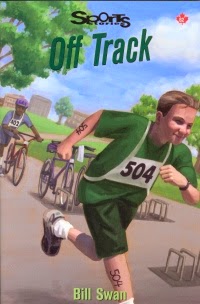
Off Track (Sports Stories, #62)
by Bill Swan
James Lorimer
106 pp.
Ages 8-13
2003

One Thing That's True
by Cheryl Foggo
Kids Can Press
128 pp.
Ages 10+
1997

On the Road Again! More Travels with My Family
by Marie-Louise Gay and David Homel
Groundwood Books
141 pp.
Ages 7-10
2008

Out of the Box
by Michelle Mulder
Orca Book Publishers
150 pp.
Ages 9+
2011
      

The Path of Names
by Ari Goelman
Arthur E. Levine/Scholastic
399 pp.
Ages 10-12
2013


Pete's Gold
by Luanne Armstrong
Ronsdale Press
188 pp.
Ages 10-14
2008

Sabotage
by Karen Autio
Sono Nis Press
293 pp.
Ages 10+
2013


Siena Summer
by Ann Chandler
Tradewind Books
142 pp.
Ages 12-14
2008

Sky Lake Summer
by Peggy Dymond Leavey
Napoleon Publishing
178 pp.
Ages 9-11
1999
Somebody Else’s Summer
by Jean Little
Viking Canada
180 pp.
Ages 9-12
2005

Summer Days, Starry Nights
by Vikki VanSickle
Scholastic Canada
221 pp.
Ages 11-14
2013

Summer in the City
by Marie-Louise Gay and David Hormel
Groundwood
150 pp.
Ages 8-10
2012

Summer of Discovery
by Eric Wilson
HarperTrophy Canada
96 pp.
Ages 9-12
1996


The Summer of Magic Quartet
by Andrea Spalding
Orca Book Publishers
Ages 9-12

The White Horse Talisman (Book One)
192 pp.
2003

Dance of the Stone (Book Two)
196 pp.
2003

Heart of the Hill (Book Three)
182 pp.
2005

Behind the Sorcerer's Cloak (Book Four)
227 pp.
2006

The Summer of Permanent Wants
by Jamieson Findlay
Doubleday Canada
241 pp.
Ages 10-14
2011

Summer of Suspense (Science Squad Adventure Series #1).
by Kristin Butcher
Whitecap Books
159 pp.
Ages 8-12
2002


The Summer of the Spotted Owl (A Dinah Galloway Mystery)
by Melanie Jackson
Orca Book Publishers
180 pp.
Ages 9-12
2005

Summer on the Run
by Nancy Belgue
Orca Book Publishers
139 pp.
Age 8-12
2005

A Taste of Perfection
by Laura Langston
Stoddart Kids (Fitzhenry & Whiteside)
214 pp.
Ages 10-13
2002

Travels with My Family
by Marie-Louise Gay     
Groundwood Books
119 pp.
Ages 7-10
2006

Trouble at Impact Lake (The Archaeolojesters, Book 3)
by Andreas Oertel
Lobster Press
185 pp.
Ages 9-12
2011

The Uncle Duncle Chronicles: Escape from Treasure Island
by Darren Krill
Lobster Press
335 pp.
Ages 14-16
2006

The Way to Schenectady
by Richard Scrimger
Illustrated by Linda Hendry
Tundra Books
163 pp.
Ages 9-13
1998

Wishing Star Summer
by Beryl Young
Raincoast Books
136 pp.
Ages 9-12
2001

Zach & Zoe: Bully and the Beagle
by Kristin Butcher
James Lorimer
117 pp.
Ages 7 -11
2009