Showing posts with label oceans. Show all posts

September 06, 2024

The Case of the Disappearing Castle (A Gumboot Kids Nature Mystery)

by Eric Hogan and Tara Hungerford 
Firefly Books
978-0-228104711
32 pp.
Ages 3-8
September 2024
 
As there were two Gumboot Kids Nature Mystery books released this month,  I won't repeat myself about the virtues of the series in teaching young children science concepts in a playful and mindful manner, as I did in yesterday's review of The Case of the Noisy Neighbor. But I would still like to share the story of The Case of the Disappearing Castle so that teachers and parents might consider the value of its scope.
From The Case of the Disappearing Castle by Eric Hogan and Tara Hungerford
This time, Daisy is building a sandcastle on the ocean's beach when Scout comes along. When they return from taking a walk, Daisy's beautiful sandcastle is gone. It's a new mystery for the nature sleuths and they take to Daisy's field notes to solve it. Daisy had, of course, made note of the sand and the ocean and even the moon that was visible during the day. With their clues and a trip to the knowledged-filled library, the two learn about tides.
From The Case of the Disappearing Castle by Eric Hogan and Tara Hungerford
Told with accuracy and simplicity, the two friends realize that the castle was swept away by the ocean tides. And with a mindful moment or two, Daisy and Scout take the time to breathe and appreciate the waves and the sounds of the ocean.
From The Case of the Disappearing Castle by Eric Hogan and Tara Hungerford
In addition to learning about tides and gravity, children will learn to make a sand clay handprint as their Nature Craft. As a support for early STEM learning, the Gumboot Kids Nature Mystery series does its job well but I am most impressed with the stories' focus on children being mindful in natural settings. Daisy and Scout always take a moment to breathe and relax as they contemplate what they've observed. With this multifaceted focus on science and self-awareness and relaxation, The Case of the Disappearing Castle reveals more than it disappears.
From The Case of the Disappearing Castle by Eric Hogan and Tara Hungerford

July 22, 2024

Have You Ever Heard a Whale Exhale?

Written by Caroline Woodward
Illustrated by Claire Victoria Watson
Pownal Street Press
32 pp.
Ages 3-7
June 2024
 
With humour and rhyme, Caroline Woodward, who wrote the text for beautifully illustrated picture books  A West Coast Summer (2018) and Singing Away the Dark (2017), again takes us to her beloved West Coast to really take in all the sensory experiences that life there offers. We will hear, and see, and smell, and taste, and learn and wonder at the unique ecosystem that is the ocean and its coast from those who live and enjoy it.
Have you ever heard a whale exhale
and SLAP the water with its tail?
Breathing in after breathing out,
heaving WHOOSH with a mighty spout!
Our visit to the West Coast has us listening to a whale as it breaches, breathing and tail slapping and spouting. Its behaviours may be typical but to any observer they are captivating and revealing. Such are the actions of the seals who spy-hop to see what's going on–one with a monocle suggests they are paying close attention–or of the oystercatcher, a shore bird, who can pry open molluscs.
From Have You Ever Heard a Whale Exhale? by Caroline Woodward, illus. by Claire Victoria Watson
And what of the smelly sea lions and the squawking seagulls, eagles and dolphins? All have their place and ways of living that intrigue and reveal life on and near the ocean. But Caroline Woodward also includes humans who are invited to think about what it means to be these animals and the ocean and what living on it and near it is truly like.
From Have You Ever Heard a Whale Exhale? by Caroline Woodward, illus. by Claire Victoria Watson
By phrasing her text as a series of questions, Caroline Woodward invites the reader to think about the ocean, its animals and their behaviours, including those of humans on the water, at a campfire or something else. Questions like "Have you ever felt the freezing north wind blow...?" or "Have you ever wondered why eagles love to fly..?" encourage young readers to look and smell and feel a little deeper about the coast and its inhabitants and not take for granted that which makes the West Coast their home.
From Have You Ever Heard a Whale Exhale? by Caroline Woodward, illus. by Claire Victoria Watson
Like Caroline Woodward, illustrator Claire Victoria Watson is a creator in British Columbia. Her visual art blends a variety of media including pen and ink, watercolours, and acrylic, with some digital design. Though the media she uses are plentiful, there is still a simplicity to her art that helps the readers focus on the smells–wavy lines emanating from the sea lions make this clear–or the sounds or the visuals of the scenes depicted. And though she follows Caroline Woodward's text to bring life to Have You Ever Heard a Whale Exhale?, Claire Victoria Watson also adds her touches of humour. There are the cormorants with the clothespins on their noses, the gray whales fine dining on herring roe, and a cowboy-hatted octopus square dancing or at least trying to. The message about the ocean and the diversity of its animals is never lost but it is told playfully as well as naturally.
From Have You Ever Heard a Whale Exhale? by Caroline Woodward, illus. by Claire Victoria Watson
Have You Ever Heard a Whale Exhale? may not cover every animal that lives in the ocean or near it, but it does cover an important message of appreciating our natural world so that we might protect it and all its inhabitants.

 🐋🦭🌊
 
Picture Book Giveaway 📫📘
 
Because I was fortunate to receive two copies of this lovely picture book,  I would love to share one with a reader of CanLit for LittleCanadians. (Only Canadian addresses are eligible to apply. Sorry.)
 
Leave a comment about the ocean (whether you've visited one or not) for me on X (formerly known as Twitter) by tagging me @HelenKubiw or on Bluesky at @hkubiw.bsky.social and using the hashtag #HaveYouEverHeardAWhaleExhale. I'll log all comments until Friday, July 26th, 2024 at 12 noon (EST) and then do a random draw. If you are selected, I will DM you to let you know and get details about where to send the book.
 
Good luck everyone! 
 
 🐋🦭🌊

March 18, 2023

World Water Day (March 22): A youngCanLit booklist


March 22 has been designed World Water Day. It's a day to celebrate water, from its role in our lives to our role in its sustainability and protection. From drinking water to rivers, and oceans to ponds, water plays a critical role in our lives and we in its. Some of these books celebrate our everyday relationships with water, from its life-sustaining role to our use of it for swimming, but some, especially those for older readers, emphasize the power of water during storms and floods. Others speak to the inequities of water availability and our role in water's conservation. Whether encouraging young children to recognize water as more than the stuff that comes out of the taps, or inspiring them to action, these picture books, novels and non-fiction books all remind us to consider the role water plays in our lives.
 
Anna Carries Water
Written by Olive Senior
Illustrated by Laura James
Tradewind Books 
40 pp.
Ages 3-6
2014
 
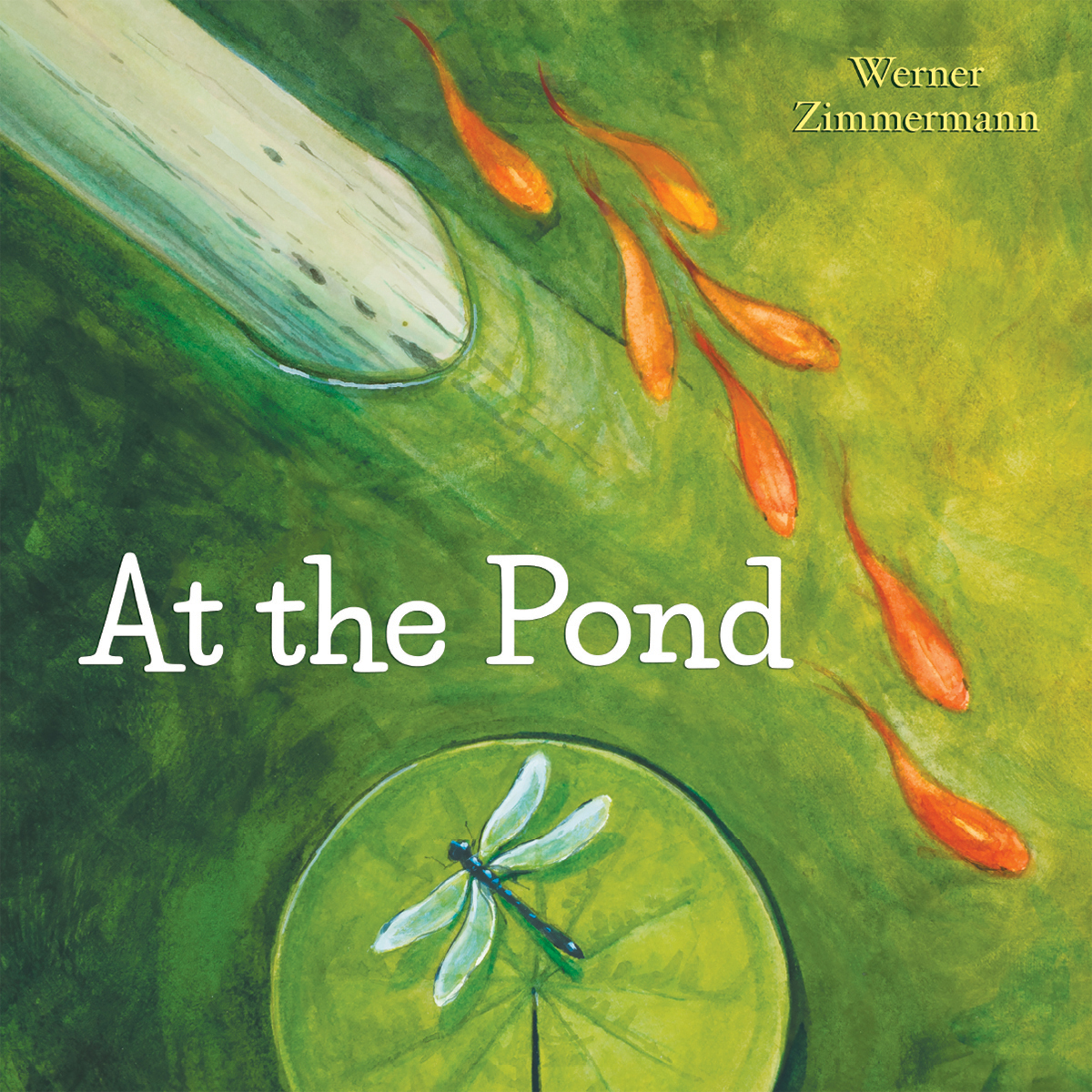
At the Pond
Written and illustrated by Werner Zimmermann
North Winds Press (Scholastic Canada)
32 pp.
Ages 2-5
2018
Reviewed here

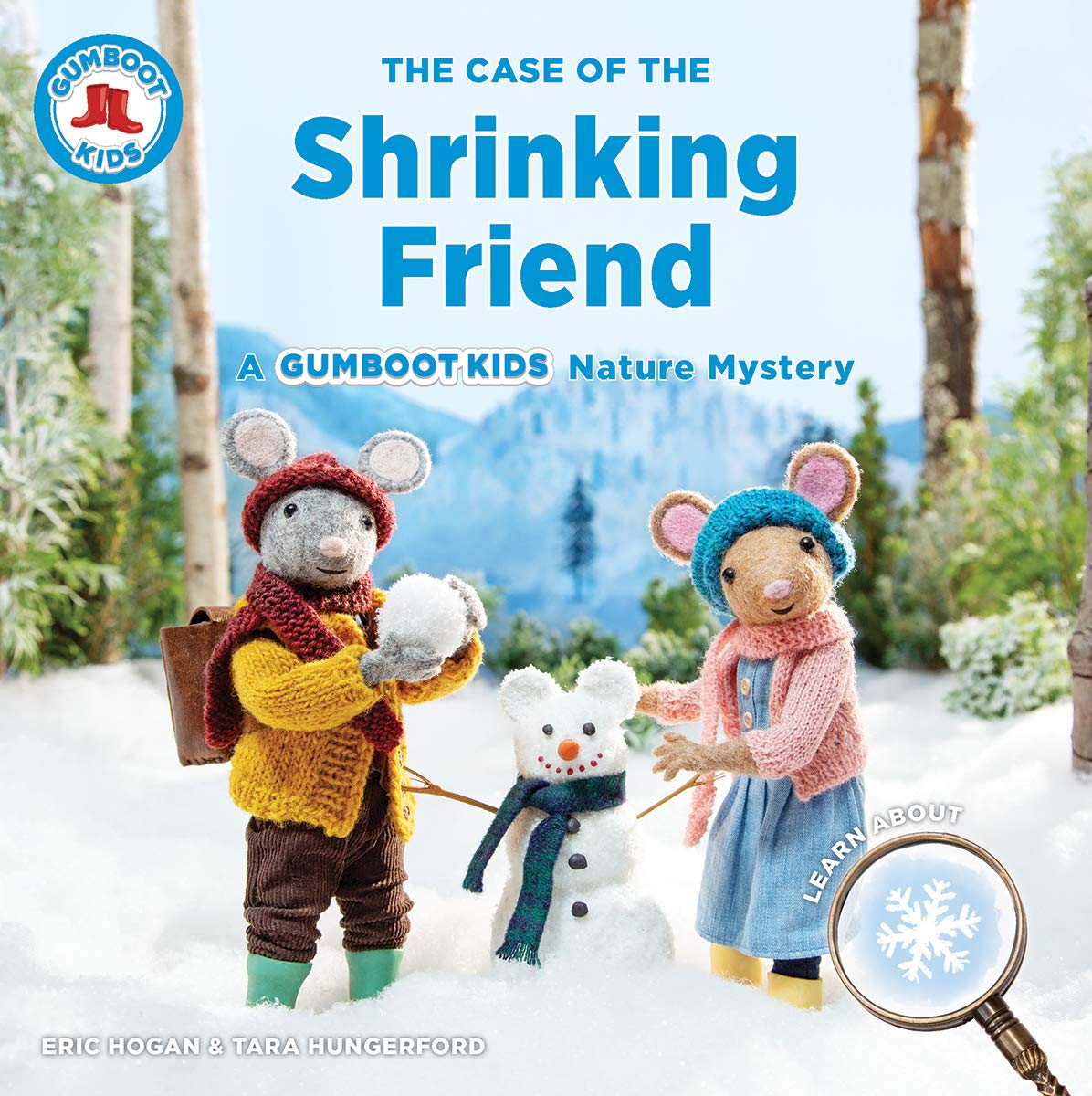
The Case of the Shrinking Friend
(A Gumboot Kids Nature Mystery)
Written by Eric Hogan and Tara Hungerford
Firefly Books
32 pp.
Ages 4-8
2021
 
City of Water
(ThinkCities)
Written by Andrea Curtis
Illustrated by Katy Dockrill
Groundwood Books
40 pp.
Ages 8-10
2021
 
Dive In! Exploring Our Connections with the Ocean
(Orca Footprint)
Written by Ann Eriksson
Orca Book Publishers
75 pp.
Ages 9-12
2018


Eco Warrior
(Submarine Outlaw)
Written by Philip Roy
Ronsdale Press
200 pp.
Ages 10+
2015
 
Every Last Drop: Bringing Clean Water Home
(Orca Footprint)
Written by Michelle Mulder 
Orca Book Publishers
48 pp.
Ages 8-12
2014
 
Fresh Air, Clean Water: Our Right to a Healthy Environment

Written by Megan Clendenan
Illustrated by Julie McLaughlin
Orca Book Publishers 
112 pp.
Ages 9-12
2022

A Good Trade
Written by Alma Fullerton
Illustrated by Karen Patkau
Pajama Press
32 pp.
Ages 5+
2012 

Mermaid Warrior Squad
Written by Karin Adams
Illustrated by Janine Carrington
James Lorimer & Co.
150 pp.
Ages 7-11
2017

My River: Cleaning Up the LaHave River

Written by Anne Laurel Carter
Formac
96 pp.
Ages 7-12
2018
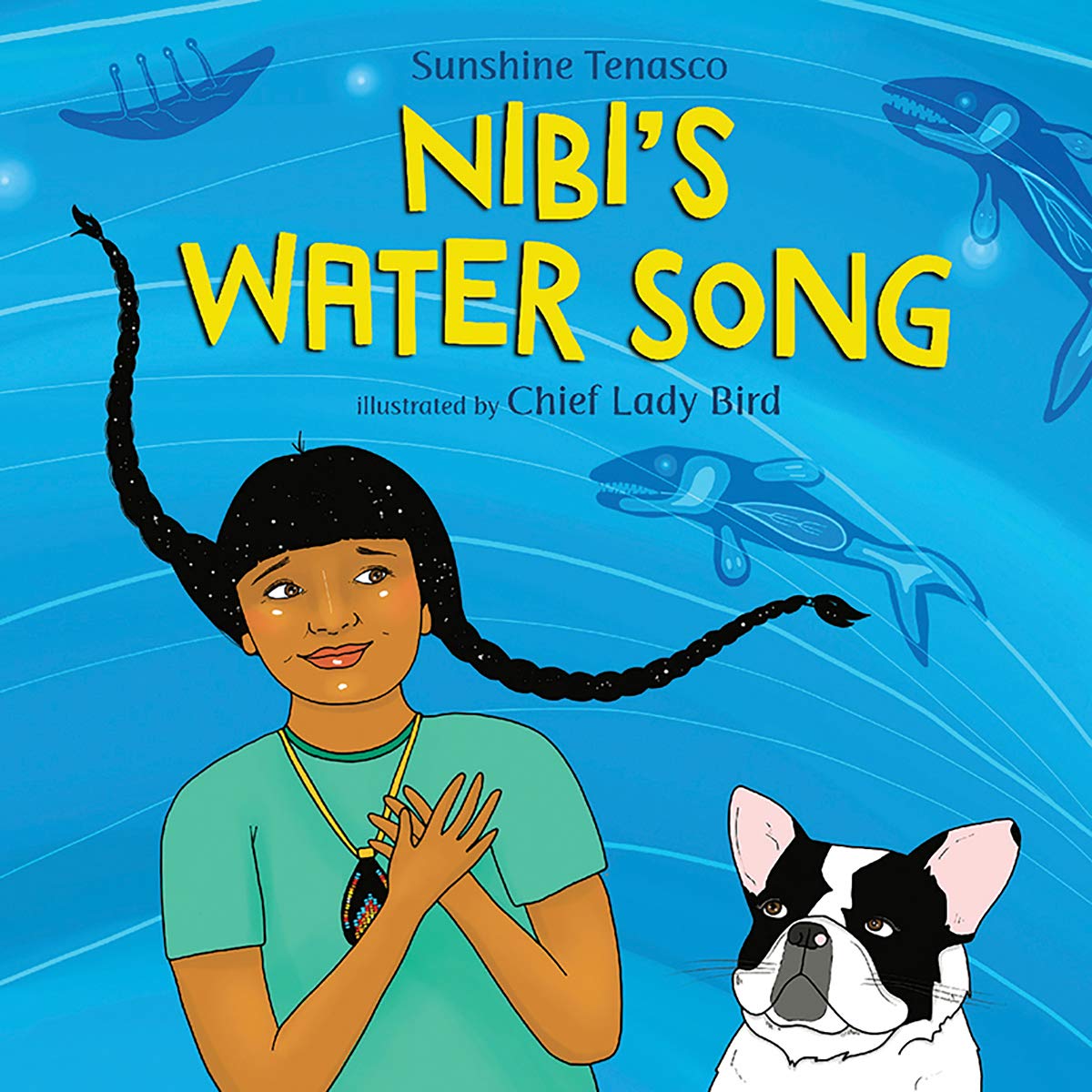
Nibi's Water Song
Written by Sunshine Tenasco
Illustrated by Chief Lady Bird
North Winds Press (Scholastic Canada)
32 pp.
Ages 4-8
2019
 
No More Plastic

Written and illustrated by Alma Fullerton
Pajama Press
32 pp.
Ages 4-7
2021
 
One Well: The Story of Water on Earth  
 
Rochelle Strauss
Illustrated by Rosemary Woods
Kids Can Press 
32 pp.
Ages 8-13
2007
 
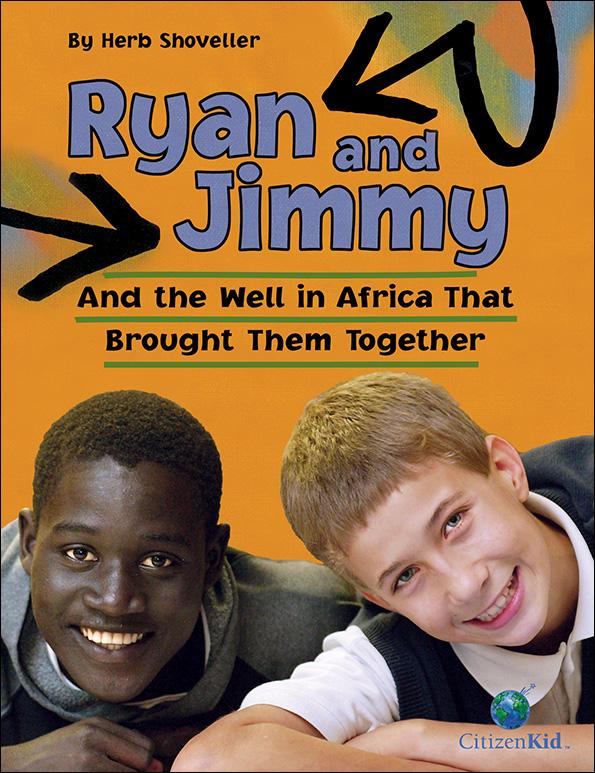
Ryan and Jimmy and the Well in Africa that Brought Them Together
(CitizenKid) 

Written by Herb Shoveller    
Kids Can Press
56 pp.
Ages 10-14
2006
 
Safe As Houses
Written by Eric Walters
Puffin Canada
176 pp.
Ages 10+
2007

Shark Lady: The True Story of How Eugenie Clark Became the Ocean's Most Fearless Scientist
Written by Jess Keating
Illustrated by Marta Álvarez Miguéns
Sourcebooks Jabberwocky
40 pp.
Ages 4+
2017
 
Swimming, Swimming
Written and illustrated by Gary Clement
Groundwood Books
48 pp.
Ages 4-7
April 2015 
 
Swimming with Seals
Written by Maggie de Vries
Illustrated by Janice Kun
Orca Book Publishers
32 pp.
Ages 4-8
2018 
 
A Terrible Tide: A Story of the Newfoundland Tsunami of 1929
Written by Suzanne Meade
Second Story Press
177 pp.
Ages 9-12 
2021
 
The Town That Drowned
Written  by Riel Nason
Goose Lane Editions
273 pp.
Ages 12+
2011
Treaty Words: For As Long As the Rivers Flow
Written by Aimée Craft
Illustrated by Luke Swinson
Annick Press
60 pp.
Ages 10+
2021
 
Upstream, Downstream: Exploring Watershed Connections
(Orca Footprint)

Written by Rowena Rae
Orca Book Publishers
48 pp.
Ages 9-12
2021
 
Walking for Water: How One Boy Stood Up for Gender Equality
(CitizenKid)
Written by Susan Hughes
Illustrated by Nicole Miles
Kids Can Press
32 pp.
Ages 7-10
2021

Water's Children: Celebrating the resource that unites us all
Written by Angèle Delaunois
Illustrated by Gérard Frischeteau
Translated by Erin Woods
Pajama Press
32 pp.
Ages 4-8
2017
 
The Water Walker
Written and illustrated by Joanne Robertson
Second Story Press
36 pp.
Ages 6-9
2017
 
Water Water
Written and illustrated by Jessica Bromley Bartram
Fitzhenry & Whiteside
32 pp.
Ages 5+
2021 
Reviewed here

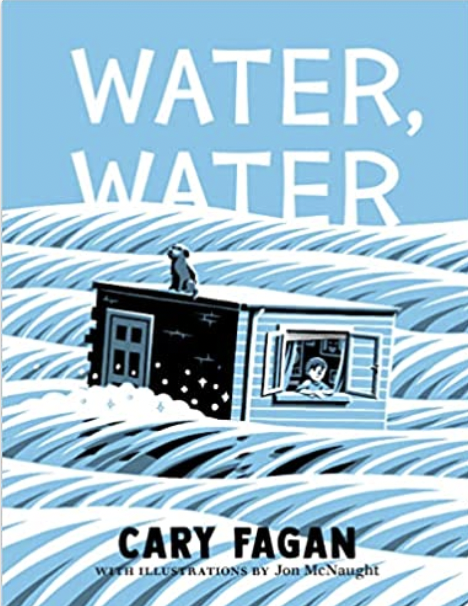
Water, Water

Written by Cary Fagan
Illustrated by Jon McNaught
Tundra Books
151 pp.
Ages 8-11
2022
 
Water Wow!: A Visual Exploration

Written by Paula Ayer and Antonia Banyard
Illustrated by Belle Wuthrich
Annick Presss
64 pp.
Ages 9-12
2016 

Wet
Written and illustrated by Carey Sookocheff
Henry Holt and Company
32 pp.
Ages 4-8
2017

Who Needs a Swamp?
(A Wetland Ecosystem)
Written and illustrated by Karen Patkau
Tundra
32 pp.
Ages 7-10
20212

Whoosh! A Watery World of Wonderful Creatures 
Written by Marilyn Baillie
Illustrated by Susan Mitchell 
Owlkids Books
32 pp.
Ages 3-7
2014

December 21, 2021

The Strangest Thing in the Sea (and Other Curious Creatures of the Deep)


Written by Rachel Poliquin
Illustrated by Byron Eggenschwiler
Kids Can Press
978-1-77138-918-1
32 pp.
Ages 7-10
October 2021

The dynamic duo of Rachel Poliquin and Byron Eggenschwiler who created Beastly Puzzles (2019) have returned with a second non-fiction picture book that doesn't just impart information. Rather, The Strangest Thing in the Sea makes young readers think about the creatures of the ocean, especially the more unusual ones, by looking at their attributes from a different perspective, before revealing who they are.

From the onset of the book, Rachel Poliquin intrigues with her mysterious intro.
The seas are filled with strangeness.

Dancing feathers. Goblin teeth. See-through heads.
Creatures that seem to be made from stardust.
Then the book becomes a series of double-spreads with fold-outs imploring the reader to guess what the creature is before revealing what it is. From the swimming head (ocean sunfish) and the spooky creature with attributes of a witch, a goblin and a ghost (goblin shark) to an alien-like fish with see-through head (barreleye fish), all manner of fish, crustaceans, invertebrates and more are revealed. And revealed is the key word here, because Byron Eggenschwiler first illustrates the creature based on its description before the young reader flips open the fold-out to reveal the true creature of the deep.
I look like a tiptoeing 
rock wearing a wig. 
I even have a bow in 
my hair, sort of.
 
Am I the strangest thing in the sea?
From The Strangest Thing in the Sea by Rachel Poliquin, illus. by Byron Eggenschwiler
For example, this description gives us a rather weird red-haired rock with sneakers and a hair bow before it is revealed to be a hairy frogfish. Speaking in first person, the frogfish explains what it looks like and what it can do, all supported by information boxes that clarify in scientific terms its morphology, habitat, food and behaviour. It's definitely informative but also inventively creative, letting the imagination play in its thinking about the creatures that exist deep in the ocean.
From The Strangest Thing in the Sea by Rachel Poliquin, illus. by Byron Eggenschwiler
By blending scientific information about a diverse assortment of creatures found in the sea with illustrations of strange underwater worlds, Rachel Poliquin and Byron Eggenschwiler bring intrigue with the curiosity and learning. Moreover, by basing the book in the titular question–"Am I the strangest thing in the sea?"–with answers directly from the creatures themselves which are only revealed by spreading open the foldout, author and illustrator make the reading of The Strangest Thing in the Sea an interactive experience.
From The Strangest Thing in the Sea by Rachel Poliquin, illus. by Byron Eggenschwiler
With a riddle of words and a flick of a page turn, The Strangest Thing in the Sea takes non-fiction reading from one of taking in the information to one of connection. Children will hopefully think about the clues as read and seen and try to piece together what each creature could be. They might not know the solution right off or at all but the revelation in text and art will be a valuable surprise and an educational moment. And Rachel Poliquin and Byron Eggenschwiler keep up that atmosphere of the unknown and the odd through their words and illustrations. Rachel Poliquin plays up images of aliens, fighter jets, fanged monsters and walking rainbows while Byron Eggenschwiler, with his dark, weird and wonderful art, emulates it through a mash-up of cut-paper, paint, coloured pencils and digital renderings. 
 
As curious and unpredictable as it is, The Strangest Thing in the Sea is still grounded in a non-fiction tradition of informing through scientific fact, glossary, infographic and more, though there are a few surprises. For example, there is an answer to the question about the strangest thing in the sea. It's not what might be expected but it is surely as unique and astonishing to those that live there as they are to us. Fittingly, it reminds us that perspective is perception and facts can be rendered to change that perspective. So, is it the strangest thing in the sea? You decide after your own reading of The Strangest Thing in the Sea (and Other Curious Creatures of the Deep).

June 16, 2020

Benjamin's Blue Feet: Q & A with author-illustrator Sue Macartney

Benjamin's Blue Feet
Written and illustrated by Sue Macartney
Pajama Press
978-1-77278-111-3
32 pp.
Ages 3-7
June 2020


Today is the release of the picture book Benjamin's Blue Feet, reviewed here on CanLit for LittleCanadians yesterday. To help launch Benjamin's Blue Feet,  I had the pleasure of interviewing author and illustrator, Sue Macartney.

Sue Macartney, author and illustrator of Benjamin's Blue Feet

HK:  What was the germ of an idea that started your writing of Benjamin’s Blue Feet? Was it finding a mirror on the beach, a trip to the Galapagos, reading a news story, or something else?

SM:  Working with young children as an art educator I’ve been struck by how early they can start comparing themselves negatively to others. This was one of the little sparks that got me writing Benjamin’s Blue Feet. I’m also passionate about nature and knew that I wanted it to be central in my storytelling.


HK:  There have been lots of books recently published that deal with the plastic problem in oceans and the colossal environmental problem of ocean garbage, but most of those books have been non-fiction. Why choose to tell your story as a picture book and not an illustrated book of non-fiction?

SM:  I was particularly drawn to the picture book format because of its amazing versatility. As a picture book author-illustrator I get to play with plots and visual subplots and can write about things like self-awareness and pollution for a very young audience. In picture book format, Benjamin’s Blue Feet is intended as a gentle and humorous exploration of these issues but can also be discussed in more depth depending on the child’s level of understanding.
         Incidentally, I started out in biology and I’m also really attracted to writing non-fiction books for children.


HK:  Though Benjamin’s Blue Feet  makes a comment about ocean garbage, it also addresses the issue of body image and wanting to look like someone else.  Why choose the blue-footed booby to focus on this concern?

SM:  The primary focus of the story is on self-awareness and I wanted my main character to be a uniquely memorable animal. The booby’s blue feet already fascinated me and became the starting point for my story. I was surprised to learn that the word “booby” is believed to come from the Spanish word “bobo”, which in English actually means “fool”. Something that might make any bird feel insecure!  So-named because the blue-footed booby’s large wings and feet can make its on-land movements seem awkward and comical. These same features also happen to be its indisputable strengths. Being able to champion an animal character that initially doubts its own attributes and then learns their intrinsic value felt like a very satisfying fit.


HK:  What do you believe are the best ways to tackle the issue of young children comparing themselves negatively to others?

SM:  Speaking only from personal observation, I think this is symptomatic of a much broader spectrum of behaviour surrounding issues of self-esteem and self-awareness. I would say that overarching societal attitudes have an enormous impact on how a child sees him/herself.  The attitude regarding healthy body image in Scandinavia, for example, is very different from that in North American.  I think primary education and more candid discussions about healthy body image with the very young are key components in tackling these issues.


HK:  Your double-spread of “Creatures of the Galapagos” depicts a variety of land and water animals from the Galapagos Islands. Do you have any personal experiences with these unique islands and would you consider another book to focus on this unusual ecosystem, particularly the endemism within?

SM:  When I was seven I got a copy of Helen Haywood’s The New Noah’s Ark of Rare Animals. Among all sorts of amazing creatures, I was introduced to Galapagos tortoises and land iguanas and learned about Charles Darwin for the first time. I think these fascinating islands have probably been floating somewhere in my brain ever since.  A real Galapagos adventure is high on my dream “bucket list” and a book examining the endemism within this remarkable ecosystem would be an amazing writing project…time to start saving for that trip!


HK:  The copyright page describes your art as  created with pen and ink and digital media.  Can you please explain the process of illustrating Benjamin’s Blue Feet?

SM:  The process for this book started with a particularly cute photo of a blue-footed booby. I really enjoy the deep dive into visual research and googled multiple images of blue-footed boobies and did lots of drawings until I found the right look for Benjamin.  The illustrations start as a series of small pencil thumbnails that I refine and enlarge for a finished pencil rendering. Next I add preliminary ink washes and details to the drawing. Then I scan the images into the computer using Photoshop for further work on colour depth and shadows. I like to incorporate paper and photo textures into my illustrations too.

•••••••••••••••••••

Many thanks to Sue Macartney
for sharing insights into the writing and illustrating of Benjamin's Blue Feet with this interview with CanLit for LittleCanadians


Thanks also go to Laura Bowman,
Sales and Marketing Manager at Pajama Press,
for arranging this interview.


June 15, 2020

Benjamin's Blue Feet

Written and illustrated by Sue Macartney
Pajama Press
978-1-77278-111-3
32 pp.
Ages 3-7
June 2020

Benjamin is a blue-footed booby who lives on an island in the Galapagos and loves searching for treasure. Unfortunately, with plenty of garbage clogging the oceans, it’s not surprising that much settles on Benjamin’s island. He finds a red “string-stretch-it” and an orange “hole-thing-um” and then he finds a “twink-um-doodle” a.k.a. a mirror. 
From Benjamin's Blue Feet by Sue Macartney
Unfortunately mirrors can be a curse for those of us who see in them what we don’t want to see. Benjamin sees that his beak is straight and very long, his wings are wide and bristly and his feet that are blue and floppy. And everything is different from those of his island mates.
From Benjamin's Blue Feet by Sue Macartney
Sadly Benjamin looks to his other found treasure to change his appearance, squeezing several onto his body to mask his “unsightly” body parts. 
From Benjamin's Blue Feet by Sue Macartney
Though a host of animals including sea lions, iguanas and finches laugh at his plastic enhancements, it is not until Benjamin recognizes the value in his big feet to his swimming, the beak to his fishing and his wings to his flying that this blue-footed booby appreciates all his attributes as they are.
From Benjamin's Blue Feet by Sue Macartney
Author-illustrator Sue Macartney tackles a lot of big issues in Benjamin's Blue Feet while maintaining a sweet story about a curious bird who finds novelty in junk. Like a child who finds gems among stones, Benjamin finds treasure in the garbage that washes up on shore. But it's that mirror that causes him to lose faith in himself when he finally sees what he looks like. By comparing himself to others, he deems himself less. And though he uses dangerous garbage to amend his appearance and can safely extricate himself from its inherent peril, this is what it takes for Benjamin to appreciate his morphological appearance as perfect for the functions of a blue-footed booby.

Sue Macartney’s art, created with pen and ink and digital media, always places the emphasis on Benjamin’s blue feet except when the garish garbage is around. His blue feet are vibrant and still harmonious with the earthiness of his environment, unlike the incongruous junk with its artificial and discordant colours.  Though Sue Macartney carries the reader to the unique environment of the Galapagos through the content of the landscape and its creatures (she also includes a double-spread of an assortment of "Creatures of the Galapagos"), I was especially mesmerized by her aquatic environment. She imbues her water with such hues of green and blues and textures of crinkly waves and whitecaps that the saltwater spray is almost palpable.
From Benjamin's Blue Feet by Sue Macartney
Benjamin may be surreal as a blue-footed booby who talks and can manipulate man-made junk, but the problem of ocean garbage and negative body image are not. They are dangerous challenges to our world and ourselves and teaching young children about them via an amiable bird reflects well on Sue Macartney and Benjamin both.

 • • • • • • • • • •

Tomorrow I interview author and illustrator of Benjamin's Blue Feet, Sue Macartney, about her new picture book.