Showing posts with label Gabrielle Grimard. Show all posts

August 21, 2026

The Sea We Call Home

Two gnome-like characters sit upon a baby whale which rests upon it smother on the cover of "The Sea We Call Home," by Dominique Demers, and illustrated by Gabrielle Grimard.
Written by Dominique Demers
Illustrated by Gabrielle Grimard 
Pajama Press
978-1-772783674
36 pp.
Ages 4-8
April 2026 
 
Little Gnouf and Mirabelle are two Gnoufs—I don't know what they are but they're adorable—who are excited about going to the sea for the first time. But when they arrive, they spot a baby whale caught in a fishing net and stranded on the shore. 
Two gnome-like characters swim in the water near a sperm whale just released from being trapped in fishing net.
Illustration by Gabrielle Grimard in The Sea We Call Home, written by Dominique Demers
Fortunately, Little Gnouf has been reading "The Big Book of the Sea," and the two friends know they need to return him to the water. And with his mother waiting off shore, they have a big job. With the help from a sand crab that cuts the ropes binding the baby whale, and some seagulls that help lift it to the sea, it is finally reunited with its mother. 
Two gnome-like characters swim among fish, starfish, seahorses, and giant turtle in the sea.
Illustration by Gabrielle Grimard in The Sea We Call Home, written by Dominique Demers
To add to their extraordinary day at sea, Little Gnouf and Mirabelle enjoy underwater sights that remind them that the sea is home to many amazing creatures.
 
While The Sea We Call Home is a picture book, Dominique Demers has used a story to share information about sperm whales, thereby installing it as a STEM resource too. Dominique Demers, whose books always include whimsical characters, first introduced her gnome-like Gnoufs in her French-language series Le petit Gnouf that includes titles Le Noël du petit Gnouf (2011) and La magie de l'hiver (2013). Now, with this English edition, new readers can learn about empathy, helping others, and kindness along with information about sperm whales from these charming characters.
A baby sperm whale rests above its mother in the sea on this information page about baby sperm whales and their mothers.
Illustration by Gabrielle Grimard in The Sea We Call Home, written by Dominique Demers
Just as the French-language series is illustrated by award-winning artist Gabrielle Grimard—see my reviews of Melanie Florence's Stolen Words (2017) and Bahram Rahman's The Library Bus (2020)—so too is The Sea We Call Home. And Gabrielle Grimard brings the whimsy of Dominique Demers's Gnoufs and the colour and wonder of the sea with her artwork. Typically using watercolour, gouache, oil, and pencil, Gabrielle Grimard integrates subtlety with boldness to amalgamate the two story components: an environmental tragedy of a stranded baby sperm whale, and the marvel that is the sea. Her art, through colour and shape, makes us feel sadness and joy, concern and relief.
 
For learning about the sperm whale, you can head to the non-fiction section of a library. But for discovering more about the sea and its elements, including the sperm whale, while appreciating how kindness and empathy can help support the natural world, then The Sea We Call Home should be your choice.

November 17, 2023

If You See a Bluebird

Written by Bahram Rahman
Illustrated by Gabrielle Grimard
Pajama Press
978-1-77278-284-4
32 pp.
Ages 5-8
October 2023
 
When families are displaced, whether from war, natural disasters, persecution, or something else, making a new home is not always easy, especially for children. And the good memories of that original home may make one long for what once was. But home is not just a place. It is the family too, as an Afghan boy learns from his grandmother and a visiting bluebird.
From If You See a Bluebird, written by Bahram Rahman, illustrated by Gabrielle Grimard
Ali and his parents and Nana had to flee Kabul, Afghanistan after war broke out. They travelled by foot, bus, and eventually escaped via plane, taking very little from their home. Now, in Canada, they live near an ocean, and Ali and Nana ride bikes to collect blackberries. But Ali misses Kabul, noting that the blackberries are not as deliciously sweet as the mulberries back home. Nana points out to him that though they are different they are not bad.
From If You See a Bluebird, written by Bahram Rahman, illustrated by Gabrielle Grimard
When they take a break from their berry-picking, they see a bluebird, and Nana reminds him that if you see a bluebird and make a wish before it flies away, your wish will come true. Her wish, for their family to be together and safe, had already come true. But his wish is for the fighting to stop in Kabul so that they might return home. It is then that Nana reminds him that home "is the love we have for each other."
 
It would be tough for a child to give up the familiar and the sweetness of his life in Kabul, with his mother playing her ghichak, his toys on a swing, gathering mulberries, and sitting on the tree's branch to look out over his neighbourhood. But,when he is reminded by his Nana of what home really is, he sees his new situation in a different light. There are now blackberries, his mother has a new instrument, spruce trees line the driveway, and they are safe. He finally appreciates this, shouting out to his parents when they arrive back that, "I am home!"

Bahram Rahman, himself a refugee from Afghanistan, gives us a different perspective of war and escape from war and adjustment to a new living situation in If You See a Bluebird. He has already shared stories in The Library Bus (2020) and A Sky-Blue Bench (2021) but in his latest picture book story, Bahram Rahman demonstrates that escape from a dangerous conflict does not always translate into a rejection of that insecurity. Because there has been loss, of place, people, objects and connection, the substitution of a new home in safety is not necessarily embraced immediately or wholeheartedly. So, Bahram Rahman shows us that a little boy can miss the wonderful things he remembers of his Afghan home but learn to lean towards something different and new that is nonetheless home.
From If You See a Bluebird, written by Bahram Rahman, illustrated by Gabrielle Grimard
Gabrielle Grimard, who also illustrated The Library Bus, has such a sensitive touch for making us feel Ali's hesitation at embracing the new place as home, holding such strong positive memories of Kabul. She gives us the bleakness of the danger when the soldiers come and the family flees but Gabrielle Grimard brings in the birghtness and colour when Ali and his family are safe and happy, whether in a Kabul without war or in Canada.

If You See a Bluebird offers the hope one needs when going through change and especially when challenged with hardships. It's a reminder that with love and family, all can be endured. And making a wish when a bluebird lingers might just help as well.

November 28, 2022

Cocoa Magic

Written by Sandra Bradley
Illustrated by Gabrielle Grimard
Pajama Press
978-1-77278-264-6
32 pp.
Ages 4-7
November 2022

There is much kindness in giving gifts in secret, in not expecting thanks or acknowledgement. It's giving for the sake of giving and not for reciprocity or reward. With the holiday season upon us, Sandra Bradley's book of Cocoa Magic, deliciously illustrated by Gabrielle Grimard, reminds us of the goodness of giving.
From Cocoa Magic by Sandra Bradley, illus. by Gabrielle Grimard
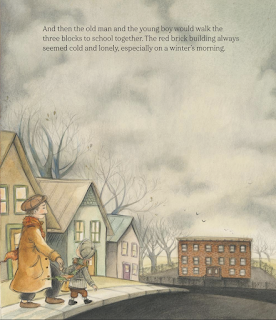
Daniel's Great Uncle Lewis is known as the Cocoa King of Charlottetown. From a very young child, Daniel learned the magic that came from a cocoa bean when vanilla, sugar and milk were added. By the time he is eight, he is spending an hour crafting chocolate into treasures at his uncle's shop before he is delivered to school.
From Cocoa Magic by Sandra Bradley, illus. by Gabrielle Grimard

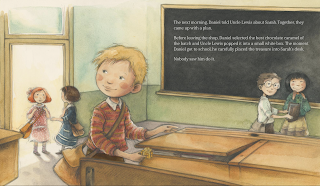
When a new girl, Sarah, arrives at school, looking a little hesitant, Daniel comes up with a plan to make her feel more welcome. The day after her arrival, he slips a gold box with a single chocolate caramel into her desk. Like magic, when she opens the little box, Sarah smiles for the first time. He repeats this for several days, with a luscious vanilla fudge, a coconut cream and a piece of nougat. And each day Sarah seems less scared and more cheerful.

Then Daniel notices Ben watching Sarah enjoy her treat and decides to surprise the boy too with some magic. Was it the chocolate that made Ben a little kinder that day? Everywhere Daniel looks, it seems someone needs to be touched by a little cocoa magic. With a tearful classmate and an injured boy and more, Daniel enlists his uncle's help in delivering little boxes to the whole class.
From Cocoa Magic by Sandra Bradley, illus. by Gabrielle Grimard
Then his uncle goes away to the World's Chocolatiers' Conference in Switzerland and must close the shop for five days. Daniel is devastated. He misses his uncle, working in the shop and he worries that without their secret chocolate gifts, the joy would disappear from his classmates. He's wrong. In fact, his classmates bring the magic to Daniel when he needs it.

What a wonderful story of empathy! Daniel understands Sarah's nervousness at attending a new school, one which he himself finds cold and lonely, and then sees what his other classmates are feeling. He sees their distresses and finds a way, his way, to make them feel better. Sandra Bradley, a clinical social worker and therapist, makes the story of Cocoa Magic one of kindness without expectation of reciprocity. She shows the positive nature of giving both on the recipient and the giver. It is only when children feel safe and secure that they can appreciate the emotional needs of others and Daniel, embraced in the warmth of his uncle and his chocolate shop, has the capacity for that empathy. But by showing empathy for his classmates, Daniel gives them the capacity to feel for others. That is magic in itself.
From endpapers of Cocoa Magic by Sandra Bradley, illus. by Gabrielle Grimard
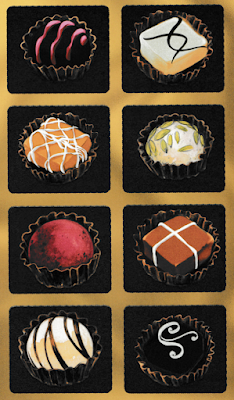
Gabrielle Grimard's illustrations, created with watercolour, gouache, coloured pencil and digital media, are filled with the sweetness of love, kindness, generosity and confections. (The endpapers are filled with an assortment of confectionary delectables too!) Though Gabrielle Grimard transports readers to the 1920s when boys wore knickerbockers, school desks had lift-tops and inkwell holes, and a special treat didn't need to be expensive or extravagant, she makes Sandra Bradley's story contemporary enough that young readers will see themselves in the diverse students who feel fear, sadness, pain and especially joy. 

There may be magic in the cocoa and the sugar but most of it comes from the empathy demonstrated through the gift giving. Perhaps at this time of year, that's the important message to cherish from Cocoa Magic.

January 04, 2022

A Long Way Home

Written by Jean Little
Illustrated by Gabrielle Grimard
North Winds Press (Scholastic Canada)
978-1-4431-7091-8
32 pp.
All ages
February 2022
 
No matter how different they are, Maya and Jane become fast friends after Maya moves into the apartment building next to Jane's house. When they learn about animals like whales and polar bears under threat, the two girls vow to do something together.
From A Long Way Home by Jean Little, illus. by Gabrielle Grimard
Jane's grandfather suggests they start close to home and do what they can for the monarch butterflies.
"...wishes don't come true without help..."
Learning of the monarchs' need for milkweed plants, the girls decide to start some plants in Jane's grandfather's community garden. Like good gardeners, they choose their site carefully, plant the seeds and tend to them. The waiting is tough but the girls fill their summer days with cycling and swimming until one day "A bright orange-and-black butterfly was fluttering flower to flower." With new watching and waiting, the girls see an egg become a caterpillar and then a chrysalis.
From A Long Way Home by Jean Little, illus. by Gabrielle Grimard
Though they are anxious for the butterfly to emerge from the chrysalis and Jane considers helping it get out, they have learned that it will appear when it is strong enough to begin its long journey. It is then that Maya reveals that she knows about long journeys. And when the butterfly does emerge and the girls send it off with hearty goodbyes, anticipating its arduous migration to Mexico, Maya bravely discloses that she and her family traveled a long way over many years to escape hardships that threatened their lives. Her own experiences give them hope that their butterflies and others, including those they might save the following year, will arrive safely to their destination just as Maya did.
From A Long Way Home by Jean Little, illus. by Gabrielle Grimard
For many lovers of Canadian children's books, Jean Little is a legend. When she passed in 2020, there was a great sense of loss for her relentless spirit and for any new books, resplendent in their compassion and heart-warming plots. With A Long Way Home, we get Jean Little back for a little while in this story that parallels the plight of the monarch butterfly with that of an immigrant family. While A Long Way Home will be a useful book for teaching STEM with its emphasis on the butterfly's life cycle, it goes beyond the science and evokes compassion for those who must escape troubling worlds and find refuge elsewhere and far away, often after much waiting. But in her inimitable style, Jean Little juxtaposes the story of the butterfly and of Maya's family without being too obvious or deliberate, letting young readers find the connection themselves, so they might understand what both have had to endure.

Gabrielle Grimard's artwork, which has graced many picture books including The Library Bus (2020), Stolen Words (2017), and  Not My Girl (2014), uses a mix of watercolours, gouache and oil to create warm and inviting scenes of children learning, playing and gardening. Her children are very real, with their fly-away hair, joyful camaraderie, and empathetic demeanours, and their efforts to help the monarch butterfly are just as honest. 

A Long Way Home is a triumphant story of a friendship born of acceptance for differences, of a compulsion to learn and help a threatened species, and of journeys taken. Moreover, with A Long Way Home, we are graced once more with a story from Jean Little whose vision is given colour and shape by Gabrielle Grimard. How wonderful for all young readers.

December 29, 2020

The Library Bus

Written by Bahram Rahman
Illustrated by Gabrielle Grimard
Pajama Press
978-1-77278-101-4
32 pp.
Ages 5-8
November, 2020

While education should be a right for all everywhere, sometimes someone has to step up to make sure those without access because of gender inequality or location or some other restriction get the schooling they should be receiving. That someone in The Library Bus is Pari's mother.

From The Library Bus by Bahram Rahman, illus. by Gabrielle Grimard
Little Pari, who will not be starting school until the following year, is going to help her mother on the library bus she takes around to villages and refugee camps without access to schools. Pari knows this is a privilege and takes her role seriously, repeating to herself that she should, "Arrange the books...clean up...be nice to the other girls." For the girls who wait patiently for the bus's arrival and cherish their time with the books and their teacher, the library bus is their school.
From The Library Bus by Bahram Rahman, illus. by Gabrielle Grimard

They exchange their library books for new ones and sit down with Pari's mother who teaches them the alphabet and their numbers in English. For the children of the refugee camps, they provide school supplies like notebooks and pencils. Pari is impressed by how much the girls know and want to learn. As she helps, she listens and learns too, ably reading the important acronyms of WFP and UNHCR by the time they leave the camp.

From The Library Bus by Bahram Rahman, illus. by Gabrielle Grimard
When Pari asks her mother where she learned the alphabet, she is told how Grandpa taught her mother in the basement as girls were prohibited from attending school. For that reason, she insists that Pari study well when she gets to school so that she might experience the freedom that learning gives.

The encouragement of learning is always powerful but by embodying it in Afghanistan, a country impacted by war and restrictive policies, Bahram Rahman's first children's book tells it gently but with influence. Many Canadian children will not appreciate the privilege that attending school and receiving an education entails. It is the norm for them. But for Bahram Rahman's characters, education is everything, and the generosity and impact of the library bus and its in-house teacher are significant.
From The Library Bus by Bahram Rahman, illus. by Gabrielle Grimard
Illustrated by award-winning artist Gabrielle Grimard with watercolour and digital media, Bahram Rahman's gentle strength of message is emulated. The softness of the watercolour and the openness of Gabrielle Grimard's character's faces invite the readers in to the story and the bus, allowing them to travel with Pari and her Mama and join the girls to be part of something bigger and meaningful.

While Bahram Rahman claims to have taken liberties to rearrange the details in the telling of the story of The Library Bus, based on his own experiences and meeting others in Afghanistan, I see only the truth about the hope gifted to the girls with the books and teaching that came with the bus's weekly visits. Now, by Bahram Rahman and Gabrielle Grimard's hands, the travels of The Library Bus will lead to even greater learning.

December 02, 2019

Nutcracker Night

Written by Mireille Messier
Illustrated by Gabrielle Grimard
Pajama Press
978-1-77278-091-8
40 pp.
Ages 3-7
September 2019

At this time of year, many families will be planning their annual excursion to a performance of the Nutcracker, a ballet scored by Tchaikovsky. Whether your child is fortunate enough to attend or perhaps even perform in it or not, Mireille Messier and Gabrielle Grimard's Nutcracker Night will bring the magic of that performance to the page and hence to every young reader.
From Nutcracker Night by Mireille Messier, illus. by Gabrielle Grimard
A young girl delights in being taken to her first performance of the Nutcracker. From the Swoosh! of the cars and the Beep! Beep! of their taxi, their journey to the ballet begins with a subtle sensory burst. Her dress goes Swish! Swish!, her dad's shoes go Clip! Clop! Clip! Clop! and the two enter the  theatre, and get to their seats while the orchestra tunes up with a Pickle-dee! Zing! Boom! Ding!

Before the ballet has even started, the reader will recognize that Mireille Messier has made this event into an onomatopoeic exploration. The sounds of the audience and the orchestra are only the beginning because soon enough Marie (or Clara) is opening her nutcracker gift on stage and her brother Fritz is breaking it. When the clock strikes midnight with a Bong! or seven, Marie envisions the Christmas tree as colossal, and the mice and the soldiers begin their battle. After a welcome intermission, the Sugar Plum Fairy dances en pointe with a Takka-takka-takka, and the flamenco dancers and Mother Ginger and the polichinelles perform, before an ending that has the crowd applauding Bravo! Brava!
From Nutcracker Night by Mireille Messier, illus. by Gabrielle Grimard
Though the story of the Nutcracker, that of a young girl perhaps dreaming of a nutcracker come to life, is the basis for Mireille Messier's picture book, Nutcracker Night goes beyond a retelling of the ballet's premise. Instead it expands the many audible experiences of the performance and encompasses the whole experience from beginning to end of a special father-daughter occasion. There is the travel to the theatre, the audience's reactions and behaviour, an intermission of food, play and chatter, and an affectionate thank-you from a little girl to her father. And throughout, Mireille Messier invites a read-aloud with sound and expression.

Gabrielle Grimard's artwork, created with watercolour, gouache, oil, coloured pencil and digital media, evokes the magic and the affection of the experience for all participants. From the wide-eyed faces of the children to the action of the ballet, Gabrielle Grimard takes the reader into the theatre to watch, to hear and to appreciate the Christmas ballet.

Head to the ballet with Mireille Messier and Gabrielle Grimard's Nutcracker Night for a different kind of audiovisual experience and one that is perfect for the holidays. Like the nutcracker itself, Nutcracker Night opens up a tale for the season.
From Nutcracker Night by Mireille Messier, illus. by Gabrielle Grimard

September 14, 2017

Stolen Words

Written by Melanie Florence
Illustrated by Gabrielle Grimard
Second Story Press
978-1-77260-037-7
24 pp.
Ages 6-9
September 2017

A young girl's simple request of her grandfather to learn how to say a word in Cree reveals much about the system that stole his language from him and so many Aboriginal children but more about the affection and courage of those who have the grit to ensure those words do not remain silent or withheld forever.
From Stolen Words 
by Melanie Florence 
illus. by Gabrielle Grimard
It's evident from the words and actions of the seven-year-old girl and her grandfather that their relationship is a cherished one.  She is exuberant from her day at school, pleased with what she's made and learned, and comforted with his attention as he escorts her home, holding her hand and carrying her backpack.  But when she asks, "How do you say grandfather in Cree?" his response is a lesson in history and one muted with hurt and needless shame.  As his granddaughter continues to ask "Where did they take them?", "Who took you away, Grandpa?" and "Where did they take you, Grandpa?", her grandfather tells the history, heartbreaking in the capture of the Aboriginal children's words like a raven in the cage of Gabrielle Grimard's grim illustrations of the residential school.
From Stolen Words
 by Melanie Florence
 illus. by Gabrielle Grimard
But his hurt and lack of words does not deter the child's curiosity or compassion, and she brings home a worn book titled "Introduction to Cree" so that together they might speak the language of home and release the formerly imprisoned language.

Nôsisim, he whispered.
Granddaughter.
The word felt familiar in his mouth.
It felt like his home. His mother.

As the grandfather reconnects with his past and makes a new connection with his young granddaughter, I wept for his loss, his family, his struggle and his courage to take steps forward. It's an emotionally charged series of interactions and memories that are pure Melanie Florence.  They will astound readers and sadden them, while encouraging healing and learning without shame or anger.  Her words, thankfully not stolen, make for leaps forward for those whose language was pilfered from them as vulnerable children. Gabrielle Grimard's illustrations are similarly strong and soft, taking the reader into the intimate relationship between a grandfather harbouring hurts and a child wanting to help.

Melanie Florence took on the gut-wrenching issue of missing Indigenous women in her award-winning picture book Missing Nimâmâ which was divinely illustrated by François Thisdale (Clockwise Press, 2015) and similarly addresses the emotional trauma of the residential schools in stifling language.  While the generations after the residential schools are still affected by their inconceivable legacy, the healing will come through them.  The grandfather's words may have been stolen but his loving granddaughter is the means by which they will be restored.
From Stolen Words 
by Melanie Florence 
illus. by Gabrielle Grimard

July 10, 2017

Fatima and the Clementine Thieves

Written by Mireille Messier
Illustrated by Gabrielle Grimard
Red Deer Press
978-0-88995-529-5
32 pp.
Ages 5-8
July 2017

In 2012, Fatima et les voleurs de clémentines was published by Éditions de la Bagnole and it promptly won the 2012 Prix jeunesse de l’Alliance française and was nominated for the 2013 Forest of Reading Tamarac Express award.  Now, five years later, English readers can share in this heartwarming story based on an African proverb that says “When spider webs unite, they can stop elephants.”  It’s a story of a defeat by the small and insignificant of the large and strong and ominous.  It’s a Moroccan spider vs elephant tale and the winners are Fatima and her grandfather and their clementine orchard.
From Fatima and the Clementine Thieves 
by Mireille Messier 
illus. by Gabrielle Grimard
Fatima helps her grandfather in their clementine orchard.  They are looking forward to having enough to take to market so that they can buy fish and pistachios and olives and perhaps a treat of almond paste.  And with her friends, the spiders, keeping the bugs from the trees–she treats them to clementines peeled into flower shapes as a thank-you– Fatima's anticipation is great.

From Fatima and the Clementine Thieves 
by Mireille Messier 
illus. by Gabrielle Grimard 
But the young girl and her grandfather awake to broken branches, trampled fruit and even uprooted trees. A nighttime vigil reveals a mother and two baby elephants are the culprits, surprising Fatima's grandfather who declares elephants have not been seen in the area for centuries.  Though they try to scare the animals off with noise and water and even throwing pistachios at them, the elephants continue to do their damage.

Grandfather in his traditional djellaba and turban and belgha slippers seeks out the advice of others in the market, finally relenting to the purchase of a rifle.  But Fatima is sure there has to be a better way to save their clementines.

Fatima enlists the help of her seemingly insignificant spiders–she actually asks them and they agree–to spin a thick wall of spider webs, thwarting the elephants whose way is blocked.
"You have saved the orchard!"
"AND we saved the elephants," adds Fatima, proudly.
"You may be small, but what you have done is very big."
(pg. 29)
The message in Mireille Messier's text is very clear: even the smallest, most insignificant creature can achieve astounding success when united in purpose and working with determination.  By setting the story in a land of clementines and elephants, she has honoured a very African saying and acknowledged the moral without leaving the continent from which it arises.  Fatima and the Clementine Thieves celebrates a culture of which many Canadian children will be unfamiliar but about which they will appreciate learning, especially since they are undoubtedly familiar with daunting tasks.  Learning a new math skill or studying for a test or dealing with family dramas may not be the same as an elephant destroying your clementine orchard but they are all predicaments or stresses one must handle.  As such, children will be able to empathize with the plight of Gabrielle Grimard's Fatima and Grandfather who appear kindly and sympathetic because of her soft artwork that always emotes beyond the page. (Previous reviews of her artwork include When I Was EightNot My Girl, and The Fabulous World of Mr. Fred.)

Fatima and the Clementine Thieves is a feel-good story about problem-solving and triumph and purposeful work. Thank you to Mireille Messier and Gabrielle Grimard for giving all readers a wonderful back story for every clementine we might enjoy in future and for a new illustrated lesson on achieving success with little but determination and a united front.
From Fatima and the Clementine Thieves 
by Mireille Messier 
illus. by Gabrielle Grimard
🍊🍊🍊🍊🍊🍊🍊🍊

Author Mireille Messier launches Fatima and the Clementine Thieves this Saturday in Toronto.  This free event will take place at the Indigo at Yonge and Eglinton. Details are listed here.

July 08, 2017

Fatima and the Clementine Thieves: Book launch (Toronto, ON)

Join author Mireille Messier

for the launch of her newest English-language picture book

the English translation of
Fatima et les voleurs de clémentines
Texte de Mireille Messier
Illustrations de Gabrielle Grimard
Éditions de la Bagnole
2012

Fatima and the Clementine Thieves
Written by Mireille Messier
Illustrated by Gabrielle Grimard
Red Deer Press
978-0-88995-529-5
32 pp.
Ages 5-8
Release July 2017

on

July 15, 2017

11 am - 2 pm

at

Indigo Yonge Eglinton
2300 Yonge St.
Toronto, ON

From Red Deer Press website:
One morning, Fatima and her grandfather wake up to find their clementine orchard savagely ransacked. 
Who could be doing this? 
How can the culprits be stopped?

A little girl faces an ENORMOUS problem. Luckily, Fatima has powerful friends: the spiders!

Retrieved from https://www.reddeerpress.com/Detail/0889955298 on July 7, 2017.

🍊🍊🍊🍊🍊🍊

I will post  my review of this lovely picture book before the launch next week.  Look for it here on CanLit for LittleCanadians.

July 24, 2015

YoungCanLit Who's Who: Illustrators A-G, List II


Here is the first of three new posts of youngCanLit illustrators whom I'd like to celebrate and promote.


Andrea Torrey Balsara


Kate Beaton


Josée Bisaillon


Mike Boldt


Claudia Dávila


Geneviève Després


Julie Flett


Alma Fullerton


Celia Godkin


Elise Gravel


Gabrielle Grimard


Per-Henrik Gürth
____________________________________________

Look for the following lists in the next couple of days:

YoungCanLit Who's Who: Illustrators H-Q, List II
  • Kellen Hatanka
  • Jacqueline Hudon-Verrelli
  • Matt James
  • Brooke Kerrigan
  • Dayal Kaur Khalsa
  • Jon Klassen
  • Julie Kraulis
  • Eliska Liska
  • Mike Lowery
  • J. Lum
  • Elly Mackay
  • Patsy MacKinnon
  • Isabelle Malenfant
  • Cyndi Marko
  • Luc Melanson
  • Nicholas Oldland
  • Paola Opal
  • Pierre Pratt
YoungCanLit Who's Who: Illustrators R-Z, List II
  • Erica Salcedo
  • Roslyn Schwartz
  • Sampar
  • Alan Silverberg
  • Sleepless Kao
  • Lisa Smith
  • Sydney Smith
  • Caroline Stellings
  • Todd Stewart
  • Jillian Tamaki
  • Christine Tripp
  • Anne Villeneuve
  • Frank Viva
  • Ange Zhang
  • Amei Zhao

November 18, 2014

The Fabulous World of Mr. Fred

by Lili Chartrand
Illustrated by Gabrielle Grimard
Fitzhenry & Whiteside
978-1-55455-346-4
32 pp.
Ages 5+
September 2014

The award-winning Monde fabuleux de Monsieur Fred (Dominique et Compagnie, 2012) has finally been translated into English, introducing new readers to the beautifully illustrated story of friendship, imagination and stories.

Pierrot is a daydreamer, a young boy who loves stories and using his imagination.  Coming across an older man sitting on a park bench and reading an invisible book, the boy introduces himself and joins the man, Mr. Fred.  Instead of treating the man as crazy, Pierrot encourages Mr. Fred to share the stories in his book.  Invited back, Pierrot enjoys Mr. Fred's magical stories, delighting in their mesmeric quality and the joy the story-teller derives.  Finally Mr. Fred feels comfortable to disclose his own story, revealing a tragedy that leads him to meeting Pierrot.  And, though Pierrot tries to excite other children about Mr. Fred and his book, they laugh at him.  That is, all but one little girl, Lila.  Sadly Lila never meets Mr. Fred.  But his friendship and stories become the catalyst for Pierrot and Lila's friendship and future.

Lili Chartrand's lovely story about the healing nature of friendship and the gift of imagination is enhanced with Gabrielle Grimard's expressive illustrations. Her use of watercolours gives the images an ethereal fluidity, though the intense gouache and definition with pencil help ground the story in bright reality.  The Fabulous World of Mr. Fred easily melds intensity and lightness of text and pictures to share a story of similar depth and tenderness.