Showing posts with label translation. Show all posts

December 08, 2025

The First Christmas Tree: An Innu Tale

Written by Ovila Fontaine
Illustrated by Charlotte Parent
Translated by Ann Marie Boulanger 
Orca Book Publishers 
978-1-4598-4180-2 
56 pp.
Ages 6–8
October 2025 
 
Many of us are getting into the holiday spirit and putting up Christmas trees or thinking about getting one. Perhaps that's why I've put off reviewing this lovely new picture book until there's snow on the ground and a nip in the air. 
From The First Christmas Tree: An Innu Tale, story by Ovila Fontaine, illus. by Charlotte Parent
Ovila Fontaine, an Innu Elder from the First Nation of Uashat mak Mani-Utenam on the northern shore of the St. Lawrence River, won the 2024 Governor General award for his French-language edition, Le premier arbre de Noël. That lovely book has now been translated into English and more young people will have the opportunity to read a story of the Great Manitou choosing the fir tree to bring brightness during the cold, harsh winter.

The Great Manitou begins his search for the perfect tree. For each of the trees he approaches, he recognizes positive attributes, knowing how each tree is used by the Innu. There's the birch tree with its flexibility and strength, useful for snowshoes, bowls, harpoons, canoes, and drums. There's the larch (tamarack) tree with its hard wood and usefulness for bows and sleds, and more medicine made from its bark. The Great Manitou also visits the black spruce whose mossy branches provide firewood for the Innu and food for caribou. The only tree he disregards is the fir tree.
From The First Christmas Tree: An Innu Tale, story by Ovila Fontaine, illus. by Charlotte Parent
When the Great Manitou approaches the birch tree, the larch tree, and the black spruce, he asks them if they'd like to be the first Christmas tree and bring joy to Innu children. Each tree declines, only concerned for how it might affect them. Finally, with the fir being the only tree left to ask, the first Christmas tree is found, and the other trees are chastened by the Great Manitou and given attributes that characterize them to this day.
From The First Christmas Tree: An Innu Tale, story by Ovila Fontaine, illus. by Charlotte Parent
Though many of us will recognize the fir as the most popular Christmas tree, Ovila Fontaine's tale shows us that that recognition was hard-won. Like many things in life in which your potential is not seen or disregarded, timing can be everything. For the fir tree, it was being in the right place at the right time, and being open to an opportunity, something the other trees were too egotistical to embrace. More importantly, each tree that declined the honour of being the first Christmas had consequences thrust upon them by the Great Manitou, censured for their lack of generosity and humility. And though most of the trees showed pride and minimal grace, Montreal illustrator Charlotte Parent makes all the forest and its animals glorious. Using gouache, she creates these expansive scenes of woodland life, flora and fauna. The dark and cold of winter is expertly achieved with lavender blue and variations thereof and with brushstrokes for mounds of snow. The infrequent but bold pink of the animals—described in an illustrated glossary of English and Innu-aimum words—and persons indicates the rich presence of the spirit of the Great Manitou in the natural world and its omnipresence.
From The First Christmas Tree: An Innu Tale, story by Ovila Fontaine, illus. by Charlotte Parent
An enchanting book for the holiday season, The First Christmas Tree is a different kind of origin story. Not only do we learn the Innu tale of how the fir became known as a Christmas tree, but we also learn why the birch loses its leaves in the fall, why the larch sheds its needles, and why the black spruce never grows tall or wide and has prickly needles. With its quietly dazzling artwork, it's a picture book to be appreciated beyond the Christmas season.
 
• • • • • • • 
 
Le premier arbre de Noël
Ecrit par Ovila Fontaine
Illustré par Charlotte Parent
La Pastèque  
978-2-897771492 
2023 


November 10, 2025

All of Us

Written and illustrated by Manon Gauthier
Translated by Michel Savard
Running the Goat, Books & Broadsides
978-1-98802296
32 pp.
Ages 3–8
October 2025 
  
The message of All of Us is a simple one, but sadly one that we need to reinforce continually. It's one of inclusivity and diversity and it's basic science. We're all the same and yet we're all different. 
From All of Us, written and illustrated by Manon Gauthier
Manon Gauthier, who has wowed this reviewer with the books she's illustrated such as Middle Bear (Susan Isern, 2017), Good Morning, Grumple (Victoria Allenby, 2017), and Elliot (Julie Pearson, 2016), has combined her talents by authoring as well as illustrating All of Us. With simplicity of text and complexity of art, Manon Gauthier develops the idea of how all animals, including humans, are different in their abilities or lack thereof, in their morphologies, in their physiologies, and more. There's "the fish who blows bubbles as it breathes,"(p. 12) and "the quiet and solitary moose," (p. 22) as well as "the tall bharal who has no fear of heights." (p. 7) There's the dancing sifaka, the cold-blooded reptiles and amphibians, and the savannah animals that can tolerate the heat. All differ in what they like, what they look like, what they can do, and more. But, essentially, we all are made up of cells, and Manon Gauthier conveys this in her words and her illustrations, using the same irregularly-shaped oval as the basis for all animals.
From All of Us, written and illustrated by Manon Gauthier
It's not until her last illustration, a double-page spread of a cell, that the reader will recognize Manon Gauthier's cleverness at using the cell's shape as the face or body or abdomen of all the 
mammals, birds, reptiles, amphibians, invertebrates and fish within All of Us. All of us really do have something in common, even with all the differences. And by using her defining cut-paper collage, in earthy tones of browns, greys, and creams with occasional touches of red, blue, green, and orange, Manon Gauthier gives a textured dimensionality and hearty organic feel to her story.
From All of Us, written and illustrated by Manon Gauthier
Whether you're a teacher who'd love to introduce a lesson on the diversity of living things with a captivating picture book, or open a lesson on animal cells, or even launch discussions about inclusivity and connection, All of Us will work beautifully. (Manon Gauthier even includes an activity in which readers can create their own animal with the same template she used throughout the book.) Whether you read it for the messaging which is presented gracefully or for the intriguing artwork, All of Us is a book for all of us about all of us.

April 08, 2024

Club Microbe

Written and illustrated by Elise Gravel
Translated by Montana Kane
Drawn & Quarterly
978-1-77046-702-6
56 pp.
Ages 4+
April 2024
 
First there was The Mushroom Fan Club (2018). Then there was The Bug Club (2021). (Soon there will be Disgusting Critters: A Creepy Crawly Collection.) And now the genius of Elise Gravel takes us to the microscopic level to introduce those germs which can harm us and all the microbes that help keep us healthy, make our food, and do so much more.
From Club Microbe, written and illustrated by Elise Gravel
From a quirky definition of microbes, Elise Gravel introduces us to different groups such as bacteria, viruses, fungi, protists, and algae. She discusses their sizes, where they can live, and the many fabulous shapes they take. Much of the text involves bacteria and viruses and, though they can cause illness, their roles in helping us with our health and the environment is well noted.
From Club Microbe, written and illustrated by Elise Gravel
I especially appreciate Elise Gravel's notes about how we can keep safer from the illnesses they cause, and she does it with humour and wisdom, mentioning hand-washing, vaccinations and antibodies, and foods that promote gut health.
You know I'm a big fan of germs, but I'm not a big fan of the ones that can make me sick.
There is much science embedded in Elise Gravel's report of microbes. She speaks to the use of a microscope to view them and never avoids using their Latin (scientific) names. And she peppers her straightforward text with numerous quirky facts including about a 150-million-year-old bacterium, van Leeuwenhoek's discovery, and even an experiment how to grow some on bread.
From Club Microbe, written and illustrated by Elise Gravel
As with all Elise Gravel's books, it's her artwork that completes the stories. And while many bacteria and viruses can look creepy, especially when we know of those that can do harm, like coronavirus, Rabies lyssavirus, and papillomavirus, she is able to keep her illustrations authentic–there is no dispute about identifying COVID with its red-orange spike proteins–but to also make them less than scary, with eyes and sometimes little teeth. And by placing them in the context of similarly anthropomorphized intestines and the brain, and a world of familiar situations, Elise Gravel delights, entertains, and teaches. 
 
There's a lot of learning that can happen here, from the role of bacteriophages to the use of microbes in making bread and cheese, and it's aimed at young children who are able to comprehend that there are microscopic organisms that impact our lives, even if we can't see them. We've already got our own Club Microbes going on in our bodies, so why not help little ones become more familiar with their mutualistic tiny organisms and those that contribute to our worlds. It's a membership we already support or can try to keep at bay. With Elise Gravel's Club Microbe, we'll know even better how they work.

July 14, 2022

The Return of the Mummy (The Lunch Club #5)


Written and illustrated by Dom Pelletier
English text by Dina Ginzburg
Scholastic Canada
978-1-4431-9584-3
136 pp.
Ages 7-10
July 2022 
 
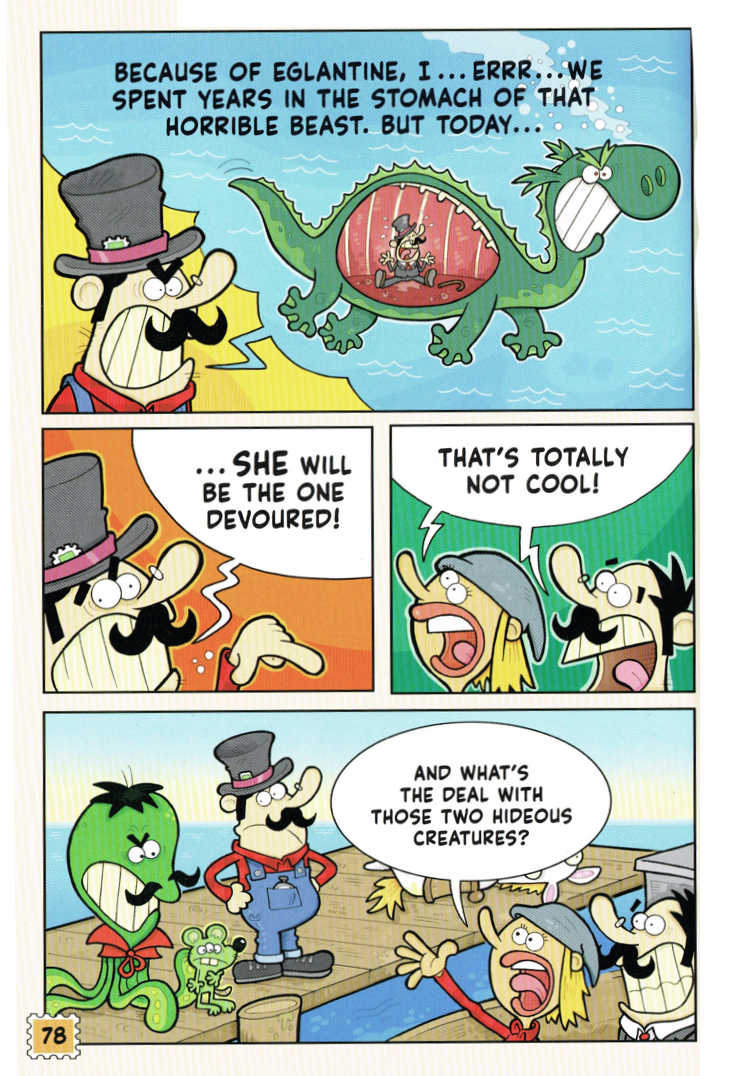
In Dom Pelletier's latest volume of his hysterical middle grade graphic novel series, the members of the secret Lunch Club a.k.a. the Philately Club must do some ingenious problem solving with time travel in order to help their teacher, Mr. Peabody, and the original founder of their club, Eglantine, from the nefarious actions of a trio of evil-doers.
From The Return of the Mummy (The Lunch Club #5) by Dom Pelletier
Determined to save himself from being eaten by Fluffy the sea monster in 1803, the villainous McSticky transports himself back in time, along with the huge moustachioed space monster Zaralgax and his mutant rat companion. Sadly Mr. Peabody is accidentally transported too. But time travel is not necessarily straightforward and the group ends up in various times before the bad guys end up where they want to be. 
From The Return of the Mummy (The Lunch Club #5) by Dom Pelletier
Meanwhile Tia and Leo end up bringing back to the school a mummy they release from a sarcophagus while on a field trip to the museum and discover, through some very funny circumstances, that it is actually someone they know who hoped to be discovered in the future. With a lot more laughs and some more time travel from the future and into the past, Tia and Leo are able to save Eglantine before McSticky changes the course of history and gets Fluffy to eat her instead.
From The Return of the Mummy (The Lunch Club #5) by Dom Pelletier
There will be belly laughs, quiet snickers and loud guffaws from kids as they again visit with Leo and Tia and Mr. Peabody in Dom Pelletier's The Lunch Club. Their teachers and parents will understand the irreverence of the stories but kids will just laugh. From Leo who is always getting into mischief like trying to wake up a mummy–"Hey, Mummy, wakey-wakey!"– or sticking fridge magnets to his braces, and Mr. Peabody who can sleep anytime and for long periods, courtesy of a radioactive mosquito, to the odd villains who annoy them, Dom Pelletier has created the weird and wonderful in The Lunch Club. Add a heavy dose of the fantastic, with time-travel, aliens, and wacky contraptions, and The Lunch Club is the place for middle grade readers to visit for a literary snack.
 
• • • • •

The Lunch Club (originally available in French as Les timbres):

#2 The Curse of the Scarewolf
#3 The Mutant Mouse from Outer Space
#4 Revenge of the Bigfoot
#5 The Return of the Mummy
 
Do check out the website dedicated to The Lunch Club, including activities, videos and learning to draw with Dom Pelletier, at Scholastic Canada here.

• • • • •

March 08, 2021

The Big Bad Wolf in My House

Written by Valérie Fontaine
Illustrated by Nathalie Dion
Translated by Shelley Tanaka
Groundwood Books
978-1-77306-501-4
32 pp.
Ages 5-8
March 2021

It's International Women's Day and, to women who find themselves in abusive home circumstances and explore ways to cope including fighting back legally or finding shelter elsewhere, we stand by you, and Valérie Fontaine and Nathalie Dion offer hope.
From The Big Bad Wolf in My House by Valérie Fontaine, illus. by Nathalie Dion
A little girl could always see through the wolf who married her mother.
He batted his eyelashes and purred like a pussycat
in front of my mother.
But he looked at me with cold eyes and sharp teeth.
The honeymoon was sour, like lemons.
From The Big Bad Wolf in My House by Valérie Fontaine, illus. by Nathalie Dion
But when her mother gets home late from work one day, the wolf show his true self, shouting names and hurling food. The child removes herself from the situation, but she can see the impact it has on her mother whose smile begins to droop along with her body.
From The Big Bad Wolf in My House by Valérie Fontaine, illus. by Nathalie Dion
Her mother tries to shield her child but the wolf is scary, leaving finger marks on the girl's arms and coming into her room as he chooses.
From The Big Bad Wolf in My House by Valérie Fontaine, illus. by Nathalie Dion
But one day, with only five minutes notice, her mother declares that they are leaving. They go to a house full of kind mothers and children but no wolves. 
The big bad wolf can huff and puff all he wants,
but this house will not fall down.
The little girl knows the tale about a big bad wolf. It's the one where he huffs and puffs to blow the house down. The little ones in the story try to protect themselves in shelters of straw and wood but to no avail. Same with this child. She tries a fortress of blankets to shield herself, or a closed door of wood but neither stops the big bad wolf. She does build "a fort made of bricks. I put it up around my heart." But it's not until they go to a new house, a shelter for women and children, that they find safety.

Told from the child's perspective and analogous to the story of the big bad wolf and the three little pigs, The Big Bad Wolf in My House makes a situation of domestic abuse very disquietingly elementary. The mother marries a man who is abusive to her and her child. He may appear sheep-like to begin with but he's dangerous. Both mother and child find ways to cope with the physical or emotional attacks, but coping is not safety. It's just a delay. Both in its original French (Le grand méchant loup dans ma maison, 2020) and this English edition (translated by Shelley Tanaka), Valérie Fontaine's story demonstrates the impact of domestic abuse on the whole family and how adults and children find their own ways to survive. Though she parallelizes the chilling abuse of a man against his new wife and stepchild with a child's fable, Valérie Fontaine never, never trivializes the situation, only gives it context. After all, the big bad wolf could be any one. 

I was just introduced to Nathalie Dion's work last week (I Found Hope in a Cherry Tree by Jean E. Pendziwol) and realize how versatile her art is, creating lightness and hope in one book and now tension and despair in The Big Bad Wolf in My House. Painting by hand with gouache and digitally with a pastel brush, Nathalie Dion still imbues her illustrations with the starkness of the family situation, engulfed with shadows and angles and using colour and lightness minimally and generally only associated with the child or situations outside the home. 

Some may despair of this tale of domestic abuse but Valérie Fontaine and Nathalie Dion have taken us through the darkness from a child's perspective and shown us an outcome that offers the promise of respite.
From The Big Bad Wolf in My House by Valérie Fontaine, illus. by Nathalie Dion

November 15, 2019

The Clothesline

Written and illustrated by Orbie
Translated by Karen Li
Owlkids Books
978-1-77147-390-3
64 pp.
Ages 5-8
October 2019

From The Clothesline by Orbie
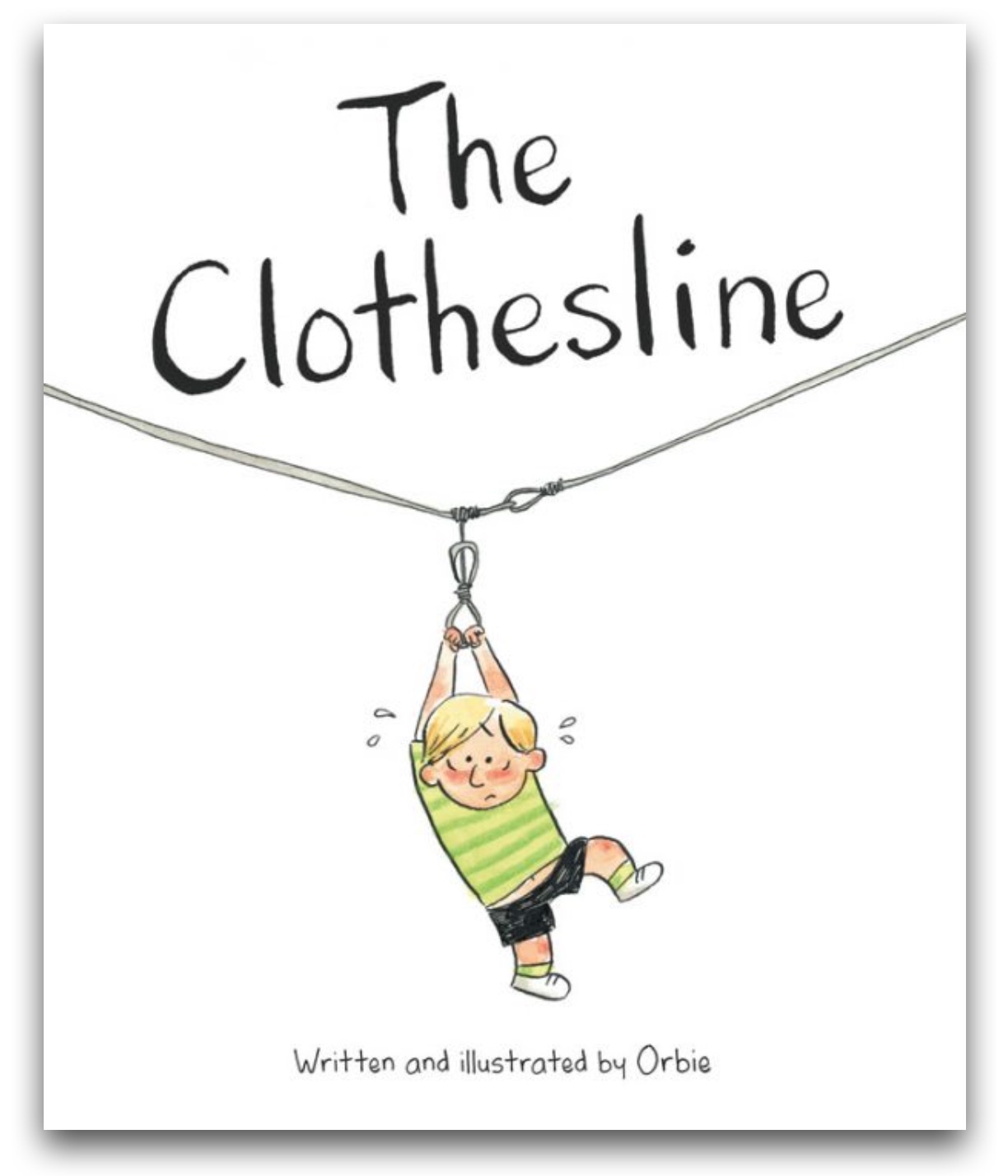
Reggie is five and lives in an apartment above a corner store. When he gets his allowance for doing chores, he races down the outside stairs heading to the store, always yanking on a knot that hangs from the adjacent clothesline.  The sound it makes–ftoiiing–is something he enjoys.

From The Clothesline by Orbie
But one day, coins in hand destined for a candy purchase, Reggie races down faster than ever, yanks at that knot but loses his footing and, grabbing at the knot, is propelled halfway across the clothesline. And there he hangs.
My name is Reggie.
I'm five years old.
And I'm stuck in the
middle of a clothesline.
From The Clothesline by Orbie
He knows this is a dilemma. He cannot use his right hand since it grasps his coins. His left hand is hurting and he knows he cannot hold his weight indefinitely. He's scared that he will fall. So Reggie hangs from the clothesline, looking down, up, across and wonders what to do. Of course he shouts for help but his mother does not hear. He tries to move himself along so he might climb down the pole but to no avail. So he waits. Only the cat comes, though it's focused on washing itself.

In the end, Reggie gets down by accident, and with a few scrapes and tears, and learns to avoid getting himself in trouble again while still enjoying the "ftoiiing" he'd always loved.

Originally published in French as La corde à ligne by Quebec illustrator Orbie, The Clothesline translates easily into English. The story is universal after all in that all children "try" things that look like fun but may get them into a spot of trouble. And though he tries to find a solution to his dilemma, thinking through the possibilities and the consequences, thereby giving children an opportunity to see how problem-solving can happen, Reggie must finally accept his fate. Thankfully he is not badly injured and Orbie's lightness of illustration with pen and ink and watercolour conveys that same impression. Ultimately Reggie finds a way to learn and compromise his need for daring with safety, all courtesy of an old-fashioned clothesline.

June 04, 2019

The New Football Coach

Written by Dominique Demers
Illustrated by Tony Ross
Translated by Sander Berg
Alma Junior (Alma Books)
978-1-84688-435-1
96 pp.
Ages 6-9
May 2019

Miss Charlotte is back! The astounding woman who touched young lives with her unorthodox ways in The New Teacher (2016) and The Mysterious Librarian (2017) has returned and this time she has been recruited to coach the Black Duck Brook Football Club whose headmistress Paulette Pesky in in competition with her twin Yvette, headmistress at Blueberry Bay. In a turn of events, always the norm with Miss Charlotte, the question of "Who will win?" becomes "Does it matter as long as we're having fun as a team?"

The narrator of The New Football Coach is Jeremy who is hopeless at football, or soccer for North American fans, but whose father, owner of a Sports Plus store, is determined that his son will play. When Miss Charlotte comes along and begins her lessons with how to lose and talks to her football, whom she calls Anatole, top scorer Fred Ferocio ridicules her approach but, for the first time, Jeremy is enjoying himself. After she invites new team members, including Jeremy's non-athletic friend Billy Bungalow and others whom Fred classifies as rubbish, to join, Miss Charlotte's coaching involves the kids getting to know their own footballs and developing their own strategies as well as offering them a special and delicious drink called smalalamiam. Will it be enough for them to win their match against Blueberry Bay?

Miss Charlotte has the right idea about playing team sports.  She recognizes that
the best team is not the one which scores the most goals. It is the team that has the most passion, the most enthusiasm, the most positive energy. (pg. 51)
Any team could benefit from this wisdom and the Black Duck Football Club does as well. The other team may be all about the drive to win, even deliberately injuring a competitor, but they have nothing on Jeremy's team of have fun pushing forward with song, gymnastics and secret codes.

Dominique Demers's Miss Charlotte books, originally written in French, are filled with silliness and wisdom, lessons and heart. They are ideal for early readers, blending fun storytelling with positive messages. For young children trying to learn right from wrong, Dominique Demers's Miss Charlotte provides the right kind of guidance. It may be somewhat unconventional, not unlike Mary Poppins, but Miss Charlotte demonstrates that doing things differently may actually be better and, with the hype and intensity shown by some players, parents and coaches when it comes to sports, she seems to get it right.


⚽⚽⚽⚽⚽⚽⚽

n.b. For French-language readers, there are several editions of this series available, including one from Québec Amérique with seven volumes.

April 10, 2018

Wash On!

Written by Michèle Marineau
Illustrated by Manon Gauthier
Translated by Erin Woods
Pajama Press
978-1-77278-018-5
40 pp.
Ages 4-7
April 2018

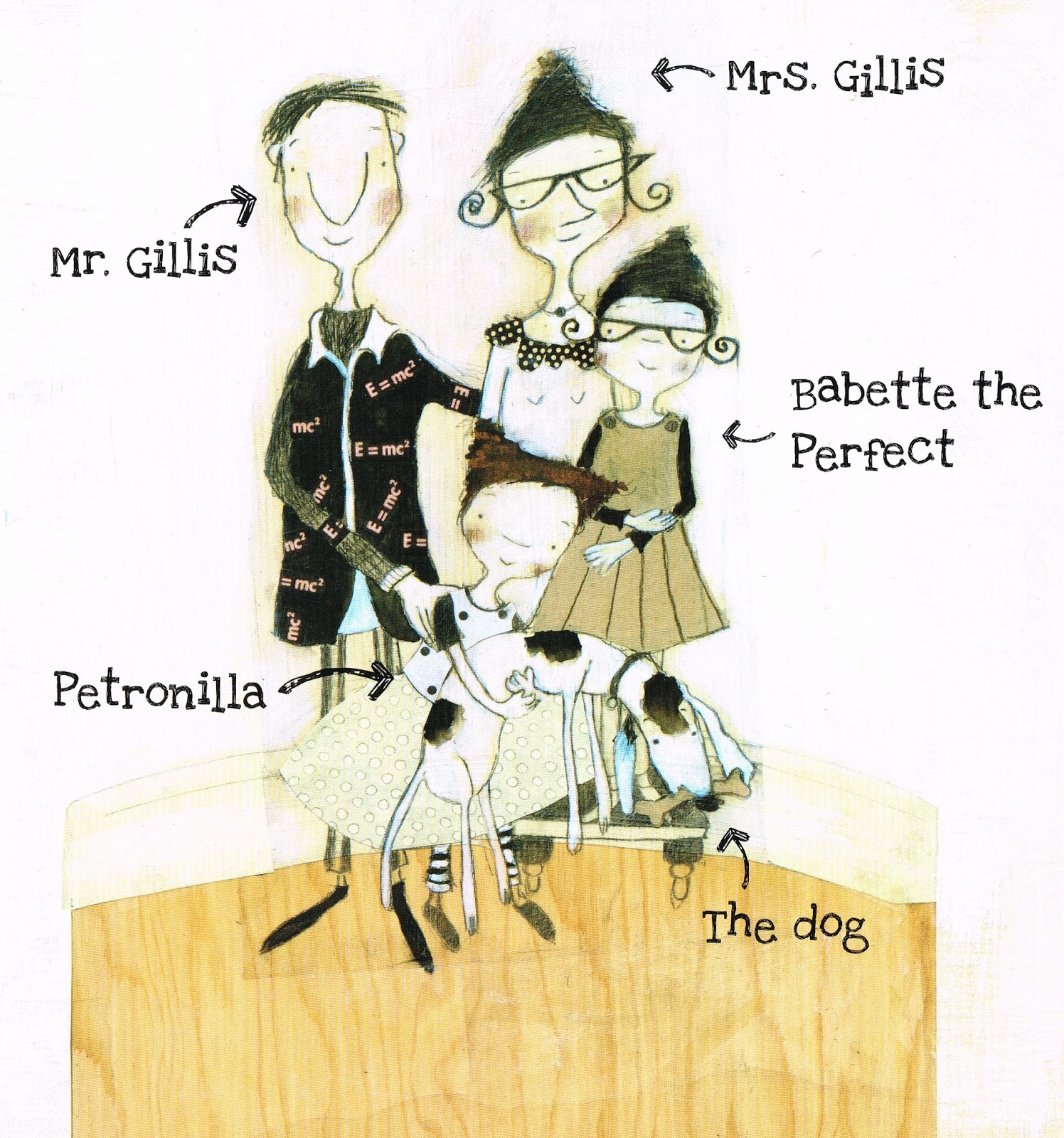
Though most of us wash off any dirt and colours that stain our skin, a little twist of words and fate have colour splotches washing onto little Petronilla in Quebec author and translator Michèle Marineau's newest picture book Wash On!
From Wash On! by Michèle Marineau, illus. by Manon Gauthier
Petronilla is known in her family to have "a talent for chaos" and probably more so when compared to her perfect sister Babette.  But nothing could have prepared her mother for the twist of process when colours from the washcloth during a bath begin to transfer to Petronilla's skin and then her mother and the whole bathroom.  Joyously, Petronilla continues to exclaim, "Wash on! Wash on! Wash on!' regardless of her mother's demands she say "Wash off!" When her father, Babette and dog come to see what's going on, the colours continue to transfer from one object to another.  Although the family thinks they'll just stay in the house until Petronilla drops her new mantra, no one could foresee the weeks that would pass as the child refuses to relinquish her powerful chant.
From Wash On! by Michèle Marineau, illus. by Manon Gauthier
Finally, the family visits the doctor who declares a case of acute coloritis, a condition so contagious that the whole planet becomes infected.  But, as lovely as all the colours are, everything blends in with everything else and no one can differentiate between objects. Even their dog is hard find except when his bark alerts them to his feeding time.  That is, until they can not locate him because there is no bark.  It is only then, when she is desperate to find their dog, that Petronilla changes her tune and finds "Wash off!" just as useful in enacting change in her home and around the world.
From Wash On! by Michèle Marineau, illus. by Manon Gauthier
Wash On! may be based on a silly situation in which colours are transferred rather than cleaned off but the story actually has several powerful messages hidden in that imaginative scenario.  First, Wash On! focuses on the joie de vivre of a world filled with colour. We all need a little colour in our lives, though some people need more and some need less.  But like anything, it is possible to have too much of a good thing, as everyone learns, including Petronilla.  Once the colours explode and there is no contrast and no way to differentiate objects, that joy is lost, like the dog, in an overabundance of stain.  Splashes of colour are wonderfully invigorating and therapeutic but excesses are debilitating and even harmful.  Second, Governor General award-winning author Michèle Marineau recognizes the power of children in defining the world and their need to manage their own circumstances.  Her family may think of Petronilla as chaotic but she seems to just want a hand in determining the life she will lead.

Michèle Marineau tells powerful stories in her native French language and this translation by Pajama Press's Erin Woods highlights that poignancy with merriment and spirit.  That same boldness is depicted with daring by Manon Gauthier's mixed media illustrations. Manon Gauthier, whose artwork I've raved about in Pajama Press's Elliot (Julie Pearson, 2016), All the World a Poem (Gilles Tibo, 2016), Good Morning, Grumple (Victoria Allenby, 2017) and Middle Bear (Susanna Isern, 2017), continues to do amazing things with gouache, pencil and paper collage, ever different and totally wonderful.

Wash On! may say a lot about living a life in colour but it also reminds us about moderation and having control over the lives we lead.  Young readers will laugh at the silliness of the family's situation but we can all learn a lesson or two from Petronilla and her splashy world.

November 30, 2017

Louis Undercover

Written by Fanny Britt
Illustrated by Isabelle Arsenault
Translated by Christelle Morelli and Susan Ouriou
Groundwood Books
978-1-55498-859-4
160 pp.
Ages 9-14
October 2017

From the acclaimed partnership of Fanny Britt and Isabelle Arsenault that brought us the award-winning Jane, the Fox and Me (Groundwood, 2013), which was also translated by Christelle Morelli and Susan Ouriou, comes a second graphic novel of emotional sensitivity, this time in a complex familial context.

The title may suggest a children's game of spying but Louis is more discreet observer and listener.  He watches important people in his life and sees what they do and hears what they say.  These observations form the fabric of his interactions with them, bringing out his sensitivities, fears and compassion. And he has much to observe, as he and his little brother Truffle bounce between their city apartment where they live with their mother and their country house where their alcoholic father still lives.
From Louis Undercover 
by Fanny Britt 
illus. by Isabelle Arsenault
Louis sees the ups and downs of his father's alcoholism: the manic periods of song and big plans and the depressive times of tears and melancholy, especially when the boys leave.  At home, he sees the joy in his mother when they return but also her sarcasm and loneliness.  Louis has his own secret burdens which he only shares with his good friend Boris.  Louis is in love with Billie.
She’s a spectacled siren, a rainstorm,
A chocolate fountain, a silent queen.
 (pg. 50)
From Louis Undercover 
by Fanny Britt 
illus. by Isabelle Arsenault
He is overwhelmed by his affection for Billie but he is immobilized into inaction.  
I had no idea that love is like a rock shattering your heart, as painful as it is life-giving, and that even as it makes you want to bolt, it keeps you glued to the spot. (pg. 58)
Though he makes plans to speak with her, just to say a few words to the gutsy girl who stands up to injustice and reads voraciously, he can't do it, even with the summer holidays imminent and a gift of dice for her in his pocket.  

From Louise Undercover 
by Fanny Britt 
illus. by Isabelle Arsenault
But two weeks of the summer at their father's becomes a turning point for the family.  Their father has stopped drinking and seems to be his old positive self, as reflected in the splashes of yellow, hitherto reserved for Billie.  Though their mom is seen as mired in the sadness of the turquoise and the browns of regular life, when Truffle is injured and sent to hospital, she rushes to his side and stays with them at their old house.  She makes breakfast and laughs with their father and sleeps in his bedroom.  They're back to their "normal" family and a trip to New York City holds the promise of a complete reunion.  But, sadly and realistically, the yellows give way to the family's blues of the past.  Returning to school in the fall, Louis can take this experience as a life lesson that love can end badly or he can see the hope that it can conquer the worst.

Fanny Britt has given us a story about a family dealing with an alcoholic parent and creates a story of understanding.  Louis sees what has happened to his family and is disheartened by it.  He recognizes the signs of his father's drinking and the impact on his mother and their family.  He is wary of love and how it can go horribly wrong.  (Note Louis' watching of his sober father playing with the happy Truffle in the illustration above.) Even his mother, ever immersed in the sadness of needing to be separated from her husband, holds out hope for recovery and reconciliation.  How Louis will adapt that understanding to his own crush on Billie, desperate to speak with her but reluctant and apprehensive about the outcome, is an ending that must be read and seen to be fully appreciated.  
From Louis Undercover 
by Fanny Britt 
illus. by Isabelle Arsenault
Isabelle Arsenault does emotional storytelling in illustration. She doesn't just draw pictures to go with the story; she builds the story with surreal elements that create depth and carry the nuance of Louis' family's circumstances.  The use of yellow and turquoise, with the browns and greys, subtly convey the emotion of each situation.  The yellow is positive and hopeful and cheery, as when Louis watches Billie or his family is happy and Dad is sober.  Turquoise permeates those illustrations of lives living with heartbreak.  Real life is brown and grey because it's sobering and no-nonsense.  

There is much sadness in Louis Undercover.  Turquoise and browns and greys are the overwhelming colours.  But be assured that there is yellow in Louis' life and Fanny Britt resolves his story with a subtle explosion of positivity matched by Isabelle Arsenault exquisite artwork.

September 25, 2017

Kisimi Taimaippaktut Angirrarijarani / ᑭᓯᒥ ᑕᐃᒪᐃᑉᐸᒃᑐᑦ ᐊᖏᕐᕋᕆᔭᕋᓂ / Only in My Hometown

Written by Angnakuluk Friesen
Illustrated by Ippiksaut Friesen
Translated by Jean Kusugak
Groundwood Books
978-1-55498-883-9
24 pp.
Ages 3-7
September 2017

Just as all families are different and children should see themselves in the families represented in youngCanLit, the communities in which those children are growing up are vastly distinct.  Some are close-knit and small, others heavily populated and expansive, and still others remote with scattered populations.  By bringing their hometown to picture book format, Nunavut sisters Angnakuluk Friesen and Ippiksaut Friesen transport young readers to a community in which elephants are mining artefacts, raw meat is feasted upon and everyone is welcome.

In her text, Angnakuluk Friesen gives us visual snippets of life in her hometown of Rankin Inlet, an Inuit community on Kudlulik Peninsula in Nunavut.  Its history may include the Thule people and mining but Angnakuluk Friesen spotlights the personal life of children in Kisimi Taimaippaktut Angirrarijarani / Only in My Hometown.  It's about play and food, chores and the outdoors.  There's snow-shovelling, story-telling, watching Northern Lights and banding together during hard times and times of joy.  But Angnakuluk Friesen tells it without telling it directly.  It's all in the subtext of her words. 

Stories, images, memories
of spirits,playing happily, fluidly, chanting.
The Northern Lights can be seen in many places,
but they dance for me
only in my hometown.

Where I come from
glimpses of hope are always appreciated.
From Kisimi Taimaippaktut Angirrarijarani / 
ᑭᓯᒥ ᑕᐃᒪᐃᑉᐸᒃᑐᑦ ᐊᖏᕐᕋᕆᔭᕋᓂ / 
Only in My Hometown 
by Argnakuluk Friesen 
illus. by Ippiksaut Friesen
Similarly, her sister Ippiksaut Friesen illustrates each memory and experience with a focus on the personal.  It's the girl atop the abandoned mining equipment, the children amidst the laundry and scattered toys, a pair watching the Northern Lights, the family at their winter camp and a gathering around a newborn.  It's their life as they see it and experience it in all its wonder and hardships and fellowship.  Her illustrations are actually of two different styles.  One, as seen on the cover, is reminiscent of William Kurelek's classic A Prairie Boy's Winter (Tundra, 1973) of a life so vast in time and space that must be filtered down to just a few poignant moments that define it. These are all-embracing images.  But Ippiksaut Friesen also goes up close and personal, getting right into the faces, concentrating on the expressions of life rather than the landscapes of their hometown.  Both blend to illustrate the life that is Kisimi Taimaippaktut Angirrarijarani / ᑭᓯᒥ ᑕᐃᒪᐃᑉᐸᒃᑐᑦ ᐊᖏᕐᕋᕆᔭᕋᓂ / Only in My Hometown

From Kisimi Taimaippaktut Angirrarijarani / 
ᑭᓯᒥ ᑕᐃᒪᐃᑉᐸᒃᑐᑦ ᐊᖏᕐᕋᕆᔭᕋᓂ / 
Only in My Hometown 
by Argnakuluk Friesen 
illus. by Ippiksaut Friesen
Translated into Inuktitut by Jean Kusugak and written out both in syllabics and transliterated roman characters,  Kisimi Taimaippaktut Angirrarijarani / ᑭᓯᒥ ᑕᐃᒪᐃᑉᐸᒃᑐᑦ ᐊᖏᕐᕋᕆᔭᕋᓂ / Only in My Hometown tells both all and only some of what life in a small northern town can be for an Inuit child.  It is a book to share with children who need to see themselves in the book or learn about others.  In other words, it's a book for all.
From Kisimi Taimaippaktut Angirrarijarani / 
ᑭᓯᒥ ᑕᐃᒪᐃᑉᐸᒃᑐᑦ ᐊᖏᕐᕋᕆᔭᕋᓂ / 
Only in My Hometown 
by Angnakuluk Friesen 
illus. by Ippiksaut Friesen

September 21, 2017

Le Jardin Invisible

Written by Valérie Picard
Illustrated by Marianne Ferrer
Monsieur Ed
978-2-924663-03-5
64 pp.
Ages 4+
August 2017

When her family travels far from the city to the country to attend her grandmother's birthday celebration, Arianne enters a marvelous world of lush vegetation, magnificent creatures and an adventure of epic proportions, like all in Le Jardin Invisible (translation: The Invisible Garden).

As pleased as she is to see her grand-maman, Arianne is the lone child in a house full of guests.  A parent suggests she go play in the garden.  A city child, unaccustomed to making play in the outdoors, Arianne is bored and lays down in the grass. A small pebble (caillou) brings her to see another world in which the pebble is a mountain, locusts are as big as cars, and plants like trees.  She chases after the locusts but loses them and catches a ride on a dandelion seed to continue her quest.  Skipping her pebble into the water, she drops in too, witnessing the wonders of the sea including the evolution of aquatic creatures to land dinosaurs who assist her in capturing a star that she releases into the cosmos.
From Le Jardin Invisible 
by Valérie Picard 
illus. by Marianne Ferrer
Perhaps Le Jardin Invisible is but the imaginative dream of a child bored with adult activity who takes bits and pieces from her surroundings and builds them into a story.  Ah, but what a story!  She sees mountains, and travels on fluffy seeds, races with creatures small and large and reaches into the heavens for a touch of magic.  No wonder when the family is returning to the city late at night, Arianne declares to the sky of stars and ethereal shapes, "À beintôt, les dinosaures!" (translation: See you soon, dinosaurs).
From Le Jardin Invisible 
by Valérie Picard 
illus. by Marianne Ferrer
Surprisingly, in 64 pages, there are few words.  The text is essentially a series of questions and exclamations.  But Valérie Picard's sparse text blossoms into a full story with Marianne Ferrer's illustrations.  Marianne Ferrer's art, first reviewed here from her picture book Racines (Monsieur Ed, 2016), gives an ethereal context to Arianne's journey from city to country to Le Jardin Invisible.  When the insignificant child is delegated to the garden, she becomes part of something larger, much larger than herself but still part of it.  Marianne Ferrer's locusts are majestic in every facet, her plant life varied and sumptuous in tones of blue, green and rose and her underwater scenes are resplendent in shades and hues of blues.  Like Arianne, these worlds are largely ignored until looked at with a closer lens.
From Le Jardin Invisible 
by Valérie Picard
 illus. by Marianne Ferrer
Whether Arianne visited this lavish garden by way of her dreams or simply her imagination is irrelevant.  Le Jardin Invisible is one to be seen and appreciated from any perspective.


n.b. The interpretation of this French-language book is solely my own.  I take full responsibility for any errors in translation and interpretation of words and art, and apologize for any discrepancies from the author/illustrator’s intent.