Showing posts with label Manon Gauthier. Show all posts

November 10, 2025

All of Us

Written and illustrated by Manon Gauthier
Translated by Michel Savard
Running the Goat, Books & Broadsides
978-1-98802296
32 pp.
Ages 3–8
October 2025 
  
The message of All of Us is a simple one, but sadly one that we need to reinforce continually. It's one of inclusivity and diversity and it's basic science. We're all the same and yet we're all different. 
From All of Us, written and illustrated by Manon Gauthier
Manon Gauthier, who has wowed this reviewer with the books she's illustrated such as Middle Bear (Susan Isern, 2017), Good Morning, Grumple (Victoria Allenby, 2017), and Elliot (Julie Pearson, 2016), has combined her talents by authoring as well as illustrating All of Us. With simplicity of text and complexity of art, Manon Gauthier develops the idea of how all animals, including humans, are different in their abilities or lack thereof, in their morphologies, in their physiologies, and more. There's "the fish who blows bubbles as it breathes,"(p. 12) and "the quiet and solitary moose," (p. 22) as well as "the tall bharal who has no fear of heights." (p. 7) There's the dancing sifaka, the cold-blooded reptiles and amphibians, and the savannah animals that can tolerate the heat. All differ in what they like, what they look like, what they can do, and more. But, essentially, we all are made up of cells, and Manon Gauthier conveys this in her words and her illustrations, using the same irregularly-shaped oval as the basis for all animals.
From All of Us, written and illustrated by Manon Gauthier
It's not until her last illustration, a double-page spread of a cell, that the reader will recognize Manon Gauthier's cleverness at using the cell's shape as the face or body or abdomen of all the 
mammals, birds, reptiles, amphibians, invertebrates and fish within All of Us. All of us really do have something in common, even with all the differences. And by using her defining cut-paper collage, in earthy tones of browns, greys, and creams with occasional touches of red, blue, green, and orange, Manon Gauthier gives a textured dimensionality and hearty organic feel to her story.
From All of Us, written and illustrated by Manon Gauthier
Whether you're a teacher who'd love to introduce a lesson on the diversity of living things with a captivating picture book, or open a lesson on animal cells, or even launch discussions about inclusivity and connection, All of Us will work beautifully. (Manon Gauthier even includes an activity in which readers can create their own animal with the same template she used throughout the book.) Whether you read it for the messaging which is presented gracefully or for the intriguing artwork, All of Us is a book for all of us about all of us.

October 23, 2018

A World of Kindness

from the Editors and Illustrators of Pajama Press
(including Ann Featherstone, Brian Deines, Tara Anderson, Wallace Edwards, François Thisdale, Kim La Fave,      Manon Gauthier, Dean Griffiths, Suzanna Del Rizzo and Rebecca Bender)
Pajama Press
978-1-77278-050-5
32 pp.
Ages 3-7
October 2018 

Whether a child dealing with a mean classmate, nastiness on social media, or world leaders striking out at others, it's evident that our world needs more kindness. But being kind is not always inherent; sometimes, often, it needs to be taught or even inspired. As Aesop affirmed, "No act of kindness, no matter how small, is every wasted." Let us be kind.

In fourteen double-spreads of text and image, the editors and illustrators of Pajama Press spark discussions about how kindness can manifest and how we should examine our own actions for kindness. Starting with "Are you kind?", the book asks questions while suggesting ways of being kind. From "Do you wait your turn?" and "Will you help someone younger...or older?" to "Are you gentle with animals big...and small?" young readers are asked to look within for evidence of their own kindness.
From A World of Kindness, illustration by Kim La Fave

From A World of Kindness, illustration by Tara Anderson
Children see how to be kind while being asked about being kind. Ideas about saying "Please" and "Thank you" and "I'm sorry" are demonstrated as important, as are sharing, helping, being supportive and compassionate. A World of Kindness covers the simplest acts of thoughtfulness and yet makes the significant and critical point that "a little kindness grows into a world of kindness."
From A World of Kindness, illustration by Manon Gauthier
The text of A World of Kindness is endearing and straightforward, and will work well with young preschoolers and children in primary grades. But it's the illustrations, some from already published works and some original art, that will carry the message. Children will see kindness in the hugs, the sharing, and the love that seasons these pages. (There are different heart shapes throughout the book, reminding us what is at the heart of kindness.) The illustrations, like Suzanne Del Rizzo's amazing polymer clay book cover art, depict all children and are aimed at children's experiences with animals, peers, siblings, elders, and parents, and include those during all seasons in Canada and in other global locales including Sri Lanka (Kim La Fave's art from When the Rain Comes), Tanzania (Brian Deines's illustration from In a Cloud of Dust), and Jordan (Suzanne Del Rizzo's art from her My Beautiful Birds). A World of Kindness shows kindness in its own inclusivity.

A World of Kindness will undoubtedly be used as a tool for teaching and instilling kindness, especially as Pajama Press has provided a downloadable poster (https://pajamapress.ca/resource/a_world_of_kindness_extra_content/) and teaching guide (https://pajamapress.ca/resource/a_world_of_kindness_teaching_guides/) on its website. Moreover, with all royalties going to Think Kindness, a project that aspires to inspire kindness in schools and other communities, purchasing A World of Kindness is a win-win for all.  But, at its heart, A World of Kindness is a compendium of beautiful messages in words and art to help make our world, starting with our youngest readers, a place of graciousness and goodwill.  With such benevolence, this picture book will triumph with purpose.

April 10, 2018

Wash On!

Written by Michèle Marineau
Illustrated by Manon Gauthier
Translated by Erin Woods
Pajama Press
978-1-77278-018-5
40 pp.
Ages 4-7
April 2018

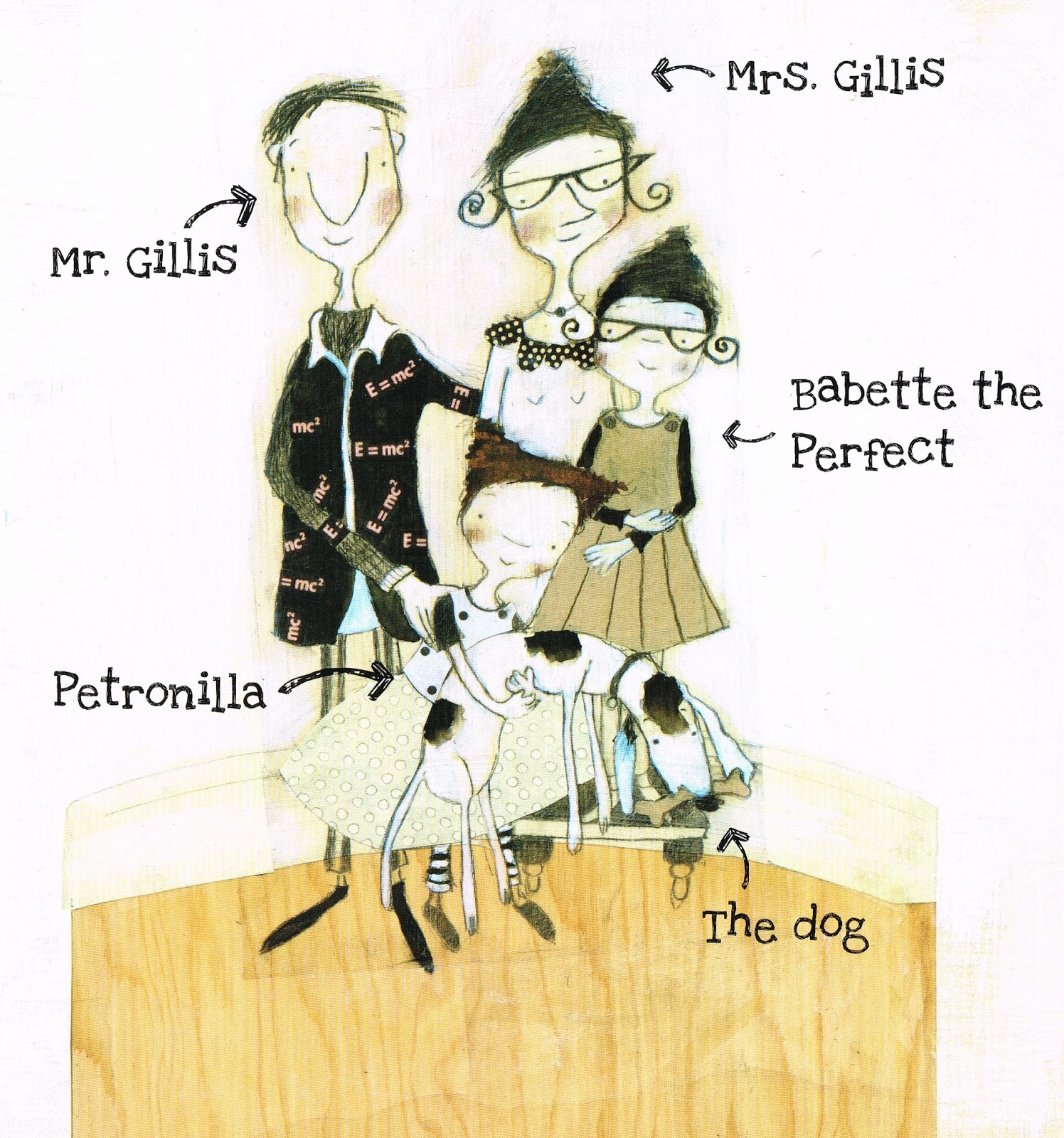
Though most of us wash off any dirt and colours that stain our skin, a little twist of words and fate have colour splotches washing onto little Petronilla in Quebec author and translator Michèle Marineau's newest picture book Wash On!
From Wash On! by Michèle Marineau, illus. by Manon Gauthier
Petronilla is known in her family to have "a talent for chaos" and probably more so when compared to her perfect sister Babette.  But nothing could have prepared her mother for the twist of process when colours from the washcloth during a bath begin to transfer to Petronilla's skin and then her mother and the whole bathroom.  Joyously, Petronilla continues to exclaim, "Wash on! Wash on! Wash on!' regardless of her mother's demands she say "Wash off!" When her father, Babette and dog come to see what's going on, the colours continue to transfer from one object to another.  Although the family thinks they'll just stay in the house until Petronilla drops her new mantra, no one could foresee the weeks that would pass as the child refuses to relinquish her powerful chant.
From Wash On! by Michèle Marineau, illus. by Manon Gauthier
Finally, the family visits the doctor who declares a case of acute coloritis, a condition so contagious that the whole planet becomes infected.  But, as lovely as all the colours are, everything blends in with everything else and no one can differentiate between objects. Even their dog is hard find except when his bark alerts them to his feeding time.  That is, until they can not locate him because there is no bark.  It is only then, when she is desperate to find their dog, that Petronilla changes her tune and finds "Wash off!" just as useful in enacting change in her home and around the world.
From Wash On! by Michèle Marineau, illus. by Manon Gauthier
Wash On! may be based on a silly situation in which colours are transferred rather than cleaned off but the story actually has several powerful messages hidden in that imaginative scenario.  First, Wash On! focuses on the joie de vivre of a world filled with colour. We all need a little colour in our lives, though some people need more and some need less.  But like anything, it is possible to have too much of a good thing, as everyone learns, including Petronilla.  Once the colours explode and there is no contrast and no way to differentiate objects, that joy is lost, like the dog, in an overabundance of stain.  Splashes of colour are wonderfully invigorating and therapeutic but excesses are debilitating and even harmful.  Second, Governor General award-winning author Michèle Marineau recognizes the power of children in defining the world and their need to manage their own circumstances.  Her family may think of Petronilla as chaotic but she seems to just want a hand in determining the life she will lead.

Michèle Marineau tells powerful stories in her native French language and this translation by Pajama Press's Erin Woods highlights that poignancy with merriment and spirit.  That same boldness is depicted with daring by Manon Gauthier's mixed media illustrations. Manon Gauthier, whose artwork I've raved about in Pajama Press's Elliot (Julie Pearson, 2016), All the World a Poem (Gilles Tibo, 2016), Good Morning, Grumple (Victoria Allenby, 2017) and Middle Bear (Susanna Isern, 2017), continues to do amazing things with gouache, pencil and paper collage, ever different and totally wonderful.

Wash On! may say a lot about living a life in colour but it also reminds us about moderation and having control over the lives we lead.  Young readers will laugh at the silliness of the family's situation but we can all learn a lesson or two from Petronilla and her splashy world.

January 05, 2018

Middle Bear

Written by Susanna Isern
Illustrated by Manon Gauthier
Kids Can Press
978-1-77138-842-9
34 pp.
Ages 3-7
October 2017

Reminiscent of the tale of the three bears, a middle-sized bear learns that he is neither too large nor too small to take on a challenge.  In fact, he's better than just right.
Retrieved from https://www.behance.net/gallery/25738405/Mediano-spain-2014 on January 5, 2018. 
The middle bear of three brothers understands well his place in his family.
He was not big, but he was not small, either.  Neither strong nor weak, neither tall nor short, neither a lot nor a little...
He accepted that his were middle-sized things–bicycles, umbrellas, clothes, dishes–but he didn't necessarily want to be the middle child as it made him sad sometimes.
From Middle Bear 
by Susanna Isern
illus. by Manon Gauthier
But when his parents fall ill and need willow bark, it is the middle bear who is able to fulfil the task, with the support of his siblings, simply by being neither the heaviest nor the smallest.
He was the middle one.
And being the middle one, he could do all sorts of things: small things, middle-sized things and big things, too.
Spanish writer Susanna Isern's story (originally published as Mediano in 2014) about the angst of the middle child becoming self-aware is simple and yet profound, all the more so for Manon Gauthier's cut paper collage illustrations. The artwork of predominantly sombre colours imbues an atmosphere of steadfastness in the bears' lives, complementing the three brothers' acceptance of their places.  However, Manon Gauthier's art demonstrates, with hints of rose and orange, blue and green, that there is lightness and opportunity for accepting something different.
Retrieved from https://www.behance.net/gallery/25738405/Mediano-spain-2014
on January 5, 2018.
Middle children, of which I am one, may not always know that they don't have to be relegated to a middling position of vagueness, and books like Middle Bear are great tools for inspiring young children, especially middle ones.  Middle children and bears should, and we do, aspire to be whatever they choose, big or small or in between.


••••••••••••••••••••••••••••••••
Because I wanted readers to see how beautiful the double spread illustrations were, I shared several images from Manon Gauthier's Behance website at https://www.behance.net/manongauthier.  Because scanning a bound book does injustice to the illustrations, I chose to show readers the original artwork, in all its glory and sans distracting divides.  I hope readers and Manon Gauthier forgive me this indulgence.

March 15, 2017

Good Morning, Grumple

Written by Victoria Allenby
Illustrated by Manon Gauthier
Pajama Press
978-1-77278-014-7
24 pp.
Ages 2-4
March 2017

According to Victoria Allenby’s dedication, she has a couple of grumples in her life–a big one and a little one–and I suspect that, if you’ve been trying to rouse your kids during March break when they’d much rather sleep, you’ve got some grumples of your own.
A grumple, a grumple is hard to awaken.
It doesn’t like noises. It hates being shaken.
 
It loathes and despises a bright, cheery voice,
And big, shiny lights are a terrible choice. (pg. 5)
From Good Morning, Grumple 
by Victoria Allenby 
illus. by Manon Gauthier
In Good Morning, Grumple, a mother fox, who has obviously endured many a morning struggling to get a grumpy young one in rumpled bed clothes out of bed, attempts the near impossible feat with an established process of rhyming song and accompanying actions.  It starts with a soft singing of “Shh–Shh–Slow we go.  The sun is rising on tip-toe, tip-toe.” (pg. 9)  Nice and easy, but the grumple just burrows deeper into the linens, only feet and a paw clutching a stuffie visible.  That’s OK.  Mother knows the next step is getting a little closer and a little louder with “Shush–Shush–There’s no rush.  The sun is gold in the morning hush.” (pg. 10) Mother Fox may rely on the sun for her inspiration but the efforts are all hers, with tickles, kisses, hugs and a dance, all with louder affirmations until both mother and child are out the door, welcoming the new day and its promise for play.

Every household must have one or two grumples, and Victoria Allenby has contrived a playful way of rousing them to waking.  You may need to read the book several times, with your child, to establish the song, and I’m not sure of the melody, but little ones will delight in the role they get to play, even if it means ultimately getting out of bed.

Victoria Allenby has proven that she can write light and refreshing books for pre-readers and early readers (Nat the Cat Can Sleep Like That, Pajama Press, 2013; Timo’s Garden, Pajama Press, 2015; Timo’s Party, Pajama Press, 2016; Rhino Rumpus, Pajama Press, 2016) but now she’s bringing that novelty to helping parents parent, all without preaching about how to do it right.  I wonder if she even intended to provide a wake-up protocol for grumples or just share an engaging practice that might work for others.
From Good Morning, Grumple 
by Victoria Allenby 
illus. by Manon Gauthier
Manon Gauthier lends her trademark cut paper collage (see Elliot, Pajama Press, 2016, and All to World a Poem, Pajama Press, 2016) to Good Morning, Grumple, establishing evocative scenes with her artistry.  Colour is limited but effective, with the neutrality of a grumple atmosphere evident throughout.  No grumple would ever see much in the way of colour before deigning to open his/her eyes completely, and Manon Gauthier supports this premise wholeheartedly.  But Manon Gauthier refuses to keep things stark and uninspiring.  All indoor and outdoor scenes, before and after waking, are freckled with birds, flowers, and household furnishings and decorations that invite readers in.  Collage art has never been so expressive and atmospheric.

Enjoy the smaller and inviting format of Good Morning, Grumple with Pajama Press’ unique padded cover, rounded corners and heavy-duty paper that make it a pleasure to hold.  Let me know whether the premise works for your own little grumples but remember: it may take a few tries, and a little more sunshine than we’re seeing in March, for it to work.  Even if it doesn’t, you’ll enjoy a great read with your youngest ones and perhaps lead them to the self-discovery of their grumple status and ultimately to an appreciation of the efforts made on their behalf.

August 17, 2016

All the World a Poem

by Gilles Tibo
Illustrated by Manon Gauthier
Translated by Erin Woods
Pajama Press
978-1-77278-009-3
32 pp.
Ages 5+
August 2016

The title All the World a Poem, taken from a poem "The Great Voice" by American professor of horticulture Liberty Hyde Bailey, launches an ardent tribute to both poetry and the natural world by award-winning author Gilles Tibo and rising star Manon Gauthier whose artwork recently  enriched the text of Elliot (Julie Pearson, Pajama Press, March 2016).

All the World a Poem is a lyrical odyssey examining the richness of poems in shape and content, place and time, purpose and destination. According to Gilles Tibo’s dreamy text, poetry can be anything and everything, filled with grace and love, both reverent and impassioning.
A poem has fallen from the sky,
slipping from a cloud.
A second has sprouted from the earth
like a rainbow flower.
A third floated in from the sea,
bobbing at the end of the big pier.
I gather up the three poems
and hold them to my heart.
Then I continue my journey
toward the endless country
of verses yet to come.
(pg. 14)
From All the World a Poem
by Gilles Tibo, illus. by Manon Gauthier
The translation from Gilles Tibo’s French Poésies pour la vie (Isatis, 2015) is beautifully rendered by Pajama Press’ own Erin Woods, who also capably gave English voice to Elliot (Pajama Press, 2016).  The text is sublime, a celebration of sounds and rhythms and expressive verse.  And Manon Gauthier again creates her distinctive illustrations of paper collage art that gives texture and whimsy a totally unique look.  The luxuriance of the words and the art is almost overwhelming in its intimate beauty.

All the World a Poem has the lightness and spiritual delicacy that suggests it could take flight. Fortunately, readers will discover that All the World a Poem has effortlessly become tethered by heart strings to our glorious world.
From All the World a Poem 
by Gilles Tibo, illus. by Manon Gauthier

March 01, 2016

Elliot

by Julie Pearson
Illustrated by Manon Gauthier
Translated by Erin Woods
Pajama Press
978-1-927485-85-9
32 pp.
Ages 5-8
For release March 2016

As soon as I read Elliot, I knew it was something very, very special.  And then I learned that Elliot was a translation (capably handled by Pajama Press' Managing Editor Erin Woods) of a 2014 French-language picture book from Les 400 coups that had already won Le Prix du livre jeunesse des Bibliothèques de Montréal for 2015.  Its subtlety and poignancy ensures its sure status as a winner in English as well!

Elliot is a young rabbit with lots of spirit.  But when he cries, or yells, or misbehaves, like all children are want to do at some point, his parents do not understand his needs.  They seek help as caring parents might and a social worker named Thomas comes and takes Elliot to live with another family “until his parents learned how to take better care of him.”

Everything is different with this new family but best of all they understand when Elliot is hungry, upset or needs attention.  And things are better when Elliot’s parents come to visit, so much so that eventually they are ready to take Elliot home again.  But, when things don’t change at home, Elliot is sent to another family.  Though he gets to visit with his parents, Elliot is told by Thomas that his “parents could never take care of him, because they did not know how.

But Thomas helps find Elliot a “a forever, forever family”,  one that does more than just understand him, because they love him.

Elliot is a heartfelt story about finding one’s true family, the one that will love and care for you forever. It might be a foster family, it may be the family you’re born into, or it might be the one that ultimately adopts you, as Elliot is fortunate to find.  But Julie Pearson embues the story of Elliot with an underlying sadness, for Elliot who is being a child and for his parents who try to do the best they can for him but can't quite manage it.  And Manon Gauthier’s subtle collages of muted colours, save for Elliot’s red striped shirt, express that sadness and the grayness of tenuous family so movingly.  I defy anyone to read Elliot and not cry for the emotional hardships Elliot braves and cheer for the rosy blush of happiness (with a splash of red text) that comes when Elliot becomes part of a new family.

There are very few picture books that I want to clutch a little tighter and hold onto in my heart a little longer.  Elliot is one that has touched me so.
From Elliot (pg. 27) by Julie Pearson