Showing posts with label control. Show all posts

February 19, 2021

The Project

Written by Courtney Summers
Wednesday Books (St. Martin's Press)
978-1-250-10573-8
352 pp.
Ages 12+
February 2021
 
In 2011, when Lo is just 13 years of age, she is critically injured in a car crash that kills her parents. Her 19-year-old sister Bea is called to the hospital and, in the chapel, begs for a miracle and Lev Warren appears. The miracle happens for Lo but Bea disappears from her life, leaving Lo in the care of their great aunt Patty.

Six years later, Lo knows Bea has joined Lev Warren's The Unity Project, an organization whose mission is to do good works to atone for all sins and bring salvation. After an earlier exposé investigating The Project as a cult, Lev has tried to keep The Project out of the media, focusing on their community work and annual public sermon. But, now working for SOV magazine, Lo is drawn to look into the organization again. While she has tried numerous times to reconnect with Bea, she is always kept away by Casey Byers, The Project's spokesperson and Lev's right hand. But Lo's interest is piqued by the death of a young man, Jeremy Lewis, whose father Arthur had been trying to save his son from The Unity Project. When Lo sees Bea in the photos Arthur's private investigator took of Jeremy, coupled with numerous voiceless calls she receives, Lo is determined to find Bea and learn more about The Project.

Alternating between the past and the present, primarily over seven years, Lo and Bea's stories unfold with Bea looking to prove herself worthy of a miracle she believes Lev performed and Lo looking for her sister. Their stories are eerily parallel, especially under the charismatic Lev who has become father, friend, therapist and even saviour to members of The Project. Both sisters are bereft because of their losses of family but each feels compelled to action because of The Project. But, it would seem, The Project has other things in mind.

Everyone should be prepared for an unnerving read in The Project. By balancing family and everyday living with the extremes of manipulation and doctrine, it's Courtney Summers at her best. Like her award-winning Sadie (2018), The Project is chilling in its possibilities because this could be someone's reality. A tragic accident, absolute faith in an irresistible leader, family estrangement, a compelling mission and the need for connection could all be elements of any of our lives and with her storytelling Courtney Summers will disquiet readers with the possibilities.

While her plotting is always sophisticated and involved, never leading the reader to a predictable ending, it's Courtney Summers's atmospheric writing that is most captivating. There's a perennial sense of foreboding, even with the most mundane of circumstances, like grabbing a cab or working in an office. Courtney Summers never lets the reader relax and maybe we shouldn't because bad things happen, even if dressed up as good.
 
Lo, the writer, tells Lev that...
If you tell a story–something real, something true–you get to be alive in other people. (pg. 251)

Thankfully Courtney Summers is alive and well by virtue of The Project and all her other stories. She tells the truth, even if it's unsettling.

May 11, 2020

At the Pond

Written and illustrated by Geraldo Valério
Groundwood Books
978-1-77306-232-7
48 pp.
Ages 3-7
March 2020

A visit to a pond teaches a young boy a lesson in securing friendship without subjucation in this new wordless picture book from Geraldo Valério.
From At the Pond by Geraldo Valério
In a grey forest of grabbing branches of trees, a dog is tied up outside a house. When a boy emerges to take the forlorn dog for a walk on its yellow leash, they are drawn to a brilliant blue pond rife with swans. When one of the swans approaches and takes the boy and his dog for a ride on its back, they float through spectacular landscapes of pink roseate spoonbills, frolicking rabbits and foxes, meadows of foxglove and a plethora of brightly coloured flowers.
From At the Pond by Geraldo Valério
But when the boy finally releases the dog to chase dragonflies, the boy chooses to place the leash on the swan. With that, Geraldo Valério's illustration turns dark once again, with only the blue of the panicked swans as they retreat. Thankfully the boy sees the hurt in the tearful swan's eyes and releases his new friend, returning the world to one of colour, joy and compassion.
From At the Pond by Geraldo Valério
As a wordless picture book, At the Pond teems with emotion, primarily through artist Geraldo Valério's use of colour, though also with line and shape. In his complex illustrations. created with pencil, acrylics, latex, markers and even gouache, Geraldo Valério explores what it means to be a friend. From that poor chained dog, almost insignificant in a bleak world of darkness, to the unconstrained life of the pond and its environs, Geraldo Valério makes it clear that friendship is not conditional upon control, though some might envision it to be so, and this boy certainly does at the outset of the story. Friendship is about allowing a dog or a swan to be free to be themselves and share in the wonder of that freedom. It is only with the banishment of the enforced bonds that a relationship of closeness and compassion can be realized. 
From At the Pond by Geraldo Valério
••••••••••••••••

For a treat, publisher Groundwood Books (House of Anansi Press) has shared a video online at https://youtu.be/kZSv-KILJlg of author-illustrator Geraldo Valério bringing life, through pencil, to a pair of swans from At the Pond.

Drawing with author and illustrator Geraldo Valério
Uploaded by House of Anansi to YouTube on May 1, 2020

June 24, 2019

You Owe Me a Murder

Written by Eileen Cook
Houghton Mifflin Harcourt
978-1-328-51902-3
359 pp.
Ages 13+
March 2019

Travel provides opportunities for new experiences, for meeting new people, and for personal growth.  But for seventeen-year-old Kim, her summer trip to London with Student Scholars for Change seems doomed from the beginning. Not only is she no longer in a relationship with Connor for whom she'd initially signed up for the trip, he is travelling with new girlfriend Miriam, and Kim has to watch it all from the sidelines of their small group of eight Vancouver high schoolers. But after meeting English girl Nicki, who challenges her to steal a bottle of duty-free vodka and lets her vent about Connor all the way to London, Kim is ready to find "a new me" (pg. 41), one that could be daring and isn't a quitter.
Being good at something doesn't mean that it isn't hard or scary–it just means that you keep moving forward when other people quit. (pg.25)
But in that vodka-infused venting session, Kim prepares a list titled "WHY I HATE CONNOR O'REILLY AND WHY HE DESERVES TO DIE" and Nicki suggests that she will kill Connor and Kim could kill Nicki's mom whose alcoholism is making her life miserable. Of course, Kim barely remembers their laughable discussion until Connor is killed in a Tube station and she gets a message that reads "You're welcome" along with the news story about his death.

Panicking, Kim doesn't know to whom she can turn. Worse still, the police begin investigating and Kim realizes her silence about her relationship with Connor is going to make her look suspicious. Worst of all, Nicki still has the incriminating document and is using it to blackmail Kim into murdering her mother.

So while sightseeing in London and relishing a budding romance, Kim tries to evade a drunken commitment to homicide, investigate the mysterious Nicki, and keep herself and others safe from a girl who purports to be owed a murder.

I would call You Owe Me a Murder a roller-coaster except that ride suggests highs and lows and twists and turns and this young adult novel has no lows. From start to finish, it's more like a high-wire act: tense, dangerous, and unrelenting. With Eileen Cook's exceptional plotting, You Owe Me a Murder becomes a magnificent melding of relationship angst with psychological thriller. It's a waiting game for the reader who is compelled to read through to learn whether Kim will go with through the murder pact or become victim to Nicki's vengeance. With characters like Kim and Nicki, and even secondary ones like Connor, Miriam and Alex, You Owe Me a Murder becomes a complex study in human behaviour as young people fall in and out of love or lust, seek revenge and fulfilment, and try to discover who they really are and what they are capable of being and doing.

Like Hitchcock's movie Strangers on a Train, Eileen Cook's You Owe Me a Murder demonstrates that meeting the right or wrong person can turn your life upside-down, and finding the way to right things may require courage and recognition that the truth hides in the details. (pg. 324)

September 28, 2018

Enid Strange

Written by Meghan Rose Allen
DCB
978-1-770865259
240 pp.
Ages 10-13
May 2018 CAN / September 2018 US

Enid Strange is eleven years old and she is writing a book, How to See the Faeries. Of course, you can't just "see" faeries as they "work through non-anticipation" (pg. 8) but you can see their shadows in patches of sunlight viewed in your right periphery.  Spotting faeries and writing her book engross Enid whose life is far from normal.

She and her mother live in a semi-detached rental home next to Mrs. Delavecchio whom Enid treats as a grandmother and her mother treats as an unpaid babysitter. In fact, Enid's mother, Margery, who'd always believed in faeries and knew enough to create banishing powders and plant trees to protect their house, now seems almost angry to Enid's interests. In fact, Margery is downright nasty to her daughter.
"I just wonder why," her mother said, returning to whisking, "you didn't turn out differently." (pg. 35)
Ouch.

Enid begins to think that the faeries are up to mischief, knocking over trees in the garden, bewitching her mother whose behaviour is definitely becoming odder and manipulating Margery's relationship with Dr. Holden, a geriatric psychiatrist at the William O. Wistop Memorial Long Term Care Facility (which Enid calls the Will O'Wisp) where Margery works. This is worse still as Dr. Holden's seventeen-year-old daughter Amber is always getting up into Enid's business. It's up to Enid to make things right and she intends to do so by catching the faeries.

Enid Strange, the book, is as odd a little thing as Enid Strange the girl. After all, faeries aren't real, are they? Readers will start by wondering whether Enid is just imagining the little mischievous creatures or whether they truly exist. Weird things are definitely happening at home and at school and it's not surprising that a girl who is told to behave herself since "We don't want you to be someone who spoils other people's happiness" (pg. 82) would be looking to find a way to take some control over her own life in a world going wacko. And Enid is an astute little thing. She sees more than she lets on and comprehends beyond her eleven years of age. For example, she knows how important it would be for the lonely Mrs. Delavecchio to reconnect with her son in prison: "She told me you are broken. Well, fix yourself up and send her a letter." (pg. 73) She devises a hypothesis that "faeries are able to manipulate light's dual nature: using waves to propel themselves forward and using particles to hide behind when they wish to remain unseen" (pg. 136) and proposes an experiment to test it.

Author Meghan Rose Allen gives voice to middle graders who have lots of ideas about their parents, school, and home life but never seem to be heard. Enid has a lot going on in her life. Loads. And yet she seems to have no support system. She's out there on her own, trying to deal with nastiness from Amber Holden and being ignored by her mother who disregards her parenting responsibilities and chastizes Enid for her dramatics when learning who her father is. Meghan Rose Allen embeds Enid's story in a rich world of faeries, and not your sweet pink variety, and allows the child to take some control over her life, with a little help from some unexpected supports, and learning that there is magic around and even in her.

April 10, 2018

Wash On!

Written by Michèle Marineau
Illustrated by Manon Gauthier
Translated by Erin Woods
Pajama Press
978-1-77278-018-5
40 pp.
Ages 4-7
April 2018

Though most of us wash off any dirt and colours that stain our skin, a little twist of words and fate have colour splotches washing onto little Petronilla in Quebec author and translator Michèle Marineau's newest picture book Wash On!
From Wash On! by Michèle Marineau, illus. by Manon Gauthier
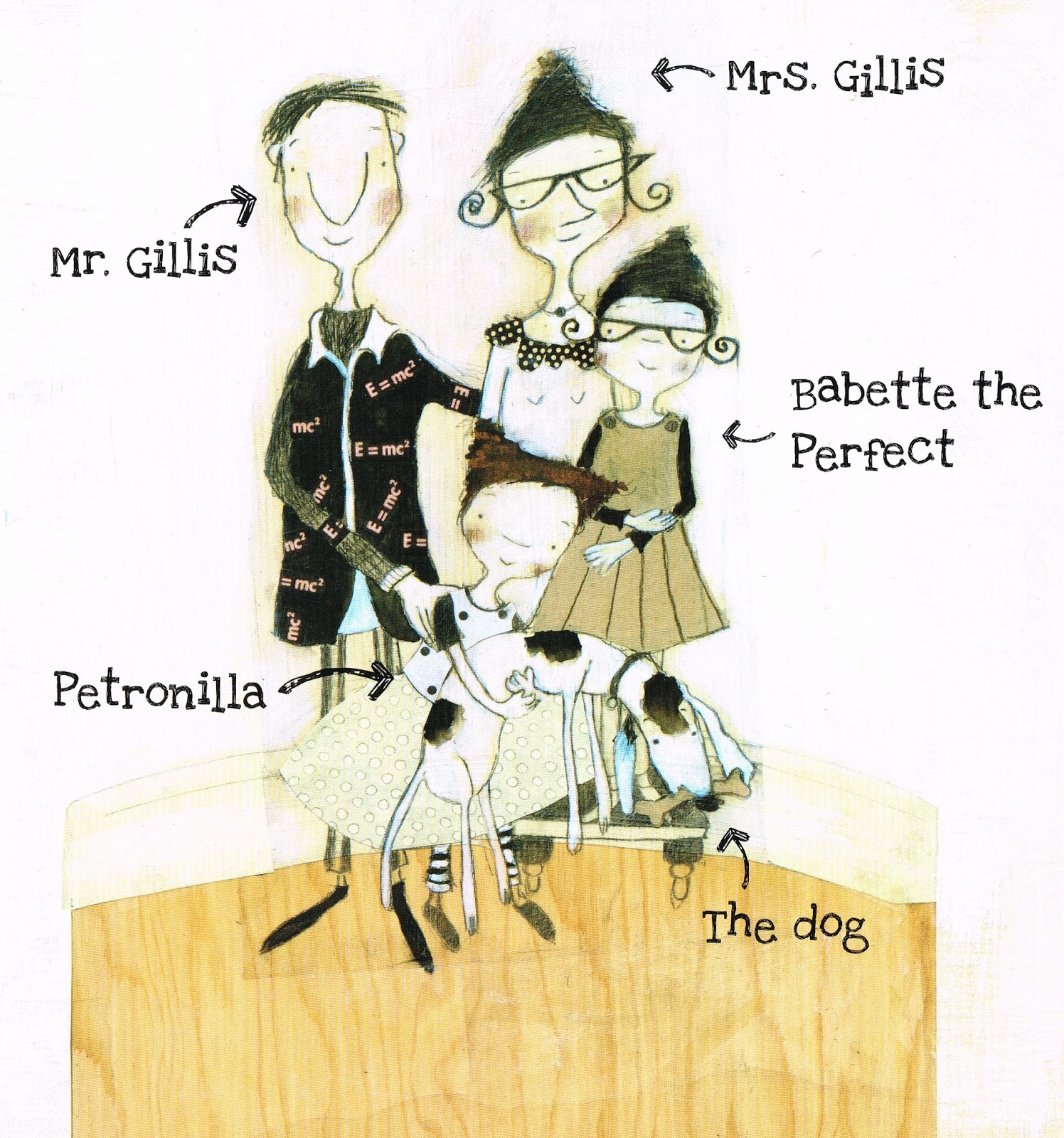
Petronilla is known in her family to have "a talent for chaos" and probably more so when compared to her perfect sister Babette.  But nothing could have prepared her mother for the twist of process when colours from the washcloth during a bath begin to transfer to Petronilla's skin and then her mother and the whole bathroom.  Joyously, Petronilla continues to exclaim, "Wash on! Wash on! Wash on!' regardless of her mother's demands she say "Wash off!" When her father, Babette and dog come to see what's going on, the colours continue to transfer from one object to another.  Although the family thinks they'll just stay in the house until Petronilla drops her new mantra, no one could foresee the weeks that would pass as the child refuses to relinquish her powerful chant.
From Wash On! by Michèle Marineau, illus. by Manon Gauthier
Finally, the family visits the doctor who declares a case of acute coloritis, a condition so contagious that the whole planet becomes infected.  But, as lovely as all the colours are, everything blends in with everything else and no one can differentiate between objects. Even their dog is hard find except when his bark alerts them to his feeding time.  That is, until they can not locate him because there is no bark.  It is only then, when she is desperate to find their dog, that Petronilla changes her tune and finds "Wash off!" just as useful in enacting change in her home and around the world.
From Wash On! by Michèle Marineau, illus. by Manon Gauthier
Wash On! may be based on a silly situation in which colours are transferred rather than cleaned off but the story actually has several powerful messages hidden in that imaginative scenario.  First, Wash On! focuses on the joie de vivre of a world filled with colour. We all need a little colour in our lives, though some people need more and some need less.  But like anything, it is possible to have too much of a good thing, as everyone learns, including Petronilla.  Once the colours explode and there is no contrast and no way to differentiate objects, that joy is lost, like the dog, in an overabundance of stain.  Splashes of colour are wonderfully invigorating and therapeutic but excesses are debilitating and even harmful.  Second, Governor General award-winning author Michèle Marineau recognizes the power of children in defining the world and their need to manage their own circumstances.  Her family may think of Petronilla as chaotic but she seems to just want a hand in determining the life she will lead.

Michèle Marineau tells powerful stories in her native French language and this translation by Pajama Press's Erin Woods highlights that poignancy with merriment and spirit.  That same boldness is depicted with daring by Manon Gauthier's mixed media illustrations. Manon Gauthier, whose artwork I've raved about in Pajama Press's Elliot (Julie Pearson, 2016), All the World a Poem (Gilles Tibo, 2016), Good Morning, Grumple (Victoria Allenby, 2017) and Middle Bear (Susanna Isern, 2017), continues to do amazing things with gouache, pencil and paper collage, ever different and totally wonderful.

Wash On! may say a lot about living a life in colour but it also reminds us about moderation and having control over the lives we lead.  Young readers will laugh at the silliness of the family's situation but we can all learn a lesson or two from Petronilla and her splashy world.

December 19, 2017

The Stone Heart: The Nameless City, Book 2

Written and illustrated by Faith Erin Hicks
Colored by Jordie Bellaire
First Second
978-1-62672-159-3
243 pp.
Ages 8-13
2017

Yesterday I jumped on The Nameless City bandwagon with my review of the first book in this trilogy (The Nameless City by Faith Erin Hicks, First Second, 2016) and am fortunate to have been able to read the second book The Stone Heart immediately. Now I just wish September 2018, the release date for Book 3 The Divided Earth, wasn't months away.

When we left the Nameless City in Book 1 of the series, Kaidu and Rat had helped save the ruler, the General of All Blades, and his son Erzi from assassination.  It is three months later and the General is proceeding with the plan of General Andren, Kaidu's father, to unite the factions of the Nameless City and beyond in one council.  Erzi believes the plan absurd but more so because he had always envisioned himself as the city's next ruler.

"You promised it to me." (pg. 19)

From The Stone Heart 
by Faith Erin Hicks
The secret of how the Northern People tunnelled through the mountain is at the heart of the power struggle and peace in the Nameless City and it seems everyone wants to learn all they can. There are legends of a great fire that could burn through rock and flesh but it is generally accepted that, even if the formula were discovered, perhaps hidden by the monks at the Stone Heart, no one now has the ability to translate their language.  Through back stories, we learn that Erzi's bodyguard, Mura, once lived at the monastery at the Stone Heart and was turned out after which she was rescued by Erzi.  She obviously harbours much bitterness towards the monks and this comes to play after Erzi becomes the new General of All Blades and the search for the formula drives them to storm the Stone Heart for answers.
From The Stone Heart
by Faith Erin Hicks
The clash of peoples who want different things for the Nameless City and for themselves is at the core of The Stone Heart.  Erzi's father is attempting to embrace all who live within the city and outside to help rule but Erzi will not have it, knowing the power he would lose.  How to balance the needs of a few over the greater good is key in The Stone Heart, and, needless to say, there is much violence, discrimination and power struggles as this balance is set askew. Faith Erin Hicks's story is both adventure and character study, a fine mix of "What's going to happen next? and "Did he really do that?"

It is only in The Divided Earth that we will learn how the Nameless City will be saved, and saved it will be surely with Kai and Rat at the front of the pack.

August 24, 2017

Me, Me, Me

Written by Annika Dunklee
Illustrated by Lori Joy Smith
Kids Can Press
978-1-77138-660-9
32 pp.
Ages 4-7
September 5, 2017

Yep, it's all about her.  Annie, friend of Lillemor and Lilianne, and the girl in charge.  Or so she thinks, putting herself in control of all decisions relating to a talent show in which the three friends hope to enter as an all-girl singing group.  Sadly, every idea Lillemor and Lilianne bring up at their picnic meeting is vetoed by Annie.  Though the three seem to appreciate the different aspects each girl brings including the languages they speak and the treats they bring, when it comes to their orders of business, Annie decides all "because this whole thing was my idea."  Lillemor and Lilianne may comply but reluctantly.  It isn't till Annie has decided on the song they will sing, the outfits they will wear, the singing role each will play and the name of the group–Mi Mi Mis– that Lillemor and Lilianne speak up.
From Me, Me, Me 
from Annika Dunklee 
illus. by Lori Joy Smith
At first Annie is fine about being a solo act. But she decides something is missing and invites Penny and Ella to join her.  Unfortunately, the two girls give Annie a taste of what she gave her friends.  They decide on the costumes and the name, and relegate Annie, to her dismay, to background dancer.  Annie realizes her mistake and apologizes to Lillemor and Lilianne, promising to listen to their ideas.  A new meeting is held with the same orders of business but with very different outcomes that lead to a winning act.

Annika Dunklee, who wrote the award-winning My Name is Elizabeth (Kids Can Press, 2011), tells a simple story of getting along with friends for the success of all.  By making the girls different in languages spoken–Swedish, French and one Annie creates herself–and in delicious treats shared at their picnic, Annika Dunklee is able to emphasize that differences do not preclude children from coming together.  In fact, these differences make the combination of friends so much richer.

Lori Joy Smith, a PEI illustrator whose name most definitely will be added to an update of youngCanLit Who's Who of illustrators, adds the vivacity of youth to Me, Me, Me, making it like a literary cupcake in colour and tone.  Like Annika Dunklee's text which is never heavy-handed with embedding diversity, Lori Joy Smith makes sure to highlight the differences in the girls' hair, skin and dress while still blending their similarities through expression and friendship.
From Me, Me, Me 
by Annika Dunklee 
illus. by Lori Joy Smith
Character ed is pedagogical programming whereby children develop positive character values like cooperation and responsibility.  Though not planned as a pun on words, I believe book characters can be used to educate readers about situations that would require the establishment of such positive characteristics, perhaps by witnessing circumstances in which they are lacking.  Me, Me, Me as the name implies tells the story of a self-centred child who needs to see the value of cooperation and listening in order to succeed.  As teachers, we know that whether children are 4, 9 or 15, there will be conflicts between friends and they are conflicts that may seem like the end of the world.  Me, Me Me demonstrates that that end may only be a temporary one if the Me, Me, Me becomes Us, Us, Us.

July 15, 2015

Crash: The Game, Book 3

by Eve Silver
Katherine Tegen Books/HarperCollins
978-0-06-219219-6
357 pp.
Ages 13+
June 2015

If you haven't read Rush and Push, Books 1 and 2 respectively of Eve Silver's The Game trilogy, do read them first.  Crash will be all the more enjoyable with the background gleaned from the first two books.  And you'll see why Rush won the 2015 White Pine award of the Ontario Library Association's Forest of Reading readers' choice award program.


><><><><><><><><><><><><><

Everything that teen Miki Jones thought she knew about the game–in which she and boyfriend Jackson and friend Luka are pulled into by the Committee to fight the alien Drau–comes crashing down in Crash, Eve Silver's final book of her The Game trilogy.

As debilitating and off-centering as the car crash that has landed both Miki's father and her best friend Carly clinging to life in hospital, so is Miki's understanding of how the game works after she finds herself telepathically communicating with an unarmed Drau who pleads for mercy.  This is not the enemy they’ve all been told about.  And now there’s some weird stuff going on in the game, with the players feeling sluggish and images breaking up into pixels, and then it’s not even being played the way they’ve learned it to be.  Even outside the game, Miki keeps getting this creepy feeling like she’s being watched.

So not only is she worrying about her father and Carly and maybe even Jackson leaving her like so many important people in her life already have, now she is brought before the Committee who question her about that encounter with the Drau.  Fortunately, Jackson's sister, Lizzie, who had died in the game but has connected with Miki from a different dimension, instructs Miki how to keep the Committee from getting inside her head and taking over all her memories.

Everything is a muddle.  How is Miki to reconcile what she knows, what she believes, what she feels, and what Jackson says and does, with what they are being told?  Too many inconsistencies and the feeling of being manipulated has Miki on a trajectory to crash through everything she knows or thinks she knows.

Crash is a fitting conclusion, wrapping up The Game trilogy with a very convincing resolution to the story of manipulation for entertainment purposes by an almost omnipotent entity.  And while Eve Silver reassures the reader that there are happy endings for seemingly ill-fated couples and that for those repeatedly overwhelmed by loss it is not endless,  The Game trilogy is a cautionary tale of finding enjoyment in war and destruction, even if it seems to be only in an action-packed role-playing game.  Enjoy the action of the story, including a number of cliff-hangers, but heed its subtle message.  Eve Silver has shared it so expressively, making it worthy of noting.

March 10, 2013

Arrow

Written by R. J. Anderson
Orchard Books
978-1-40831-262-9
357 pp.
Ages 11-15
2011


Every once in a while I decide to review a book that was published a few years ago just to bring attention to a worthwhile read that I may have missed.  In fact, I have enjoyed the first two books of R. J. Anderson's Faery Rebels series, Spell Hunter (HarperCollins Canada, 2009) and Wayfarer (HarperCollins Canada, 2010), reading them when they were published, and had looked forward to a third book in the series.
However, the third book was never published in Canada, only in the United Kingdom, and its name follows the alternate titles for the books published in Great Britain.  Arrow is the title of this third book, following Knife (Orchard Books, 2009) and Rebel (Orchard Books, 2010).


So, now that I've tried to clarify that there were only two books in the series prior to Arrow, but with different titles depending on where they were published, I insist that you read them before this third book just because you'll not want to miss out on the superb story-telling and strong characterizations of the very different faeries and how they all come together in Arrow.  And in case you're convinced that faeries are for little girls, I might remind you of a mermaid prejudice I had that was completely unfounded. These faery books are not for little girls.  There is romance and treachery and bullying.  In Spell Hunter, there is talk of stealing children, a suicide attempt and a man using laudanum as a pain-killer.  Not your typical faery book.  What is typical of each of R. J. Anderson's books is the flavourful and robust language (e.g., "Great Gardener" is the faery expletive) and the intricate plots and subplots, chock full of connections and relationships, and secrets and revelations.  And I haven't even mentioned the humour.

Just for a little background, in Knife (a.k.a. Spell Hunter), a world of faeries live in the Oak, rarely leaving, for fear of death or losing their powers, except as dictated by their queen. Knife has become the Queen's hunter and freely leaves the Oak, reacquainting herself with a human young man, Paul. Together they learn the truth of the Sunderling, an event that cost the faeries their magic.

With the last vestiges of magic, fifteen-year-old faery, Linden, leaves the Oak in Rebel (a.k.a. Wayfarer), and with a human ally, Timothy, attempts to find other faeries and help the Oakenfolk recover their magic as well as ensure the people don't die off.  Together they bring back the Stone of Naming from the Green Isles, home of the Children of Rhys, to help protect them from the Empress, a self-appointed ruler who learns the true names of faeries to bind them to her forever.

Now the Oakenfolk, all female faeries under Queen Valerian, with Rob and the rebel faeries who escaped the Empress' control, and Garan and other Children of Rhys, who'd taken the Stone of Naming and left the Green Isles without permission, are preparing for an attack by the Empress. 

Back on the Green Isles, the Elders of the Children of Rhys are convinced that they have been cursed by the removal of the Stone of Naming, but are assured that they are not threatened by the Empress.  Rhosmari, formerly betrothed to Garan, is determined to retrieve the Stone of Naming.  Leaving the Green Isles through its secret portal, Rhosmari heads to the mainland and meets Martin, a faery who is trying to evade the Empress and her "enforcers", the Blackwings.  Having heard that the Empress has already attacked the Oak and burned it to the ground, Martin offers to work with Rhosmari to find Garan.

R. J. Anderson's newest faery rebel book plays on several keys themes, including trust vs. deceit, and freedom vs. bondage. While the power and control that the Empress seeks, at all costs, is the obvious example of bondage, Martin recognizes that the Children of Rhys have their own bondage.  Moreover the subjugation to which Rhosmari and others subconsciously relinquish control goes beyond these extraordinary constraints, often including the much more typical ones of guilt, remorse, survival, and love. The extent to which the individual chooses to accept or reject these restraints or even see them as such depends on the individual.  And the submission of one's trust to another, for their affections, or their loyalty or their admiration.

But if you're not looking for understanding or clarification with regards to these themes, and would still enjoy a fantastical romp, Arrow (after Knife and Rebel) provides an inviting portal into the faery realm.  But be forewarned:  Arrow's world of faeries has little in common with those in which faeries scatter sparkly dust and flit around granting wishes.  This one is immersed in politics, love, and allegiances - all the issues sure to cause heated discussions among humans and faeries alike.