Showing posts with label Erin Woods. Show all posts

April 10, 2018

Wash On!

Written by Michèle Marineau
Illustrated by Manon Gauthier
Translated by Erin Woods
Pajama Press
978-1-77278-018-5
40 pp.
Ages 4-7
April 2018

Though most of us wash off any dirt and colours that stain our skin, a little twist of words and fate have colour splotches washing onto little Petronilla in Quebec author and translator Michèle Marineau's newest picture book Wash On!
From Wash On! by Michèle Marineau, illus. by Manon Gauthier
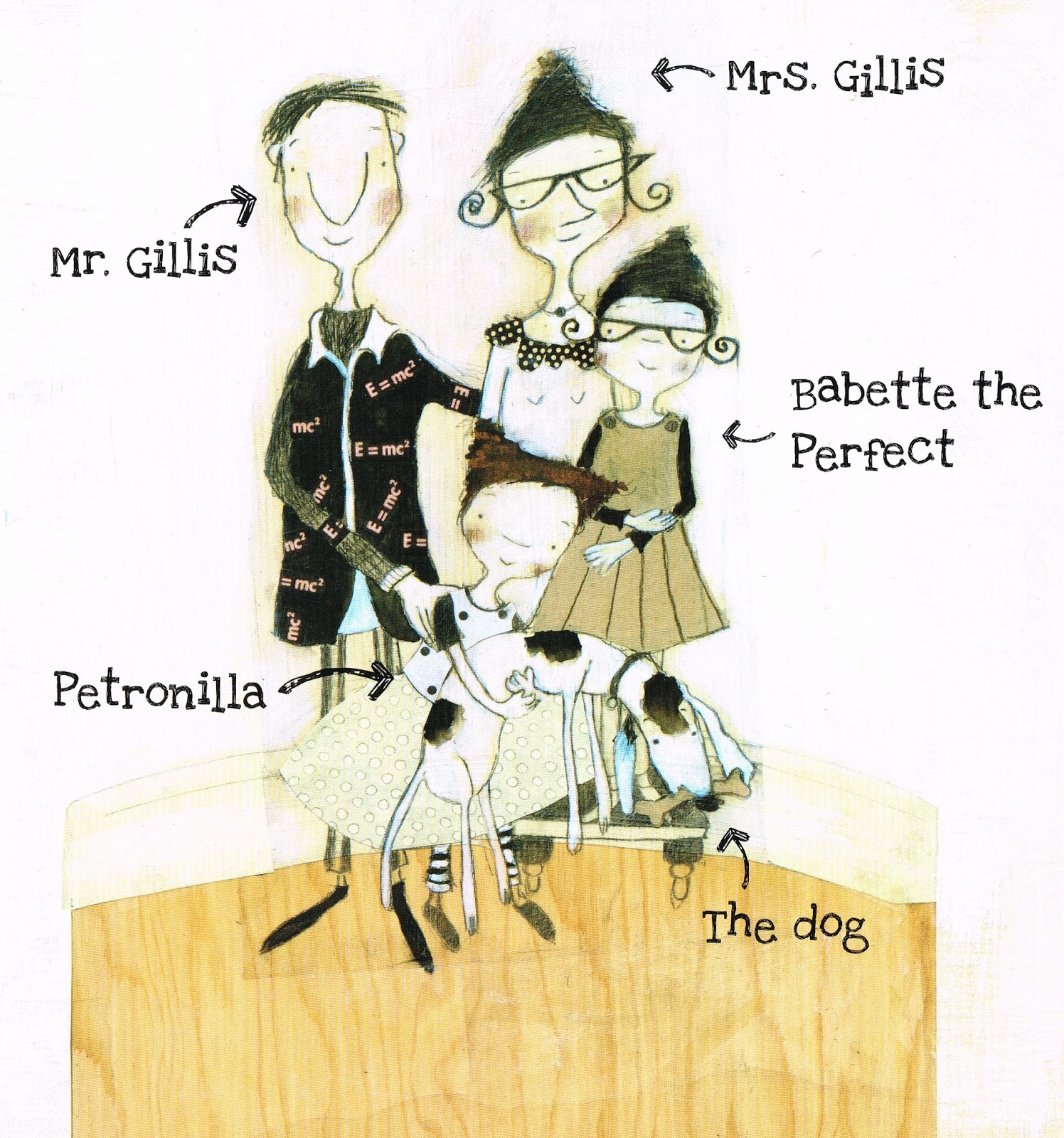
Petronilla is known in her family to have "a talent for chaos" and probably more so when compared to her perfect sister Babette.  But nothing could have prepared her mother for the twist of process when colours from the washcloth during a bath begin to transfer to Petronilla's skin and then her mother and the whole bathroom.  Joyously, Petronilla continues to exclaim, "Wash on! Wash on! Wash on!' regardless of her mother's demands she say "Wash off!" When her father, Babette and dog come to see what's going on, the colours continue to transfer from one object to another.  Although the family thinks they'll just stay in the house until Petronilla drops her new mantra, no one could foresee the weeks that would pass as the child refuses to relinquish her powerful chant.
From Wash On! by Michèle Marineau, illus. by Manon Gauthier
Finally, the family visits the doctor who declares a case of acute coloritis, a condition so contagious that the whole planet becomes infected.  But, as lovely as all the colours are, everything blends in with everything else and no one can differentiate between objects. Even their dog is hard find except when his bark alerts them to his feeding time.  That is, until they can not locate him because there is no bark.  It is only then, when she is desperate to find their dog, that Petronilla changes her tune and finds "Wash off!" just as useful in enacting change in her home and around the world.
From Wash On! by Michèle Marineau, illus. by Manon Gauthier
Wash On! may be based on a silly situation in which colours are transferred rather than cleaned off but the story actually has several powerful messages hidden in that imaginative scenario.  First, Wash On! focuses on the joie de vivre of a world filled with colour. We all need a little colour in our lives, though some people need more and some need less.  But like anything, it is possible to have too much of a good thing, as everyone learns, including Petronilla.  Once the colours explode and there is no contrast and no way to differentiate objects, that joy is lost, like the dog, in an overabundance of stain.  Splashes of colour are wonderfully invigorating and therapeutic but excesses are debilitating and even harmful.  Second, Governor General award-winning author Michèle Marineau recognizes the power of children in defining the world and their need to manage their own circumstances.  Her family may think of Petronilla as chaotic but she seems to just want a hand in determining the life she will lead.

Michèle Marineau tells powerful stories in her native French language and this translation by Pajama Press's Erin Woods highlights that poignancy with merriment and spirit.  That same boldness is depicted with daring by Manon Gauthier's mixed media illustrations. Manon Gauthier, whose artwork I've raved about in Pajama Press's Elliot (Julie Pearson, 2016), All the World a Poem (Gilles Tibo, 2016), Good Morning, Grumple (Victoria Allenby, 2017) and Middle Bear (Susanna Isern, 2017), continues to do amazing things with gouache, pencil and paper collage, ever different and totally wonderful.

Wash On! may say a lot about living a life in colour but it also reminds us about moderation and having control over the lives we lead.  Young readers will laugh at the silliness of the family's situation but we can all learn a lesson or two from Petronilla and her splashy world.
April 19, 2017

Water's Children: Celebrating the resource that unites us all

Written by Angèle Delaunois
Illustrated by Gérard Frischeteau
Translated by Erin Woods
Pajama Press
978-1-77278-015-4
32 pp.
Ages 4-8
April 2017

Of course water is important.  Everyone knows it is the basis for life.  But water is so, so much more than just the liquid that sustains life. It enriches, energizes, moves, alters and drenches and Water’s Children is truly a celebration of that life force in a global context.

From Water's Children
by Angèle Delaunois
illus. by Gérard Frischeteau
trans. by Erin Woods
Quebec author, visual artist and publisher Angèle Delaunois takes the reader across the world to witness the importance of water to the children of different countries.  Each child describes their experiences with getting water, using water, and what water represents, with a final summation statement.  Canada is represented by two spreads, one from Quebec and one from Nunavut, both which speak in terms of what is most familiar to young  Canadian readers.

For me, water is everywhere:
the tap that I turn on without thinking,
the bathtub full of bubbles,
the sprinkler that greens the grass,
the lake that summons us for vacation fun.
For me, water is a burst of laughter. (pg. 7)

For me, water is winter:
the ocean and the river trapped beneath the ice,
the snowflakes that blur the horizon where earth becomes sky,
the frost that whitens my lashes,
the solitude and silence of the long polar night.
For me, water is a perfect crystal of snow. (pg. 8)

While other texts and illustrations will be familiar or at least obvious such as the Russian child of a fishing village and the rain experienced by an urban child in Germany, many spreads will rouse thoughtful discussions of unfamiliar depictions of water.  There’s the flooded lands after a dam is built, the Brazilian rainforest, the orange groves on lands that were once desert, and water trucks in Mauritania.  Imagine worlds in which water is  “an outstretched hand” or “a cup of mint tea.”  The ultimate word goes to an unborn child for whom “water is the song of my mother” and who speaks for the world declaring that “For me, for all of us, water is a matter of life.

From Water's Children
by Angèle Delaunois
illus. by Gérard Frischeteau
trans. by Erin Woods
The artwork of Montreal animator, graphic artist and illustrator Gérard Frischeteau rings with authenticity, depicting each global child in both personal and expansive landscapes, often providing details about daily life and family.  From the scarlet macaw of the rainforest to the bowler hat of the South American girl with her alpaca, each spread provides a glimpse into another world in which water is life.
From Water's Children
by Angèle Delaunois
illus. by Gérard Frischeteau
trans. by Erin Woods
In fact, “Water is Life” is a special touch in Water’s Children. On watermarks adorning each spread, the term “water is life” is translated into a corresponding language, including French, Inuktitut, Catalan, German, Portuguese, Tamil, Arabic and Wolof with a final listing of all regions and languages represented in the book.

I know I’ve listed the reading audience as 4 to 8 years of age but don’t follow that.  Water’s Children’s audience should read “All ages” or “Everyone” because it is an extraordinarily inspirational examination of the importance of water throughout the world.  You can save it for World Water Day (March 22) but I recommend it for this weekend’s Earth Day (April 22) and anytime meaningful attention be paid to a global resource i.e., always.

March 02, 2017

Under the Umbrella

Written by Catherine Buquet
Illustrated by Marion Arbona
Translated by Erin Wood
Pajama Press
978-1-77278-016-1
32 pp.
Ages 4-8
March 2017


If Under the Umbrella proves anything, it's that there's always a little sunshine associated with the gloominess of rain if you just open your eyes to see beyond the umbrellas.
From Under the Umbrella 
by Catherine Buquet 
illus. by Marion Arbona
A grumbling man dashes through the streets of the town, bracing himself and his umbrella against the sleeting rain.  The man’s suit and umbrella seem as colourless as he is, the only colour the pink of his  raw hands.  He is wet, he is cold and he is late.  It’s not surprising that the older man does not see the young boy mesmerized by the edible treats glowing from within a bright and warm inviting shop.  But when the wind hurls the man’s umbrella away, the rosy-cheeked little boy retrieves it for the man who shows his gratitude with a red rhubarb-raspberry tart. That delightful treat brings the two into a shared experience that takes the chill off the weather for the two unlikely friends.  
From Under the Umbrella
by Catherine Buquet 
illus. by Marion Arbona
Under the Umbrella was first published in French as Sous le parapluie (Les 400 coups, 2016) and garnered much attention for its simple but restorative story told with the pencil and gouache illustrations of Marion Arbona, the artist behind numerous French-language books like Arachnéa and English-language picture books The Good Little Book and Sam’s Pet Temper.  Catherine Buquet’s text suggests a darkness to the man’s trek in the rain, using words like "grumbled", "growled", "muttered", "attacked", "forced", and “With striding feet and stormy heart” (pg. 15), making it evident that the man’s mood is as foul as the weather.  Yet when she introduces the boy who is “entranced” “at a warm and glowing window” and uses words like “gazes”, “the wonders”, “delight”, “shimmered” and “treat”, the atmosphere changes completely, though the rain continues to fall.  What a great lesson in word choice for older readers and writers to witness the impact vocabulary has on atmosphere.  Marion Arbona’s artwork conforms to that climate, using dusky greys and sharp angles for the dreary scenes  while shining bright yellows and reds and pinks within the patisserie and then upon the two as they savour a shared treat.  The interaction between the balding older man in the pin-striped suit and the little boy in cap and short pants is fleeting but colossal in its momentary importance.  I’m glad the boy was taking the time to enjoy the visual display and that the man took the time to acknowledge the boy.  It’s a small thing, but it’s a good thing.

November 10, 2016

Little Fox, Lost

by Nicole Snitselaar
Illustrated by Alicia Padrón
Translated by Erin Woods
Pajama Press
978-1-77278-004-8
32 pp.
Ages 3-6
September 2016

This is certainly a week for Pajama Press on CanLit for LittleCanadians with Little Fox, Lost being the third book from this publisher that I've reviewed in the past 4 days.  That says a lot about Pajama Press's releases. Except for review copies, which I get from many publishers, I receive no renumeration for any reviews. I just review those books that I believe need to be read and Little Fox, Lost is such a book.  Written by French author Nicole Snitselaar and illustrated by Venezuelan Alicia Padrón, and translated by Pajama Press’s own Erin Woods, Little Fox, Lost is a beautiful, soft book in textual sentiment and physical texture (it has that wonderful cushioned cover) with illustrations evocative of the majesty and solitude of a forest in winter.

After a brilliant snowfall, Mama Fox takes Little Fox out of their den for a walk.  Though cautioned to stay close, Little Fox becomes distracted by his paw prints in the snow while his mother chats away with Mrs. Gray Fox.  It doesn’t take long for Little Fox to realize that he’s gone a little deeper into the forest than he’d planned.  He can’t even retrace his steps which run in every direction.  Fear overcomes Little Fox who starts to cry.  Even when an old owl tries to reassure Little Fox and suggests leading him out of the forest, Little Fox recalls his mother’s wise words:

"If ever you are lost, my child,
Don’t let a stranger guide you.
Be still, and I will search the wild
Until I am beside you." (pg. 20)
From Little Fox, Lost 
by Nicole Snitselaar 
illus. by Alicia Padrón
Even better, Little Fox begins to sing his mother’s rhyme aloud, with the owl’s help, hoping to draw his mother to him.  With the help of some other animals who are also drawn to the singing, Little Fox is reunited with Mama Fox.

From Little Fox, Lost 
by Nicole Snitselaar 
illus. by Alicia Padrón
Little Fox, Lost has a happy ending to a fearful situation for both parent and child, and I suspect that the rhythmic verse in Little Fox, Lost could become a go-to teaching tool for telling a child what to do when lost.  If there is a tune with it, that verse could become widespread in child safety measures.  But, in the meanwhile, read Little Fox, Lost with your children at home and at school to inform them about what to do if lost and reassure them that they will be found.  Because of Alicia Padrón’s stunning artwork, children will lulled into the story and captivated by her delicate creatures and expansive landscapes. There’s a softness and quiet that comforts and envelops the reader in a blanket of safety and support, and even have you looking forward to winter and snow. (I just wish my scanner could depict more accurately the colours within.)

Everything about Little Fox, Lost is sublime, from the lyrical text and its message, to the artwork, the cover, the framing of the words on the page, and the endpapers. Little Fox, Lost is lovely, through and through, and deserving of appreciative readings, over and over.


August 17, 2016

All the World a Poem

by Gilles Tibo
Illustrated by Manon Gauthier
Translated by Erin Woods
Pajama Press
978-1-77278-009-3
32 pp.
Ages 5+
August 2016

The title All the World a Poem, taken from a poem "The Great Voice" by American professor of horticulture Liberty Hyde Bailey, launches an ardent tribute to both poetry and the natural world by award-winning author Gilles Tibo and rising star Manon Gauthier whose artwork recently  enriched the text of Elliot (Julie Pearson, Pajama Press, March 2016).

All the World a Poem is a lyrical odyssey examining the richness of poems in shape and content, place and time, purpose and destination. According to Gilles Tibo’s dreamy text, poetry can be anything and everything, filled with grace and love, both reverent and impassioning.
A poem has fallen from the sky,
slipping from a cloud.
A second has sprouted from the earth
like a rainbow flower.
A third floated in from the sea,
bobbing at the end of the big pier.
I gather up the three poems
and hold them to my heart.
Then I continue my journey
toward the endless country
of verses yet to come.
(pg. 14)
From All the World a Poem
by Gilles Tibo, illus. by Manon Gauthier
The translation from Gilles Tibo’s French Poésies pour la vie (Isatis, 2015) is beautifully rendered by Pajama Press’ own Erin Woods, who also capably gave English voice to Elliot (Pajama Press, 2016).  The text is sublime, a celebration of sounds and rhythms and expressive verse.  And Manon Gauthier again creates her distinctive illustrations of paper collage art that gives texture and whimsy a totally unique look.  The luxuriance of the words and the art is almost overwhelming in its intimate beauty.

All the World a Poem has the lightness and spiritual delicacy that suggests it could take flight. Fortunately, readers will discover that All the World a Poem has effortlessly become tethered by heart strings to our glorious world.
From All the World a Poem 
by Gilles Tibo, illus. by Manon Gauthier

March 01, 2016

Elliot

by Julie Pearson
Illustrated by Manon Gauthier
Translated by Erin Woods
Pajama Press
978-1-927485-85-9
32 pp.
Ages 5-8
For release March 2016

As soon as I read Elliot, I knew it was something very, very special.  And then I learned that Elliot was a translation (capably handled by Pajama Press' Managing Editor Erin Woods) of a 2014 French-language picture book from Les 400 coups that had already won Le Prix du livre jeunesse des Bibliothèques de Montréal for 2015.  Its subtlety and poignancy ensures its sure status as a winner in English as well!

Elliot is a young rabbit with lots of spirit.  But when he cries, or yells, or misbehaves, like all children are want to do at some point, his parents do not understand his needs.  They seek help as caring parents might and a social worker named Thomas comes and takes Elliot to live with another family “until his parents learned how to take better care of him.”

Everything is different with this new family but best of all they understand when Elliot is hungry, upset or needs attention.  And things are better when Elliot’s parents come to visit, so much so that eventually they are ready to take Elliot home again.  But, when things don’t change at home, Elliot is sent to another family.  Though he gets to visit with his parents, Elliot is told by Thomas that his “parents could never take care of him, because they did not know how.

But Thomas helps find Elliot a “a forever, forever family”,  one that does more than just understand him, because they love him.

Elliot is a heartfelt story about finding one’s true family, the one that will love and care for you forever. It might be a foster family, it may be the family you’re born into, or it might be the one that ultimately adopts you, as Elliot is fortunate to find.  But Julie Pearson embues the story of Elliot with an underlying sadness, for Elliot who is being a child and for his parents who try to do the best they can for him but can't quite manage it.  And Manon Gauthier’s subtle collages of muted colours, save for Elliot’s red striped shirt, express that sadness and the grayness of tenuous family so movingly.  I defy anyone to read Elliot and not cry for the emotional hardships Elliot braves and cheer for the rosy blush of happiness (with a splash of red text) that comes when Elliot becomes part of a new family.

There are very few picture books that I want to clutch a little tighter and hold onto in my heart a little longer.  Elliot is one that has touched me so.
From Elliot (pg. 27) by Julie Pearson