Showing posts with label residential schools. Show all posts

February 04, 2026

Shirley: An Indian Residential School Story

Written and illustrated by Joanne Robertson with Shirley (Fletcher) Horn
Second Story Press
978-1772604542
70 pp.
Ages 9–12
Releases February 10, 2026 
 
Shirley, who originally came from Moose Factory, before moving with her family to the southern area of Treaty 9, on the Missinaibi River, remembers being happy. They hunted, fished, trapped, gathered food, and grew food in their garden. But when she was five, the Indian agent came, declaring that since her parents had separated, she and her siblings, which included three-year-old Billy and older sister Frances, would be going with him.  
From Shirley: An Indian Residential School Story, written by Joanne Robertson with Shirley (Fletcher) Horn, illustrated by Joanne Robertson
They were taken by canoe to St. John's Indian Residential School in Chapleau. The first order of business was separating the children into different areas, and Shirley declares that "separating us was their first act of cruelty." (pg. 11) As Shirley and her little brother were too young for school, she became the companion for the minister's young daughter, and Billy was kept outside with the chickens.
From Shirley: An Indian Residential School Story, written by Joanne Robertson with Shirley (Fletcher) Horn, illustrated by Joanne Robertson
When she was finally able to go to school, Shirley loved learning and felt that "being in the classroom took away some of the loneliness." (pg. 17) She saw her siblings at church and at mealtimes, but never being allowed to speak to them was difficult. 
From Shirley: An Indian Residential School Story, written by Joanne Robertson with Shirley (Fletcher) Horn, illustrated by Joanne Robertson
When St. John's Residential School was condemned, the children were moved to Shingwauk Indian Residential School in Sault Ste. Marie. They were able to see their father again, who presented them with generous bags of apples and oranges—which the supervisors took to oversee—and their aunt and uncle who "filled up more than our bellies in our brief visit. They filled up our spirits with good feelings." (pg. 18)
 
At their new school, their routines were quite strict. (The inside front and back covers display "Pupils' 'Timetable,' Shingwauk Home" with times, bells and activities, from workers to work  to the marching to dormitories and the saying of grace, laid out.) And, though Shirley and her friends find ways to endure the rigorous nature of their lives—having competitions, daring each other, and grabbing moments of joy when possible—Shirley missed her family very much. Not surprising that Shirley with others attempted several escapes, though hers were not successful being children so far from home. 
From Shirley: An Indian Residential School Story, written by Joanne Robertson with Shirley (Fletcher) Horn, illustrated by Joanne Robertson
The stories of residential schools are plentiful and always horrific. For children to be taken from those who loved them and to be forced to dissociate from family and their culture and heritage is heartbreaking. Shirley (Fletcher) Horn's story, as shared with Joanne Robertson (who wrote and illustrated The Water Walker, 2017), is an honest portrayal of her experiences, but still told in an age-appropriate tone. Enough stories of survivors of residential schools and of those who were victimized in those schools are plentiful and tragic. But, because Joanne Robertson and Shirley (Fletcher) Horn take Shirley's reminiscences, good and bad, and focus on her perspective on them and how she dealt with everything, what comes across most importantly is her resilience. As a child, she made herself think of other things, to delve into her learning, and to "shut off my loneliness." (pg. 30) She fought off bullies, fear, and, most of all, that loneliness. She is strong and gutsy, and she endured.
 
The images in Shirley: An Indian Residential School Story are a unique blend of photographs, many from Algoma University archives of Shingwauk Residential School Centre and from Joanne Robertson, and drawings by Joanne Robertson. By mixing two media, she helps us focus on Shirley and the other children, and less on their grim circumstances. By limiting colour to the children and any positive circumstances they appreciated like a confirmation dress, or the river banked by trees, Joanne Robertson reminds us of where the goodness is. 
 
Shirley: An Indian Residential School Story is an important addition to all compilations of middle grade stories about Indigenous children in residential schools. By telling her story, just as she did to the Truth and Reconciliation Commission, Shirley (Fletcher) Horn's has found a way to share for those who endured the same and for those who cannot imagine it and need to be informed. 

July 23, 2025

Miya Wears Orange

Written by Wanda John-Kehewin
Illustrated by Erika Rodriguez Medina
HighWater Press
978-1-77492-125-8
40 pp.
Ages 6–8
August 2025 

Miya loves school and is far removed from experiencing the trauma that too many Indigenous youth had when sent to residential schools. But when her teacher reads a story of one little girl who had such an experience, it all becomes deeply personal for Miya.
 
Miya, the only Indigenous child in her class, is shocked to hear about the child in the book having her hair cut, having her doll taken away, and not being allowed to see her family. 
Miya thinks about how she is the only Indigenous kid in her class, and her chest feels tight.
From Miya Wears Orange, written by Wanda John-Kehewin, illustrated by Erika Rodriguez Medina
The story read by the teacher was an introduction to the upcoming
National Day for Truth and Reconciliation. But Miya cannot focus on the importance of September 30th. Instead, she wonders if she will be sent to residential school because she is Indigenous.
From Miya Wears Orange, written by Wanda John-Kehewin, illustrated by Erika Rodriguez Medina
So begins a discussion between mother and daughter. Miya's mother explains more about the residential schools and that those schools are closed, and Miya would never be taken from her. With her big heart and much compassion, Miya feels so much for the children who were taken, and her mother reassures her that that would never happen to her and that wearing an orange shirt would honour those children. 

Though Erika Rodriguez Medina gives illustrations that are endearing, the story of Miya Wears Orange is a sobering one, and it is one based in the circumstances Wanda John-Kehewin experienced with her own child. This is not a worry a child should ever have. But by answering her questions, reassuring her with her words and her actions—letting her stay home one day and continuing with their daily routines, including picking her up from school—Miya's mom, and probably Wanda John-Kehewin, did everything right. With time and reassurance, Miya will worry less, though I believe she will always think about and feel for those children who suffered. For her, wearing an orange shirt could be for any and every day.
From Miya Wears Orange, written by Wanda John-Kehewin, illustrated by Erika Rodriguez Medina
Just as I have previously reviewed a book by Wanda John-Kehewin (Visions of the Crow, Book 1 of Dreams series), so too have I reviewed those illustrated by Erika Rodriguez Medina. (In fact, the last book I reviewed, The Friendship Blanket, was illustrated by her.) Her ability to keep the warmth of her art no matter the nature of the story speaks to her creativity and skill. In Miya Wears Orange, Erika Rodriguez Medina does not emphasize the horrors of the residential schools, the source of Miya's anxieties. Instead, her focus is on the child and her mother and the good things about school. Her colour palette is limited with much burnt orange and purples and burgundy, and occasional blue or turquoise, keeping the tone of a story about remembrance and empathy. 
From Miya Wears Orange, written by Wanda John-Kehewin, illustrated by Erika Rodriguez Medina
Miya Wears Orange may become an important read for introducing young children to the National Day for Truth and Reconciliation and also why we wear orange on September 30th. But I think it will also open discussions about children sharing their worries so those concerns might be lessened or alleviated. For little children, worries can become magnified very quickly, and for children of Indigenous heritage, for whom generational trauma is a potential, it's incumbent upon parents, teachers and those who care for them to be aware of their responses to texts and news related to residential schools. Those stories are horrific, even when adjusted for a younger audience, and attention and compassion must be applied to ensure an affirmative outcome.

July 07, 2025

Little Shoes

Written by David A. Robertson
Illustrated by Maya McKibbin
Tundra Books
978-1-77488-172-9
48 pp.
Ages 3–7
For release July 29, 2025 

In 2023, David A. Robertson, award-winning author of When We Were Alone and On the Trapline, collaborated with illustrator Maya McKibbin to create The Song That Called Them Home. That partnership of story and art is recreated here with another story based on an intergenerational relationship and based in the experiences of Indigenous Peoples. 
From Little Shoes, written by David A. Robertson, illustrated by Maya McKibbin
James is a kid who thinks big thoughts. His thinking is so big that it keeps him from sleep. What are his thoughts? He thinks about the earth's movements and gravity, about the stars and the constellations. He seeks consolation and wisdom from his mom, and the comfort he finds in her arms helps him sleep. But the next night, his sleeplessness returns. Even remembering the stories his kōkum had told him about the constellations and such, it's James's mother who reassures him.
From Little Shoes, written by David A. Robertson, illustrated by Maya McKibbin
And then James joins his kōkum on a march that ends at a memorial for children who'd attended residential schools and had never come home. There are numerous little shoes, teddy bears, tobacco ties, and flowers. When his grandmother shares with him that her own sister did not return from their residential school, James is overcome. That night when he again cannot sleep, he thinks about all those little shoes.
 
Little Shoes is both a big story about generational trauma of residential schools but a story that focuses on the comfort that comes from family. James's empathy is extraordinary in depth but perhaps not uncommon. Children, especially those who are empathetic, can feel so intensely about others' traumas and other experiences. David A. Robertson's "Author's Note" indicates a familial connection to this story, and I am impressed by the depth of feeling and thinking James, or David A. Robertson's son, demonstrates. I'm also saddened to think about the children in the residential schools and the children like James who empathize with them feeling so much trauma. I'm also thankful for those who are there to reassure, to illuminate, and to love those children through their challenges. 
From Little Shoes, written by David A. Robertson, illustrated by Maya McKibbin
Maya McKibbin, a Two-Spirited multidisciplinary visual artist living on the unceded traditional territories in BC, uses an interesting palette in their digital illustrations. Many of the double spreads are bathed in the dark blues of a night sky that are only lightened with the moonlight and stars. When the story turns to James' walk with his kōkum to the memorial, the colours meaningfully turn to the many hues of oranges, both a reminder that every child matters, and that there is hope for a better future. Beyond their colour palette, Maya McKibbin evokes comfort and discomfort, as well as affection and thoughtfulness, with great sensitivity.
 
Little Shoes, the book, will be a great discussion starter for families and classes about residential schools, about Every Child Matters, and about asking questions. But it will also inspire understanding and empathy for that which has happened so that tragedies like residential schools are not repeated.

September 28, 2024

Dad, I Miss You

Written by Nadia Sammurtok
Illustrated by Simji Park
Inhabit Media
978-1-77227-482-0
40 pp.
Ages 9-12
August 2024
 
Dad, I Miss You is a conversation that only takes place in the minds of a father and son as the boy is returned, again, to a residential school, leaving his father, mother, and two-year-old sister behind. It is a heartbreaking exchange that never takes place in person but tells us so much about the family and what they went through.
From Dad, I Miss You, written by Nadia Sammurtok, illustrated by Simji Park
As a young boy recalls catching a fish, having learned from his father, his father watches his son out the window, also thinking about how proud he is for feeding the family and sure the boy will be a good provider for his own family when he is a man.
From Dad, I Miss You, written by Nadia Sammurtok, illustrated by Simji Park
When the child hears the plane that will transport him far from his home, in his mind he tells his dad that he doesn't want to go back there. Hearing the same plane, his father is hopeful that it will be over soon if the boy just does what they say. After all, "They said it will be better this way." (p. 9)
 
And as the boy packs his things, he wishes that his dad would stop them from taking him and not to let them take his baby sister too. His dad has the same worries about his daughter.
From Dad, I Miss You, written by Nadia Sammurtok, illustrated by Simji Park
As the boy is taken away and endures the horrors of residential school, from the cold and lack of food to punishment and loss of language, his father keeps hope that his child is learning and will be home soon. But things are different when he returns home. Thankfully there is still love and acceptance and the wisdom to understand what he may be going through.
I know you've forgotten some parts of yourself, but after some time, you'll find yourself again. (p. 37)
Every story that speaks to the residential school experiences of Indigenous families is heartbreaking. But Nadia Sammurtok approach of getting into the unspoken thoughts of both son and father remind us of the emotional toll on both parents and children. While the son knows what he must live with at the school, from hunger and abuse, loss of culture and homesickness, his father does not know. The boy's family has been told a sanitized and misleading version of what his child will learn and do, but without first-hand accounts they cannot know what happens there. Still, as both father and son show stoicism, revealing their feelings and thoughts only to themselves, Nadia Sammurtok shows us the depth of their connection. They think about similar things but from different perspectives and readers can only hope that this connection will sustain their relationship through the hardships of a child taken away to residential school. (As the story is based on Nadia Sammurtok's own family history of residential school separation, we hope that they found strength in that connection.)
From Dad, I Miss You, written by Nadia Sammurtok, illustrated by Simji Park
Simji Park, an artist based in England and the Netherlands, uses pencil and watercolours to create scenes of great heart and feeling. Just as the dialogue between father and son is repressed, Simji Park's illustrations are subdued, using soft tones and quiet lines to depict simple scenes of home and school. She still conveys the muted comfort of home and the angst of the residential experience, but she does so with hushed ambience, reflecting the unspoken dialogue between father and son.

Every book that speaks about the tragedy of families separated when Indigenous children were forced into residential schools is unique and revealing. By focusing on the unspoken thoughts of a parent and a child, Nadia Sammurtok makes us see something a little different. The bond between a parent and a child is stretched and almost severed and yet there is hope that there is enough resilience to reunite and strengthen. Dad, I Miss You is a story of tragedy but also one of the capacity of family to reconnect and prevail.
 
• • • • • • •
Teaching about the residential school experiences is a challenging one for teachers and parents. A QR code appended to the book links to downloads of educational support materials. 
• • • • • • •

August 23, 2024

We Are the Medicine (Surviving the City, Vol. 3)


Written by Tasha Spillett
Illustrated by Natasha Donovan
Coloured and lettered by Scott B. Henderson
HighWater Press
978-1-77492-110-4
64 pp.
Ages 12–18
August 2024
 
The Indigenous teens that Tasha Spillett introduced in the first two books in her Surviving the City series, illustrated by Natasha Donovan, are set to graduate from high school and they're thinking about their futures. But how can they look forward when the remains of 215 children are revealed at a former residential school in BC? What future is there when the injustices of the past continue to be disclosed, and discrimination and wrongs persist in new forms?
From We Are the Medicine, written by Tasha Spillett, illustrated by Natasha Donovan, coloured and lettered by Scott B. Henderson
Now that Dez has accepted themself as a Two-Spirit person and is in a relationship with Kacey, and Miikwan is dating Riel, the teens are enjoying stronger connections with others and in their community. But when the unearthing of hundreds of unmarked graves of children at a former residential school makes the news, the impact on the teens, particularly Riel, is palpable. Speaking in their school's sharing circle with Elder Geraldine, they express their fears, dismay, hurts, and anger. Miikwan wants to help Riel as he lashes out, but Elder Geraldine recognizes the "We have a right to feel angry. We just have to find something to do with that energy so it doesn't harm us or anyone else." (p. 10)
From We Are the Medicine, written by Tasha Spillett, illustrated by Natasha Donovan, coloured and lettered by Scott B. Henderson
With Riel trying to find a way to turn his anger into something healing, they come up with the idea of a powwow for people to gather safely–it's still a time of masking and social distancing–to honour those whose young lives were taken from them. But when Riel is drawn to a protest nearby and his Afro-Indigenous cousin Ginebig follows him, it's Ginebig who is accosted by the police, as is Riel who comes to his defense. It is there, in jail, that Riel, after dreaming of the spirits of those children from the residential school, realizes that they themselves are the medicine for healing.

From We Are the Medicine, written by Tasha Spillett, illustrated by Natasha Donovan, coloured and lettered by Scott B. Henderson
Tasha Spillett takes on a lot of important social justice issues in We Are the Medicine, including residential schools, truth and reconciliation, police violence, monuments that are reminders of systemic racism, and more. It's a lot. But, just as they are issues that Indigenous people have been forced to experience historically and now, Tasha Spillett blends them authentically for these teens, who come from different places and narratives. Some are reminded of their own losses, like Riel whose brother Wayne was murdered by the police, or Dez whose beloved Granny had endured abuse at a residential school. They are understandably confused and angered and stymied by questions about why things have happened and are still happening, and how to make a difference and heal. The healing, for the past and for now, is imperative for them if they are to have a future for themselves and for others to make for themselves.

It's a new day. Let's do something good with it. (p. 15)
 
Natasha Donovan's illustrations, coloured and lettered by Scott B. Henderson, honour the characters in their diversity. Their experiences, at school, in relationships, with family and in the city, are distinct and reveal how they approach challenges and injustices. They may be different, but none are wrong. Natasha Donovan lets us see these teens in their struggles and their joys, from the harshness of police violence, told in sharp shapes and crushing colours, to the spirits who watch over the kids in muted blues. There's real darkness and sorrow in the news of the graves of residential school children and joy and colour in powwow regalia and in the gardening of medicinal plants. Natasha Donovan's art sets the mood and serves Tasha Spillett's story.

Dez and Miikwan and their friends carry heavy loads of history, family, fears, and abuse. The city has not made it easy for them. But their supports are growing, and they are finding ways to move forward, though never forgetting their pasts or that of their ancestors. Fortunately, they will heal and they will survive because the medicine comes from them.
 • • • • • • •
 
Surviving the City series
From the Roots Up (2020)
We Are the Medicine (2024)


April 24, 2023

Visions of the Crow (Dreams, Book 1)

Written by Wanda John-Kehewin
Illustrated by nicole marie burton
Lettering by Kielamel Sibal
HighWater Press (Portage & Main)
978-1-774920459
80 pp.
Ages 12+
April 2023 

Damon Quinn is a teen who is burdened with challenges that are not of his doing. His mother, Marnie, drinks and doesn't always ensure there's food in the house. At school, he's tormented by a bully Marcus who thinks it's clever to call him an Indian in the cupboard. And there's a crow that seems to be watching him. Damon meets Journey who comes to his defense, saying they should stick together even if he isn't fully Indigenous. When she calls him the Métis Crow Whisperer, he decides to ask his mother about his heritage.
From Visions of the Crow by Wanda John-Kehewin, illus. by nicole marie burton


Though Marnie has always been reluctant to talk about her family and Damon's, and she suggests he's better off without them, she reveals that she is Cree from Alberta, and his father was Métis. When she got pregnant at 17, she left her dysfunctional family on the reserve and she and his father moved to Vancouver. When Damon was four, his dad left to return to the reserve and made a new family with another woman.
From Visions of the Crow by Wanda John-Kehewin, illus. by nicole marie burton
Marnie recognizes that "sometimes when you run from things you run too far the other way" (pg. 21) and that maybe it would be beneficial for Damon to talk to someone. She suggests that this might be especially important to him after he has several visions that he doesn't understand, some when he's sleeping, others when he's awake, that place him in the time of his ancestors. Perhaps it's as he's been told, that the crow is a messenger from his ancestors that they are waiting to help him. 
 
Damon meets with a counsellor named Craig Ben Bolton who helps Damon see the meaning in his visions while also appearing in them. Damon sees his ancestors debating the signing of Treaty 6, juggling whether to starve or lose their land. He meets his great uncle who instructs him in honouring the drum. He witnesses the pain of his great-great-grandmother as a child at residential school. And while he learns about his family's past and Marnie becomes more forthcoming of her own history, Damon discovers the impact of intergenerational (a.k.a. transgenerational or historical) trauma on his mother and now him.
This trauma flows through the bloodlines and into you, Damon. (pg. 63)
From Visions of the Crow by Wanda John-Kehewin, illus. by nicole marie burton
Visions of the Crow is a powerful graphic novel of how the past is never in the past completely. Its impact can be far-reaching whether because of multigenerational trauma or through the learning of important lessons or passing on of cultural traditions or by framing who we are as individuals. And with visions that take him into the past experiences of his ancestors, Damon draws knowledge which can lead to healing and to growth for both Damon and his mother. As such, author Wanda John-Kehewin has made Visions of the Crow a story of family, albeit one that can go back generations and into the future. 
 
There is much darkness in Visions of the Crow and graphic artist nicole marie burton gives that shadow quality to their illustrations with their choice of palette and expressive characters that feel so much. There is much to feel in the story and art of Visions of the Crow and nicole marie burton's art takes us from a tenuous home situation to bullying at school and from anger at the unknown to the delicacy that comes from enlightenment, all while taking the reader from Damon's contemporary life into the past with ease.
 
Visions of the Crow is just the first book in this new graphic novel series–Damon's story continues in the second book, Visions From the Fire–and I anticipate more learning and healing to come for Damon and his family. Maybe it will come through surreal visions again or maybe through very real connection with living family but, whatever way Wanda John-Kehewin decides to take Damon's story, it will be forward.

February 14, 2022

Muinji'j Asks Why: The Story of the Mi'kmaq and the Shubenacadie Residential School

Told by Muinji'j and Shanika MacEachern
Art by Zeta Paul
Nimbus Publishing
978-1-77471-047-0
40 pp.
Ages 5+
January 2022 

Though the horrors of the residential schools has long been known, recent discoveries and revelations have brought shock and questions from more of us. Now imagine being a child whose family's history includes those residential schools. There would be questions, many questions. Hence, Muinji'j Asks Why.

Muinji'j, one of this book's storytellers, is a seven-year-old child who returns from school distraught that that day's schooling included discussions about residential schools that differed from what she'd been told by her Mi'kmaq grandparents, Nana and Papa. They decide it is time to tell her the history of her people.
From Muinji'j Asks Why by Muinji'j and Shanika MacEachern, illus. by Zeta Paul
From the beginnings when the Mi'kmaq were the one people present, Nana and Papa tell of a life born of Mother Earth. They tell of a way of life in which children were taught from their Elders and became knowledge keepers. Then, other people arrived to explore Mi'kma'ki and, what had begun as a relationship of cooperation and sharing, soon became one of control and assimilation. The Mi'kmaq may have been moved to reservations and unable to live their traditional ways but they still held onto their language and beliefs, no matter how much this angered the men who had all the power. And so, in a final push to convert the Mi'kmaq to their ways, they built schools to teach the Canadian way of life. 
From Muinji'j Asks Why by Muinji'j and Shanika MacEachern, illus. by Zeta Paul
The children were taken away by force and in Mi'kma'ki–today's Nova Scotia, New Brunswick and Prince Edward Island–they went to the Shubenacadie Residential School. There children had their hair, their clothing, their beliefs and their language taken and eventually they started to think the same as the others. They'd been taught to be ashamed of their heritage, and returning home caused them even more confusion, not fitting in as they once did. 

When little Muinji'j asks about the children who died at residential schools, Papa tells her with great sadness of the deaths of children from sicknesses and cruelties, and the overwhelming losses to families who rarely knew of the tragedies until long past.
From Muinji'j Asks Why by Muinji'j and Shanika MacEachern, illus. by Zeta Paul
Finally Nana shares with Muinji'j that, though the schools have closed, the hurts from the suffering have not gone away.
It is hard to heal from suffering that last lifetimes. It is hard to heal when so much was taken away and so much harm was done. But our people work together to heal and to be well. 

Still, by Muinji'j now knowing the stories, the truth can be shared. And with Muinji'j Asks Why, the sharing can continue.

Children hear and want to learn. They want to know the truth but the truth may not always be available or it is provided by a secondary source who doesn't know the reality of that truth. By asking her grandparents, Muinji'j opened herself to learning the truth of their histories and experiences, and with the help of her mother, Shanika MacEachern, Muinji'j (who also goes by Breighlynn) MacEachern passes that story on. That story is inclusive in its breadth of storytelling and in its compassionate approach to a history that is both far-reaching, rich and troubling. With Mi'kmaw artist Zeta Paul's illustrations, the reality and starkness of that story comes to light. Her art is clear and defined, and conveys the pride of culture, the sadness of a people forced to assimilate, the darkness of the residential school experience, and the promise that the stories won't be lost. 

With this picture book and an obligation to work towards healing–Nana is right when she tells Muinji'j that "It is time now for all of Canada to help us heal"–the darkness may allow more light to shine in and from the culture and people of the Mi'kmaq.

October 01, 2021

Ga's / The Train

Written by Jodie Callaghan
Illustrated by Georgia Lesley
Interpreted/translated by Joe Wilmot
Second Story Press
978-1-77260-200-5
36 pp.
Ages 6-9
September 2021

With National Day for Truth and Reconciliation being recognized yesterday, there has been an important push for greater understanding about the impact of residential schools on Indigenous people. Jodie Callaghan and Georgia Lesley's book The Train, first winner of the Second Story Press Indigenous Writing Contest, was on the book list I prepared to help educators and parents address the topic of residential schools. However, with a new dual-language edition–Mi'gmaw and English–released recently, I thought it was appropriate to review this meaningful book now.

From Ga's / The Train by Jodie Callaghan, illus. by Georgia Lesley, interpreted/translated by Joe Wilmot

A young Ashley is walking home from school through fields and weed-covered train tracks along the dirt road that leads to the old train station when she is surprised to be met by her uncle. She is perplexed when, in answer to her question about what he is doing there, he claims that he is waiting for the train. They both know that the train no longer runs here, but he explains that he's sad that their people have forgotten about this place.

From Ga's / The Train by Jodie Callaghan, illus. by Georgia Lesley, interpreted/translated by Joe Wilmot
Uncle remembers when the train would come infrequently and bring supplies. Then one day, he and his three eldest siblings were sent to the train with other children from the village and taken to a school where their clothes and baskets were taken away and their hair cut off. 
We weren't allowed to speak our language. We weren't allowed to be Nnu.

From Ga's / The Train by Jodie Callaghan, illus. by Georgia Lesley, interpreted/translated by Joe Wilmot

Uncle tells his niece how that train changed everything. But, he is hopeful that things will be okay some day, as he hears and sees the joy in her and her sister's play.

"I wanted you to know where your family has come from, Ashley. So you can be proud of where you are going."
Still he comes to remember and to wait for what was lost to come back. Now, Ashley offers to wait with him.
 
As with all stories of residential school survivors, there is heartbreak. It's for the loss of lives, of language, of family, of culture. It's also a bone deep legacy. Ashley's uncle needs to revisit this scene of tragedy, hopeful that slowly it will become something different for him. And now Ashley can help him in his waiting and remembering and grief. By matching the then and now with a significant intergenerational relationship, Jodie Callaghan of Listuguj Mi'gmaq First Nation demonstrates the long-lasting tragedy of the residential schools while suggesting that healing will come from younger generations. They are still impacted by what their elders experienced but they want to help in going forward, as they can. Jodie Callaghan's text is both rooted in the past and the future, much like a train moving from there to here, and is both anguished and expectant. The tragedy is acknowledged and healing awaited.
From Ga's / The Train by Jodie Callaghan, illus. by Georgia Lesley, interpreted/translated by Joe Wilmot
Georgia Lesley's artwork similarly depicts the contrast of the then and now, differentiating between the starkness and dullness of a wretched past in a residential school with the brightness and promise of a niece's company in a lively meadow in sunshine. Georgia Lesley's paintings have an organic feel to them, very much a grass-roots atmosphere, reflecting Uncle's candour and Ashley's readiness to learn and help.

In Ga's / The Train's powerful preface, it is revealed that Joe Wilmot, also of Listuguj First Nation, interpreted/translated The Train into Mi'gmaw in response to his own mother's loss of language with her subjection to residential school. He hoped "that this book will be a reminder of all that was left behind at the residential school." Sadly there was far too much left behind. Still, the telling of these stories helps bring them from the shadows into the light of now, offering opportunities for better.

September 24, 2021

National Day for Truth and Reconciliation (Orange Shirt Day): September 30


September 30th is National Day for Truth and Reconciliation. Also known as Orange Shirt Day since 2013 when residential school survivor Phyllis Jack Webstad recounted having her gifted orange shirt taken away when she was placed in residential school, National Day of Truth and Reconciliation is a day of remembrance for the Indigenous victims of the Canadian residential school system.

For those who want to learn more, through fiction or non-fiction, or who want to introduce the significance of the day to their students or children, this short list of picture books, fiction, graphic novels, young adult novels and non-fiction offers a wide perspective and content for all young readers.


Aggie and Mudgy: The Journey of Two Kaska Dena Children 
Written by Wendy Proverbs
Heritage House
144 pp.
Ages 9-12
2021
As Long As the Rivers Flow
Written by Larry Loyie with Constance Brissenden
Illustrated by Heather D. Holmlund
Groundwood Books
48 pp.
Ages 7-11
2002
 
 
These are My Words: The Residential School Diary of Violet Pesheens, Northern Ontario, 1966 (Dear Canada)
Written by Ruby Slipperjack 
Scholastic Canada
192 pp.
Ages 8-13
2016

Fatty Legs
Written by Christy Jordan-Fenton and Margaret Pokiak-Fenton
Annick Press
104 pp.
Ages 7-11
2010
 
I Am Not a Number 
Written by Jenny Kay Dupuis and Kathy Kacer
Illustrated by Gillian Newland
Second Story Press
32 pp.
Ages 7+
2016 
 
I'm Finding My Talk
Written by Rebecca Thomas
Illustrated by Pauline Young
Nimbus Publishing
32 pp.
Ages 4-9
2021
 
I Lost My Talk
Written by Rita Joe
Illustrated by Pauline Young
Nimbus Publishing
32 pp.
Ages 4-9
2021 
 
Looks Like Daylight: Voices of Indigenous Kids

Written by Deborah Ellis
Groundwood Books
256 pp.
Ages 12+
2013 

No Time to Say Goodbye: Children's Stories of Kuper Island Residential School
Written by Sylvia Olsen with Rita Morris and Ann Sam
Soni Nis Press
189 pp.
Ages10-14
2001

Not My Girl
Written by Christy Jordan-Fenton and Margaret Pokiak-Fenton
Illustrated by Gabrielle Grimard
Annick Press
36 pp.
Ages 6-9
2014 
 
The Orange Shirt Story
Written by Phyllis Webstad
Illustrated by Brock Nicol
Medicine Wheel Education
44 pp.
Ages 6-9
2018
 
The Outside Circle
Written by Patti LaBoucane-Benson
Illustrated by Kelly Mellings
House of Anansi Press
128 pp.
Ages 16+
2019
 
Phyllis's Orange Shirt

Written by Phyllis Webstad
Illustrated by Brock Nicol
Medicine Wheel Education
28 pp.
Ages 3-5
2019
Red Wolf
Written by Jennifer Dance 
Dundurn
256 pp.
Ages 12-15
2014

Residential Schools
(Indigenous Life in Canada: Past, Present, Future)
Written by Heather Hudak
Beechstreet Books
32 pp.
Ages 10-13
2020
 
Residential Schools: With the Words and Images of Survivors, A National History 
Written by Larry Loyie with Wayne K. Spear and Constance Brissenden
Indigenous Education Press
112 pp.
Ages 13+
2014
 
Righting Canada's Wrongs: Residential Schools
Written by Melanie Florence
Lorimer
128 pp.
Ages 9-13
2015
 
Secret Path
Written by Gord Downie
Illustrated by Jeff Lemire
Simon & Schuster
96 pp.
Ages 13+
2016 


Shin-Chi's Canoe
Written by Nicola I. Campbell
Illustrated by Kim LaFave
Groundwood Books
40 pp.
Ages 4-8
2008 


 Shi-shi-etko
Written by Nicola I. Campbell
Illustrated by Kim LaFave
Groundwood Books
32 pp.
Ages 4-8
2005
 
Speaking Our Truth: A Journey of Reconciliation
Written by Monique Gray Smith
Orca Book Publishers
160 pp.
Ages 9+
2017

Spirit Bear: Fishing for Knowledge, Catching Dreams
Written by Cindy Blackstock 
Illustrated by Amanda Strong 
First Nations Child & Family Caring Society of Canada
52 pp.
Ages 6-12
2018
 
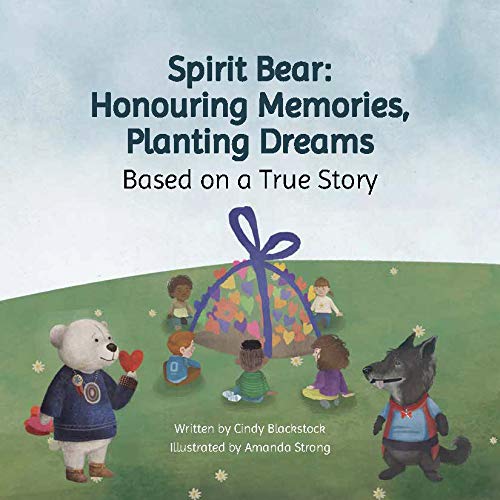
Spirit Bear: Honouring Memories, Planting Dreams
Written by Cindy Blackstock 
Illustrated by Amanda Strong  
First Nations Child & Family Caring Society of Canada
66 pp.
Ages 6-12
2019

Stolen Words 
Written by Melanie Florence
Illustrated by Gabrielle Grimard
Second Story Press
24 pp.
Ages 6-9
2017 

A Stranger at Home
Written by Christy Jordan-Fenton and Margaret Pokiak-Fenton
Annick Press
120 pp.
Ages 8-13
2011
 
Sugar Falls: A Residential School Story
(10th anniversary edition)
Written by David A. Robertson
Illustrated by Scott B. Henderson
Colours by Donovan Yaciuk
HighWater Press
48 pp.
Ages 14-18
2021
 
The Train
Written by Jodie Callaghan
Illustrated by Georgia Lesley
Second Story Press
32 pp.
Ages 6-9
2020
 
 Truth and Reconciliation (Indigenous Life in Canada: Past, Present, Future)
Written by Simon Rose
Beechstreet Books
32 pp.
Ages 10-13
20217

When I Was Eight 
Written by Christy Jordan-Fenton and Margaret Pokiak-Fenton
Illustrated by Gabrielle Grimard
Annick Press
32 pp.
Ages 6-9
2013
 
When We Play Our Drums, They Sing!
/ Lucy & Lo
(The Journey Forward, Novellas on Reconciliation)
Written by Richard Van Camp / Written by Monique Gray Smith, Illustrated by Julie Flett
McKellar & Martin
160 pp.
Ages 19-13
2018
(n.b. this is a "flipbook" with two stories)
 
When We Were Alone 
Written by David A. Alexander
Illustrated by Julie Flett
HighWater Press
32 pp.
Ages 6-8
2016

White Raven
Written by Teoni Spathelfer
Illustrated by Natassia Davies
Heritage House
32 pp.
Ages 4-8
2021 

You Hold Me Up

Written by Monique Gray Smith
Illustrated by Danielle Daniel
Orca Book Publishers
32 pp.
Ages 4-7
2017


Many of these books are available in other languages, including French, Plains Cree and Anishinaabemowin. I would recommend GoodMinds as an excellent source for most, if not all, of these books.

• • • • • • •