Showing posts with label National Film Board of Canada. Show all posts

November 04, 2022

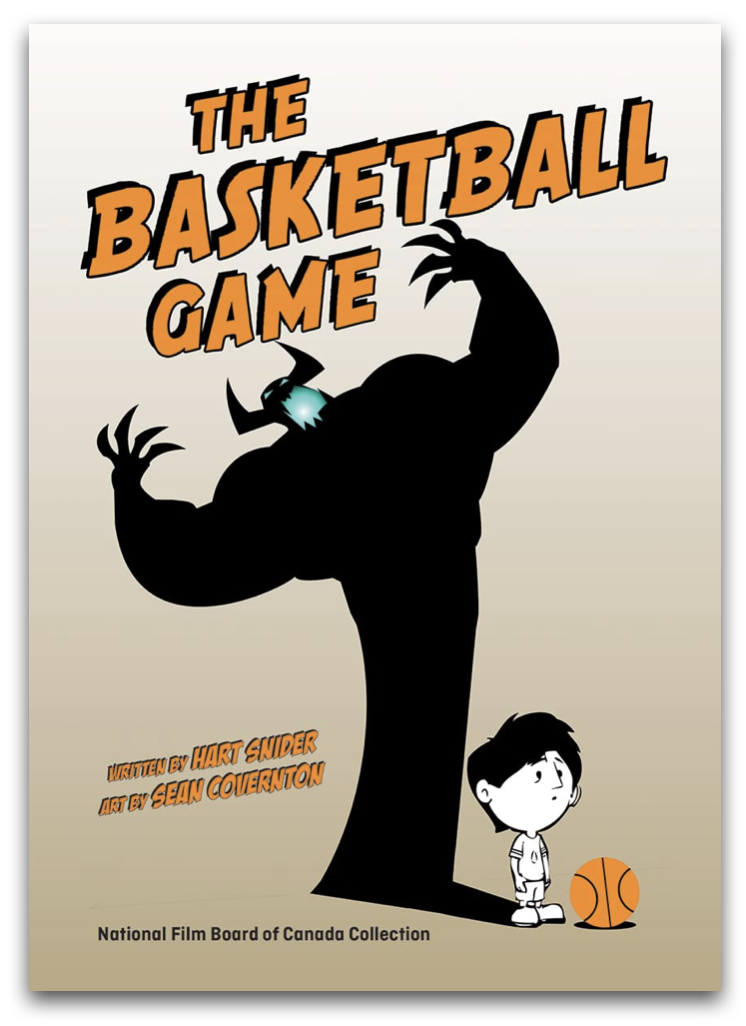
The Basketball Game

Written by Hart Snider
Illustrated by Sean Covernton
Firefly Books
978-0-2281-0391-2
87 pp.
Ages 12+
October 2022

Although hate speech has been around since time immemorial, there seems to have been a deluge of it in recent years with the news inundated with misinformation, fake news, and bigotry. Sadly, with social media, the dissemination of hate speech has been especially facile. But hate seems to always be there, sometimes overt and sometimes less conspicuous, until it isn't. In 1983, one Alberta teacher who denied the Holocaust in his social studies teaching and promoted hatred of the Jewish people was called out by a parent, leading to dismissal, charges and more. And a basketball game.

Author Hart Snider was just a child in Edmonton when the story of teacher Jim Keegstra of Eckville, Alberta was headline news. However, he was a Jewish child who was attending Camp BB in Pine Lake when his world and that of the news came together. This story, based on a National Film Board of Canada animated short film of the same title, is his camp story from the summer of 1983.
From The Basketball Game by Hart Snider, illus. by Sean Covernton
It was Hart's first summer at Camp BB, and he was just as happy to sit under a tree and read comic books. But, distractedly, he signs up with a pretty camp counsellor for a "social mixer to encourage cultural understanding." When Bill, the larger-than-life camp director, tells them that their day of fun and fellowship, which would include a picnic and a basketball game, would be with Jim Keegstra's former Eckville students, Hart and others wonder how these kids would approach them. And when one boy asks Hart if he actually has horns, Hart wonders if the Jewish kids are all seen as demonic supervillains with horns, or global banking conspirators, or maybe even magical wizards. But then he looks at the Eckville kids and sees them as being no different from skinheads, Nazis or the KKK. Ultimately, it's just a basketball game between a bunch of kids, Jewish or not, having fun.

From The Basketball Game by Hart Snider, illus. by Sean Covernton

The Basketball Game may be a personal graphic memoir of Hart Snider, but it's also a compelling reminder of the impact of hate on children. From Jim Keegstra's antisemitic teachings, which coerced young people to adopt his opinions in order to pass, to the children of Camp BB who enjoyed the familiarity of their Jewish community but anticipated conflict because of it, the story of The Basketball Game is a sobering reminder how vulnerable they are to fake news, misinformation and worse. The stereotypes were embedded in their learning and, with no other basis, it's all they had to go on. The camp boys who are depicted as monstrous members of a blue team must compete against the equally scary members of the Eckville red team. Like the fear they pose, the team members are frightening and powerful. (And fully coloured.) In reality, they are a bunch of young boys, drawn in black-and-white, still open to colour and ideas and not quite grounded in themselves. Canadian animator Sean Covernton contrasts the innocent with the horrific, making the expected far scarier than the reality and reminding us that young children are open to suggestion and vulnerable to those who might mislead them with hateful opinions. He also shows them as kids who want to make friends, read comic books, play basketball, and enjoy the positive traditions of their community.

There is a warning that prefaces the book, cautioning the reader about hateful language and depictions of antisemitism. However, though the book is intended for those twelve years of age and older, The Basketball Game may offer an opportunity for discussion with younger kids with the right approach. (Discussion questions are appended to the story.) It helps children see that not all adults are right, that questioning and discussing difficult topics is worthwhile to ensure understanding, and that kids are kids, no matter what their backgrounds.
From The Basketball Game by Hart Snider, illus. by Sean Covernton

December 19, 2019

Runaway (National Film Board of Canada Collection)

Story and characters by Cordell Barker
Adapted by Sarah Howden
Firefly Books
978-0-2281-0079-9
pp.
Ages 8-12
October 2019

Cordell Barker's short NFB film Runaway was released in 2009 but its black humour and commentary on greed and self-importance will now reach a new audience of young readers with this adaptation to print medium. Though the 9-minute film has very little discernible dialogue, Sarah Howden's adaptation fills in the narrative about a cow walking on railway tracks when a train is left without its conductor.
From Runaway by Cordell Barker, adapted by Sarah Howden
Sarah Howden's narrative begins with a commentary about how uncomplicated cows are compared to humans who are "always up to something." (pg. 9) There are the wine-drinking, cigar-smoking and billiards-playing top-hatted rich men, and one lady with her black dog, in the first car behind the engine. In the next car with their livestock are the pointy-hatted folk who are crowded to the rafters and who pass the time with music and beer. In the caboose, three train crewmen sleep. As "They were all going about their business, no questions asked" (pg. 14), the little dog escapes into the locomotive. The Captain, not missing an opportunity to ingratiate himself with a rich patron, shoves back the fireman and is promptly bitten by the urchin-like canine. While the rich woman takes the Captain back into her chamber to tend to his wound, the train is left without a man at the helm. The train is now a runaway and all the more after the Fireman falls onto the levers when the cow is hit. (It's okay. The cow survives.)

As the Fireman searches for the Captain, the oblivious patrons continue with their preferred activities. The train loses its caboose on a wild ride down a mountain and destroys a bridge after passing over it but the worst is when there is insufficient fuel to get the train up the slope on the other side of the bridge. Will the passengers work together to find a solution?
From Runaway by Cordell Barker, adapted by Sarah Howden
How the story in the print edition of Runaway ends is up for interpretation though the cow does live to see a glorious sunset. The rich people do take advantage of the common people, promising them money for their clothes to be used for fuel, and then unhitch their car and take back the money. The Captain and lady and her dog eventually reappear and get caught up in the efforts to save the train. But how much can they do when a train is hurtling up and over hills out of control?

Cordell Barker's story takes the reader on an alarming ride of both a train without a conductor and a culture without goodwill. A little benevolence and the tale of this train and its occupants could have had a far different ending. But, with greed and self-importance overriding all common sense, this train is doomed. Regrettably, Runaway is a stark metaphor for our narcissistic world, even more so than in 2009, by reflecting a society that emphasizes taking care of the self before all else. Only the Fireman can see the need to put self aside but even he cannot prevent the disaster when all work against the whole and think only of the self.
From Runaway by Cordell Barker, adapted by Sarah Howden
As in any graphic novel, the art helps tell the story. The art in Runaway is strong in its depiction of the different classes of people, with the rich in their train car decorated in rose with food artwork and the commoners in their earthy-coloured attire living with their food animals. Even the conductor, expecting to be called Captain, aspires to more in his highly-decorated bicorn hat and jacket festooned with golden epaulets. But the art also tells us what the Fireman is thinking, how the cow conducts herself as she needs, and that the rich on the train take glee in taking advantage of the poor and even delight in their demise.

Because Cordell Barker uses dialogue sparingly in the short film, Sarah Howden needed to "fill-in-the-blanks" for young readers for whom the complexity of the circumstances might not be evident. They will understand the story, just as they might understand a fairy tale, but to give them insight into the greater picture of Runaway, Sarah Howden highlights the humans' actions from a distant perspective, trying to understand what they do and why, all which will help explain the outcome of the story. Her words give landscape to the story without explaining everything, allowing young readers to apply their own visual literacy skills and interpretation to the allegory of what can go wrong when self and greed override all.

🎥🎥🎥🎥🎥🎥🎥

The original short film is available on the NFB's YouTube channel at https://youtu.be/qUGHv2VAESE and is an accomplishment of movement, tension and social statement. Just be prepared: it's only a happy ending for the cow in this version.

Uploaded by NFB to YouTube on May 26, 2017.

August 31, 2017

My Grandmother Ironed the King's Shirts

Story and art by Torill Kove
National Film Board of Canada Collection
Firefly Books
978-1-77085-967-8
32 pp.
Ages 7-10
September, 2017

The National Film Board of Canada has been a part of Canada since 1939, impressing audiences, critics and award juries around the world for its entirety.  Films from documentaries to animations have delighted and now Firefly Books is partnering with the NFB to bring some of its stories to publication.  Starting next month, Firefly Books is launching the National Film Board of Canada Collection with the publication of two picture books including this one, My Grandmother Ironed the King's Shirts, based on the 1999 Oscar®-nominated NFB animated film of the same name.

Torill Kove recounts a story she'd heard from her grandmother, Aslang Bech of Norway, of her activities just before, during and prior to World War II in Oslo.  Though I have no doubts that Torill Kove’s grandmother, whose photo prefaces the story, truly ironed the King’s shirts, there is an air of a tall tale to her story of civil disobedience against the Nazis that may or may not be true.  I choose to believe it as it would be so satisfying if it were. Regardless of its veracity, the story is charming.

The book begins with a history lesson about Norway and the country’s decision to have a king lead them when it became an independent country.  Prince Carl of Denmark was selected and became King Haakon VII of Norway with Queen Maud and young Prince Olav in tow.  Though the family became proud Norwegians, embracing the people and culture readily, their wrinkled appearance had Norwegians shaking their heads.  So a clothing shop called Hoff agree to iron the royal family’s clothing, and years later this is the shop to which Torill Kove’s grandmother came to work.  A little investigative work led her to learn that she truly was ironing the King’s shirts.

From My Grandmother Ironed the King's Shirts 
by Torill Kove
All that changed when Norway was drawn into war against the Germans in 1940.  Proudly, the King refused to surrender and urged Norwegians to resist.  Now relegated to ironing the shirts of the German army, Torill Kove's grandmother began to sabotage their uniforms and encouraged the other Hoff pressers to do the same. “Word of their activities spread and soon all the shirt pressers in Norway were involved in a nationwide shirt sabotage.
From My Grandmother Ironed the King's Shirts 
by  Torill Kove
Though history books may attribute the departure of the Germans in 1945 to Europe-wide capitulation, Torill Kove suggests they left because they had no undamaged clothes and fled in near-nakedness.  For this act of civil disobedience, her grandmother and others were decorated as resistance fighters.
From My Grandmother Ironed the King's Shirts 
by Torill Kove
Tall tale? Maybe.  Enthralling?  Absolutely!  Between the story details and Torill Kove’s illustrations, which are playful yet factual as seen by the accuracy of Torill Kove’s depiction of the King, My Grandmother Ironed the King’s Shirts is a splendid side story that illuminates how a country outside of the the key players could withstand and triumph during World World II.  By keeping her tale absorbing while boisterous in colour and cartoon-like illustrations, Torill Kove tells history in a way that goes beyond both truth and tragedy, something few stories of WWII can achieve.


NFB  NFB  NFB  NFB  NFB  NFB

Do check out the animated short upon which this picture book is based at the NFB's channel on YouTube. The link is https://youtu.be/5LfJrv1_sZI

March 01, 2015

The Blind Boy and the Loon

by Alethea Arnaquq-Baril
Illustrated by Alethea Arnaquq-Baril and Daniel Gies
Inhabit Media
978-1-927095-57-7
48 pp.
Ages 6-10
2014

Alethea Arnaquq-Baril makes it clear from her preface that the story of The Blind Boy and the Loon, first developed into her film Lumaajuuq (National Film Board of Canada, 2010), is both just a small part of an epic story told by her Inuit elders and simply her version, with its mistakes and omissions, "which our elders would never have committed." (pg. 3) Honouring their telling of the story, Alethea Arnaquq-Baril has compressed it into just a few minutes of film and a mere 48 pages of impressive text and illustration to tell a story of cruelty and revenge and the origin of the narwhal.

Living with his sister and mother in the far north, a blind boy endures his mother's resentment and cruelty. With the return of spring, he gets his sister to lead him to the lake to visit with the loon, a creature with formidable eyesight.  In addition to learning that his mother was responsible for causing his blindness, the boy regains his eyesight after repeated divings into the lake on the loon's back. Fully-sighted again, the boy resumes whale-hunting and uses an outing to exact revenge on his mother, whose plunge into the water turns her into the narwhal, her braids twisted into its characteristic tusk.

The dark tale within The Blind Boy and the Loon is nurtured by the highly-stylized elements of the illustrations, from the simple lines of the boy in his parka, to the hills and waters of the harsh landscape. Using shades and tones of greys, dark teal and taupe,  The Blind Boy and the Loon is rich with uncompromising elements of unkindness, deep waters, and expansive tundra, all essential in supporting the story within.  While Alethea Arnaquq-Baril may undervalue the content or interpretation of her telling of this origin tale, The Blind Boy and the Loon is an accomplished and breath-taking rendition.

If you want to see the animation of the stunning beauty that is The Blind Boy and the Loon, sneak a look at the original short film Lumaajuuq (National Film Board of Canada, 2010) upon which the picture book is based.  You will not be disappointed, but rather stunned by the starkness of its richness.

February 28, 2012

National Film Board: From Paper to Film


With the recent Academy Awards ceremonies, I'd like to recognize the numerous contributions of the National Film Board of Canada (NFB) to promoting Canadian literature.  As the NFB has been nominated for more Oscars than any production company or organization outside of Hollywood and has provided work experience for every Foreign Language film director nominated this year, its reputation for exceptional documentaries, animations and such is well established.

But did you know that there are numerous short and full-length films available for viewing on the National Film Board of Canada website?  As a blogger of Canadian literature for young people (as well as a teacher-librarian), I love the short films of popular Canadian children's books that offer a different perspective on the stories. (If you're a teacher, using text and film versions of a story is a great way to teach a variety of writing and reading skills.  Just look for resources about teaching with movies.)

Explore for yourself the variety of films available for viewing at the National Film Board of Canada website, including these particular favourites of mine:

by Manjusha Pawagi
Illustrated by Leanne Franson
Second Story Press, 1998

Director:  Jo Meuris
Producer:  Tamara Lynch
2006

by Rachna Gilmore
Illustrated by Alice Priestley
Second Story Press, 1994

Director:  Michel Vo
Producer:  Tamara Lynch
2001

by Lynette Comissiong
Illustrated by Marie Lafrance
Annick Press, 1997

Directors:  Chris Cormier and Derek Cummings
Producer:  Michael Scott
2005

by Paulette Bourgeois
Illustrated by Izabela Bzymek
 Kids Can Press, 2001

Director:  Izabela Bzymek
Producer: Svend-Erik Eriksen
2007

by Itah Sadu 
Illustrated by Roy Condy
Scholastic Canada, 1993

Director:  Vincent Gauthier
Producer:  Tamara Lynch
2001

(The Hockey Sweater)
by Roch Carrier
Illustrated by Sheldon Cohen
Tundra, 1984

Director:  Sheldon Cohen
Producers:  Marrin Canell and David Verrall
1980

by Dayal Kaur Khalsa
Tundra, 1994

Director:  Sheldon Cohen
Producer:  Marcy Page 
2002

by Madeleine Thien
 Illustrated by Joe Chang
Walrus Books, 2001

Director: Joe Chang
Producer: George Johnson
2002


(The Snow Cat)
by Dayal Kaur Khalsa
Tundra, 1992

Director:  Sheldon Cohen
Producers:  Sheldon Cohen, Kenneth Hirsch, Marcy Page
1998