Showing posts with label slavery. Show all posts

June 25, 2020

Howdy, I'm John Ware

Written by Ayesha Clough
Illustrated by Hugh Rookwood
Howdy Books (Red Barn Books)
978-1-9991087-8-6
48 pp.
Ages 6-11
January 2020

John Ware, born into slavery around 1850, was a man of strong character and fortitude, who parlayed hard work and his skills as a cowboy into a life of accomplishment in present-day Alberta.
From Howdy, I'm John Ware by Ayesha Clough, illus. by Hugh Rockwood
Though accounts of John Ware's early life are spotty, it is known that, after the abolition of slavery, he was hired on as a ranch hand, earning a reputation as a hard worker. Working as a cowboy on cattle drives, John Ware helped move cattle from the southern US to the north. It was one drive in 1882 that brought cattle from Idaho to the foothills near Calgary and landed John Ware north of the border and into the country that would become his home.
From Howdy, I'm John Ware by Ayesha Clough, illus. by Hugh Rockwood
Regardless of his accomplishments as a cowboy, John Ware still suffered the discrimination of a black man in the predominantly white world of ranching. Nevertheless, his skills and good nature would ultimately win over those who'd seen only his skin colour, recognizing him as an outstanding man of integrity and determination.
From Howdy, I'm John Ware by Ayesha Clough, illus. by Hugh Rockwood
There are stories of extraordinary courage and strength and the legends about John Ware covered everything from wrestling steers, lifting a cow, walking on the backs of bulls and be able to ride anything. In addition to John Ware's accomplishments as a cowboy, he became a rancher, starting with a small herd, marrying, and growing his family and his ranch into a fine life. Upon his death, his funeral was "the largest that young city (Calgary) had ever seen" with ranchers calling him the finest gentleman, a good soul and an incredible horseman.
From Howdy, I'm John Ware by Ayesha Clough, illus. by Hugh Rockwood
Ayesha Clough tells John Ware's story as he might recount it, sharing how others saw him or what they knew of him while expressing his own surprise, pleasure and sadness with life's milestones. His attitude to the animals is especially poignant.
     I connected with animals. Like me, they had to work for a master. But there was no need for fear and violence.
     I cared about them, showed them love and respect. They, in turn, gave their best for me. (pg. 23)
Appended with photos, a timeline and notes for educators, Ayesha Clough helps ensure that John Ware's story is remembered. Though his accomplishments have been recognized with a number of place names like Mount Ware and John Ware Ridge as well as several buildings, this picture book will serve to introduce him to young children.  He achieved so much as a cowboy and, with decency and hard work, created a life of goodness for himself and his family and, with comic book artist Hugh Rookwood's illustrations to focus on the occasions of the cowboy's life, both challenging and impressive, John Ware's story becomes accessible to all young readers. 

It is fitting that two Albertans, Ayesha Clough and Hugh Rookwood, should honour another Albertan, John Ware, a cowboy who dealt with racial discrimination and achieved respect and admiration from all, by telling his story in Howdy, I'm John Ware. It's a story I hope all will read.

••••••

Giveaway!

I have a free copy of Howdy, I'm John Ware for giveaway from publisher Red Barn Books. 
For your chance at this giveaway,
just leave a comment below about why you'd like a copy of the book.
I'll do a random draw at 6 p.m. EST on June 29, 2020.

Good luck, readers! 

••••••

January 30, 2019

A Cage Without Bars

Written by Anne Dublin
Second Story Press
978-1-77260-069-8
160 pp.
Ages 10-14
September 2018

The Lord is with me. I have no fear of what man can do to me.      (pg. 1)

In 1492, the king and queen of Spain signed the Edict of Expulsion, giving the Jews of Spain the choice of converting to Catholicism or leaving the country. Many fled to Portugal where their refuge was short-lived. A Cage Without Bars is the story of Joseph, a twelve-year-old Jewish boy, who escapes from Spain with his parents and ten-year-old sister Gracia only to be enslaved by the Portuguese and shipped with other children to the island of São Tomé off the coast of West Africa.
They did not need ropes or chains to restrain us. We were bound by our grief and terror. (pg. 23)
Though Captain Caminha had been expecting a hundred African slaves promised by the king, he is surprised to be delivered of a large group of Jewish children, including Joseph and Gracia, as well as the group of convicts (degredados), who are to be put to work on establishing a settlement and farming cane to make sugar. As horrific as the ship's journey is for the children, with seasickness, poor food, minimal drinking water, dirty quarters, lashings, and Friar Escobar's regular lectures about Christianity, new horrors await them upon the island. When the Portuguese settlers who had received land grants choose their child slaves to work their land in exchange for food, clothing and shelter, Joseph is selected with six others by Dom Pereira, the expert on growing sugar cane. The Jewish child slaves live in huts behind their master's house and begin the hard work of clearing plants and trees. Gracia, on the other hand, who had been chosen to work for the captain's wife Dona Maria while still on the ship, remains by her mistress's side, tending to her clothing and hair and begins to adopt the Christian ways.

Many children lose their lives on the ship, mostly from bloody flux (dysentery), but now the remaining children begin to fall victim to tertian fever (malaria) and accidents including attacks by snakes and crocodiles. The slaves' numbers are augmented with a shipload of African slaves who are a tremendous help in clearing the land and preparing the soil, as well as planting and weeding. Because Joseph sees that they are all slaves, he doesn't always recognize the Jewish children and Africans as different. Even after he is enlisted to learn all he can about making sugar from books after Dom Pereira dies, Joseph begins to befriend the Africans, teaching a boy Tomás his letters–a punishable action–and partaking in their food and storytelling.
Most of us decided to do the best we could; to cling to life; to survive. There was no other choice. (pg. 96)
A tale of slavery cannot have a happy ending, though Anne Dublin does give Joseph a settling of the story that is bittersweet. But she makes sure that it is not contrived or impossible to believe. Perhaps that's to give the reader some hope that from such terrible historical circumstances some resolution could still occur. Still A Cage Without Bars is a very different story about slavery by recounting the historical events that resulted from the Spanish Edict of Expulsion in the fifteenth century. It's evident from author Anne Dublin's writing and historical notes, which include extensive footnotes, a glossary and references for further reading, that this was a difficult story to learn about and to tell. Still, she tells it well by embedding Joseph's story in the big picture of history, making it personal and real, not just bleak in tone and facts, and exposing a new story from the past that needs to be acknowledged in order to further our understanding and extend our compassion, all in the effort to replace ignorance and discrimination.

February 14, 2018

Elijah of Buxton

Written by Christopher Paul Curtis
Scholastic Press
9780439936477 
288 pp.
Ages 9-12
2007

Eleven-year-old Elijah Freeman is the first free child born in Buxton, Ontario, a town of slaves who have escaped from the United States.  His days are filled with fishing by throwing stones, going to school, staying away from snakes (of which he is deathly afraid) and continuing to run into the Preacher, a sweet-talking but manipulative man, who gets Elijah involved in more than one of his schemes. But when the Preacher steals all the hard-earned money that Mr. Leroy was saving to buy his wife and two children out of slavery, Elijah, a boy of innocence and a strong sense of fairness, finds himself heading across the border and into the world of slavers and those seeking freedom in Canada. His ma might call him "fra-gile" but Elijah proves that he is anything but.

Though Elijah of Buxton is a book of a harrowing journey into America by a black youth looking to right a wrong, it only becomes a perilous adventure in the last third of the book.  Christopher Paul Curtis takes time to set the stage for that venture, establishing his characters and cultural landscape through the complexity of voice and atmosphere.  Elijah's interactions with others in his community, both peers and those "growned-up," speak to the changing times, when racism could be overt or concealed and the divide between the United States and Canada was both conspicuous and subtle.

Elijah of Buxton begs to be read aloud to get the full nuance of language and tone that Christopher Paul Curtis instills in the narration and dialogue, just as he has in The Madman of Piney Woods and The Journey of Little Charlie.  The dialect can seem confusing at times but read aloud the text becomes rich and flavourful.

There are many difficult moments in Elijah of Buxton, times when my heart broke and I struggled to read on.  Not because the book wasn't an outstanding piece of literature but because of the injustices and horrors endured.   Mind you, even Christopher Paul Curtis's ending left me sobbing and still hopeful for a baby, for Elijah and for all. Christopher Paul Curtis had just set up the “most beautifullest, most perfectest” story he could.

••••••••••••••••••

Though I rarely review books not published in the past year, my recent review of The Journey of Little Charlie compelled me to review Christopher Paul Curtis's earlier books that reference the town of Buxton, The Madman of Piney Woods and now Elijah of Buxton.  These books are not a series, though Buxton is mentioned in each.  Please read them all.

February 13, 2018

The Madman of Piney Woods

Written by Christopher Paul Curtis
Scholastic Canada
978-1-44313-912-9
363 pp.
Ages 8-12
2014

Though I don't often review books older than a year, I referred to this title several times in my review of The Journey of Little Charlie yesterday so that I thought it was incumbent upon me to share the importance of this volume now.  Fortunately, I must also address Christopher Paul Curtis' book  Elijah of Buxton (Scholastic, 2007) which first speaks to the historically important town of Buxton, originally a settlement of runaway slaves.

In 1859, eleven-year-old Elijah Freeman is the first free-born child in Buxton, Canada, a haven for slaves fleeing the American south.  In his story, Elijah of Buxton, Elijah uses his wits to find justice when money earmarked to buy a family's freedom is stolen.

In 1901, forty years after the story of Elijah of Buxton, the storylines of two unlikely friends, Benji and Red, converge in an unexpected manner to tell a new story for Buxton.  Benji Alston is a black boy living in Buxton whose shenanigans with his friends Spencer and  others become imagined newspaper stories.  Benji spends much of his time in the pine woods between Chatham and Buxton, and makes the acquaintance of a hermit-like man in the woods who, similar to Benji, is more comfortable in the woods than anywhere else.  Red is an Irish boy who lives with his father, a judge, and his highly prejudiced Grandmother O’Toole in Chatham.  Meanwhile Red and his friends talk of the Lion Man of the South Woods of whom they've learned they should avoid.

The two boys become friends after meeting at a speech competition.  When Red suspects that the Madman, whom he knows to be a friend of Benji’s, has been shot, the two become forever entwined with the mysterious man of the woods whose story began in Elijah of Buxton.

Told in alternating chapters in the voices of the two boys, The Madman of Piney Woods becomes an adventure story with a haunting mystery based in the past.  The horrors that a Black Canadian soldier endured because of the American Civil War or that an Irish immigrant escaping the devastation of the Potato Famine suffered before a tortuous journey on a coffin ship are as real as the memories of enslavement of many Buxton inhabitants.  Benji and Red may never have endured these horrors but these very different and yet surprisingly ordinary boys are defined by their friends and family. Still Christopher Paul Curtis contrives an authentic story by which the two come together to work together and make things right that have been wrong for too long. As I wrote yesterday in my review of The Journey of Little Charlie, from the ordinary comes the extraordinary.

History may take place in the past but The Madman of Piney Woods reminds us that the past engraves the present and the future for the survivors of war, slavery and all manner of disaster as well as for those who love them.

February 12, 2018

The Journey of Little Charlie

Written by Christopher Paul Curtis
Scholastic Canada
978-1-4431-4263-2
234 pp.
Ages 8-13
February 2018

Little Charlie Bobo, the son of a white sharecropper on the South Carolina plantation of Mr. Tanner, can hardly be called little for his size. At twelve, he is 6'4".  So, when Little Charlie's father is killed and cap'n Duke, the abusive overseer on the plantation, claims that he'd paid him fifty dollars upfront to help him retrieve money stolen from Mr. Tanner, Little Charlie has no recourse but to accompany the man.

Heading to Detroit, Little Charlie knows enough to listen and not say much to the brutal and racist cap'n Duke.
You can learn from anybody.  Even dimwits can teach you if you listen careful and pick at the kernels of corn from the horse crap they's dishing out. (pg. 71)
He quickly learns that the "thieves" they are searching out are slaves Lou and Cleytus and their young son Sylvester who'd escaped from the Tanner plantation ten years earlier.  With some assistance from the equally reprehensible Sheriff Turner and his associate Keegan, cap'n Duke captures the parents who have made a good life for themselves and their family and  now go by Eloise and Chester Desmarest.  But cap'n Duke is determined to get all the family, including the two-year-old twin daughters and son Sylvanus, a student at a school in Saint Catharines, Canada.  Though warned about going into Canada to retrieve escaped slaves, cap'n Duke with Little Charlie in tow get themselves cleaned up and travel by ferry and train to deceive Sylvanus into returning to the United States with them.

The Journey of Little Charlie may begin as a debt the young man is trapped into repaying but it becomes a journey of learning beyond any his poor existence at home had provided him.  Though his parents imparted some wisdom to him about survival and living a life of subservience, Little Charlie has had few opportunities–he cannot read–and never expected much from his life. Accompanying the vile cap'n Duke, Little Charlie is able to see for himself how the world outside of Possum Moan, South Carolina works, including entering Canada, a country which had abolished slavery decades earlier. For the first time, he could see, not just learn second-hand, what life was like for others, including the poor, the rich, "colored folk" and everyone.  The Journey of Little Charlie is a coming-of-age story of historically immense proportions; it is Little Charlie's journey outside of what he has always known and been taught. And he heeds the words of the old railway man, Ol'Jerry, they meet outside of "Dee-troit."
"I 'membered thinking at the time 'tis too bad this can't be a reg'lar part of living, where we all gets a chance to walk away from whatever train wreck we's made of our lives and run off to start up building something new." (pg. 79)
Just as he did in The Madman of Piney Woods (Scholastic, 2014), Christopher Paul Curtis brings together very different voices on a similar journey, though their intentions and perspectives vary greatly.  In The Madman of Piney Woods, he gives voice to a boy living in the shadow of his grandmother's harrowing immigration from Ireland and a distinct one to another whose family and friends live with the legacy of slavery.  They, like Little Charlie and cap'n Duke, live ordinary lives for the times.  But from the ordinary comes the extraordinary.  It is the righting of wrongs and redemption that carries the story forward, delivering history from the every day and teaching compassion from cruelty.
They never once looked back.                                                    If I was them, I wouldn't-a neither. (pg. 232)

January 13, 2015

The Gospel Truth

by Caroline Pignat
Red Deer Press
978-0-88995-493-9
328 pp.
Ages 12+
October, 2014


Hope is the thing with feathers
That perches in the soul
And sings the tune without the words
And never stops at all
                             ~Emily Dickinson

Emily Dickinson would not have written this poem yet but her words would still ring true for an enslaved young woman named Phoebe on a Virginian tobacco plantation in 1858. Phoebe is attuned to listen to the birds for their messages of hope and freedom, while keeping her own song quiet, having stopped speaking since her mother Ruthie was sold by Master Arnold Duncan ten years earlier.  And though she doesn't speak, Phoebe is chosen to accompany Doctor Ross Bergman, a guest at the plantation, and Miss Tessa, the marriageable daughter of Master Duncan, when he visits the plantation from Canada to study the birds of Virginia.

Taken under the wing of Bea, the housekeeper, and given to Miss Tessa as her personal maid, Phoebe understands well enough what is expected of her but also what she needs to do for herself, including learning to read so that she may find her Momma.
Cause a slave can't have words.
Or hope. 
But I do. 
I got both,
buried deep in the hollow part of me. (pg. 36)
However, not everyone feels as Phoebe does, including Shad, the young slave who has feelings for her. Though the younger brother of a powerful slave who has runaway three times, Shad is still convinced the best recourse is obedience to Master Duncan, and it is this attitude that threatens everything for Phoebe.

Told in free verse and in six voices (Phoebe, Master, Miss Tessa, Doctor Bergman, Bea, and Shad), The Gospel Truth tells more than just of the life of slaves on a tobacco plantation in the mid-19th century.  It speaks of a change coming, of those who see it and those who don't, and those who risked so much to be part of that change–love, security, family, life–sometimes even without choice.  Every voice that speaks from Caroline Pignat's pen is clear and resounds with every word spoken or not.  

The power of Caroline Pignat's words would compel me to cite so much of her text. She has the gift for novel in verse, not simply writing prose in verse form.  Just as a good novelist doesn't tell everything, allowing the reader to interpret, surmise and read into the text, a great writer of novel in verse tells even more in fewer words.  Pamela Porter, Martine Leavitt and now Caroline Pignat.  As for the story, think The Book of Negroes by Lawrence Hill in free verse for younger readers and with more soul.  A perfect bundle of story, voice and form–that's The Gospel Truth by Caroline Pignat.

October 12, 2014

The Gospel Truth: Book launch (Ottawa)


Governor General Literary Award-winning author
Caroline Pignat

is launching her latest book


The Gospel Truth

Red Deer Press
978-0889954939
328 pp.
Ages 12+
Released October 1, 2014

A novel in verse, The Gospel Truth takes the reader to a tobacco plantation in 1858 Virginia, and shares the interactions and perspectives of slaves, their masters and a visiting bird-watcher.


Visit 
Caroline Pignat

at

the All Saints Christmas Craft Fair
All Saints Catholic High School
5115 Kanata Avenue
Kanata (Ottawa), Ontario

from 9 a.m. to 4 p.m.


to purchase The Gospel Truth
do some Christmas shopping, and 
support a great cause.


Admission 
to the Christmas Craft Fair
with over 150 vendors
is 
$1 or a canned good


Proceeds from sales of The Gospel Truth
will be going towards
a school, Todo los Santos,
sponsored by All Saints DR Experience Team and the All Saints community. 


February 10, 2014

Black History Month: Book List

(This book list has now been updated at http://canlitforlittlecanadians.blogspot.ca/2016/02/black-history-month-updated-youngcanlit.html)

There could never be enough books to inform young Canadians about the history of the Black community in Canada and elsewhere. In this list of picture books, fiction and non-fiction titles, a small portion of that history, both the trials and the achievements, are noted.

PICTURE BOOKS
All Aboard! Elijah McCoy’s Steam Engine (Great Ideas Series)
by Monica Kulling
Illustrated by Bill Slavin
Tundra Books
32 pp.
Ages 5-8
2010
Biography

From Lands of the Night
by Tololwa M. Mollel
Illustrated by Darrell McCalla
Red Deer Press
32 pp.
Ages 7+
January, 2014
East African traditional stories, celebration

Mayann's Train Ride
by The Honourable Mayann Francis
Illustrated by Tamara Thiébaux Heikalo
Nimbus Publishing
32 pp.
Ages 4-9
2015
Biography

Nana's Cold Days
by Adwoa Badoe
Illustrated by Bushra Junaid
Groundwood
32 pp.
Ages 3-7
2002

The Orphan Boy
by Tololwa M. Mollel
Illustrated by Paul Morin
Oxford University Press
32 pp.
Ages 5-9
1990
Masai folklore


A Pot of Wisdom: Ananse Stories
by Adwoa Badoe
Illustrated by Baba Wagué Diakité
Groundwood
62 pp.
Ages 7-10
2001
African folklore 

Viola Desmond Won't Be Budged!
by Jody Nyasha Warner
Illustrated by Richard Rudnicki
Groundwood
32 pp.
Ages 7-10
2010
Biography, civil rights


FICTION
Between Sisters
by Adwoa Badoe
Groundwood
205 pp.
Ages 13+
2010
Ghana
Cape Town
by Brenda Hammond
Great Plains Teen Fiction
326 pp.
Ages 14+
2012
Apartheid, South Africa


Chanda’s Secrets
by Allan Stratton
Annick
193 pp.
Ages 12-15
2004
HIV/AIDS

Chanda’s War
by Allan Stratton
HarperCollins
382 pp.
Ages 13-17
2008
Civil war, child soldiers
Crossing to Freedom
by Virginia Frances Schwartz
Scholastic Canada
231 pp.
Ages 10+
2010
Slavery, freedom

Dark of the Moon
by Barbara Haworth-Attard
Roussan Publishers
136 pp.
Ages 9-12
1995
Underground Railroad

A Desperate Road to Freedom: The Underground Railroad Diary of Julia May Jackson (Dear Canada)
by Karleen Bradford
Scholastic Canada
240 pp.
Ages 9-13
2009
Slavery, Underground Railroad

Elijah of Buxton
by Christopher Paul Curtis
Scholastic Canada
288 pp.
Ages 9+
2007
Freedom, slavery, Ontario

The Freedom of Jenny
by Julie Burtinshaw
Raincoast Books
182 pp.
Ages 7-10
2005
Underground Railroad, British Columbia


The Gospel Truth
by Caroline Pignat
Red Deer Press
328 pp.
Ages 12+
2014
Slavery, freedom


Grease Town
by Ann Towell
Tundra
192 pp.
Ages 10-13
2010
Racism, Ontario
The House of Good Spirits
by Donn Kushner
Lester & Orpen Dennys
214 pp.
Ages 12-15
1990
Racism, slavery, African folktales

Hurry, Freedom (A Canadian Flyer Adventure)
by Frieda Wishinsky
Illustrated by Dean Griffiths
Maple Tree Press
81 pp.
Ages 6-9
2008
Underground Railroad

I Came as a Stranger: The Underground Railroad
by Bryan Prince
Tundra Books
160 pp.
Ages 11-14
2004
Underground Railroad, slavery

If I Just Had Two Wings
by Virginia Frances Schwartz
Stoddart Kids
221 pp.
Ages 11+
2001
Underground Railroad, slavery
Last Days in Africville
by Dorothy Perkyns
Sandcastle Books/Beach Holme
110 pp.
Ages 8-12
2003
Africville, Nova Scotia, racism

The Madman of Piney Woods
by Christopher Paul Curtis
Scholastic
384 pp.
Ages 9+
2014
Forty years after Elijah of Buxton
Morning Star
by Judith Plaxton
Second Story Press
277 pp.
Ages 11-14
2011
Underground Railroad
My Name is Henry Bibb: A Story of Slavery and Freedom
by Afua Cooper
Kid Can Press
160 pp.
Ages 10-14
2009
Biography, slavery, abolitionism
My Name is Phillis Wheatley: A Story of Slavery and Freedom
by Afua Cooper
Kid Can Press
152 pp.
Ages 11+
2009
Biography, slavery, poetry
Rachel: Certificate of Freedom (Our Canadian Girl)
by Lynne Kositsky
Penguin Canada
112 pp.
Ages 8-12
2003
Slavery, racism, freedom, Nova Scotia  

Rachel: An Elephant Tree Christmas (Our Canadian Girl)
by Lynne Kositsky
Penguin Canada
84 pp.
Ages 9-11
2004
Racism, Nova Scotia

Rachel: The Maybe House (Our Canadian Girl)
by Lynne Kositsky
Penguin Canada
83 pp.
Ages 9-11
2002
Loyalists, slavery, racism, Nova Scotia

Rachel: A Mighty Big Imagining (Our Canadian Girl)
by Lynne Kositsky
Penguin Books
64 pp.
Ages 8-11
2001
Slavery, freedom
 
Seas of South Africa (Submarine Outlaw series)
by Philip Roy
Ronsdale Press
200 pp.
Ages 10+
2013
Racism, violence, South Africa, apartheid

Send One Angel Down
by Virginia Frances Schwartz
Holiday House
163 pp.
Ages 12-14
2000
Slavery, racism
Stones
by William Bell
Doubleday Canada
210 pp.
Ages 10+
2001
Racism, intolerance
Underground to Canada
by Barbara Smucker
Puffin Canada
144pp.
Ages 9-12
2003
Slavery, Underground Railroad, freedom

Zack
by William Bell
Doubleday Canada
165 pp.
Ages 12-16
1998
Slavery, racism, Richard Pierpoint


NON-FICTION
Africans Thought of It: Amazing Innovations
by Bathseba Opini and Richard B. Lee
Annick Press
48 pp.
Ages 8-12
2011
Inventions

The Bite of the Mango
by Mariatu Kumara with Susan McClelland
Annick Press
216 pp.
Ages 14+
2008
Sierra Leone, civil war


Children of Africville
by Christine Welldon
Nimbus
81 pp.
Ages 8-12
2009
Africville, racism

Five Thousand Years of Slavery
by Marjorie Gann and Janet Willen
Tundra
168 pp.
Ages 11-16
2011
Slavery

Harriet Tubman: Freedom Seeker, Freedom Leader (A Quest Biography)
by Rosemary Sadlier
Dundurn
190 pp.
2012
Biography, Harriet Tubman

How the Blacks Created Canada
by Fil Fraser
Dragon Hill
255 pp.
Ages 16+
2009
Settlement, Canada

Jailed for Being Black: The Story of Rubin "Hurricane" Carter (Real Justice)
by Bill Swan
Lorimer
144 pp.
Ages 13-17
2014
Biography, Rubin "Hurricane" Carter, injustice, racism

The Kids Book of Black Canadian History
by Rosemary Sadlier
Illustrated by Wang Qijun
Kids Can Press
56 pp.
Ages 9-12
2003
Canada, history


Nelson Mandela: Champion of Freedom (Remarkable People series)
by Simon Rose
Weigl Publishers
24 pp.
Ages 8-12
2010
Nelson Mandela, South Africa


On an American Day: Story Voyages Through History, 1759-1899
by Rona Arato
Illustrated by Ben Shannon
Owlkids Books
96 pp.
Ages 9-13
2011
On a Canadian Day: Nine Story Voyages Through History
by Rona Arato
Illustrated by Peter Ferguson
Maple Tree Press/Owlkids Books
96 pp.
Ages 9-13
2009
Underground Railroad

Out of Slavery: The Journey to Amazing Grace
by Linda Granfield
Illustrated by Janet Wilson
Tundra Books
40 pp.
Ages 9+
2009
Slavery, John Newton


People Who Said No: Courage Against Oppression
by Laura Scandiffio
Annick Press
168 pp.
Ages 9-14
2012
Civil rights, Rosa Parks, NAACP, apartheid, South Africa

Season of Rage: Hugh Burnett and the Struggle for Civil Rights
by John Cooper
Tundra Books
71 pp.
Ages 10-15
2005
Racism, civil rights, Ontario

Singing Towards the Future: The Story of Portia White (Stories of Canada)
by Lian Goodall
Illustrated by Liz Milkau
Napoleon Publishing
63 pp.
Ages 9-11
2004
Biography, Portia White

Stay Strong: A Musician's Journey from Congo
by Natalie Hyde
Clockwise Press
160 pp.
Ages 12-16
2015
Biography


Talking about Freedom: Celebrating Emancipation Day in Canada
by Natasha L. Henry
Dundurn
174 pp.
Ages 12+
2012
Slavery, emancipation


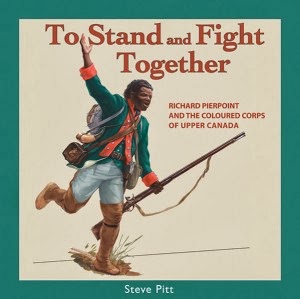
To Stand and Fight Together: Richard Pierpoint and the Coloured Corps of Upper Canada
by Steve Pitt
Dundurn
144 pp.
Ages 10+
2008
War of 1812, Richard Pierpoint, soldiers, Canada


Trials and Triumphs: The Story of African-Canadians
by Lawrence Hill
Umbrella Press
64 pp.
Ages 11+
1993
Settlement, slavery, racism, achievements

The Underground Railroad: The Long Journey to Freedom in Canada (Amazing Stories)
by L. D. Cross
James Lorimer
144 pp.
Ages 12+
2010
Slavery, Underground Railroad, freedom

Willie O'Ree: The Story of the First Black Player in the NHL (Recordbooks)
by Nicole Mortillaro
James Lorimer
140 pp.
Ages 11-13
2012
Biography, hockey, Willie O'Ree

Working for Freedom: The Story of Josiah Henson
by Rona Arato
Napoleon
78 pp.
Ages 10-13
2009
Biography, Josiah Henson, slavery, Underground Railroad


PLAYS
In the Freedom of Dreams: The Story of Nelson Mandela
by Michael A. Miller
Playwrights Canada Press
67 pp.
Ages 14+
2003
Biography, Nelson Mandela


FILMS
Loyalties: A Trip Down Slavery Lane
Directed by Lesley Ann Patten
Produced by Kent Martin and Lesley Ann Patten
National Film Board of Canada
57 min., 3 sec.
Ages 11+
1999
Heritage, slavery, South Carolina, Halifax