Showing posts with label novel in verse. Show all posts

January 28, 2026

Planting Sunshine

Written by Andrée Poulin
Illustrated by Enzo (Enzo Lord Mariano)
Groundwood Books
978-1-77946-095-0
116 pp.
Ages 9–12
February 2026 
 
As is often the case, Theo's day is normal enough until it isn't. And what changes everything is watching the news coverage of war breaking out far, far away.
Theo's father
turns on the TV— 
     and war arrives
in their living room. (pg. 9)
Theo cannot believe what he is hearing and seeing. Horrified by the sights and sounds of bombs and guns, tanks and drones, and most of all the destruction of people and place, Theo is troubled. He wants to know why this happens, whether they are safe, and asks why humans are so cruel.
From Planting Sunshine, written by Andrée Poulin, illustrated by Enzo
Though the countries involved are never identified, readers might recognize some of the images described as those from the attack on Ukraine by Russia, such as the elderly woman who confronts a Russian soldier with sunflower seeds and suggests that if he puts them in his pocket. . .
At least when you die here
     on the soil of my country
     the sunflowers will grow 
                    around you. (pg. 20)
Theo asks his neighbour Mrs. Lena, an elderly woman who grew up in "the country now caught in this terrible war" (pg. 21), about the war and this incident, and she tells him of the sunflower—soniashnyk, in Ukrainian—being the "flower that feeds hope." (pg. 22) Seeing Theo's continued distress, day after day, she gives him sunflower seeds to plant.
From Planting Sunshine, written by Andrée Poulin, illustrated by Enzo
Each day there is more horrific news from the war, and the details stay with Theo. He thinks about the numbers, about the images, about the losses, and all he can do is wonder why no one is stopping it. 
Each day Theo asks, "Will the war end today?" (pg. 38) The war may be very far away but it's impacting Theo in the way he sees life. The word "bomb" no longer reminds him of diving board cannonballs. His friends playing war angers him. His dad refuses to let Theo watch the news anymore, so Theo hides his tablet and watches at night. And then the nightmares start, a mix of anger, fear, hatred and more.
 
When he meets a girl drawing doves on a wall as protest, Theo is finally able to share what he's feeling–never wanting to burden Mrs. Lena or his teacher or his father—and feels a little less alone. And he finds his own way to express his anger and his grief. 
From Planting Sunshine, written by Andrée Poulin, illustrated by Enzo
Still, he is unconvinced that the war will end or that things would change, until Mrs. Lena offers him the idea of hope. She tells him, "Hope lives in the after." (pg. 91) And, with a little help from those around him, Theo finds a way to settle his anger, remember what should never be forgotten, work to help a cause, and find "a small way to start building peace." (pg. 110)

I could quote page after page of eloquent text that clutches at the heart of Theo's bewilderment and trauma. Andrée Poulin has always had a knack for telling tough stories lightly—not lightheartedly—for a young audience. Whether it's sanitation (Burying the Moon, 2021), diversity and tolerance (Tickled Pink, 2020), or abandonment (The Biggest Poutine in the World, 2016), Andrée Poulin recognizes that her audience is young, and will be impacted differently about important issues. Theo is just such a child, significantly impacted by a war thousands of kilometres away, and not understanding fully what is happening. He's feeling a lot and needs help understanding those emotions and directing them into activities that help. Andrée Poulin takes Theo full circle, from unfamiliarity with war, to an introduction by media, to immersion in images and sensory overload, to impact and trauma, and finally purposeful attention. And she does so eloquently in words and in verse form. This book will become an exemplar of telling a story with sensitivity and compassion, and awareness of how world events can impact children in powerful ways. 
From Planting Sunshine, written by Andrée Poulin, illustrated by Enzo
Enzo (a.k.a. Enzo Lord Mariano), a Montreal-based illustrator, provides the artwork that frames Andrée Poulin's story. Using Procreate with watercolour textures, Enzo gives us some war images—the ones of a blue tractor in a field of sunflowers that is later devastated by bombs is especially heartrending—but generally it's all about Theo because this is his story. It is not a story of war. It is a story of a boy who struggles with the concept of war and his emotions with the senseless destruction it perpetuates. Enzo helps us see Theo's anguish and his anger, the trauma of his sleepless nights, and his despondency. But Enzo also shows us family, friendship, and community, and how those can soften the suffering.
 
I don't think I can say enough about Planting Sunshine. (A French-language version, Semer des soleils, was published in 2024 by La courte echelle.) Not only does it remind all that there is an ongoing conflict in Ukraine, but that there are children beyond the borders of that war that are struggling with it. Highly sensitive children like Theo can be impacted by what they see and hear in the news and cannot always articulate what they are feeling or recognize how to grapple with those emotions. In a world of strife and public media, children will continue to be exposed to all manner of frightening news. Awareness of their potential struggles and attention to their needs might help them find ways to plant sunshine and to unearth hope.

November 04, 2024

Unsinkable Cayenne

Written by Jessica Vitalis
Greenwillow Books (HarperCollins)
978-0-06-331445-0
304 pp.
Ages 8-12
October 2024
 
 
But in middle school
there are two choices:
fit in
or
stand out. (p. 69) 
 
It's 1985 and Cayenne has always lived a nomadic life with her Mom and Dad and now six-month-old sibs Sossity and Bear. They've travelled throughout the U.S. in their van, living off Dad's small disability check from the VA, with Mom homeschooling Cayenne. Cayenne knows that some people may look down on them for being poor and living a hippie lifestyle, but she feels a closeness with her family, especially when she plays her harmonica and Dad plays his guitar and Mom dances, even though Mom has been distracted with the babies. Still Dad decides to settle them down in a Montana town where he's gotten a job at the sawmill, and Cayenne feels like it's where they finally belong and maybe she can feel normal, even if Mom isn't necessarily happy. 
I agreed to this move.
I did not agree 
to sell my soul. (p. 31) 
Still Cayenne is all in. At Sandstone Middle School, Cayenne is determined to make friends. She's keen on the popular girls who play flute in band but she's not quite up to their skills and she is separated from them while she learns the instrument. And though she isn't eager to attach herself to a "loser," she is befriended by Dawn, an awkward girl who is always reading, wearing outfits that reflect her reading, and who plays drums. She also meets Tiff, a popular chatterbox of a girl from art class, who lives on the wealthy side of town. And then there's Beau, a new boy whom Cayenne met while walking their dog, George. Cayenne is smitten and when others suggest that Beau likes her, Cayenne is sent into a tizzy of how to act and what to say. So, as Cayenne desperately tries to fit in, choosing with whom to associate and hide the reality of her family's circumstances, things become even more tenuous. Fitting in becomes even harder when you don't feel like you have the means to belong, whether the money, the family, the clothes, the opportunities, anything. 

Jessica Vitalis, whose earlier middle-grade books The Rabbit's Gift, The Wolf's Curse, and Coyote Queen made quite a splash, doesn't just give us a novel about pre-teen angst. She gives us a story enfolded in many layers of storytelling which add context and insight into Cayenne's own life. From their Titanic-themed social studies unit in which they learn of the disparities between first- and third-class passengers, particularly with respect to their survival, and Cayenne's love of birds and her knowledge of their behaviours, Unsinkable Cayenne goes beyond a kid trying to fit in with her new classmates. She's trying to fit in to her life, her new one and the one she has always had with her family, and she sees it through multiple lenses. She is the new kid but also a poor kid and a kid whose family is atypical in their circumstances. They might not have money to replace her holey shoes and the electricity might have to be turned off to save for rent money, but they also don't have a phone or a TV. Cayenne doesn't complain or see it as a problem; it's just different. Her perspective is both insightful and revealing, and Jessica Vitalis does not sugar-coat their poverty with a happy ending or lottery winning or change in financial circumstances. She makes and keeps it real.
 
The writing is exceptional. Unsinkable Cayenne, told in free verse, flows through Cayenne's days at school and her thinking about her life with vigour and subtlety.
I don't understand why the amount of money
someone has determines how much they are worth. (p. 182)
Jessica Vitalis tells a story for middle-grade readers but with sophistication and lyricism. She's given us a real kid who not only exemplifies the famous Unsinkable Molly Brown of Titanic fame in her tenacity and humble beginnings but also in seeing others beyond class and wealth.

July 15, 2024

Seeking Draven

Written by Michael F. Stewart
Red Deer Press
978-0-88995-738-1
204 pp.
Ages 9–12
April 2024
 
The cover of Michael F. Stewart's latest novel, and his first in free verse, is subtle and deceivingly simple. It's not unlike the fungi that ten-year-old Teagan loves to study and draw. But, like the mushrooms and other fungi, what you see is just a fraction of what is there, most hidden and complex. Seeking Draven is a story of such depth of feeling and craft, masquerading as a short novel about a little girl who likes mushrooms and playing with her phone.
 
Teagan's 18-year-old brother Draven has always been there to support her: to find her when she gets lost in the woods, to defend her to their dad, to play basketball bump with her, and more. But when their dad accuses Draven of theft in front of his friends, Draven takes off and everything changes.
But when the smoke clears Dad falls silent,
Draven leaves us in his exhaust and everyone else goes
Home. (p. 13)
Devastated by Draven's absence and Dad's reluctance to tell her anything or to search for her brother, Teagan decides to look for him herself. It's almost impossible–though she breaks into Draven's bedroom to look for clues–until her dad gives her his old cell phone, hoping that it will make her less sad and quiet. (He doesn't realize that she's angry.) Now with a cell phone, which she calls Tab, Teagan goes on the hunt for Draven and tries to reconnect.
 
But that cell phone becomes something more for Teagan as she tries to find Draven, looking for him on social media. Now she sees herself through others' comments and she feels the pressure to share, and to be liked, and even laugh at others' misfortunes. She's taking selfies and listening to the comments. Like the zombie fungus which will alter the behaviour of ants which ingest it, Teagan's cell phone is taking over her life. As her father recognizes her addiction to it, Teagan has a revelation about Draven, piecing together clues from his computer searches and expensive stuff she found in his room, and suspects a gambling addiction.
Addictions make us lie.
     They make us falsify.
     If addiction made Draven a thief
     What is it doing to me? (p. 108)
So begins a new leg of Teagan's search for Draven, and a mission for understanding.

Michael F. Stewart has given us some compelling young adult novels, from his Assured Destruction tech trilogy or Counting Wolves and Heart Sister in which characters deal with mental health issues but, with Seeking Draven, he steps into a whole new genre of writing. The power of the writing is still there but, in its novel in verse form, Michael F. Stewart gives a story of addictions, both gambling and tech, a weightiness to which they are entitled. These are significant issues of chronic mental health, stealing relationships and lives from those afflicted. If they are fortunate enough to acknowledge their addictions, and accept help, and seek treatment, they may be able to break that dependence. The issue is important, and Michael F. Stewart treats it as such but, by juxtaposing Teagan's obsession with her cell and Draven's gambling, and enveloping it all in their close brother-sister relationship, he also manifests it as a family issue. Teagan's insight into what both she and her brother are experiencing is profound, especially for a ten-year-old child. But, if it shows us anything, there is no age limit on compassion and a willingness to help.

I've always been a huge fan of novels in verse and know that those who endeavour to write in this form are challenged with choices that limit text to words and phrases that have impact. Michael F. Stewart has just demonstrated his proficiency with this form, distilling important ideas into fewer words and phrasing that has intensity. 
If anyone's a thief, it's Dad,
Stealing
Hope. (p. 16)
I wish I could tell you how Teagan's story and that of Draven resolve but that will be the story you will need to read for yourselves. Fortunately, good or bad, Michael F. Stewart has the skill and heart to tell their stories from multiple perspectives and with sensitivity to their difficulties and to tell them with an eloquence of verse that makes us understand and empathize.

April 05, 2023

Standing on Neptune

Written by Valerie Sherrard
DCB
978-1-77086-687-4
160 pp.
Ages 13+
April 2023

Brooke Wells's story begins with an important line:

…this is about what happened (pg. 1)

But the seventeen-year-old explains that it’s only a moment in her story, not her whole story. It's less than a week, in fact, but a monumental one of a secret, hidden beneath the facade of being a daughter, a sister, a girlfriend, a friend and a classmate. It's a moment and one that may, or may not, change her life.
 
x + y = -5 is the equation Brooke envisions for her situation on the Monday of her story. What this means is she and her boyfriend Ryan had sex and now her period is five days late. Standing in Neptune is primarily her story, told in free verse, as she comes to terms with what it means, who to tell, and what to do. While she grapples with the shock and enormity of the possibility of a pregnancy, Brooke is almost frozen in place, telling only Ryan and only in the briefest of terms. She sees his panic, his anger, his fear, and even hope, and, instead of supporting each other, Brooke becomes more aloof and distant. 

Her bestie Emma knows something is up, but Brooke lies, worried that Emma may let her secret slip. Brooke's nine-year-old brother Kevin can also see that she is distracted, but she denies it and lies to him as well. Her thoughts are her only support, though she finds a convenient distraction in a science project on Neptune. As she learns about the frozen planet, she finds parallels to her own situation, like how it was detected mathematically and what is visible and not visible.
Our shared truth, I suspect, is that
it too has secrets, hidden beneath
what can be seen.      (pg.79)
Like Neptune, with so much more to it than the obvious, Brooke is more than her relationships with others. She is more than Ryan's girlfriend or Emma's friend. She is holding in a secret that might impact her whole life. Or will it? The frozen blue planet of Neptune with its orbiting moons is easily recognizable but, like Brooke, there is much beneath the surface that is unknown. And, until she knows the truth, i.e., is she pregnant or not, she is frozen with inaction, with hesitancy to share, and projecting a facade that all is normal.
Perhaps I am simply frozen in place, afraid of
facing things, of
getting it wrong.      (pg. 99)
Novels in free verse are one of my favourite genres, packing so much emotion and storytelling in few but well-chosen words, structured for meaning. Valerie Sherrard, whose earlier novel in verse Counting Back from Nine (2013) was nominated for a Governor General's Literature Award for children's text, knows how to use the genre to tell gripping stories. She takes us into the thoughts of teens as they contend with issues of teen pregnancy, shaky friendships, blended families, insecurities, and self-awareness. There's a lot going on in Brooke's head, more than she reveals to others, and Valerie Sherrard lets us hear Brooke's thoughts. Though Ryan's point of view is occasionally shared in excerpts of prose, it is Brooke we hear. It's her perspective that is paramount in Standing on Neptune. Whether she is pregnant or not, or right or wrong in her choices is irrelevant. They are hers. And as she studies Neptune and sees herself as a lone planet with moons that orbit her, perhaps someday being torn apart by her gravitational force, Brooke still knows she's part of something far greater.

November 14, 2022

Fly

Written by Alison Hughes
Kids Can Press
978-1-5253-0583-2
200 pp.
Ages 10-14
October 2022
 
...my body is not all that I am. (pg. 40)

Fly is what 14-year-old Felix Landon Yarrow (a.k.a. Fly per his initials) dreams of doing. In his dreams, he is no longer trapped in a wheelchair by cerebral palsy. He is free to spread his arms and soar.
            My disability,
                         my difficulties,
                                               my pain–
often on public display–
are
in fact
all my own.
                                       Private. (pg. 59)
But, Felix is in a wheelchair. And though he feels very much like his pain is often on public display, whether he is working with his aide Levi or being driven in the "special" school bus, he knows that he is invisible to many, especially his peers. Still, that invisibility becomes his superpower, with Felix becoming a "Fly on the Wall" and ready to emulate his literary guide, Cervantes's Don Quixote, and follow truth and justice. His quest: to save his classmate and damsel in distress, Daria, from the arrogant and dangerous Carter.

As Felix watches and learns, he becomes Knightwatch and emails warnings to Daria about Carter and to Carter that his heinous and potentially criminal behaviour has been observed. But, like Don Quixote, along with battles with enemies come inner battles of understanding of self. 

Fly, a novel in free verse, may have a contemporary setting but its story is as classic as that of Don Quixote. It's about finding inner strength and fighting against injustices. But author Alison Hughes makes sure the reader realizes that much of this is also about perception. Told in Felix's voice, the reader will sympathize with his constrained physical nature and applaud his courage to pursue chivalrous goals of protecting first Daria and then others from oppressors. Going after Carter gives Felix purpose, though he doesn't realize until the end that his manner of attack may leave others vulnerable. His goal is outward, to help others, but the learning he takes from his endeavour is all about him and what he needs to do to be fair. The growth that Felix experiences, moving from annoyance at how others judge and treat him to appreciation for efforts others make, is a monumental one. And Alison Hughes takes the readers along on that epic journey through her elegant free verse. The writing flows and has shape that comes with self-discovery, engagement with others and context of circumstances. Felix's story takes a form not unlike his own body, both vulnerable and combative, and we're there for the moment of battle, within and externally, when Felix realizes that some of the limitations to the freedom to fly may be those he's imposed on himself.

November 19, 2021

Burying the Moon

Written by Andrée Poulin
Illustrated by Sonali Zohra
Groundwood Books
978-1-77306-604-2
112 pp.
Ages 9-12
October 2021

Every night
in the field 
     of Shame
Latika has only
     one thought
     one wish:
     to bury the moon. (pg. 14)
That's because Latika and the girls and women of her Indian village always head to the field on the outskirts to crouch and do their business in the night as there are no toilet facilities available to them. They are silent, they are ashamed and they are fearful. And Latika resents that moon shining down on them and revealing them in the shame of their bodily functions.
From Burying the Moon by Andrée Poulin, illus. by Sonali Zohra
At home, Latika's grandmother is bedridden, her Aunt Nita sobs for the loss of her young son, and her older sister Ranjini, once the brightest student at school, rages at everything now that she has turned twelve and been forced, as a young woman, to stop attending school.

When a very-important-government-official, Mister Samir, comes to Padaram to see how the government could help the village, Latika is desperate to ask about "you know what" but she is dissuaded by her mother.
It's so hard
to stay silent
when you have
important things
          to say.
Important things
  that everyone
      stays silent
          about. (pg. 41)
When Mister Samir brings an engineer to the village to install a well, Latika tries to speak with Mister Samir, whose smiling eyes encourage her. But when the sarpanch–village leader–and Mister Samir have a disagreement, Latika is terrified to approach him. Still Latika finds a way to engineer something that will work before she is able to share their need for sanitation with Mister Samir and change minds, including her own about burying that moon.
From Burying the Moon by Andrée Poulin, illus. by Sonali Zohra
Today, November 19, is World Toilet Day and Burying the Moon makes a significant contribution in recognizing the great number of people globally who do not have access to toilets and sanitation. Worse yet is the gender inequality and discrimination that accompanies this deficiency. With girls prohibited from going to school once they turn twelve in anticipation of them getting their menstrual periods, the stigma of expelling their bodies' waste is compounded. But Andrée Poulin does more than just indicate how inconvenient the lack of toilets are for women. She recognizes that the Shame, always capitalized in Burying the Moon, is a greater burden for them. It robs them of their pride, their voices and their education. 
 
Telling Latika's story in free verse is inspiring. The text is heavy with meaning and emotion but short on filler. The depth of Latika's loathing for the moon, her jealousy at what boys are allowed to do, and her anger at the harm their village's unsanitary conditions have done is so palpable that readers will feel all that. Even though most who read this book will know nothing of these conditions, whether sanitation or gender discrimination, they will sympathize and hopefully learn more. (Andrée Poulin who previously worked in international development assistance offers further reading to help inform readers.)
 
With India's Sonali Zohra's digitally-rendered illustrations, rich in purples, roses and blues with lines of vitality, providing the context for Andrée Poulin's story, Burying the Moon is both a story to inform about a global issue and one of empowerment as Latika steps up to find a solution while discovering her own voice.

July 15, 2020

36 Must Read Canadian YA Books


Social media is liberally peppered with book lists and best-of lists but too often the ones that make the biggest splashes are those that come from the United States–they do have a far greater population.  CanLit for LittleCanadians is all about books by Canadian creators so let me throw my blog into that ring and share with you my list of 36 Must Read Canadian YA Books.

There's a little bit of everything: historical fiction, high fantasy, romance, non-fiction, high school, lots of relationships, graphic novel, paranormal, thriller, LGBTQ+, tragedy, humour, diverse characters, family, coming of age, mental health, dystopia, novels in verse, and so much more. (I initially intended to add tags for each book but I didn't want to skew what any reader might get out of the books so I chose not to include them here.)

I know that I've missed many, many fine books for teens here and I am sorry. I could make a top 100 list easily but it would be prohibitively long if I wanted to add images of the book covers–which I always do–but hopefully this short list will get readers of YA started thinking about the wealth of books written by Canadians and then seek out other great Canadian YA books. 


40 things I Want to Tell You
Written by Alice Kuipers
HarperTrophy Canada
978-1-44340-587-4
283 pp.
Ages 13+
2012
Reviewed here


The Agony of Bun O'Keefe
Written by Heather T. Smith
Penguin Teen Canada
978-0-143198659
224 pp.
Ages 13-17
2017


Blink & Caution
Written by Tim Wynne-Jones
Candlewick Press
978-0-7636-3983-9
342 pp.
Ages 14+
2011
Reviewed here

Chanda's Secrets
Written by Allan Stratton
Annick Press
978-1550378351
200 pp.
Ages 14+
2004

Cheeseburger Subversive
Written by Richard Scarsbrook
Thistledown Press
978-1894345545
204 pp.
Ages 13+
2006

Dance of the Banished
Written by Marsha Forchuk Skrypuch
Pajama Press
978-1- 927485-65-1
288 pp.
Ages 12+
2014
Reviewed here

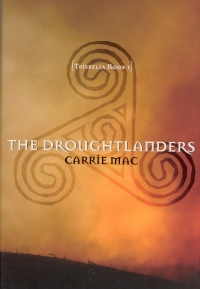
The Droughtlanders
Written by Carrie Mac
Puffin Canada
978-0143056669
347 pp.
Ages 12-16
2006


Everything Beautiful is Not Ruined
Written by Danielle Younge-Ullman
Razorbill
978-0-425-28759-0
368 pp.
Ages 13-17
2017
Reviewed here


Exit, Pursued by a Bear
Written by E. K. Johnston
Dutton Books for Young Readers
978-1-101994580
256 pp.
Ages 12-18
2016
Reviewed here

Falling Kingdoms
Written by Morgan Rhodes
Razorbill
978-1-59514-584-0
412 pp.
Ages 12+
2012
Reviewed here


The Fashion Committee
Written by Susan Juby
Penguin Teen
978-0670067602
320 pp.
Ages 12+
2017

The First Stone
Written by Don Aker
HarperTrophy Canada
978-0-00639-286-6
289 pp.
Ages 14+
2003
Reviewed here


The Gathering
Written by Kelley Armstrong
Doubleday Canada
978-0-385-66851-4
359 pp.
Ages 12+
2011
Reviewed here


A Girl Like That
Written by Tanaz Bhathena
Farrar Straus Giroux
978-0-374-30544-4
369 pp.
Ages 13-18
2018
Reviewed here


The Gospel Truth
Written by Caroline Pignat
Red Deer Press
978-0-88995-493-9
328 pp.
Ages 12+
2014
Reviewed here

Half Brother
Written by Kenneth Oppel
HarperCollins Canada
978-1-55468-812-8
304 pp.
Ages 12+
2010


In the Key of Nira Ghani
Written by Natasha Deen
Running Press Kids
978-0-762465477
304 pp.
Ages 12+
2019


Jeremy Stone
Written by Lesley Choyce
Red Deer Press
978-0-88995-504-2
184 pp.
Ages 14-18
2013
Reviewed here


The Love and Lies of Rukhsana Ali
Written by Sabina Khan
Scholastic
978-1-338-22701-7
336 pp.
Ages 14+
2019
Reviewed here

Looks Like Daylight: Voices of Indigenous Kids
Written by Deborah Ellis
Groundwood Books
 978-1-55498-120-5
256 pp.
Ages 12+
2013
Reviewed here


The Marrow Thieves
Written by Cherie Dimaline
DCB (Cormorant)
978-1-77086-486-3
231 pp.
Ages 14+
2017
Reviewed here


Moon at Nine
Written by Deborah Ellis
Pajama Press
978-1927485576
224 pp.
Ages 14+
2014
Reviewed here

My Book of Life by Angel
Written by Martine Leavitt
Groundwood Books
978-1-55498-117-5
246 pp.
Ages 14+
2012
Reviewed here

Optimists Die First
Written by Susin Nielsen
Tundra Books
978-1-77049-782-5
240 pp.
Ages 12+
2017
The Rule of Three
Written by Eric Walters
Razorbill
978-0-670-06705-3
405 pp.
Ages 12-18
2014
Reviewed here

Sadia
Written by Colleen Nelson
Dundurn
978-1-45974-029-7
240 pp.
Ages 12+
2018
Reviewed here

Sadie
Written by Courtney Summers
Wednesday Books
978-1-250-10571-4
308 pp.
Ages 14+
2018
Reviewed here


The Scorpion Rules (Prisoners of Peace)
Written by Erin Bow
Margaret K. McElderry Books (Simon & Schuster)
978-1-48144-271-8
384 pp.
Ages 14+
2015

Skim
Written by Mariko Tamaki
Illustrated by Jillian Tamaki
Groundwood Books
978-0888997531
144 pp.
Ages 14+
2002


Swimming in the Monsoon Sea
Written by Shyam Selvadurai
Tundra Books
978-0-88776-735-4
274 pp.
Ages 16+
2005


This Place: 150 Years Retold
Written by Katherena Vermette, Sonny Assu, Jen Storm, David A. Robertson, Rachel and Sean Qitsualik-Tinsley, Kateri Akiwenzie-Damm, Richard Van Camp, Brandon Mitchell, Niigaanwewidam James Sinclair, Chelsea Vowel
Illustrated by Scott B. Henderson, Kyle Charles, Natasha Donovan, GMB Chomichuk, Ryan Howe, Jen Storm, Tara Audibert, Andrew Lodwick
Colour by Donovan Yaciuk, Scott A. Ford, Natasha Donovan, GMB Chomichuk, Andrew Lodwick
HighWater Press
978-1-555379-758-6
274 pp.
Ages 13+
2019
Reviewed here


The Unlikely Hero of Room 13B
Written by Teresa Toten
Doubleday Canada
978-0-385678346
255 pp.
Ages 14+
2013
Reviewed here

We Contain Multitudes
Written by Sarah Henstra
Penguin Teen
978-0-735264212
384 pp.
Ages 14+
2019
Reviewed here


What We Hide
Written by Marthe Jocelyn
Tundra Books
978-1-77049-642-2
275 pp.
Ages 14+
2014
Reviewed here


When Everything Feels Like the Movies
Written by Raziel Reid
Arsenal Pulp Press
978-1-55152-574-7
160 pp.
Ages 14+
2014


Wondrous Strange
Written by Lesley Livingston
HarperCollins
978-1-55468-273-7
327 pp.
Ages 12+
2008
Reviewed here