November 10, 2017

Baby Cakes

Written by Theo Heras
Illustrated by Renné Benoit
Pajama Press
978-1-77278-030-7
24 pp.
Ages 1-4
October 2017

If Baby Cakes don't sound yummy enough, wait until you see Renné Benoit's illustrations of the children and kitten at play baking.  They are sweet and delightful and wholly scrummy.

From Baby Cakes 
by Theo Heras
 illus. by Renné Benoit
An older sister and little brother, with tuxedo kitten in tow, don their aprons, gather their ingredients and baking utensils and set to work.  Of course there are a few mishaps–there always are in the kitchen–of spilled ingredients but the two little ones seem to know what they are doing.  Measure, sprinkle, cream, wash, wash again, pour, blend, mix, fill and wait.  Except for brief appearances of a parent's hands to help out with a spill and to put the cupcakes in the oven, this story is that of the labours of the children and the kitten.  As should be, there is a tasty treat to imbibe in at tea time.

From Baby Cakes 
by Theo Heras 
illus. by Renné Benoit
Theo Heras, whose first book with Pajama Press Hat On, Hat Off (2016) was also illustrated by the wonderful Renné Benoit, reintroduces the sister and brother, slightly older now and able to take on a baking project with a little help from a parent. But Baby Cakes is still written for the very young, with Pajama Press' trademark padded cover and sturdy pages, and large bold font and simple sentences of only a few words.  I suspect that Baby Cakes could be the first book young children will be able to read themselves as the repeated readings by an older child or adult will enable them to remember the words and learn to match the visual with the sounds.  Learning to bake and read in one charming book.

But like so many picture books, it is the artwork that will captivate children and adults.  Renné Benoit's illustrations capture the innocence and earnestness of the very young and their efforts to undertake what must seem a monumental task.  The seriousness of their efforts does not take away from their delight in the work and the surprises that happen.  With a much-loved kitten, the children are bonded to their task and to each other, cooperating in their efforts and sharing in the fruits of their labours.  It's a warm scene of family that I wish could be experienced in every household.  Hopefully, Baby Cakes will compel that to happen in more.  With the recipes for chocolate and vanilla cupcakes, as well as vanilla frosting, on the endpapers, everyone and anyone can assist young children in baking some yummy delights, with or without a kitten to help.
From Baby Cakes 
by Theo Heras
 illus. by Renné Benoit

November 09, 2017

Nimoshom and His Bus

Written by Penny M. Thomas
Illustrated by Karen Hibbard
HighWater Press
978-1-55379-708-1
24 pp.
Ages 4-8
October 2017

I think that it's important that every child be able to see themselves and the components of their lives in literature.  Nimoshom and His Bus will speak volumes to many children, whether Cree or bused students, in its simple story of a Cree grandfather, Nimoshom, who drives a school bus.
From Nimoshom and His Bus 
by Penny M. Thomas 
illus. by Karen Hibbard
Nimoshom's day begins outside of his bus with his dog and the narrator explaining that Nimoshom means my grandfather in Cree.
From Nimoshom and His Bus 
by Penny M. Thomas
 illus. by Karen Hibbard
As children get on the bus and they travel to school, Nimoshom greets them and comments on the day, occasionally having to remind the students to sit down, Api, or to hurry up, Kinapi.  We also learn the Cree words for thank you–as he tells the children who share gifts with him– and yes, no, wait, and the all-purpose Ekosi that means okay, that's it or amen.  The book concludes with a brief Cree word list of the thirteen terms emphasized in this book.
From Nimoshom and His Bus 
by Penny M. Thomas 
illus. by Karen Hibbard
While Penny M. Thomas' story is not a plot-driven allegory or a message-based lesson, Nimoshom and His Bus is a sweet introduction to some simple Cree words in the context of a common-place activity for many children.  This could have been an illustrated dictionary of Cree words but Penny M. Thomas, who is of Cree-Ojibway heritage, was able to give a familiar frame of reference which will help all children connect with the story.  Karen Hibbard who uses watercolours and pastels to create a gentle background for Nimoshom's day on his bus gives the story a grassroots mood, highly appropriate for a routine day of activity and interaction for this bus driver and his charges.  It's very relatable.

There is much to learn from Nimoshom, whether as a bus student or a reader of the book, and it's all done gracefully, not unlike Nimoshom himself.
From Nimoshom and His Bus 
by Penny M. Thomas 
illus. by Karen Hibbard
🚌 🚌 🚌 🚌 🚌

For those learning or teaching the Cree language, the publisher has provided a Cree pronunciation guide in pdf format as well as a downloadable lesson plan at http://www.portageandmainpress.com/product/nimoshom-and-his-bus/ to further the educational value of this picture book.


November 08, 2017

Love You Forever: New Pop-Up Edition

Written by Robert Munsch
Illustrated by Sheila McGraw
Paper engineering by Bruce Foster
Firefly Books
978-1-770859654
14 pp.
All ages
September 2017

Though not Robert Munsch's first book, Love You Forever is perhaps his best known, with astronomical sales over the decades and inclusion on multiple lists of top books of all time.   Published in 1986, Love You Forever is an iconic picture book about a parent's love for her child and it is now available in a pop-up version.
From Love You Forever Pop-Up Edition
The story begins with a mother holding her new baby and singing a lullaby to him:

I'll love you forever,
I'll like you for always,
As long as I've living
my baby you'll be.

Then the boy becomes a toddler and gets into much mischief but still his mother sneaks into his room and rocks him back and forth while she sings the lullaby to him. This continues as the boy becomes nine, and then a teenager and finally an adult who moves away.  Still his mother sneaks into his room, rocks him and sings her lullaby.  But when she is too old to come see him, he visits her and sings the lullaby she cannot, revising it appropriately:

I'll love you forever,
I'll love you for always,
As long as I'm living
My Mommy you'll be.  
From Love You Forever Pop-Up Edition
The story ends with the son returning home, supposedly after his mother has passed, and he sings the lullaby to his own daughter, just as his mother sang to him.

Because of the alternative format with fold-out flaps and pull- and push-tabs to create three-dimensional illustrations, this Love You Forever is only 14 pages long.  Still the whole story is there, Robert Munsch's original words and Sheila McGraw's illustrations, now brought to life with the paper engineering of Bruce Foster, an American paper magician. (You can see a demonstration of the rocking chair pop-up on his website Paperpops.) There's not much I can say about the book Love You Forever that has not already been said time and time again but I can address the novelty of Bruce Foster's paperwork in adding a third dimension to the art and hence the story.  Though some of the illustrations may appear dated–check out the clothing, the computer and the hairstyles–there is a freshness that comes with the pop-ups, bringing new life to the pages of Love You Forever.  Parents may still be reading the story and singing the lullaby to their children but now children can interact with the story, pushing and lifting and pulling tabs, to help tell that story and appreciate the love between parent and child.

•••••••••••••••••••••

For anyone who will be reading Love You Forever and has never heard the melody to the lullaby the mother sings, Robert Munsch shares it on a YouTube video uploaded on January 13, 2011 by tvoparents at https://youtu.be/YFX6pdwJWpA.

November 07, 2017

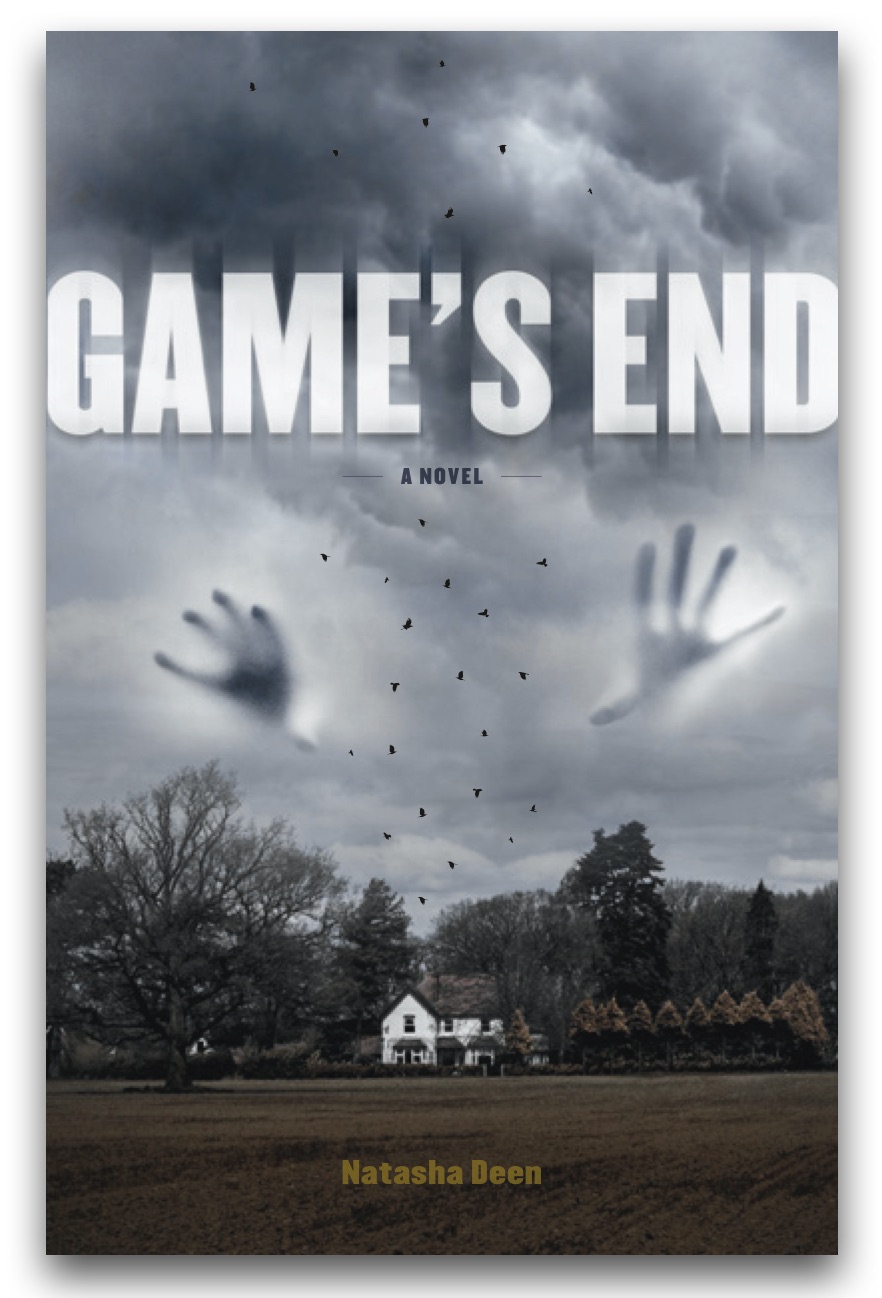
Game's End: Q & A with author Natasha Deen


Game's End
Written by Natasha Deen
Yellow Dog (formerly Great Plains Teen Fiction)
978-1-927855 -85-0
240 pp.
Ages 13+
November 2017


Yesterday I reviewed Game's End, the third book in Natasha Deen's series that began with Guardian and Gatekeeper. Today I have the thrill of interviewing author Natasha Deen about her newest young adult paranormal mystery.


•••••••••••••••••


HK: In my review of Gatekeeper, I called you the “princess of YA paranormal murder mysteries” and I stand behind that moniker, though I know you can write other genres as well.  But, though there are wild supernatural elements to Game’s End, at its heart the story is a whodunit, a murder mystery to be solved.  Are you a fan of mystery books and if so, who are a few of your favourite authors?

ND:  First of all, thank you for those kinds words! That thrills me. ☺

I am a huge fan of mysteries. There’s just something—thrilling, fascinating, intriguing—about hunting and gathering puzzle pieces, and delving beneath the personalities to find the truth. (I think it’s a bit like real life, where you listen and talk to people, and search for the subtext of their actions and words, and puzzle out who they are versus who they (1) want you to think they are (2) who they are trying to be).

I come by my love of mystery via family genetics.  Some of my favourite memories are the weekend afternoons when everyone was taking a nap, except my mother and I, who drank tea, ate cookies, and watched PBS Masterpiece Theatre,  as well my family coming together during the weeknights to watch TV and guess the murderer in Murder She Wrote, Columbo, and Matlock.

When it comes to my favourite authors, there are too many to name, but my first mystery-author love has to be Agatha Christie. Murder on the Orient Express, And Then There Were None, and any of the Miss Marple mysteries are tops in my books (no pun intended).


HK: Your subplots do double-duty, adding depth to the mystery as well as being the source of red herrings to trick the reader into guessing the identity of the murderer and more.  How hard is it to craft subplots that have to lure readers into thinking the story is going one way and then take them completely off course?  

ND:  It definitely takes some doing, but it’s so much fun to play with readers, and I really enjoy it. It’s like hiding Easter eggs and I love trying to find the balance of hiding clues deep enough to trick readers, but still making it apparent, so when they go back, they can see the clues.

As a reader, I love that feeling of racing to guess the bad guy before the main character/detective reveals them. It’s so exciting when you have that “Aha! I knew I was right!” moment, but I also love the “Ahh! They got me, I didn’t see it coming!” But when I go back, I can see how they were setting up the clues.

Stories that drive me crazy are when the author has some off the page clue that only the detective is privy to, or some sudden plot twist that’s not actually a twist, it’s just a sharp turn/plot device—that’s cheating. Put the clues on the page and let’s see how it turns out.


HK: From Guardian to Gatekeeper and now Game’s End, you have kept Maggie honest, humble and very real, though she has supernatural powers.  How did you ensure that she stay this real when she obvious isn’t?

ND:  I think from Maggie’s perspective, she’s not special.  Everyone has powers and talents, hers just happens to be seeing the dead. It doesn’t make her any better than anyone else, and with a dad like Hank, I just couldn’t see her being raised any way but the way she shows up on the page.

Also, I come from a culture (Guyanese) that embraces the idea of the supernatural, so why would you freak out or act weird? That would be like acting strange when you see the sun, but the sun is always there.

It’s not that Maggie doesn’t understand her power is unusual, but since it’s part of her, it just is…one of my favourite shows is West Wing, and one of the things that struck me was that the characters are never over the top or shrill. Then I realized that what was unusual for me (i.e., another country threatening to launch weapons or impose sanctions) is an everyday event for them. If they were over-reactive to it, they’d exhaust themselves by the end of the day. So, I think it’s the same with Maggie. It’s her everyday. She’s always seeing ghosts, transitioning them, learning about the terrible, beautiful aspects of their life. I’d like to think that it gives her depth and an appreciation for all the ways life is special and unique.


HK: While you’d made Maggie a sympathetic character, there are many others who are totally reprehensible and yet very real in the abuse they inflict on others.  Did you find it emotionally draining to write about domestic abuse and self-righteousness and violence against those who are vulnerable?

ND:  The short answer is yes. There’s a lot of personal experiences that inform those narratives, both mine and people I care about, and it’s a hard place to go, a hard place to live in, BUT, as storytellers, it’s important for authors to take the pain of those moments to make sure the story we tell is true to life, and the characters are as real as they can be.

One of the things that I feel is my saving grace and helps me not to get mired in the pain/darkness is my characters rise above those circumstances, so the bad things in life aren’t there to weigh them down, but to lift them up. I hope it’s something my readers can trust about my work—that there’ll be intense moments and difficult scenes, but in the end there is some kind of positive resolution.

There are a lot of studies on the effects of reading on the brain, on the physiological changes that happen when we imagine, so it’s important for me that even if there isn’t always a Hollywood happy ending in a book, it ends on some kind of hopeful note.

If I can expand out the answer, then it’s worth noting in my personal philosophy, I believe we’re all storytellers, and that’s why sharing stories (with friends, in writing, with groups) is an important thing. The world is made better and stronger when we connect through our shared stories and experiences.


HK: While there is much fear associated with death and dying, the concept of an afterlife offers some prospect for good to come out of that fear.  Do you believe in a particular version of an afterlife?  If so, does this belief come from a spiritual background, personal experiences with a psychic medium, or something else entirely?

ND:  Asking a Guyanese person if they believe in ghosts is akin to asking them if they believe in the sky. ☺ The sky exists, it’s there whether you believe it or not. According to Guyanese philosophy, ghosts and the supernatural is just another level of existence. Your ancestors will visit you in your dreams, they can change the reality around you, so you must always be aware of unusual occurrences in the everyday (a butterfly showing up in a location butterflies aren’t known to appear, for example). It’s why you should always behave—no one wants a lecture from long-dead Auntie who shows up in your dreams.

As a kid of two nations, Canada and Guyana, it’s one of the things I had to reconcile. North American culture doesn’t embrace the supernatural in the same way as Guyanese. But I’m so proud of my heritage and the subtext of this belief, that love can be so strong, your family members so connected to you that even death can’t break that bond, and I love the lesson to pay attention to the world around you, to pay attention to the unusual things because something beautiful might be coming your way.


HK: Although I’ve never heard of them, the supernatural creatures called serengti seem familiar to me yet I can find no reference to them in the literature.  Are these creatures from any particular mythology or are they your own fantastical creation? 

ND:  I sketched out the series back in 2010, and I remember coming across a reference to an ancient creature that was female and…that’s all I remember. When I tried to find my notes, they were missing. I *feel* like I came up with the serengti term, but that it’s based off of mermaids, sirens, and my wondering about what the after-life of Hans Christian Anderson’s Little Mermaid may have been like.


HK: I so enjoy your humour.  Even in a book that deals with death and the supernatural, I found myself laughing aloud at the banter between Maggie and Serge and Nell’s pluck.  How can you remain light and jovial in your writing when immersed in a story about murder and violence and dangerous situations?

ND:  I have to thank my family and my family history for that. When you grow up as a POC, your life is just different from the non-POC kids (I still remember being 9 years-old and telling a Caucasian girl in my class that I was creeped out by white pillows, and her not having a clue about why, and when I said, “Well, because of the KKK and the Aryan Nations,” she still looked confused. That was one of the many moments I realized my growing up and how I navigated the world wasn’t going to be like my classmates, and what the world offered me versus what it offered them was never going to be the same).

My family history is one of struggle and overcoming, of standing strong while terrible things happened, and letting the bad things pass. Part of the standing strong involved love, forgiveness, a lot of humour. There’s an unspoken code of conduct in my family. In a bad situation, find a way to laugh. If you can do that, you can find a way to overcome, you can find the light, and a way out of whatever darkness is encroaching on you.

From a story/character perspective, I wanted to give Maggie, Serge, Nell, and Craig a similar philosophy. Certainly from Maggie and Craig’s perspectives, they’ll have seen things they can’t unsee. Serge is now heading down that path, and for Nell, she doesn’t have the same abilities (or any supernatural powers) as her friends, so how does she navigate the stories she hears from them, and how does she step in to support? Humour seems like the perfect weapon.


HK: The ending of Game’s End leaves it open for the possibility of more books in the series.  Are you planning on continuing Maggie’s story?  Readers will definitely want to learn about the return of a key character. (I won’t spoil the ending for readers, though they should be prepared that, as you say, “Maybe there are no happy endings.  Maybe there are just endings, and it is up to us to make them happy.”; pg. 240)

ND:  I’m giggling because for writers, our stories are forever continued, and we’re always living with our characters. The Guardian trilogy wrapped some of the big issues facing Maggie—bullying, domestic violence, abuse, forgiveness, resilience—in a series of horror/mystery/suspense novels, and I feel as though I’ve told that portion of her story. Having said that, I’m definitely open to more of Maggie’s adventures.


•••••••••••••••••

Many thanks to Natasha Deen for answering my somewhat lengthy questions 
and 
Marketing Director Mel Marginet at Great Plains for facilitating this interview.

• • • • • • • • • • • • • • • • •

If you haven't read the whole series, time to get your own copies of Guardian, Gatekeeper and Game's End!


November 06, 2017

Game's End

Written by Natasha Deen
Yellow Dog, an imprint of Great Plains Publications
978-1-927855-85-0
240 pp.
Ages 13+
November 2017


     “He’s not my real brother, we’re soul-bonded.”
     “If he’s not your brother, why do you call him that?” asked Zeke.
     “Because.” Serge wriggled into the spot between us. “It sounds better than ‘hi, meet Serge. We used to go to school together and he bullied me until I wanted to die. Luckily, he was the one who stopped breathing.  I helped him figure out that his so-called suicide was a murder, and then we discovered in this life we were both scripted to become guardians.  We watch over the dead and living, transition souls from this plane to the next, and make sure the bad spirits from hell stay there.’”
     “Yeah,” Zeke nodded. “I can see how that’s a mouthful.”
(pg. 25)

That's essentially the creation story of Maggie Johnson and Serge Popov though there is so much more to their story.  There's Maggie's supernatural boyfriend Craig who is a ferrier of the dead, and her extremely plucky (her word, not mine) and loyal best friend Nell, and her dad Hank and his girlfriend Nancy who is the sheriff.  They all "live"–some more than others–in Dead Falls, Alberta where Maggie has been involved, with some supernatural help, in exposing those responsible for the deaths of several people, sadly raising the ire of some local citizens who consider the teen "a death magnet" (pg. 159) who has ruined the reputations of the town and some people like Serge's father, Reverend Popov.  The vibe in the town is definitely off but there's something worse coming as foretold by The Voice–the disembodied voice that comes through radios and whom Maggie suspects is her mother–and it's coming for Maggie.  Craig believes it's as a power-seeking soul-eater, which appears and swallows up lost and wandering dead just as Maggie is trying to help the newly dead Zeke cross over with his little brother Homer.  If the soul-eater is the only threat is yet to be seen.

As Craig and Serge attempt to get more info from the other side about her mother, Maggie is being pulled into her own investigations.  She tries to learn more about her mother from Hank who reveals that she too had powers that were tearing her apart.  On top of that, Maggie is experiencing unusual out-of-body experiences that take her to different times and places to witness the rescue of children's souls by a serengti, a supernatural called Serena, who compassionately tries to spare them the trauma of their deaths.

Then a murder shatters Maggie's world, and she's on the trail, both of our world and a supernatural one, to find the killer and keep those she loves safe.

Game's End is the conclusion of Natasha Deen's Guardian trilogy that began with Guardian (Great Plains Teen Fiction, 2014) and led to Gatekeeper (Great Plains Teen Fiction, 2016), all stories that embed the reader in the worlds of the dead.  For the dead in Game's End those worlds includes both the good and the bad, those who attempt to ease the dead to the other side and those, both living and supernatural, who seek to harm for the sake of power.  The evil that kills and aims to destroy is palpable in Game's End and, except for those who attempt to harm the children Serena wishes to rescue, not always easily identifiable.  Like evil everywhere, it is masked with lies and smiles and facades of rational behaviour.  The only reassurance is that, whether they are the self-righteous or domestic abusers or murderers, justice, in this world and the next, will be levelled against them.  That's the reassuring message of Natasha Deen's paranormal mystery: revenge is not necessary because there's karma.

Even so, Natasha Deen makes Game's End a story about a typical teen who is trying to find her niche in the world.  What she has on her plate is a little different than most teens, balancing being a friend and daughter with battling evil on both sides of the death divide.  But it all reads so naturally because of Natasha Deen's characters and a healthy infusion of comic relief.  While Maggie may be playing "demonic whack-a-mole" (pg. 29) with some unfriendly entities, she's rolling her eyes at Serge's wisecracks and Nell's off-hand comments that always alleviate the tension.

“Oh, he’s cute,” said Nell.
“Calm down,” I said. “He’s dead.”
“I could make him feel alive again.”
(pg. 21)

I know it's bizarre to match Natasha Deen's intense plotting with her tongue-in-cheek humour but the two work so artfully together, one escalating the drama and the other cushioning it, that Game's End would be a very different entity without this curious pairing.

Game's End may be Book 3 in this series but it's far from game over for Natasha Deen.  And if you're a new reader to the Guardian series, you've got three books of robust plotting, clever characters and bright banter ahead of you. Enjoy!


•••••••••••••••••

Look for my in-depth interview with author Natasha Deen tomorrow.  She graciously answered some tough questions about her writing, her beliefs and plotting for Game's End and her whole Guardian series. 

•••••••••••••••••

November 03, 2017

Smiley: A Journey of Love

Written by Joanne George
Fitzhenry & Whiteside
978-1-55455-412-6
56 pp.
For all ages
October 2017

Anyone who has ever asked me to review a book and to whom I have sent my review policy knows that I generally do not review books about animals.  It is far to difficult for me emotionally to know of the hardships that animals are enduring in real life and even in fictionalized accounts. If you look back over my years of reviewing, you could count the number of animal books I've reviewed on one hand. That said, I wanted to do a brief review of Smiley: A Journey of Love as it is a nominee of the 2018 Forest of Reading's Silver Birch Express Award.

Smiley's tragic beginnings start in an Ontario puppy mill where he was born without eyes and with genetic dwarfism.  He was rescued by the author Joanne George and others at the vet clinic where she worked.  I'm in sobbing tears recalling the horrors that that little dog must have endured when he and others were found. Fortunately, with much love and patience, Smiley was able to survive and flourish under Joanne George's care.
No act of kindness, no matter how small, is ever wasted. - Aesop
The book, peppered with photographs and inspirational quotations, shares Smiley's story from rescue to rehabilitation, including surgery, training and introduction to new situations, places, other animals and people.
From Smiley: A Journey of Love 
by Joanne George
As Smiley becomes part of Joanne George's family and welcomes others into it–her husband and son come after him–the small Golden Retriever shared his wonderfulness with others by becoming a St. John Ambulance Therapy Dog.
The end result of kindness is that it draws people to you. - Anita Roddick
From Smiley: A Journey of Love 
by Joanne George
The process of becoming a therapy dog is involved but everyone knew that Smiley was special and would provide much comfort.  He could give that which he had been denied at birth but had had been nurtured through Joanne George and her family. From hospitals to nursing homes and seniors and children, Smiley has brought love and compassion and calm to those in need.

Smiley: A Journey of Love truly is a story of love, of two loving spirits, Smiley and Joanne George.

From Smiley: A Journey of Love 
by Joanne George
•••••••••••••

After posting this review, I learned that Smiley, who has his own Twitter account @Mysmileydog, passed away on October 14, 2017.  Do check out all the photos on his Twitter feed, of Smiley as a pup, meeting Justin Trudeau, being honoured time and time again.  Let me echo the sentiment posted the day after his passing: "I hope you are running free today, and you can see all the beauty in heaven."

November 02, 2017

Prince of Pot

Written by Tanya Lloyd Kyi
Groundwood Books
978-1-55498-944-7
216  pp.
Ages 13+
September 2017

I live in the middle of a forest.  On a grow-op. With bears.  And I get shot at on my way home. (pg. 61)
This is definitely living on the edge.  Isaac Mawson's family has been keeping a marijuana grow-op for forty years, starting with Isaac's grandfather Walt who is now debilitated by a stroke.  Their rustic lifestyle includes a cabin with few amenities and a quintet of bears as companions and homeschooling until Isaac and his older sister Judith reached Grade 8. But, though he's in town regularly for school–he's in his final year–and for the grow's supplies, and to see his sister who'd been desperate to leave, Isaac has always found solace in the woods, as well as his artwork.
Once we're in the trees, my lungs expand.  I suppose most people relax when they open their front door and smell dinner cooking.  For me, it's as I step into these hemlocks. (pg. 51)
Then, on one of his routine scouting expeditions, he meets Sam Ko, a new student at his high school and Isaac is smitten.  Sam is a big personality with lots of grit and guts and a flair for drama, on stage and in life.  Too soon he's crushing on the sixteen-year-old and she's bringing him more attention than he wants, bragging about his interactions with a bear (it was the lovely tame Hazel, a bear his father had rescued) and dragging him to her home and parties and sharing his special places with her friends.  And then he learns her dad is a RCMP corporal.  Isaac is torn between having Sam in his life and keeping his family and their lifestyle safe from attention, especially of the law enforcement variety.

Tanya Lloyd Kyi may be better known for her numerous books of middle-grade non-fiction (e.g., Canadian Girls Who Rocked the World, Whitecap Books, 2011; 50 Underwear Questions, Annick Press, 2011; Eyes and Spies, Annick, 2017) but her collection of teen fiction is growing.  Prince of Pot is her fourth YA book and Tanya Lloyd Kyi capably tackles typical teen issues like first loves, grief, and independence with less common ones of pot grow-ops, teen pregnancy, and dyslexia, grabbing her readers with the familiar and the unusual.  Tanya Lloyd Kyi astutely recognizes that for some the atypical is the familiar, and by writing about these unusual circumstances, she's actually letting many teens see themselves in her writing.  Isaac's situation of living in the woods and helping with his family's grow may seem foreign to many of us but, you can bet, somewhere there is a young person who knows that life, those fears and restrictions of living outside of the law. But there's another who knows the dangers of habituating wild animals such as bears, and another who is infatuated with another and doesn't know how to reconcile the conflict of being with that person and the life they want to or need to live.  This is what works in Prince of Pot.  Tanya Lloyd Kyi makes readers completely sympathetic to Isaac's life with his family and the grow and even his actions which can be criminal or gut-wrenching or wholly innocent.  While my heart broke at a turn of events that should never, ever happen in real life, I could see how the story was leading to that moment.  I know Prince of Pot is just fiction but I suspect somewhere someone is living this kind of life.  I can only hope that, while we enjoy the book as an entertaining read, this story might provide guidance to living well, both within the family and independently, as well as within the law and outside of it, if that so happens.