Showing posts sorted by relevance for query Watch it grow. Sort by date Show all posts

January 23, 2020

Watch It Grow: Backyard Life Cycles

Written and illustrated by Barbara Reid
North Winds Press (Scholastic Canada)
978-1-4431-7559-3
32 pp.
Ages 4-8
December 2019

This one may have been released just after Christmas but any picture book by Barbara Reid, the grande dame of plasticine art, could not be overlooked, especially one that will be a valuable teaching tool for young biologists.
From Watch It Grow: Backyard Life Cycles by Barbara Reid
For four species, Barbara Reid illustrates their complete life cycles in three double-page spreads each. There is the monarch butterfly which transforms from egg to caterpillar to chrysalis and butterfly. There is the sunflower which grows from the recognizable hard-shelled seed through germination with root and stem and two cotyledons, to leaves and finally flower and seed again.
From Watch It Grow: Backyard Life Cycles by Barbara Reid
The third species is the green frog which lays many eggs from which tadpoles hatch, and then develop into organisms with back legs and then front legs. The final species is the white oak growing from an acorn which will take root, produce a seedling which grows into a sapling and finally a mature tree. To summarize the cycles, Barbara Reid provides a one-page illustration of each at the end of her book.
From Watch It Grow: Backyard Life Cycles by Barbara Reid
This may be the content of Watch It Grow: Backyard Life Cycles and it is important content for teachers who will be helping young children investigate the relationships between different stages of the same organism.  But Watch It Grow is more than a child's picture book as teaching tool, and that's because the art is that of Barbara ReidWatch It Grow: Backyard Life Cycles becomes a celebration of life and the seasons, as plant and animals grow and develop through their life stages. Into each life cycle's story, Barbara Reid brings in a landscape of pond or backyard, woods or meadow, all with the textural and accurately-coloured richness of her plasticine art. Young children will be reaching out, as they always do with Barbara Reid's art, to touch the leaves or the caterpillar or a flower, certain that its softness or fuzziness or crispiness will be palpable and maybe even sonorous.

I know teachers and parents will want to have this book in their library for the teaching of life cycles, which Watch It Grow: Backyard Life Cycles will do flawlessly, but don't ignore the artistry of its illustrations. Young readers will certainly be enamoured with Barbara Reid's art and this will only cultivate further learning.

August 15, 2024

The Weedflower

Written by Elizabeth Davaze
Illustrated by Marianne Ferrer
Owlkids Books
978-1771475884
32 pp.
Ages 4-8
August 2024


In a busy schoolyard, with children jumping and climbing, sliding and clapping, one child sees a plant with a yellow flower growing in the crack between the cement and rubber turf. Only Sam sees it and watches it and sings to it and admires it.
From The Weedflower, written by Elizabeth Davaze, illustrated by Marianne Ferrer
But, as with most living things, the "alien bud" grows. It grows into a tall, bright yellow flower and then it catches the attention of the other children who join Sam to admire the flower. (Or is it a weed?) Not only do they admire it, but they also protect it and nurture it. They stop balls from hitting it and squirrels from nibbling at it. And the flower thrives. "Before long, the entire blossom had changed into one perfect, dreamy fluffball."

From The Weedflower, written by Elizabeth Davaze, illustrated by Marianne Ferrer
But when the adults at the school finally notice the "fluffball flower," they do not appreciate it the way that the children do.

    "They did not see the magic."

From The Weedflower, written by Elizabeth Davaze, illustrated by Marianne Ferrer
After much tugging by many adults, including the large principal, "the weedflower’s roots broke free, the stem came loose, and all the fluff floated away with all the students’ wishes in the breeze." It is only with time that Sam and the other children will see the weedflower has not gone because that fluff was actually filled with the promise of new life.
From The Weedflower, written by Elizabeth Davaze, illustrated by Marianne Ferrer
 
Adults may see a plant that is growing where they don't want it whether it be a dandelion in a lawn, or volunteer trees that grow to close to a house's foundation. But children don't see that. Ralph Waldo Emerson, who had much to say about nature, is quoted as saying, "A weed is simply a plant whose virtues we haven't yet discovered” and many children have no problem finding the virtues in the dandelion. They bring home bouquets for their mothers, and blow the dandelion fluff and watch it travel like fairies on wind currents. They delight in their spread on lawns to become fields of green dotted with yellow brightness. (We used to braid the stem and flowers into crowns.) To nurture any plant and have it destroyed for its inconvenience to another would be devastating. Kincardine author Elizabeth Davaze takes the perspective of children seeing the dandelion as a flower, a thing of beauty and wonder, and makes us realize the loss they feel when the weed, according to the adults, is eradicated. It's all about perspective, isn't it? Too bad the adults aren't enlightened enough to realize that the dandelion would not be stopped by pulling one out.
 
Montreal's Marianne Ferrer, whose illustrations I have long admired (e.g., Carmen and the House That Gaudí Built, Racines, and Le Jardin Invisible), knows where to put the emphasis on her illustrations. Green and gold, the dandelion's only colours, along with the brown of the dirt, are the basis of all Marianne Ferrer's artwork in The Weedflower, regardless of whether she's drawing the dandelion or the children. The attention is on the plant, just as the children want it to be. Moreover, her use of watercolour and gouache give The Weedflower its organic texture, prioritizing the natural world. 
 
I know some teachers will use The Weedflower as an introductory story to teach the life cycle of a plant–too many kids don't know that seeds come from flowers–but I think it's a wonderful exploration of perspective and seeing things through a child's eyes to appreciate all living things as extraordinary, even the seemingly lowly dandelion.

November 07, 2017

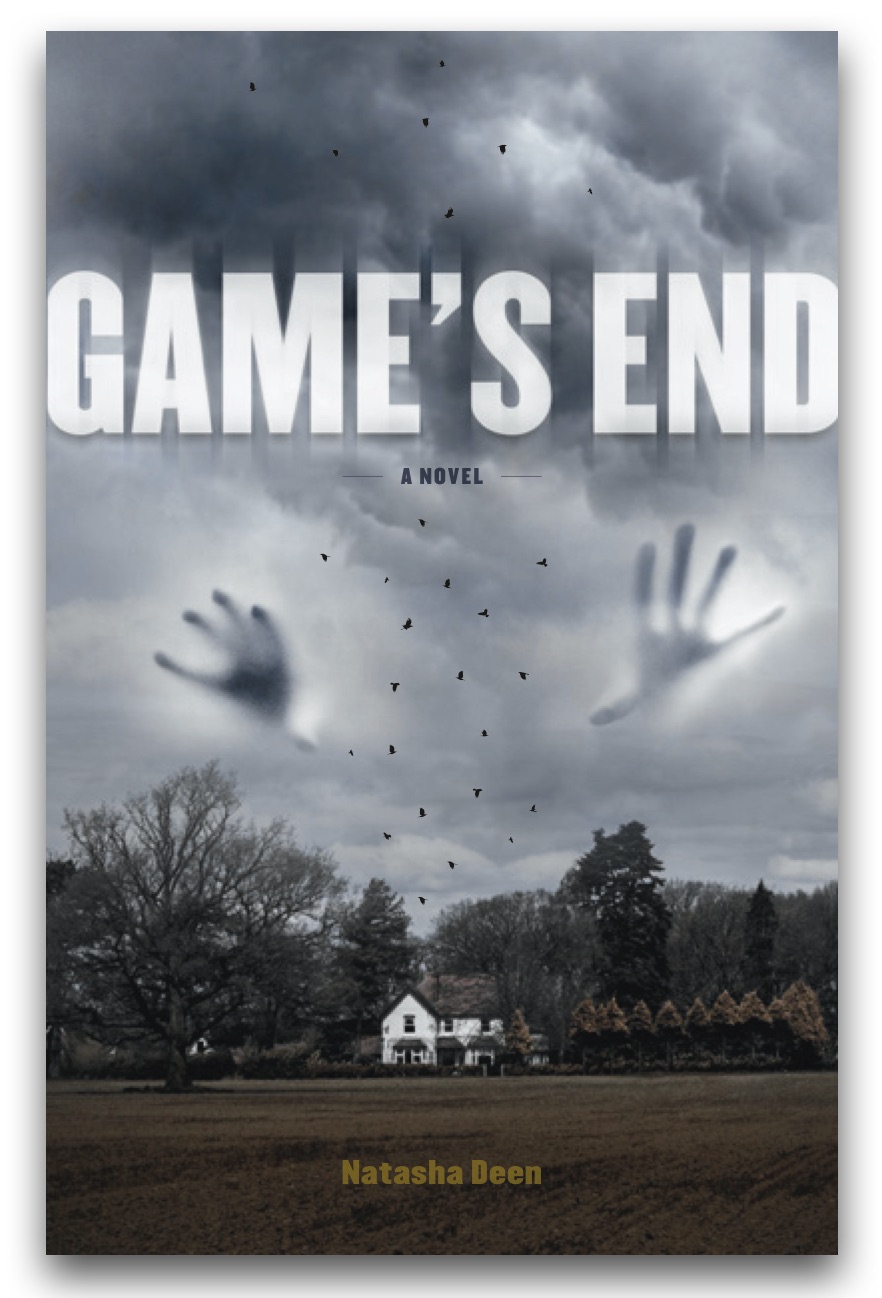
Game's End: Q & A with author Natasha Deen


Game's End
Written by Natasha Deen
Yellow Dog (formerly Great Plains Teen Fiction)
978-1-927855 -85-0
240 pp.
Ages 13+
November 2017


Yesterday I reviewed Game's End, the third book in Natasha Deen's series that began with Guardian and Gatekeeper. Today I have the thrill of interviewing author Natasha Deen about her newest young adult paranormal mystery.


•••••••••••••••••


HK: In my review of Gatekeeper, I called you the “princess of YA paranormal murder mysteries” and I stand behind that moniker, though I know you can write other genres as well.  But, though there are wild supernatural elements to Game’s End, at its heart the story is a whodunit, a murder mystery to be solved.  Are you a fan of mystery books and if so, who are a few of your favourite authors?

ND:  First of all, thank you for those kinds words! That thrills me. ☺

I am a huge fan of mysteries. There’s just something—thrilling, fascinating, intriguing—about hunting and gathering puzzle pieces, and delving beneath the personalities to find the truth. (I think it’s a bit like real life, where you listen and talk to people, and search for the subtext of their actions and words, and puzzle out who they are versus who they (1) want you to think they are (2) who they are trying to be).

I come by my love of mystery via family genetics.  Some of my favourite memories are the weekend afternoons when everyone was taking a nap, except my mother and I, who drank tea, ate cookies, and watched PBS Masterpiece Theatre,  as well my family coming together during the weeknights to watch TV and guess the murderer in Murder She Wrote, Columbo, and Matlock.

When it comes to my favourite authors, there are too many to name, but my first mystery-author love has to be Agatha Christie. Murder on the Orient Express, And Then There Were None, and any of the Miss Marple mysteries are tops in my books (no pun intended).


HK: Your subplots do double-duty, adding depth to the mystery as well as being the source of red herrings to trick the reader into guessing the identity of the murderer and more.  How hard is it to craft subplots that have to lure readers into thinking the story is going one way and then take them completely off course?  

ND:  It definitely takes some doing, but it’s so much fun to play with readers, and I really enjoy it. It’s like hiding Easter eggs and I love trying to find the balance of hiding clues deep enough to trick readers, but still making it apparent, so when they go back, they can see the clues.

As a reader, I love that feeling of racing to guess the bad guy before the main character/detective reveals them. It’s so exciting when you have that “Aha! I knew I was right!” moment, but I also love the “Ahh! They got me, I didn’t see it coming!” But when I go back, I can see how they were setting up the clues.

Stories that drive me crazy are when the author has some off the page clue that only the detective is privy to, or some sudden plot twist that’s not actually a twist, it’s just a sharp turn/plot device—that’s cheating. Put the clues on the page and let’s see how it turns out.


HK: From Guardian to Gatekeeper and now Game’s End, you have kept Maggie honest, humble and very real, though she has supernatural powers.  How did you ensure that she stay this real when she obvious isn’t?

ND:  I think from Maggie’s perspective, she’s not special.  Everyone has powers and talents, hers just happens to be seeing the dead. It doesn’t make her any better than anyone else, and with a dad like Hank, I just couldn’t see her being raised any way but the way she shows up on the page.

Also, I come from a culture (Guyanese) that embraces the idea of the supernatural, so why would you freak out or act weird? That would be like acting strange when you see the sun, but the sun is always there.

It’s not that Maggie doesn’t understand her power is unusual, but since it’s part of her, it just is…one of my favourite shows is West Wing, and one of the things that struck me was that the characters are never over the top or shrill. Then I realized that what was unusual for me (i.e., another country threatening to launch weapons or impose sanctions) is an everyday event for them. If they were over-reactive to it, they’d exhaust themselves by the end of the day. So, I think it’s the same with Maggie. It’s her everyday. She’s always seeing ghosts, transitioning them, learning about the terrible, beautiful aspects of their life. I’d like to think that it gives her depth and an appreciation for all the ways life is special and unique.


HK: While you’d made Maggie a sympathetic character, there are many others who are totally reprehensible and yet very real in the abuse they inflict on others.  Did you find it emotionally draining to write about domestic abuse and self-righteousness and violence against those who are vulnerable?

ND:  The short answer is yes. There’s a lot of personal experiences that inform those narratives, both mine and people I care about, and it’s a hard place to go, a hard place to live in, BUT, as storytellers, it’s important for authors to take the pain of those moments to make sure the story we tell is true to life, and the characters are as real as they can be.

One of the things that I feel is my saving grace and helps me not to get mired in the pain/darkness is my characters rise above those circumstances, so the bad things in life aren’t there to weigh them down, but to lift them up. I hope it’s something my readers can trust about my work—that there’ll be intense moments and difficult scenes, but in the end there is some kind of positive resolution.

There are a lot of studies on the effects of reading on the brain, on the physiological changes that happen when we imagine, so it’s important for me that even if there isn’t always a Hollywood happy ending in a book, it ends on some kind of hopeful note.

If I can expand out the answer, then it’s worth noting in my personal philosophy, I believe we’re all storytellers, and that’s why sharing stories (with friends, in writing, with groups) is an important thing. The world is made better and stronger when we connect through our shared stories and experiences.


HK: While there is much fear associated with death and dying, the concept of an afterlife offers some prospect for good to come out of that fear.  Do you believe in a particular version of an afterlife?  If so, does this belief come from a spiritual background, personal experiences with a psychic medium, or something else entirely?

ND:  Asking a Guyanese person if they believe in ghosts is akin to asking them if they believe in the sky. ☺ The sky exists, it’s there whether you believe it or not. According to Guyanese philosophy, ghosts and the supernatural is just another level of existence. Your ancestors will visit you in your dreams, they can change the reality around you, so you must always be aware of unusual occurrences in the everyday (a butterfly showing up in a location butterflies aren’t known to appear, for example). It’s why you should always behave—no one wants a lecture from long-dead Auntie who shows up in your dreams.

As a kid of two nations, Canada and Guyana, it’s one of the things I had to reconcile. North American culture doesn’t embrace the supernatural in the same way as Guyanese. But I’m so proud of my heritage and the subtext of this belief, that love can be so strong, your family members so connected to you that even death can’t break that bond, and I love the lesson to pay attention to the world around you, to pay attention to the unusual things because something beautiful might be coming your way.


HK: Although I’ve never heard of them, the supernatural creatures called serengti seem familiar to me yet I can find no reference to them in the literature.  Are these creatures from any particular mythology or are they your own fantastical creation? 

ND:  I sketched out the series back in 2010, and I remember coming across a reference to an ancient creature that was female and…that’s all I remember. When I tried to find my notes, they were missing. I *feel* like I came up with the serengti term, but that it’s based off of mermaids, sirens, and my wondering about what the after-life of Hans Christian Anderson’s Little Mermaid may have been like.


HK: I so enjoy your humour.  Even in a book that deals with death and the supernatural, I found myself laughing aloud at the banter between Maggie and Serge and Nell’s pluck.  How can you remain light and jovial in your writing when immersed in a story about murder and violence and dangerous situations?

ND:  I have to thank my family and my family history for that. When you grow up as a POC, your life is just different from the non-POC kids (I still remember being 9 years-old and telling a Caucasian girl in my class that I was creeped out by white pillows, and her not having a clue about why, and when I said, “Well, because of the KKK and the Aryan Nations,” she still looked confused. That was one of the many moments I realized my growing up and how I navigated the world wasn’t going to be like my classmates, and what the world offered me versus what it offered them was never going to be the same).

My family history is one of struggle and overcoming, of standing strong while terrible things happened, and letting the bad things pass. Part of the standing strong involved love, forgiveness, a lot of humour. There’s an unspoken code of conduct in my family. In a bad situation, find a way to laugh. If you can do that, you can find a way to overcome, you can find the light, and a way out of whatever darkness is encroaching on you.

From a story/character perspective, I wanted to give Maggie, Serge, Nell, and Craig a similar philosophy. Certainly from Maggie and Craig’s perspectives, they’ll have seen things they can’t unsee. Serge is now heading down that path, and for Nell, she doesn’t have the same abilities (or any supernatural powers) as her friends, so how does she navigate the stories she hears from them, and how does she step in to support? Humour seems like the perfect weapon.


HK: The ending of Game’s End leaves it open for the possibility of more books in the series.  Are you planning on continuing Maggie’s story?  Readers will definitely want to learn about the return of a key character. (I won’t spoil the ending for readers, though they should be prepared that, as you say, “Maybe there are no happy endings.  Maybe there are just endings, and it is up to us to make them happy.”; pg. 240)

ND:  I’m giggling because for writers, our stories are forever continued, and we’re always living with our characters. The Guardian trilogy wrapped some of the big issues facing Maggie—bullying, domestic violence, abuse, forgiveness, resilience—in a series of horror/mystery/suspense novels, and I feel as though I’ve told that portion of her story. Having said that, I’m definitely open to more of Maggie’s adventures.


•••••••••••••••••

Many thanks to Natasha Deen for answering my somewhat lengthy questions 
and 
Marketing Director Mel Marginet at Great Plains for facilitating this interview.

• • • • • • • • • • • • • • • • •

If you haven't read the whole series, time to get your own copies of Guardian, Gatekeeper and Game's End!


February 17, 2026

The Story Hunter

Written and illustrated by Barbara Reid
North Winds Press (An imprint of Scholastic Canada)
978-1-0397-1033-7
32 pp.
Ages 3–8
February 2026 
 
 I am a story hunter. I carry stories. (pg. 33)
 
The Story Hunter is like nothing I've read from Barbara Reid. Her stories are treasures of brightness and joy, often of everyday life, whether it be gardening (Watch It Grow: Backyard Life Cycles, 2019), the weather (Picture the Sky, 2017), bedtime songs (Sing a Song of Bedtime, 2015), trees (Picture a Tree, 2013), or playing in the snow (Perfect Snow, 2009). But The Story Hunter, inspired by Barbara Reid's visit to see the cave art in the Vézère Valley, is a story from tens of thousands of years ago. It may be fiction, but it is rich in history of people and place and storytelling.
From The Story Hunter, written and illustrated by Barbara Reid
This child is part of a community of hunters and gatherers. They follow the animals across valleys in the shadows of mountains, camping when the animals stop. And when they stop, they work together to make shelter, to prepare food, to gather wood, and to care for children.
From The Story Hunter, written and illustrated by Barbara Reid
But when the hunters pack up to go, they are led by Grandmother because she knows where to look. They are not hunting animals for food; they are looking for the stories. Using lamps made of stone with depressions to carry fire, the hunting party enters into the blackness of caves in their search.
We are swallowed.
Our feet find smooth places, 
rough places, slippery places. 
Our lamps find marks that 
jump and hide. (pg. 14)
From The Story Hunter, written and illustrated by Barbara Reid
There are stalactites and stalagmites, dripping water and pools in openings, until they reach a cavern where the walls are covered in animals that play in their light. (pg. 19) The hunting party revels in the paintings they find, with the child especially enamoured with that of a mammoth, before adding their own story marks, with their preparation of red ochre. There is gratitude and revelry for the stories that were told and would be told.
 
I think that we forget that stories have been told for thousands of years and in a multitude of forms. And just because they are in form with which we are generally unfamiliar to interpret fully, they are stories that impart meaning just the same. Whether they are records of hunts or wishes for good ones, places of ceremony, or spiritual narratives, these pictographs tell much about the people who put them there. This child and his people are hunters, but more than just those of animals.
From The Story Hunter, written and illustrated by Barbara Reid
Barbara Reid's text is one of reverence and community. The togetherness of all members, from the child to his grandmother, is what makes the community work, whether hunting for stories or looking for food. Her text depicts that admiration for people, past and present, and what they have done and are still doing. That honour is portrayed in their words ("Our home holds all we need," says Grandmother. "If we look."; pg. 2) and in Barbara Reid's art. The world is far greater and more important than the individual people. The vastness of the sky, the land, and all who live there is evident. Even when they enter the confined space of the caves, the walls are the focus, lit with an orange glow from their lanterns or torches. Barbara Reid knows where we should look, and she directs us there.
 
While the artwork was "made with modelling clay that was shaped and pressed onto illustration board" with acrylic paint used for special effects, it has a very different feel from the majority of Barbara Reid's books. In fact, I was very surprised to read this art credit on the copyright page, convinced Barbara Reid had employed a different art technique. But, though appearing more two-dimensional that other picture book illustrations of Barbara Reid's that I have reviewed, it works for a story about pictographs which are painted onto rock surfaces, not carved. It's in keeping with the story, just as her use of colour emphasizes the natural tones of an outdoor world and the darkness of an indoor cave. Always perfect, Barbara Reid knows how to take us to a place, whether now or 15,000 years ago. The stories will be told and found and told again, no matter their form.

October 13, 2015

Q & A with author Caroline Pignat: 2015 Governor General Literary Award finalist

Last week, the Canada Council for the Arts announced the finalists for the 2015 Governor General Literary Awards.  Amongst the many worthy nominees is Caroline Pignat for her recent book, The Gospel Truth.  Interestingly, Caroline Pignat has already won the GG for children's book text, in 2009 for Greener Grass (Red Deer Press, 2008).

The Gospel Truth, which I reviewed on January 13, 2015 (review here) is a staggering achievement for a book of youngCanLit, both in its content and its form, and I now have the honour of interviewing author Caroline Pignat about her book.

Photo by Angela Flemming

HK:  What was the germ of an idea that had you focusing your story on the life of a young slave woman in Virginia in the mid-1800s?

CP:  To be honest, it started as a sequel to finish up my Irish series. Kit told her story in Greener Grass and Wild Geese, and then Jack told his in Timber Wolf. So I figured Annie, the third and youngest Byrne orphan, needed a chance to tell hers. She was five when we last read about her. To make her at least fifteen, meant setting her story in 1858 and I just Googled “Canadian history 1850s.”

The facts fascinated me, particularly those about the Fugitive Slave Act and the influx of people escaping from slavery to Canada. After researching the Underground Railroad and the role of abolitionists, I pitched Annie’s story to Red Deer Press and they offered me a contract.

I began writing it in the alternating voices of Annie and a house slave named Phoebe. But I soon realized that I didn’t care about Annie and I was skimming through her parts to get to Phoebe’s. Though mute, Phoebe had much, much more to say. Her voice felt stronger. Richer. Much more engaging. I knew then, that this wasn’t Annie’s book, it was Phoebe’s.


HK:  The Gospel Truth is written in free verse and an astounding accomplishment for your first foray into that form.  But I believe your writing is so well suited for free verse as you are able to use words both sparingly and powerfully.  What made you choose this form for The Gospel Truth?

CP:  In the beginning, I wrote my chapters in prose, alternating POV between Annie and Phoebe. Because of the research I’d done to tune in to Phoebe, she had a very distinct voice. Sparse. Simple, but wise. Figurative. I had previously written free verse for the voice of Will, the bullied character in my first novel, Egghead. I loved the form and was keen to try it for an entire novel, but none of my books since seemed to be a good fit. When Phoebe spoke, I realized that her diction, syntax, and the symbolic way she saw her world truly was poetic. She was speaking in free verse, but I was writing it in prose at first. Switching to free verse was liberating, it felt like cleaning away all the clutter and getting right to the heart of her. Many early poems came word for word from those first draft chapters.


HK:  Writing The Gospel Truth in six different voices–Phoebe, Master, Miss Tessa, Doctor Bergman, Bea the housekeeper and Shad another slave–must have been challenging because they are so unique.  How were you able to keep their voices distinctive and still find the means for them to experience the commonalities of life on a plantation in 1858? And how difficult was it to get the voices right, with dialects of the slaves and people of the region of which you wrote?

CP:  Egghead is told in three voices; the Greener Grass series is told in Kit and Jack’s voices; Ellie is narrating Unspeakable, but I also included Jim’s journal entries; and my upcoming novel, Shooter (Penguin, May 2016) is in the voices of five students in a lockdown. I love seeing a common experience through different perspectives. I love figuring out what filters flavour each character’s interpretation of that reality. But writing in multiple POV means treating each one of those narrators as a main character. It means knowing them intimately and developing them completely so they appear distinct, authentic, and believable.

My research informed my characters’ attitudes, experiences, and perceptions. I read many biographies and autobiographies of abolitionists as well as those by enslaved people like Josiah Henson, Harriet Jacobs, and Solomon Northrop. But what helped me really tune in to their voices --  particularly those of Phoebe, Shad, and Bea -- was reading transcribed slave narratives, like those in Unchained Memories. Those vivid descriptions of slave life, their turns of phrase (“and that’s the Gospel truth”), and their varied experiences and resilient spirits affected me deeply and inspired my characters.


HK:  There is a lot of self-deception going on in The Gospel Truth.  Whether it’s the bird playing dead–“That bird just so scared of what it, it gotta go pretending what isn’t” (pg. 18)–or Will telling his brother Shad that “being blind to what is, don’t make it false” (pg. 87), it’s all about self-protection.  How important do you think this is amongst your characters and for people in general when dealing with challenges?

CP:  I think we grow into our truth. We discover it and accept it, as we are ready. Self-deception can be a kind self-protection, for a time, it may be necessary, but if we stay there, in denial, we are as trapped as that bird in the cage.

Parts of this journey for Phoebe are the baby steps she takes: to learn her letters; to steal a notebook; to meet with Bergman; to help Will escape. With every choice, she moves one step closer to discovering, accepting, and eventually speaking her truth.


HK:  Secrets play a tremendous role in The Gospel Truth and in fiction in general.  And Phoebe makes a very insightful declaration about secrets in the book.
Every one carry secrets inside,
but once they spilled
there ain’t no taking them back.
And just like blood,
Everyone that secret touches 
be stained.” (pg. 167)
What do you think is more difficult to write about: the keeping of secrets or the telling of secrets?

CP:  Secrets are powerful. Though dangerous in real life -- they’re fabulous in fiction. A juicy secret can drive character motive, stir fear, and raise tension. It complicates relationships because a secret weakens integrity, arouses suspicion, and undermines trust.

In multiple POV, secrets bring even more to the story because now the reader knows not only the secret, but who is in on it, and what is at stake. Usually, the longer a character tries keep a secret, its telling becomes even more difficult and destructive. If a plot includes a secret, I try to make the most of the scene where it’s revealed.


HK: I know that you are an accomplished writer of historical fiction, having already won a Governor General Literary Award for Greener Grass (Red Deer Press, 2008) among many other book awards, and I anticipate more such volumes in the future.  But, will you consider writing more novels in free verse–please, please, please!–whether it be historical fiction or not? In fact, do you have any plans or works in progress or set for publication already that follow that format?

CP:  I love writing free verse -- and I’m so encouraged by how The Gospel Truth is being received. Because free verse is so sparse, it forces me to focus on that one meaningful moment. It makes me notice and highlight what really matters. Where first person is like being in someone’s head --  free verse is like being in their heart. It’s raw, honest, and intense. I would love to write another novel in free verse -- assuming I find a character whose voice is best expressed in that form.

As I wrote The Gospel Truth, I realized this story was really about Phoebe’s inner journey to choose freedom. It was fascinating to watch her slowly progress beyond her fear and come to that moment of decision. Will she risk everything and leave all she has ever known?

Though I had researched the URR for the outer journey, it didn’t belong in this novel. Maybe it deserves a sequel --  but I’m still discerning that one.


HK:  I often ask this question of authors and I would love to know your take on it: Would you rather produce one book of extraordinary importance that becomes a classic but one to which all your writing is forever compared, or would you prefer to author many different books for different audiences and which could not be compared to each other?

CP:  Hmmm. Tough question, Helen!

Do I want to live in the shadow of one super-fantastic book... or in productive obscurity? As a one-hit wonder... or as muzak?

Hmmm.

In which one of these scenarios am I on a beach in Cuba?

When I think product, yes, I would LOVE to create a book of extraordinary importance. But when I think process, I would HATE to believe that I had peaked as a writer. I need to try new things. I need to feel inspired and excited about my next work-in-progress. Comparison only leads to creative constipation.

So, I’d choose to author many books for different audiences. Besides, classic or not, I believe that each book is extraordinarily important to someone.

And sometimes that someone is just me.


HK:  If there is anything else that you would like to share with readers of CanLit for LittleCanadians about The Gospel Truth, your nomination for another Governor General Literary Award, or your writing, please fee free to do so.  We’d really love to know more!

CP:  You’ll find links to excerpts, reviews, and research materials on my website:

www.carolinepignat.com

Right now, I’m working on a Study Guide for The Gospel Truth. It should be available for free download in early November. Great for book club discussion, as a Novel Study Unit, or as a resource for Black History Month in February.


•  •  •  •  •  •  •  •  •  •  •  •  •

Many thanks 
to the generous Caroline Pignat 
for sharing her writing, with much honesty and humour, 
and 
to children's book publicist Winston Stilwell 
for arranging this Q & A.

•  •  •  •  •  •  •  •  •


BUT WAIT!

There is a giveaway, yes GIVEAWAY, starting today October 13, for one of 10 free SIGNED copies of The Gospel Truth on Goodreads, so it's a perfect chance to get your own copy, if you don't have it yet.  In addition to being named a finalist for the 2015 Governor General's Literary Award, The Gospel Truth is also a finalist for the Ottawa Book Award, the Amy Mathers Teen Book Award, and the Geoffrey Bilson Award for Historical Fiction for Young People and is an honour book for the CLA Young Adult Book of the Year Award!  The giveaway is open to readers in the US and Canada.

So enter now for your chance to win one of ten SIGNED copies of The Gospel Truth by Caroline Pignat.

January 28, 2026

Planting Sunshine

Written by Andrée Poulin
Illustrated by Enzo (Enzo Lord Mariano)
Groundwood Books
978-1-77946-095-0
116 pp.
Ages 9–12
February 2026 
 
As is often the case, Theo's day is normal enough until it isn't. And what changes everything is watching the news coverage of war breaking out far, far away.
Theo's father
turns on the TV— 
     and war arrives
in their living room. (pg. 9)
Theo cannot believe what he is hearing and seeing. Horrified by the sights and sounds of bombs and guns, tanks and drones, and most of all the destruction of people and place, Theo is troubled. He wants to know why this happens, whether they are safe, and asks why humans are so cruel.
From Planting Sunshine, written by Andrée Poulin, illustrated by Enzo
Though the countries involved are never identified, readers might recognize some of the images described as those from the attack on Ukraine by Russia, such as the elderly woman who confronts a Russian soldier with sunflower seeds and suggests that if he puts them in his pocket. . .
At least when you die here
     on the soil of my country
     the sunflowers will grow 
                    around you. (pg. 20)
Theo asks his neighbour Mrs. Lena, an elderly woman who grew up in "the country now caught in this terrible war" (pg. 21), about the war and this incident, and she tells him of the sunflower—soniashnyk, in Ukrainian—being the "flower that feeds hope." (pg. 22) Seeing Theo's continued distress, day after day, she gives him sunflower seeds to plant.
From Planting Sunshine, written by Andrée Poulin, illustrated by Enzo
Each day there is more horrific news from the war, and the details stay with Theo. He thinks about the numbers, about the images, about the losses, and all he can do is wonder why no one is stopping it. 
Each day Theo asks, "Will the war end today?" (pg. 38) The war may be very far away but it's impacting Theo in the way he sees life. The word "bomb" no longer reminds him of diving board cannonballs. His friends playing war angers him. His dad refuses to let Theo watch the news anymore, so Theo hides his tablet and watches at night. And then the nightmares start, a mix of anger, fear, hatred and more.
 
When he meets a girl drawing doves on a wall as protest, Theo is finally able to share what he's feeling–never wanting to burden Mrs. Lena or his teacher or his father—and feels a little less alone. And he finds his own way to express his anger and his grief. 
From Planting Sunshine, written by Andrée Poulin, illustrated by Enzo
Still, he is unconvinced that the war will end or that things would change, until Mrs. Lena offers him the idea of hope. She tells him, "Hope lives in the after." (pg. 91) And, with a little help from those around him, Theo finds a way to settle his anger, remember what should never be forgotten, work to help a cause, and find "a small way to start building peace." (pg. 110)

I could quote page after page of eloquent text that clutches at the heart of Theo's bewilderment and trauma. Andrée Poulin has always had a knack for telling tough stories lightly—not lightheartedly—for a young audience. Whether it's sanitation (Burying the Moon, 2021), diversity and tolerance (Tickled Pink, 2020), or abandonment (The Biggest Poutine in the World, 2016), Andrée Poulin recognizes that her audience is young, and will be impacted differently about important issues. Theo is just such a child, significantly impacted by a war thousands of kilometres away, and not understanding fully what is happening. He's feeling a lot and needs help understanding those emotions and directing them into activities that help. Andrée Poulin takes Theo full circle, from unfamiliarity with war, to an introduction by media, to immersion in images and sensory overload, to impact and trauma, and finally purposeful attention. And she does so eloquently in words and in verse form. This book will become an exemplar of telling a story with sensitivity and compassion, and awareness of how world events can impact children in powerful ways. 
From Planting Sunshine, written by Andrée Poulin, illustrated by Enzo
Enzo (a.k.a. Enzo Lord Mariano), a Montreal-based illustrator, provides the artwork that frames Andrée Poulin's story. Using Procreate with watercolour textures, Enzo gives us some war images—the ones of a blue tractor in a field of sunflowers that is later devastated by bombs is especially heartrending—but generally it's all about Theo because this is his story. It is not a story of war. It is a story of a boy who struggles with the concept of war and his emotions with the senseless destruction it perpetuates. Enzo helps us see Theo's anguish and his anger, the trauma of his sleepless nights, and his despondency. But Enzo also shows us family, friendship, and community, and how those can soften the suffering.
 
I don't think I can say enough about Planting Sunshine. (A French-language version, Semer des soleils, was published in 2024 by La courte echelle.) Not only does it remind all that there is an ongoing conflict in Ukraine, but that there are children beyond the borders of that war that are struggling with it. Highly sensitive children like Theo can be impacted by what they see and hear in the news and cannot always articulate what they are feeling or recognize how to grapple with those emotions. In a world of strife and public media, children will continue to be exposed to all manner of frightening news. Awareness of their potential struggles and attention to their needs might help them find ways to plant sunshine and to unearth hope.

August 05, 2015

The Dragonfly Effect (Book 3 of The Hypnotists)

by Gordon Korman
Scholastic Press
978-0-545-50336-5
243 pp.
Ages 9-12
August 2015

When readers last visited with 12-year-old Jackson Opus, the kid had major problems and they all stemmed from the evil Dr. Elias Mako who was determined to manipulate Jax, a powerful hypnotist, into doing his mesmeric bidding.  Thankfully, Book 2 of The Hypnotists, The Memory Maze, ended with Mako being sent to jail, and Jax and his parents being whisked away by the military for their protection.  But, while the Opuses are currently safely ensconced at Fort Calhoun and Jax assists the very serious Colonel Brassmeyer in developing hypnotism as a weapon system as part of HoWarD, the Hypnotic Warfare Research Department, life isn’t as rosy as it might be expected to be.

Jax’s Mom and Dad are bored and miserable, not even able to go bird-watching without getting arrested for leaving without their identification. Not surprizing that Dad has become addicted to the FreeForAll website with its myriad of games and activites, not the least of which is tending to his virtual grass in Lawn Master!  Jax isn’t faring much better, having to deal with the humourless Colonel Brassmeyer, the HoWaRD psychiatrist Captain Pedroia, and the other hypnotists including the nasty Wilson DeVries, former thug for Mako, and eight-year-old orphan and powerful though unskilled hypnotist Stanley X.

In addition to their various activities including bending (hypnotizing) soldiers and each other–which is when Jax realizes how powerful Stanley is–and trying to teach hypnotism to ordinary people, Jax has been recruited to participate in Operation Aurora.  Using remote hypnotism, Jax mesmerizes all 753 volunteer inhabitants at an artificial test community called Delta Prime to stop all activity at a set time.  The collateral damage is frightening to Jax, though Brassmeyer’s miliary sense of duty keeps him from being bothered by it.  Not surprising that when Jax suspects that someone is using remote hypnotism via the FreeForAll website and using the newly-adopted Stanley, the teen hypnotist springs into action, regardless of the army’s intentions for him.

If you’ve read the earlier two books in The Hypnotists series, you’ll know that Gordon Korman keeps readers on the edge of their seats, anticipating the next manipulation by an evil one, or joining in on chase or escape from entrapment or worrying about whom to trust.  Jax’s life is an action-packed adventure he hopes he’ll live through.  And Jax is such a decent kid.  He’s concerned about how miserable his parents are at the cost of his safety.  He’s appalled by Brassmeyer’s relentless experimentation with hypnotism to develop it as a powerful weapon, regardless of the consequences.  And he seems to want to watch out for everyone at HoWaRD, recognizing their vulnerabilities, even the vicious Wilson.

But Gordon Korman is the master of tongue-in-cheek and keeps the reader smiling with his quips and barbs at everything from the military and online games, to bus drivers, and traffic in the Lincoln Tunnel.  
…he noticed Ashton Opus was still playing Lawn Master.  It was almost four hours now!
       In Lawn Master, you could plant, water, fertilize, weed, cut, top-dress, spray, and aerate your virtual lawn.  Dad had just spent the last four hours literally watching grass grow.  It wasn’t even real grass! (pg. 97-8)
But amidst all the skirmishes and problem-solving, Gordon Korman has Jax finding a way, even manipulating it, for himself to lead a “normal” life, and that “happy” ending in The Dragonfly Effect–even though it is important to recognize that, as Jax does, that “It was impossible to command someone to be happy” (pg. 22)–is worth the price, all costs included.

April 02, 2020

Weather, Seasons and Life Cycles in YoungCanLit


Many teachers and parents of primary children look for great resources to help little ones understand the four seasons, weather and the life cycles associated with them. These 50+ picture books and non-fiction titles from Canadian authors and illustrators should fit the bill nicely.

Bear's Winter Party   
Written by Deborah Hodge
Illustrated by Lisa Cinar
Groundwood Books
32 pp.
Ages 4-7
2016
Reviewed here

Ben's Snow Song: A Winter Picnic
Written by Hazel Hutchins
Illustrated by Lisa Smith
Annick Press
24 pp.n
Ages 4-7
1987

Capelin Weather
Written and illustrated by Lori Doody
Running the Goat Books & Broadsides
32 pp.
Ages 3-7
2017
Reviewed here

Changing Seasons (Nature's Changes)
Written by Bobbie Kalman and Kathryn Smithyman
Crabtree
32 pp.
Ages 6-10
2005

Counting on Fall (Math in Nature)
Written by Lizann Flatt
Illustrated by Ashley Barron
Owlkids Books
32 pp.
Ages 4-8
2012

Emma's Cold Day 
Written by Margriet Ruurs
Illustrated by Barbara Spurll
Fitzhenry & Whiteside
24 pp.
Ages 3-7
2001

Hat On, Hat Off 
Written by Theo Heras
Illustrated by Renné Benoit
Pajama Press
24 pp.
Ages 1-3
2016
Reviewed here

If You Hold a Seed
Written and illustrated by Elly MacKay
Running Press Kids
32 pp.
Ages 3-7
2013

Is This Panama?: A Migration Story 
Written by Jan Thornhill
Illustrated by Soyeon Kim
Owlkids Books
40 pp.
Ages 5-8
2013

It's Moving Day 
Written by Pamela Hickman
Illustrated by Geraldo Valério
Kids Can Press
32 pp.
Ages 7-9
2008

Kitten's Autumn
Written and illustrated by Eugenie Fernandes
Kids Can Press
24 pp.
Ages 1-4
2012

Kitten's Spring  
Written and illustrated by Eugenie Fernandes
Kids Can Press
24 pp.
Ages 1-4
2010

Kitten's Summer 
Written and illustrated by Eugenie Fernandes
Kids Can Press
24 pp.
Ages 1-4
2013

Kitten's Winter 
Written and illustrated by Eugenie Fernandes
Kids Can Press
24 pp.
Ages 1-4
2013

Last Leaf First Snowflake to Fall  
Written and illustrated by Leo Yerxa
Groundwood Books
32 pp.
Ages 4-8
2012

The Life Cycle of a Mosquito
Written by Bobbie Kalman
Crabtree
32 pp.
Ages 7-10
2003
Crabtree has almost two dozen life cycle books including for the raccoon, whale, bat, honeybee, and sea horse.
Lily and the Paper Man
Written by Rebecca Upjohn
Illustrated by Renné Benoit
Second Story Press
24 pp.
Ages 4-7
2007

Making Grizzle Grow
Written by Rachna Gilmore
Illustrated by Leslie Elizabeth Watts
Fitzhenry & Whiteside
32 pp.
Ages 4-7
2009

Morning on the Lake  
Written by Jan Bourdeau Waboose
Illustrated by Karen Reczuch
Kids Can Press
32 pp.
Ages 5-8
1997

My Forest is Green
Written by Darren Lebeuf
Illustrated by Ashley Barron
Kids Can Press
32 pp.
Ages 3-7
2019
Reviewed here

Nana's Cold Days
Written by Adwoa Badoe
Illustrated by Bushra Junaid
Groundwood Books
32 pp.
Ages 3-7
2002

A New Duck
Written by Pamela Hickman
Illustrated by Heather Collins
Kids Can Press
20 pp.
Ages 3-7
1999

Once Upon a Northern Night 
Written by Jean E. Pendziwol
Illustrated by Isabelle Arsenault
Groundwood Books
36 pp.
Ages 4-7
2013
Reviewed here
Perfect Snow
Written and illustrated by Barbara Reid
North Winds Press (Scholastic Canada)
32 pp.
Ages 4-7
2009


Picture a Tree
Written and illustrated by Barbara Reid
North Winds Press (Scholastic Canada)
32 pp.
Ages 3-8
2013

Poetree
Written by Caroline Pignat
Illustrated by François Thisdale
Red Deer Press
32 pp.
All ages
2018
Reviewed here


Rosario's Fig Tree  
Written by Charis Wahl
Illustrated by Luc Melanson
Groundwood Books
32 pp.
Ages 4-7
2015
Reviewed here

Run Salmon Run
Written by Bobs & LoLo (Robyn Hardy and Lorraine Pond)
Illustrated by Lori Joy Smith
Bobs & LoLo Books
36 pp.
Ages 3-7
2018
Seasons Before the War
Written by Bernice Morgan
Illustrated by Brita Granström
Running the Goat, Books & Broadsides, Inc.
44 pp.
Ages 7+
2018
Reviewed here

Shaping Up Summer (Math in Nature)
Written by Lizann Flatt
Illustrated by Ashley Barron
Owlkids Books
32 pp.
Ages 4-8
2014

Sizing Up Winter (Math in Nature)
Written by Lizann Flatt
Illustrated by Ashley Barron
Owlkids Books
32 pp.
Ages 4-8
2013

SkySisters
Written by Jan Bourdeau Waboose
Illustrated by Brian Deines
Kids Can Press
32 pp.
Ages 5-8
2000

The Snow Knows
Written by Jennifer McGrath
Illustrated by Josée Bisaillon
Nimbus Publishing
32 pp.
Ages 4-8
2016
Reviewed here

Snowy Sports: Ready, Set, Play! 
Written by Yvette Ghione
Illustrated by Per-Henrik Gürth
Kid Can Press
24 pp.
Ages 3-6
2009

Sockeye Silver, Saltchuck Blue
Illustrated by Roy Henry Vickers
Text by Robert Budd
Harbour Publishing
20 pp.
Ages 2-6
2019
Reviewed here

Sorting Through Spring (Math in Nature)
Written by Lizann Flatt
Illustrated by Ashley Barron
Owlkids Books
32 pp.
Ages 4-8
2013

Stella, Queen of the Snow 
Written and illustrated by Marie-Louise Gay
Groundwood Books
32 pp.
Ages 3-7
2010

Summer North Coming
Written by Dorothy Bentley
Illustrated by Jessica Bartram
Fitzhenry & Whiteside
32 pp.
Ages 5-9
2019
Reviewed here 

A Tree in a Forest
Written and illustrated by Jan Thornhill
Simon & Schuster
32 pp.
Ages 7-11
1991

Tree Song 
Written by Tiffany Stone
Illustrated by Holly Hatam
Annick Press
32 pp.
Ages 4-7
2018

Watch It Grow: Backyard Life Cycles
Written and illustrated by Barbara Reid
North Winds Press (Scholastic Canada)
32 pp.
Ages 4-8
2019
Reviewed here

When the Trees Crackle with Cold: a Cree Calendar: PĪSIMWASINAHIKAN
Written by Bernice Johnson-Laxdal and Miriam Körner
Illustrated by Miriam Körner
Your Nickel's Worth Publishing
32 pp.
Ages 5-10
2016

Which Season Is It? (My World)
Written by Bobbie Kalman
Crabtree
16 pp.
Ages 1-5
2011

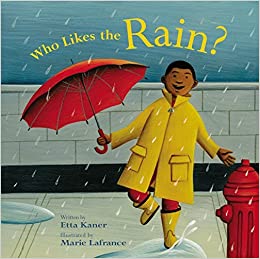
Who Likes the Rain? (Exploring the Elements)
Written by Etta Kaner
Illustrated by Marie Lafrance
Kids Can Press
32 pp.
Ages 4-7
2007

Who Likes the Snow? (Exploring the Elements)
Written by Etta Kaner
Illustrated by Marie Lafrance
Kids Can Press
32 pp.
Ages 4-7
2006

Who Likes the Sun? (Exploring the Elements)
Written by Etta Kaner
Illustrated by Marie Lafrance
Kids Can Press
32 pp.
Ages 4-7
2007


Who Likes the Wind? (Exploring the Elements)
Written by Etta Kaner
Illustrated by Marie Lafrance
Kids Can Press
32 pp.
Ages 4-7
2006

Winter Moon Song 
Written by Martha Brooks
Illustrated by Leticia Ruifernández
Groundwood Books
32 pp.
Ages 4-7
2014
Reviewed here

Winter's Coming: A story of seasonal change
Written by Jan Thornhill
Illustrated by Josée Bisaillon
Owlkids Books
32 pp.
Ages 5-8
2014
Reviewed here

A Winter's Tale  
Written and illustrated by Ian Wallace
Groundwood Books
32 pp.
Ages 4-8
1997

The Wolf-Birds  
Written and illustrated by Willow Dawson
Owlkids Books
40 pp.
Ages 5-8
2015
Reviewed here