Showing posts with label life cycles. Show all posts

July 06, 2026

Wait Like a Seed

Book cover of "Wait Like a Seed" by Erin Alladin and illustrated by Tara Anderson shows a girl holding an open milkweed po
Written by Erin Alladin
Illustrated by Tara Anderson
Pajama Press 
978-1-77278-359-9
32 pp.
Ages 4–8 
March 2026  
 
Understanding life cycles, particularly of plants, can be a challenge for young children because of the extended time needed for a seed to progress through its stages. Kids may get the idea of a flower but knowing how a flower came to be and what it can produce is far more difficult. Using simple rhyming verses, bold words, and additional info pages, Erin Alladin leads young readers through the parts of a plant and how that plant can produce a new plant or hundreds.
A little boy gardens seeds germinating in the soil
From Wait Like a Seed, written by Erin Alladin, illustrated by Tara Anderson
The story is set up with text and a drawing of the seed or plant as it is developing opposite an illustration of the children, and occasional orange tabby, watching the plant grow. From a seed waiting for the spring rains to fall, through rooting, sprouting, and growing leaves, buds, flowers, and pods, the milkweed plant goes through its life cycle. 
Smile like a flower,
Giving and grand.
Smile like a flower
'Til the butterflies land. (pg. 14)

The children wait and watch and delight in what they get to witness over the seasons, from spring rains to winter dormancy. And because the monarch butterfly is tied to milkweed plants, children can also witness the development of eggs to larvae, to caterpillars and further. 

A girl looks at the milkweed plant and flowers as well as a monarch butterfly and caterpillar
From Wait Like a Seed, written by Erin Alladin, illustrated by Tara Anderson
While I don't usually review paperback releases of previously published hard copy books, I never got to see Wait Like a Seed when it was released last year. And seeing this new edition, I really wanted to share Erin Alladin's latest. She has a lovely talent of telling stories, particularly those related to the natural world. (See her Outside You Notice, 2021.) By blending the life cycles of the milkweed and the monarch butterfly with the experiences of two young children, Erin Alladin gives us a personal story with which young children may be familiar. And with her rhyming text, she makes an educational book into a charming read with a tempo that balances with the pace of the plant's development.
The life cycle of the monarch butterfly
From Wait Like a Seed, written by Erin Alladin, illustrated by Tara Anderson
But without Tara Anderson 's coloured pencil illustrations, Wait Like a Seed would not have the colour and shape to carry readers effortlessly through the milkweed's life stages. Instead of a book of non-fiction, Wait Like a Seed is the story of two playful children as they swing, pop milkweed pods, build a snowman, and play with their cat. She gives them joy and curiosity.
A girl touches the pods of a milkweed plant
From Wait Like a Seed, written by Erin Alladin, illustrated by Tara Anderson
I know that teachers and parents will want to use Wait Like a Seed as a teaching tool for life cycles and the seasons, but don't forget the soft poetry that sweeps through the book. It tells its own story of imaginative and educational play, helping children to grow in their own way.

August 27, 2025

The Tufted Puffins of Triangle Island (Wild By Nature)

Written by Deborah Hodge
Illustrated by Karen Reczuch
Groundwood Books
978-1-773067186 
32 pp. 
Ages 3–7 
August 2025 
 
Children's non-fiction books generally take two formats: one as a story, and the other as an information book with graphs, maps, info boxes, a glossary and more. Both formats work but some stories work better one way than the another. For the Tufted Puffins of Triangle Island, Deborah Hodge and Karen Reczuch's chose to tell their story as a narrative, taking readers right onto the island and making them witness to the lives of these seabirds. 
From The Tufted Puffins of Triangle Island, written by Deborah Hodge, illustrated by Karen Reczuch
First, Deborah Hodge transports us to Triangle Island, an isolated island off the northwestern tip of Vancouver Island. This Ecological Reserve is protected, as is the Marine Wildlife Area around it, offering safety for millions of seabirds from people and land predators. Each year, more than 50,000 Tufted Puffins return in the spring and, after finding their mates, prepare burrows in which nests are created.
From The Tufted Puffins of Triangle Island, written by Deborah Hodge, illustrated by Karen Reczuch
In addition to recounting the life cycle from the laying of the egg to it hatching six weeks later, Deborah Hodge discusses the food and feeding of the Tufted Puffins, the fledging of the birds, and their end-of-summer departure to the North Pacific. It's not until the birds are mature that they will return to Triangle Island to start new lives with the laying of eggs.
From The Tufted Puffins of Triangle Island, written by Deborah Hodge, illustrated by Karen Reczuch
While Deborah Hodge does append her story with a graphic list of other seabirds of Triangle Island and extensive information about the island itself—an extraordinary place of seabird diversity and national and provincial protection—including further reading, she stays true to a narrative. From their arrival to their breeding, departure and return, the lives of the Tufted Puffins of Triangle Island are told with simplicity but heart. It is evident that Deborah Hodge has a deep appreciation for this place and its wildlife and the need to protect them all.
From The Tufted Puffins of Triangle Island, written by Deborah Hodge, illustrated by Karen Reczuch
The remarkable beauty of Triangle Island and its uncommon accommodation of seabirds, among which the Tufted Puffins are but one species, is gloriously portrayed in Karen Reczuch's watercolour and coloured pencil illustrations. The scientific accuracy is there but it's Karen Reczuch's style of creating textures in the birds, in the landscape and with her perspective that generates an elegance of graphic storytelling.  
 
Karen Reczuch and Deborah Hodge have collaborated on previous picture books in their West Coast Wild series (e.g., West Coast Wild Rainforest and West Coast Wild ABC) and, as in The Tufted Puffins of Triangle Island, they have always given us reality with feeling. Even as they tell us about plants and animals and Canadian landscapes, they make us feel for the places they portray. I anticipate no less for this new series Wild By Nature if The Tufted Puffins of Triangle Island is any indication.

March 13, 2024

West Coast Wild Rainforest

Written by Deborah Hodge
Illustrated by Karen Reczuch
Groundwood Books
978-1-77306-839-8
44 pp.
Ages 3+
March 2024
 
Each time I read a book in Deborah Hodge and Karen Reczuch's West Coast Wild series (see the list below), I am transported to the Pacific Northwest to visit the forests, coasts, waters, and mountains. I get to stand under majestic conifers and watch animals play. With West Coast Wild Rainforest, Deborah Hodge and Karen Reczuch lead us into the temperate rainforest and show us the wonders within.
From West Coast Wild Rainforest, text by Deborah Hodge, illus. by Karen Reczuch
Our walk through the rainforest begins with the rain and its role in keeping the forest growing and the fires away. In addition to those multi-storeyed trees, Deborah Hodge introduces readers to mosses, lichens, and other vegetation of the undergrowth. That lush forest is perfect for making a home, and there is much discussion about the relationship between Douglas squirrels and the trees which provide them with shelter and food, and which the squirrels inadvertently replant.
From West Coast Wild Rainforest, text by Deborah Hodge, illus. by Karen Reczuch
In each part of the rainforest, there is life, and the cycles that happen with that life. There are the streams where young salmon hatch. Later they will return to spawn in these same streams, and then become food for the bears, wolves, and eagles, with leftovers fertilizing the forest.
In this wonderful cycle of nature, the trees protect the salmon and the salmon feed the trees. 
From West Coast Wild Rainforest, text by Deborah Hodge, illus. by Karen Reczuch
As the natural cycles of the forest are revealed, more animals are introduced, from black bears and bald eagles, to gray wolves, black-tailed deer, western screech-owls, chest-backed chickadees, and banana slugs. Everything has a place and a purpose, and together they help the forest to grow and thrive and nurture others.

West Coast Wild Rainforest is a lovely walk through a unique biome that defines one part of Canada. For those on the West Coast, this book will be a literary hike to see and smell and feel a complex of ecosystems that encompass vegetation, water, land, and animals. For the many readers who may never have the opportunity to visit British Columbia and its coastal areas, West Coast Wild Rainforest entreats us to do the same but teaches with Deborah Hodge's text and beguiles with Karen Reczuch's watercolour and pencil artwork. This is an opportunity to learn and to be present in a luxuriant biome unique to our Pacific coast. By telling a story with a scientific basis, Deborah Hodge's words show a reverence to the Pacific rainforest without dulling the learning with endless details. And with  Karen Reczuch's illustrations, depicted with realism and profound awe for the landscape and biota of this area, West Coast Wild Rainforest will reach many young, and older, readers and entrap them in the beauty of the Pacific coastal rainforest and fascinate them with its teeming life.

🌲•🌲• 🌲•🌲•🌲
 
West Coast Wild series
 West Coast Wild (2015)
West Coast Wild At Low Tide (2022)
West Coast Wild Rainforest (2024)
West Coast Wild Baby Animals (coming May 2024)

February 06, 2024

This is a Tiny Fragile Snake

Written by Nicholas Ruddock
Illustrated by Ashley Barron
Groundwood Books
978-1-77306-784-1
36 pp.
Ages 3+
February 2024
 
This is a Tiny Fragile Snake is a nature walk, a stroll through different habitats to see a variety of animals but observed through human eyes and through our interactions with them. Nicholas Ruddock, Guelph writer and physician, gives us the perspective of children as they take in a snake, a bear, a hummingbird, a caterpillar, and more as their worlds intersect with ours. In rhyming verse, Nicholas Ruddock lets us see something different along with these children.
From This is a Tiny Fragile Snake, written by Nicholas Ruddock, illustrated by Ashley Barron
The first poem is "Snake" which, while it mentions what the snake eats, is more about the children protecting the snake from being trampled by moving it to a safer place via a coffee cup. Children being benevolent is a theme that also shows up in the poem about the hummingbird that has its beak stuck in a window screen, and a caterpillar saved from a lawnmower, as well as a chipmunk being stalked by a tuxedo cat.
I plucked it from its blade of grass
and placed it on a tree,
and a week ago a butterfly
came by and danced for me. ("Caterpillar")
From This is a Tiny Fragile Snake, written by Nicholas Ruddock, illustrated by Ashley Barron
Some poems reflect how we feel about the animals highlighted, whether disgusted, scared, impressed or something completely different. "Ants" speaks to dissuading ants from ruining a picnic by offering some sugary treats some distance away. "Skunk" suggests to children that, while we might see a skunk as a stinky animal, perhaps the skunk sees us with disdain too. Whether it be hornets, a moose, herons, a red squirrel, or a finch, wasp, worms, or loon, Nicholas Ruddock reminds us that people have a relationship with other animals. This might be because we have imposed ourselves on their habitats, or because they have encroached on ours, but there is an interrelationship as our dynamic worlds merge and separate.
From This is a Tiny Fragile Snake, written by Nicholas Ruddock, illustrated by Ashley Barron
By showing young readers how our actions can impact other species, Nicholas Ruddock demonstrates how we can ensure that those actions are always positive or at least harmless. There is wisdom in getting a raccoon out of house or how to free a loon trapped in ice which is delivered with a gentle awe of these animals and how they behave. There is a respect for them that is both explicit and implicit.
It turned out we were helpless,
there was nothing we could do,
for there seemed a steady stream of them,
and we were only two. ("Hornets")
I've admired Ashley Barron's cut-paper collage illustrations in earlier books that she's illustrated for others (e.g., Up! How Families Around the World Carry Their Little Ones, Chaiwala!, and Granny Left Me a Rocket Ship) and I believe that the texturing that comes with her technique lends itself well to outdoor settings. Like leaves that layer and feathers and fur, scales and petals of texture, Ashley Barron's art is rich in depth and colour, giving a three-dimensionality to the landscapes and their animals.

While This is a Tiny Fragile Snake will entice readers, young and old, to find the poetry in nature and how we interact with it, the poems within also remind us how, when our worlds merge, we can ensure those interactions remain copacetic.
So we gave up, threw up our hands,
defeated by a pest,
and for the rest of summer
she was treated as a guest. ("Squirrel")

August 21, 2023

Burt the Beetle Lives Here!

Written and illustrated by Ashley Spires
Kids Can Press
978-1-5256-1011-9
64 pp.
Ages 5-8
June 2023

Author-illustrator Ashley Spires introduced her readers to Burt the ten-lined June beetle (also known as a watermelon beetle) in Burt the Beetle Doesn't Bite! (Kids Can Press, 2021) and charmed us with his story as well as educating us on the natural habits of a variety of other insects. This time, Ashley Spires takes us into insect real estate to look at the nests and habitats of Burt and his insect friends as they seek shelter for short stints and longer periods.
From Burt the Beetle Lives Here! by Ashley Spires
Burt likes to spend short periods of time "snug as a bug" under a leaf. But when he realizes that it would be nice to have a place to call home, he looks at the homes of other insects. He considers the chrysalis of the monarch butterfly, the foam of the spittlebugs, and the silk web nests of tent caterpillars, but each doesn't work for him. So, he considers what materials he might use to build his own, taking his cues from wasps, bees, and weaver ants. Again, none work for him. 

Though he's ready to give up on finding a home within sight of his beloved porch light, Burt realizes soon enough that he needs shelter from weather and predators, and finds that protection, and even camaraderie, in a most familiar location. 
From Burt the Beetle Lives Here! by Ashley Spires
Kids love learning about science and living things, but it must be taught in a way that entertains through the inquiry process. As in all her Burt books, Ashley Spires has given young students, and their teachers, an easy source of relevant scientific information, here about insects and their habitats using Burt as an insightful guide. Through his very small eyes, readers are shown a bug's-eye view of a variety of different insect nests, with explanations for how the animals live in them or create them. And with her trademark humour, Ashley Spires will make kids chuckle at Burt's antics, as the adults in their lives will laugh at the analogies to human home-buying with places with stunning views, lots of potential, open floor plans and advertised as architectural masterpieces and those that are perfect for entertaining or impeccably renovated.
From Burt the Beetle Lives Here! by Ashley Spires
Ashley Spires, creator of Binky the Space Cat, consistently uses a clean illustrative style that is digitally rendered, never cluttering her illustrations with superfluous details that, while accurate, may detract from the key information about where the insects live and why. Because of the organic nature of the story, Ashley Spires's palette is primarily one of greens and browns, but she gives us enough shades and tints and tones to make it appear rich and varied, much like nature itself.

Whether you're a teacher of younger students who need to understand local habitats or how communities create nests, or you're a school librarian who loves providing quality creative non-fiction for the many children who prefer non-fiction or fiction, or a reader to appreciates fabulously illustrated books with a side helping of humour, Burt the Beetle Lives Here! has got you covered, perhaps even better than Burt's leaf!
 
🐛 🐞 🐜 🐝 🐛 🐞 🐜 🐝 🐛
 
Burt the Beetle Lives Here! (2023)

December 15, 2022

Luna's Green Pet

Written by Kirsten Pendreigh
Illustrated by Carmen Mok
Sleeping Bear Press
978-1-534111615
40 pp.
Ages 5-8
August 2022
 
What is Luna's green pet? Is it a turtle? A parrot? A fish? A frog? It's none of those because Luna's apartment does not allow pets.  Though her friends suggest a rock or a pet-a-guchi, Luna can't seem to connect with them. But, one day, she rescues the perfect pet for her.
From Luna's Green Pet by Kirsten Pendreigh, illus. by Carmen Mok
In a trash bin outside her apartment, she discovers a small plant. It even had its name on a marker: Stephanotis floribunda. Because it's quite a mouthful, Luna calls her Stephanie. And Luna is the best pet caregiver. She transfers Stephanie to a new and bigger pot, gives her new soil, and waters her. She reads stories to Stephanie and even takes her for walks in the park.
From Luna's Green Pet by Kirsten Pendreigh, illus. by Carmen Mok
Luna's friends may not be impressed with Stephanie's personality, but Luna loves her new pet and Stephanie is thriving. In fact, Stephanie grows so much that Luna must shape her long stems into an animal form. But then one day, Stephanie exhibits strange growths and Luna is concerned, ready to take her pet to a botanist for examination, until she learns it's just the natural cycle of life blossoming in Stephanie.

Not every child is fortunate to live in a household where they can have a pet, whether because of building restrictions or familiar limitations with respect to health or finances. But having a pet is a
privilege and one that Luna takes seriously. Her pet may be a plant, but Stephanie gives Luna companionship, offers the child opportunities for responsibility and learning, and nurtures Luna's empathy and self-confidence. By having Luna think outside the box about what a pet can be, BC's Kirsten Pendreigh offers kids an exemplar in problem solving. Luna has a problem i.e., no pets in her building and needs to find a solution i.e., a pet that will be allowed. She finds both a solution and a pet in Stephanie. Even better, hers is a rescue that needed a home and some loving care to become the star Stephanie would become. (I suspect that Stephanie would've been much loved regardless of becoming a winner at the pet parade.) And, if all that goodness wasn't enough, through the miracle of a life cycle, Stephanie's seeds are to be spread further afield to bring joy to others.
From Luna's Green Pet by Kirsten Pendreigh, illus. by Carmen Mok
As a picture book, Luna's Green Pet uses illustrations to help convey the story and bring it to life. Carmen Mok, who has illustrated a number of fabulous books including When I Listen to Silence, Viola Shrink and Tough Like Mum uses a variety of media including gouache, India ink, dry pastel and colour pencil to create her refreshing artwork. Green is a star in Luna's Green Pet, highlighting the importance of flora in the natural world, but Carmen Mok makes sure to use a full palette and soft lines and shapes to draw young readers into Luna's world. Kids may identify themselves in Kirsten Pendreigh's story, but they'll see their lives in the artwork Carmen Mok has created for Luna's world of home, school, and outdoors.

It may be raining or snowing outside right now here in Canada–in fact, where I live it's doing both!–but what better a time to talk to children about growing plants, whether it be as a school project to learn about a plant's life cycle, or in preparation for a spring planting, or as a pet to be loved. With a story to bolster any of that learning and some guidance from Kirsten Pendreigh–she appends her story with some background into Stephanie and growing plants–as well as the brightness of Carmen Mok's illustrations, Luna's Green Pet will get kids clamouring to develop their green thumbs and perhaps look at plants as the engaging living things they are.
From Luna's Green Pet by Kirsten Pendreigh, illus. by Carmen Mok

November 13, 2020

Kits, Cubs, and Calves: An Arctic Summer

Written by Suzie Napayok-Short
Illustrated by Tamara Campeau
Inhabit Media
978-1-77227-274-1
32 pp.
Ages 7-11
September 2020

I know summer is over and it has definitely passed in the far north but learning about other cultures and ecosystems, life cycles and food chains, is never out of season, and certainly not in schools so Kits, Cubs, and Calves: An Arctic Summer is undoubtedly a great read at any time of year.
From Kits, Cubs, and Calves: An Arctic Summer by Suzie Napayok-Short, illus. by Tamara Campeau
Akuluk, who lives south of the Arctic and had been spending time in Nunavut with her grandparents, has just arrived in Saattut to visit with her aunt and uncle. Even though it is summer, she is dressed warmly in her atigi, a duffle parka, when the northern float plane delivers her and her stuffed polar bear, Piulua. Even driving from the dock, Akuluk can see new life on the tundra in the form of fox kits playing and at the house, there are seven month-old puppies born to their sled dog Blackie. 

The next day, Akuluk's Aunt Sulie and Uncle James, along with Uncle Tommy, take her out on the boat to check out their summer camp grounds, now inhabited by polar bears. With a wealth of food, that includes dried Arctic char, palaugaaq bannock and aqpiit (a glossary of Inuktitut words explains these and more at the conclusion of the story), they begin their foray on the Arctic Ocean.
From Kits, Cubs, and Calves: An Arctic Summer by Suzie Napayok-Short, illus. by Tamara Campeau
Their sighting of a pod of creamy white beluga whales, including a grey calf, mesmerizes Akuluk, and even more so when they use a recording device to hear the mother's cooing, clicking, chattering and whistling sounds. Based on the Inuktitut word for small, mikilaaq, Akuluk names the baby Miki. But when another lone calf appears, they watch as the mother and the other whales check it out, perhaps to adopt the orphan.

From Kits, Cubs, and Calves: An Arctic Summer by Suzie Napayok-Short, illus. by Tamara Campeau
Finally they arrive near their old camp and see the polar bear and her cubs who'd previously found their fishing nets filled with char and now return annually. The family willingly gave up "their traditional land to help these large animals survive." (pg. 21) They place themselves between the bears on land and the whales and watch the bears eat their catch of seal meat, as seagulls, hopeful of remnants, look on.  Akuluk learns that normally the Arctic foxes would be following the bears, eating any meat left behind, but in the summer they have their kits and stay away from the nanuit (sing. nanuq) who would prey on the very young.
"Everywhere we go, Inuit and animals, we all have a need to stay close, so we can help one another," she says, putting an arm around Akuluk. "The wildlife do what they can to help one another, in their own way, and we do what we can in ours. We have to share our earth with all the wildlife that live here. We need to look after our land, and the plants in it, too." (pg. 29)
Suzie Napayok-Short who was born in Frobisher Bay and has lived on Baffin Island and Nunavut takes delight in Akuluk's visiting and learning, perhaps because these were her own experiences. Not only does Akuluk get to spend time with family and witness animal wonders in the Arctic, she learns of the traditional ways, piusituqait, and their importance in maintaining ecosystems. Author Suzie Napayok-Short embeds her storytelling, perhaps recounting, with a respectful gravitas, recognizing Akuluk's visit as pivotal for the young girl. 
From Kits, Cubs, and Calves: An Arctic Summer by Suzie Napayok-Short, illus. by Tamara Campeau
Illustrator Tamara Campeau who also illustrated The Muskox and the Caribou and In the Sky at Nighttime stays true to her artistic style of realism with a hint of the personal. She doesn't make her illustrations frivolous or silly; instead, the art depicts the true nature of the familial relationships and the wonder of the natural world. By blending the authentic with the deferential, Tamara Campeau dignifies Suzie Napayok-Short's story while giving it colour and shape.

Kits, Cubs, and Calves: An Arctic Summer goes beyond summer and gives a picture of life in Nunavut for its people, its animals and the land, and it's a great place to visit through Suzie Napayok-Short and Tamara Campeau's work.

April 02, 2020

Weather, Seasons and Life Cycles in YoungCanLit


Many teachers and parents of primary children look for great resources to help little ones understand the four seasons, weather and the life cycles associated with them. These 50+ picture books and non-fiction titles from Canadian authors and illustrators should fit the bill nicely.

Bear's Winter Party   
Written by Deborah Hodge
Illustrated by Lisa Cinar
Groundwood Books
32 pp.
Ages 4-7
2016
Reviewed here

Ben's Snow Song: A Winter Picnic
Written by Hazel Hutchins
Illustrated by Lisa Smith
Annick Press
24 pp.n
Ages 4-7
1987

Capelin Weather
Written and illustrated by Lori Doody
Running the Goat Books & Broadsides
32 pp.
Ages 3-7
2017
Reviewed here

Changing Seasons (Nature's Changes)
Written by Bobbie Kalman and Kathryn Smithyman
Crabtree
32 pp.
Ages 6-10
2005

Counting on Fall (Math in Nature)
Written by Lizann Flatt
Illustrated by Ashley Barron
Owlkids Books
32 pp.
Ages 4-8
2012

Emma's Cold Day 
Written by Margriet Ruurs
Illustrated by Barbara Spurll
Fitzhenry & Whiteside
24 pp.
Ages 3-7
2001

Hat On, Hat Off 
Written by Theo Heras
Illustrated by Renné Benoit
Pajama Press
24 pp.
Ages 1-3
2016
Reviewed here

If You Hold a Seed
Written and illustrated by Elly MacKay
Running Press Kids
32 pp.
Ages 3-7
2013

Is This Panama?: A Migration Story 
Written by Jan Thornhill
Illustrated by Soyeon Kim
Owlkids Books
40 pp.
Ages 5-8
2013

It's Moving Day 
Written by Pamela Hickman
Illustrated by Geraldo Valério
Kids Can Press
32 pp.
Ages 7-9
2008

Kitten's Autumn
Written and illustrated by Eugenie Fernandes
Kids Can Press
24 pp.
Ages 1-4
2012

Kitten's Spring  
Written and illustrated by Eugenie Fernandes
Kids Can Press
24 pp.
Ages 1-4
2010

Kitten's Summer 
Written and illustrated by Eugenie Fernandes
Kids Can Press
24 pp.
Ages 1-4
2013

Kitten's Winter 
Written and illustrated by Eugenie Fernandes
Kids Can Press
24 pp.
Ages 1-4
2013

Last Leaf First Snowflake to Fall  
Written and illustrated by Leo Yerxa
Groundwood Books
32 pp.
Ages 4-8
2012

The Life Cycle of a Mosquito
Written by Bobbie Kalman
Crabtree
32 pp.
Ages 7-10
2003
Crabtree has almost two dozen life cycle books including for the raccoon, whale, bat, honeybee, and sea horse.
Lily and the Paper Man
Written by Rebecca Upjohn
Illustrated by Renné Benoit
Second Story Press
24 pp.
Ages 4-7
2007

Making Grizzle Grow
Written by Rachna Gilmore
Illustrated by Leslie Elizabeth Watts
Fitzhenry & Whiteside
32 pp.
Ages 4-7
2009

Morning on the Lake  
Written by Jan Bourdeau Waboose
Illustrated by Karen Reczuch
Kids Can Press
32 pp.
Ages 5-8
1997

My Forest is Green
Written by Darren Lebeuf
Illustrated by Ashley Barron
Kids Can Press
32 pp.
Ages 3-7
2019
Reviewed here

Nana's Cold Days
Written by Adwoa Badoe
Illustrated by Bushra Junaid
Groundwood Books
32 pp.
Ages 3-7
2002

A New Duck
Written by Pamela Hickman
Illustrated by Heather Collins
Kids Can Press
20 pp.
Ages 3-7
1999

Once Upon a Northern Night 
Written by Jean E. Pendziwol
Illustrated by Isabelle Arsenault
Groundwood Books
36 pp.
Ages 4-7
2013
Reviewed here
Perfect Snow
Written and illustrated by Barbara Reid
North Winds Press (Scholastic Canada)
32 pp.
Ages 4-7
2009


Picture a Tree
Written and illustrated by Barbara Reid
North Winds Press (Scholastic Canada)
32 pp.
Ages 3-8
2013

Poetree
Written by Caroline Pignat
Illustrated by François Thisdale
Red Deer Press
32 pp.
All ages
2018
Reviewed here


Rosario's Fig Tree  
Written by Charis Wahl
Illustrated by Luc Melanson
Groundwood Books
32 pp.
Ages 4-7
2015
Reviewed here

Run Salmon Run
Written by Bobs & LoLo (Robyn Hardy and Lorraine Pond)
Illustrated by Lori Joy Smith
Bobs & LoLo Books
36 pp.
Ages 3-7
2018
Seasons Before the War
Written by Bernice Morgan
Illustrated by Brita Granström
Running the Goat, Books & Broadsides, Inc.
44 pp.
Ages 7+
2018
Reviewed here

Shaping Up Summer (Math in Nature)
Written by Lizann Flatt
Illustrated by Ashley Barron
Owlkids Books
32 pp.
Ages 4-8
2014

Sizing Up Winter (Math in Nature)
Written by Lizann Flatt
Illustrated by Ashley Barron
Owlkids Books
32 pp.
Ages 4-8
2013

SkySisters
Written by Jan Bourdeau Waboose
Illustrated by Brian Deines
Kids Can Press
32 pp.
Ages 5-8
2000

The Snow Knows
Written by Jennifer McGrath
Illustrated by Josée Bisaillon
Nimbus Publishing
32 pp.
Ages 4-8
2016
Reviewed here

Snowy Sports: Ready, Set, Play! 
Written by Yvette Ghione
Illustrated by Per-Henrik Gürth
Kid Can Press
24 pp.
Ages 3-6
2009

Sockeye Silver, Saltchuck Blue
Illustrated by Roy Henry Vickers
Text by Robert Budd
Harbour Publishing
20 pp.
Ages 2-6
2019
Reviewed here

Sorting Through Spring (Math in Nature)
Written by Lizann Flatt
Illustrated by Ashley Barron
Owlkids Books
32 pp.
Ages 4-8
2013

Stella, Queen of the Snow 
Written and illustrated by Marie-Louise Gay
Groundwood Books
32 pp.
Ages 3-7
2010

Summer North Coming
Written by Dorothy Bentley
Illustrated by Jessica Bartram
Fitzhenry & Whiteside
32 pp.
Ages 5-9
2019
Reviewed here 

A Tree in a Forest
Written and illustrated by Jan Thornhill
Simon & Schuster
32 pp.
Ages 7-11
1991

Tree Song 
Written by Tiffany Stone
Illustrated by Holly Hatam
Annick Press
32 pp.
Ages 4-7
2018

Watch It Grow: Backyard Life Cycles
Written and illustrated by Barbara Reid
North Winds Press (Scholastic Canada)
32 pp.
Ages 4-8
2019
Reviewed here

When the Trees Crackle with Cold: a Cree Calendar: PĪSIMWASINAHIKAN
Written by Bernice Johnson-Laxdal and Miriam Körner
Illustrated by Miriam Körner
Your Nickel's Worth Publishing
32 pp.
Ages 5-10
2016

Which Season Is It? (My World)
Written by Bobbie Kalman
Crabtree
16 pp.
Ages 1-5
2011

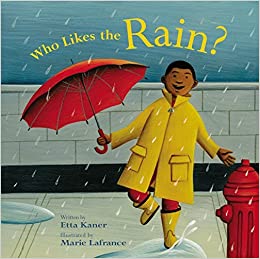
Who Likes the Rain? (Exploring the Elements)
Written by Etta Kaner
Illustrated by Marie Lafrance
Kids Can Press
32 pp.
Ages 4-7
2007

Who Likes the Snow? (Exploring the Elements)
Written by Etta Kaner
Illustrated by Marie Lafrance
Kids Can Press
32 pp.
Ages 4-7
2006

Who Likes the Sun? (Exploring the Elements)
Written by Etta Kaner
Illustrated by Marie Lafrance
Kids Can Press
32 pp.
Ages 4-7
2007


Who Likes the Wind? (Exploring the Elements)
Written by Etta Kaner
Illustrated by Marie Lafrance
Kids Can Press
32 pp.
Ages 4-7
2006

Winter Moon Song 
Written by Martha Brooks
Illustrated by Leticia Ruifernández
Groundwood Books
32 pp.
Ages 4-7
2014
Reviewed here

Winter's Coming: A story of seasonal change
Written by Jan Thornhill
Illustrated by Josée Bisaillon
Owlkids Books
32 pp.
Ages 5-8
2014
Reviewed here

A Winter's Tale  
Written and illustrated by Ian Wallace
Groundwood Books
32 pp.
Ages 4-8
1997

The Wolf-Birds  
Written and illustrated by Willow Dawson
Owlkids Books
40 pp.
Ages 5-8
2015
Reviewed here