Showing posts with label heritage. Show all posts

March 14, 2026

My Language Is a Garden

Written by E.G. Alaraj
Illustrated by Rachel Wada
Orca Book Publishers
978-1-4598-4065-2
32 pp.
Ages 6–8
February 2026 
 
How a child begins to learn a language is a complex process of exposure and comprehension. It involves being introduced to it from those who speak it and who cherish it. And when it's taught with love and reverence, it almost sacred. For this father sharing his language with his child, it's everything.
From My Language Is a Garden, written by E.G. Alaraj, illustrated by Rachel Wada
In evocative rhyming verse, E.G. Alaraj gives a father voice to embody his language with memories and meaning as he shares it with his daughter. It's obvious how much his language means to him, reminiscent of people and places, and tastes, smells, and sounds. E.G. Alaraj gives weight to this parent's words, both tender and passionate.  
My language roams the desert
And fills its pails with sand.
Builds castles, forts, and shelters
That stretch across the land. (pg. 12) 
From My Language Is a Garden, written by E.G. Alaraj, illustrated by Rachel Wada
This father is determined, but not vehement, drawing on images of cities and mountains, shores and markets, to convey what language can bring and conjure. There is magic in language, and he is earnest about sharing this with his child.
Our language, it will bloom—
Add sweetness to the air,
And tie my heart to yours,
 
So I'm with you everywhere. (pg. 27–29)
E.G. Alaraj's poem is emotional, as is the premise upon which it is based. Her author's note explains her husband's efforts to help their children learn and then retain their Arabic language. But My Language Is a Garden could speak to any parent or educator teaching a heritage language, hopeful of children holding that connection with culture and ancestry, as they balance contemporary influences outside of that language. But instead of drilling that language and forcing communication by using it, this father invites and illustrates with much affection and safety, coaxing his child to see and feel the language, just as the reader does with E.G. Alaraj's expressive words. The rhyming verses soothe and transport, as well as entice inwards and open worlds beyond. 
From My Language Is a Garden, written by E.G. Alaraj, illustrated by Rachel Wada
As dramatic as E.G. Alaraj's words are, Rachel Wada's illustrations give them artistic substance. Her art was created digitally and feels like watercolours, suspending people and places in different times and spaces. Rachel Wada, whose art has honoured books like I Am Wind: An Autobiography (Rachel Poliquin, 2024) and Shizue's Path (Mark Sakamoto, 2023), expresses strength and sensitivity with her use of line and shape. Whether in her gloriously lush gardens of poppies, in the rolling dunes of sand, or in the branches and stems of trees, Rachel Wada makes big locales seem personal and intimate, and the people within them connected.
 
As teachers and parents in Canada, we often use English language acquisition and learning as milestones for children, but learning a heritage language should be similarly appreciated. Beyond its purpose in communication, those languages help connect children with their families, their cultures, and their ancestors. It gives their lives colour and history, heart and identity. This father's language, depicted as a living entity that grows and feels, nurtures and responds, already enriches his life, connecting him with so much, and E.G. Alaraj makes us hopeful that he is able to cultivate that same abundance for his child.

May 14, 2025

Our Ancestors' Kitchen

Written by Willie Poll
Illustrated by Shaikara David 
Annick Press
978-1-77321-962-2
36 pp.
Ages 4-7
April 2025 
 
Our ancestors teach us that there are memories in our meals.
There is magic in our cooking.
There is culture in our food.
 
So begins Willie Poll's story of a child learning at the stove of her grandma. With each dish comes a story and an invitation to witness how their ancestors lived and her own memories of her Grandpa and her community.
From Our Ancestors' Kitchen, written by Willie Poll, illustrated by Shaikara David
First they cook the minoomin (wild rice) and the girl begins to see a different scene within the kitchen. She can smell the water in which the wild rice grows, and she can hear the frogs, and see her ancestors on the water harvesting the rice. 
From Our Ancestors' Kitchen, written by Willie Poll, illustrated by Shaikara David
Next, Grandma is cooking meat, and the child sees the kitchen transformed with the colours of fall and animals stocking food for winter, and she remembers hunting with her Grandpa. That meat brings memories of finding mooz (moose) with their moose calls, and the tradition of giving thanks with prayer and asemaa (tobacco) after the mooz's "spirit danced into the sky." As important is the sharing of the meat with their Elders so that they might also care for their community. Their cooking together continues with maple syrup (zhiiwaagamizigan) and sunchokes (ashkibwaa) and blueberries, each bringing memories of time with her Grandpa and with the lives of their ancestors. And when the family and friends gather to eat, their ancestors join them.
From Our Ancestors' Kitchen, written by Willie Poll, illustrated by Shaikara David
Willie Poll, a Métis writer from Sault Ste. Marie and now of Prince Edward Island, reminds us of the importance of food to culture and to connecting us with those who came before us. Whether we learned to cook the foods from their hands or how to harvest the ingredients from age-old practices, those culinary experiences are almost bred in the bone. And when connected to our ancestors, the experiences are almost spiritual, as this child recognizes in the richness of the memories and the awareness of her heritage. With each ingredient and dish, she is transported to places she has been and to people she may have never met. But still the sensory experiences of those foods have become a part of her, to share with others now and forever.
 
Shaikara David, an Indigenous Mohawk from Akwesáhsne, uses her double-spread illustrations to bridge the contemporary with the past seamlessly. On a single spread, the child and her grandmother cook in a modern kitchen which transitions to an outdoor setting of trees and water and include Woodland-style artwork on blue backgrounds for animals and more. (See the rabbit, fox, squirrel and birds in the illustration below.) Shaikara David creates an organic connection between the present and the past almost effortlessly but still with some whimsy like the presence of the water rising beneath the kitchen table upon which a frog sits.
From Our Ancestors' Kitchen, written by Willie Poll, illustrated by Shaikara David
Many of us know that connection with our heritage and our ancestors through food but Willie Poll and Shaikara David help us to see the one that comes through an intergenerational relationship and into a culture with which most of us are unfamiliar. Moreover, in her author's note, Willie Poll wants readers to think about Indigenous Peoples and their connection with the land, as well as other cultures and their connection to food and the land. It's a relationship that is borne from acknowledgement and appreciation, enduring generations even as things change around us.

October 17, 2024

Milo the Knight

Written by Grégoire Laforce
Illustrated by Charlotte Parent
Milky Way Picture Books
978-1-990252-35-8
48 pp.
Ages 4-8
October 2024
 
Milo is a brave knight who comes from a long line of knights. His armor means everything to him, and he is proud to wear it. And he always wears it just in case a dragon attacks their colony. Those silly jesters could waste their time on frivolous activities, but Milo is determined to keep everyone safe from the bad out there.
From Milo the Knight, written by Grégoire Laforce, illustrated by Charlotte Parent
One day while outside the castle walls, Milo is caught in a horrific rainstorm. It goes on and on, raining and raining, and Milo keeps going. It's only when the rain stops, and Milo is still struggling to keep going that he realizes that his beautiful armor has rusted until it seizes completely.
From Milo the Knight, written by Grégoire Laforce, illustrated by Charlotte Parent
A wandering jester offers Milo help, but he initially refuses. After all, he is a knight and not a silly jester. But the jester suggests that the only way to help Milo is for Milo to remove his armor. Even though he is both shocked to consider this and fearful of not being able to protect the colony–something which he already could not do–Milo opens his visor, looks into the jester's eyes and is moved to tears.
From Milo the Knight, written by Grégoire Laforce, illustrated by Charlotte Parent
But the armor does not survive, falling into useless pieces, while Milo emerges for the first time to feel the warmth of the sun and the stirring of the wind. By shedding his armor, Milo also sheds his fears and his mistrust.
 
Gatineau's Grégoire Laforce, former military, seems to have something to say about the roles we play in a community, from the protectors to the entertainers. No one is only one thing. And to restrict yourself by putting on a shield of armor that keeps you separate from others and from experiencing a life that is full and varied can be harmful. Milo only knew about being a knight, as did his ancestors. He didn't know otherwise. It was only the jester with his own perspective and suggestion that Milo remove his armor–an armor that was doing him harm at that point–that Milo becomes open to another life. Perhaps this was Grégoire Laforce's experience too, going from the military life of service and security to having kitchen parties with his family at home, as his bio reveals. It probably wasn't as easy as just removing a uniform but, as with Milo and the jester, a little outlook can bring big change.
From Milo the Knight, written by Grégoire Laforce, illustrated by Charlotte Parent
Montreal artist Charlotte Parent, who illustrated Mireille Messier's The Magic Cap, uses coloured pencils to give Milo the Knight both a bright contemporary feel as well as a medieval tone appropriate for a story about a knight. Her use of colour that range from pinks and purples to oranges and greens keeps the story light and bright as do the patterns she uses to decorate borders with floral motifs and scenes of activity. Milo the Knight could've been a darker tale of perceived fears and wariness of others and even injury, but Charlotte Parent makes it a story of revelation through her radiant colours and emotive lines and shapes.

Milo the Knight thought his life had been determined and he would serve as he had been born to do so but a change in circumstance and an openness to see beyond the obvious gives him the opportunity for more in his life. His service was admirable, but it was time to live for himself and enjoy that which he'd never experienced before. Whether he becomes Milo the Jester or Milo the Vagabond or something else entirely, he's taken off his armor and left himself free and receptive to more possibilities.
 

August 12, 2024

I Am Cherished

Written by Onome Ako
Illustrated by Ken Daley
North Winds Press (Scholastic Canada)
978-1-4431-9449-5
32 pp.
Ages 6-8
August 2024 
 
For many kids, starting at a new school can be exciting but also trepidatious. Kikelomo, a child full of colour and brightness, is very excited about making new friends. But her first experience with sharing her name becomes less of welcoming and more of distress when she hears her classmates' reactions.
From I Am Cherished, written by Onome Ako, illustrated by Ken Daley
As the kids in the class introduce themselves in a circle, calling back each other's names to learn them and to welcome them, Kikelomo can't wait to share. But when they giggle and tell her that her name is weird and not normal and too long, the child is left in tears.
From I Am Cherished, written by Onome Ako, illustrated by Ken Daley
At home, her Nigerian Mommy and her Mohawk Nation Daddy remind her of her heritage and that her name means a child who is cherished. Recalling all the ways in which she has felt cherished, from having a bedtime story read to her, or singing in Yoruba with her grandma, or playing with her cousins, Kikelomo is invigorated to appreciate her name.
From I Am Cherished, written by Onome Ako, illustrated by Ken Daley
At school the next day, when the class joins for their circle, Kikelomo tells everyone what her name means and the ways her family make her feel cherished.
Calling me by my name reminds me of what it means.
With that admission, Kikelomo opens the door for others to share how they got their names, including Mr. Santos whose first name is Elvis, and for them to practise saying her name and reminding her that she is cherished at school as well as home.
 
Children can be unintentionally cruel when they are faced with something different, whether it be a name or food or activity. It is more a reflection of what they can't do, like say an unfamiliar name, then that they don't like something. Unfortunately, the recipients of that harshness–Kikelomo in this case–will be hurt, until a connection can be made that brings the two together. Brilliant little Kikelomo, with her courage to speak up and share her name's story, invites them to know her story and share their own. By letting the children make a connection through the sharing of their names, Nigerian-born Toronto author Onome Ako makes them all belong and brings back Kikelomo's bright light. No matter what a child's story is, from whence they came, or what language they speak, or what they look like, they all belong, and their differences just make for a richer community. I hope that Morenike, Onome Ako's daughter and the inspiration for the book, had as positive a resolution, i.e., the making of many friends, as Kikelomo does once they learned the melodic and expressive nature of her name.
 
Ken Daley, an illustrator born in Cambridge, Ontario, keeps the brightness of Kikelomo and lets it shine throughout the story. Ken Daley's digital art uses the full spectrum of colours, giving us a story of sunshine and joy, never letting Kikelomo's disappointment tarnish her story. That blip of dejection is fleeting and cancelled through the love of her family.
 
Kikelomo's story would be a lovely introduction for a first day of school class, to share naming traditions and perhaps even bridge to discussions of family and heritage. If Onome Ako and Ken Daley's book I Am Cherished helps even one child make a connection with another child unlike themselves, it will be gratifying as a first day of school read.

May 27, 2024

The Not-So-Simple Question (A Holly-Mei Book, #3)

Written by Christina Matula
Inkyard Press
978-1-335-00999-9
272 pp.
Ages 8-12
April 2024 
 
Isn't it lovely that we get to visit with Holly-Mei and her friends and family once again? The twelve-year-old who Christina Matula introduced us to in The Not-So-Uniform Life of Holly-Mei and allowed us to join in her new life in Hong Kong is a little older, well-situated at Tai Tam Prep, and becoming familiar with her new home. But with all those important changes, Holly-Mei is now becoming a teen, and The Not-So-Simple Question is her coming-of-age story.
 
Holly-Mei and her family have now been in Hong Kong for nine months and she is in the last few months of her Grade 7 year. There are lots of important events still to come like Experience Week during which Upper Grade students travel to other Asian locations for a week of learning. It's a great opportunity for Holly-Mei to discover more about her Taiwanese heritage–her mother and Ah-ma, grandmother, are Taiwanese while her father is British–by visiting Taiwan. She's also hoping that it will help her clarify who she is, feeling less than others because of her mixed heritage. And then there's the problem with boys. Her friend Gemma is determined to have an end-of-year prom to which the girls must bring dates. Holly-Mei is obviously well liked by her friends, including Dev and Theo, but, unlike her younger sister Millie who is all about popularity and acting grown-up, Holly-Mei isn't ready for dating, and she doesn't know how to reconcile her feelings with the demands of her friends.

Holly-Mei has a lot on her plate but that is what it often feels like when you are entering your teen years. It's a balance of moving from childhood to adulthood and navigating when and how much you're wanting to change. But coupled with that is Holly-Mei's confusion about her heritage and feeling that others judge her by how she speaks Chinese, who her parents are, and if half of anything is enough for her to be her true self. It's no wonder the girl is feeling on edge and confused. And with Holly-Mei, that uncertainty often leads her to misunderstanding or saying the wrong thing. Thankfully, Holly-Mei's story is in Christina Matula's capable hands, and she ends it with understanding, acceptance, and accord. (And we get to take a wonderful trip to Taiwan to see the sights, the culture, and the food. Always the food!)

The first Holly-Mei book was just recommended by young readers of the Red Maple Forest Kid Committee for their summer reading list and it's nice to know that there are two more books in the series to reach for after you've enjoyed The Not-So-Uniform Life of Holly-Mei. With The Not-So-Simple Question, we get to see how Holly-Mei has ended her Grade 7 year, after a full year of learning to deal with new friends, with sports competition, with sibling interactions, with misunderstandings, and more. With that learning has come an appreciation for who she is and the kind of person she wants to be. She's still learning to be the best version of herself but she's on the right path, and Christina Matula lets us tag along on Holly-Mei's journey of self-realization and growing up, while enjoying the sights and cultures of Hong Kong and Taiwan.
From The Not-So-Simple Question, written by Christina Matula
• • • • • • •
Holly-Mei Books

• • • • • • •

May 22, 2024

A Song for the Paper Children

Written by Christopher Tse
Plumleaf Press
978-1-7388-9828-2
52 pp.
Ages 9+
May 2024
 
 
A Song for the Paper Children
is a tribute to early Chinese immigrants, some of whom came to Canada after the Chinese Exclusion Act was passed to severely restrict their entry. These “paper children,” courageous men and women, endured legislated racism, financial hardship, and frequent acts of violence and discrimination, but they followed in the footsteps of their predecessors to lay the foundation for a Chinese Canadian community today that is vibrant, resilient, and here to stay.
 
 
With this preface, slam poetry artist Christopher Tse introduces the background for his poem and book about the stories of Chinese Canadians who endured and thrived under challenging circumstances of racism, economic hardship, exclusionary government policies and more. Christopher Tse tells their stories with admiration and respect, and makes it a true song, a composition of historical relevance.
From A Song for the Paper Children, by Christopher Tse
Christopher Tse's poem is a tribute to his own family. He remembers his Gung Gung (maternal grandfather) and relatives toiling in his Quebec restaurant, "his smile tired bright" (p. 12). How did they manage knowing that they were not wanted, that they were not meant to succeed or put down roots?
We were never meant to make home from ashes, 
to find kin from the masses. (p. 17)
From A Song for the Paper Children, by Christopher Tse
Peppering his poem with photographs of people and documents as well as drawings, Christopher Tse instills a gravitas to his works which are already deeply evocative of time and place. Surprisingly, much of it comes from asking questions. How did they feel? What did they think? What was the cost? Are they heard now? Christopher Tse makes the reader think and feel. It is the feeling of heartbreak for mistreatment and abuses, of awe for resilience and endurance, and of astonishment that these stories happened.
From A Song for the Paper Children, by Christopher Tse
There is hurting in much of A Song for the Paper Children but that hurting is always bonded to courage and tenacity. From generations who witnessed anti-Asian signage to families destroyed by exclusionary practices like the Chinese Head Tax and the Chinese Immigration Act, there has been discrimination against and negation of their contributions  by virtue of their heritage alone. With A Song for the Paper Children, Christopher Tse gives voice of empowerment through his recognition of Chinese Canadians past and present and applauds them.
From A Song for the Paper Children, by Christopher Tse
I hope that there will be an opportunity for Christopher Tse to record a performance of A Song for the Paper Children. There is an obvious emphasis or tone to his poem that is evident in the choice of font and colour as well as placement of text, but I suspect that the cadence of a performance would be compelling. For his words and their stories to come together in one dynamic presentation would be another step forward towards reconciliation.

January 30, 2017

Racines

Written and illustrated by Marianne Ferrer
Monsieur Ed
978-2-924663-04-2
16 pp.
Ages 4-8
2016

Racines is an seemingly-inconspicuous accordion-style (leporello) picture book that shares both a powerful sentiment about our roots and a story of one girl's family influence. Don't let its small size mask the power of its story.

En racines s’incarne la sérendipité.
(translated: Roots embody destiny.)

Racines (translated to Roots) is a deeply-moving yet simple examination of a girl’s roots and her awareness of what they mean to her.  She recognizes the roles of the key people in her life–her grandmother, mother and grandfather–in shaping her with both the magical and the tragic.  But beyond the simple but profound words, Marianne Ferrer illustrates the intensity of emotion  in her starkly-coloured but complex artwork.  Playing on both the emotions and the words, Marianne Ferrer depicts the girl embedded in the landscape, her hair becoming branching roots that meld into the tassels of the rug from which her grandmother combs out tangles. This is her grandmother who climbed down from the mountains, from her own ancestral roots, to make her way into a new world in which she is transformed by the love of a dark-skinned and moustached man.

From Racines by Marianne Ferrer
It is then the girl's mother's story of life by the sea, of extraordinary stars and animals, and fears from which comfort is given and tragedies endured that become part of the girl’s story.  “Je suis toujours consciente de mes racines” (translated: I am always aware of my roots.)

From Racines by Marianne Ferrer
Marianne Ferrer's artwork is both complex and simple, embedding complicated messages of family and heritage in the soft textures of the characters' landscapes.  It is a shame that my own limitations in understanding French has kept me from promoting the profound artistry of illustrators such as  Marianne Ferrer but I hope that Racines is but the first of more French-language books that I might promote here on CanLit for LittleCanadians.


^^^^^^^^^^^^^^^^^^^^^^^
n.b. The interpretation of this French-language book is solely my own.  I take full responsibility for any errors in translation and interpretation of words and art, and apologize for any discrepancies from the author/illustrator’s intent.
Leporello format of Racines by Marianne Ferrer

February 03, 2016

Black History Month: An updated youngCanLit book list


Two years ago I prepared my first book list of 54 youngCanLit titles for Black History Month.  I have updated that list periodically when important titles were brought to my attention or were newly published, like Caroline Pignat’s Governor-General award-winning book, The Gospel Truth.  But, it gets to the point when that list becomes a bit ragged and the formatting starts to go wonky and I thought it best to update it and reorganize it completely.  I hope that, in this more complete list of 76 titles, enhanced with the addition of titles brought to my attention by readers, everyone will find something that helps them grasp the importance of Black History Month to all Canadians.


Dear Baobab
Written by Cheryl Foggo
Illustrated by Qin Leng
Second Story Press
24 pp.
Ages 5-8
2011
Immigration to Canada


From Lands of the Night
Written by Tololwa M. Mollel
Illustrated by Darrell McCalla
Red Deer Press
32 pp.
Ages 7+
January, 2014
East African traditional stories, celebration


Malaika’s Costume
Written by Nadia L. Hohn
Illustrated by Irene Luxbacher
Groundwood Books
32 pp.
Ages 3-7
2016
Carnival, immigration to Canada


Mayann's Train Ride
Written by The Honourable Mayann Francis
Illustrated by Tamara Thiébaux Heikalo
Nimbus Publishing
32 pp.
Ages 4-9
2015
Biography

Music From the Sky
Written by Denise Gillard
Illustrated by Stephen Taylor
Groundwood Books
32 pp.
Ages 4-7
2011
African Canadian intergenerational relationship

Nana's Cold Days
Written by Adwoa Badoe
Illustrated by Bushra Junaid
Groundwood Books
32 pp.
Ages 3-7
2002
Visit to Canada from Africa
The Orphan Boy
Written by Tololwa M. Mollel
Illustrated by Paul Morin
Oxford University Press
32 pp.
Ages 5-9
1990
Masai folklore


A Pot of Wisdom: Ananse Stories
Written by Adwoa Badoe
Illustrated by Baba Wagué Diakité
Groundwood
62 pp.
Ages 7-10
2001
African folklore 

Up Home
Written by Shauntay Grant
Illustrated by Susan Tooke
Nimbus
32 pp.
Ages 7-11
2011
North Preston’s black community

Viola Desmond Won't Be Budged!
Written by Jody Nyasha Warner
Illustrated by Richard Rudnicki
Groundwood
32 pp.
Ages 7-10
2010
Biography, civil rights


Black and White
Written by Eric Walters
Puffin
232 pp.
Ages 10-13
2009
Racism, friendship

Crossing to Freedom
Written by Virginia Frances Schwartz
Scholastic Canada
231 pp.
Ages 10+
2010
Slavery, freedom

Dark of the Moon
Written by Barbara Haworth-Attard
Roussan Publishers
136 pp.
Ages 9-12
1995
Underground Railroad

A Desperate Road to Freedom: The Underground Railroad Diary of Julia May Jackson (Dear Canada)
Written by Karleen Bradford
Scholastic Canada
240 pp.
Ages 9-13
2009
Slavery, Underground Railroad

Elijah of Buxton
Written by Christopher Paul Curtis
Scholastic Canada
288 pp.
Ages 9+
2007
Freedom, slavery, Ontario

The Freedom of Jenny
Written by Julie Burtinshaw
Raincoast Books
182 pp.
Ages 7-10
2005
Underground Railroad, British Columbia

Grease Town
Written by Ann Towell
Tundra
192 pp.
Ages 10-13
2010
Racism, Ontario
The Heaven Shop
Written by Deborah Ellis
Fitzhenry & Whiteside
192 pp.
Ages 10-14
2004
Malawi, HIV/AIDS

Hurry, Freedom (A Canadian Flyer Adventure)
Written by Frieda Wishinsky
Illustrated by Dean Griffiths
Maple Tree Press
81 pp.
Ages 6-9
2008
Underground Railroad

I Came as a Stranger: The Underground Railroad
Written by Bryan Prince
Tundra Books
160 pp.
Ages 11-14
2004
Underground Railroad, slavery

If I Just Had Two Wings
Written by Virginia Frances Schwartz
Stoddart Kids
221 pp.
Ages 11+
2001
Underground Railroad, slavery

Last Days in Africville
Written by Dorothy Perkyns
Sandcastle Books/Beach Holme
110 pp.
Ages 8-12
2003
Africville, Nova Scotia, racism

The Madman of Piney Woods
Written by Christopher Paul Curtis
Scholastic
384 pp.
Ages 9+
2014
Sequel to "Elijah of Buxton"

Morning Star
Written by Judith Plaxton
Second Story Press
277 pp.
Ages 11-14
2011
Underground Railroad

Moses, Me, and Murder: A Barkerville Mystery
Written by Ann Walsh
Dundurn
112 pp.
Ages 10-14
2013
Based on a Gold Rush murder

My Name is Henry Bibb: A Story of Slavery and Freedom
Written by Afua Cooper
Kid Can Press
160 pp.
Ages 10-14
2009
Historical fiction, slavery, abolitionism

My Name is Phillis Wheatley: A Story of Slavery and Freedom
Written by Afua Cooper
Kid Can Press
152 pp.
Ages 11+
2009
Biography, slavery, poetry

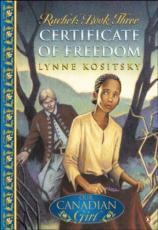
Rachel: Certificate of Freedom (Our Canadian Girl)
Written by Lynne Kositsky
Penguin Canada
112 pp.
Ages 8-12
2003
Slavery, racism, freedom, Nova Scotia  

Rachel: An Elephant Tree Christmas (Our Canadian Girl)
Written by Lynne Kositsky
Penguin Canada
84 pp.
Ages 9-11
2004
Racism, Nova Scotia

Rachel: The Maybe House (Our Canadian Girl)
Written by Lynne Kositsky
Penguin Canada
83 pp.
Ages 9-11
2002
Loyalists, slavery, racism, Nova Scotia

Rachel: A Mighty Big Imagining (Our Canadian Girl)
Written by Lynne Kositsky
Penguin Books
64 pp.
Ages 8-11
2001
Slavery, freedom

Seas of South Africa (Submarine Outlaw series)
Written by Philip Roy
Ronsdale Press
200 pp.
Ages 10+
2013
Racism, violence, South Africa, apartheid

Send One Angel Down
Written by Virginia Frances Schwartz
Holiday House
163 pp.
Ages 12-14
2000
Slavery, racism

Stones
Written by William Bell
Doubleday Canada
210 pp.
Ages 10+
2001
Racism, intolerance

Underground to Canada
Written by Barbara Smucker
Puffin Canada
144pp.
Ages 9-12
2003
Slavery, Underground Railroad, freedom


Between Sisters
Written by Adwoa Badoe
Groundwood
205 pp.
Ages 13+
2010
Ghana

A Big Dose of Lucky
Written by Marthe Jocelyn
Orca Book Publisher
249 pp.
Ages 12+
2015
Heritage

Cape Town
Written by Brenda Hammond
Great Plains Teen Fiction
326 pp.
Ages 14+
2012
Apartheid, South Africa


Chasing Freedom
Written by Gloria Ann Wesley
Fernwood Publishing
240 pp.
Ages 13+
2011
Black Loyalists coming to Nova Scotia

Chanda’s Secrets
Written by Allan Stratton
Annick
193 pp.
Ages 12-15
2004
HIV/AIDS

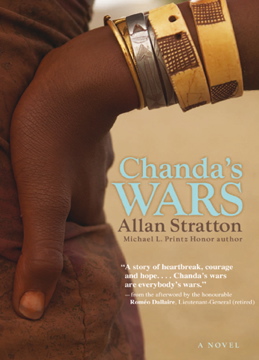
Chanda’s War
Written by Allan Stratton
HarperCollins
382 pp.
Ages 13-17
2008
Civil war, child soldiers

The Gospel Truth
Written by Caroline Pignat
Red Deer Press
328 pp.
Ages 12+
2014
Slavery, freedom

The House of Good Spirits
Written by Donn Kushner
Lester & Orpen Dennys
214 pp.
Ages 12-15
1990
Racism, slavery, African folktales

If This is Freedom
Written by Gloria Ann Wesley
Fernwood Publishing
272 pp.
Ages 13+
2013
Black loyalist settlers in Nova Scotia

My Life Before Me
Written by Norah McClintock
Orca Book Publishers
248 pp.
Ages 12+
2015
Civil rights, racism

Rush Home Road
Written by Lori Lansens
Back Bay Books
387 pp.
Ages  16+
2011
Town founded by fugitive slaves

Zack
Written by William Bell
Doubleday Canada
165 pp.
Ages 12-16
1998
Slavery, racism, Richard Pierpoint


Africans Thought of It: Amazing Innovations
Written by Bathseba Opini and Richard B. Lee
Annick Press
48 pp.
Ages 8-12
2011
Inventions


All Aboard! Elijah McCoy’s Steam Engine (Great Ideas Series)
Written by Monica Kulling
Illustrated by Bill Slavin
Tundra Books
32 pp.
Ages 5-8
2010
Biography

Big League Dreams: Baseball Hall of Fame's First African Canadian, Fergie Jenkins
Written by Richard Bridnall
Lorimer
152 pp.
Ages 11-13
2010
Biography, Fergie Jenkins

The Bite of the Mango
Written by Mariatu Kumara with Susan McClelland
Annick Press
216 pp.
Ages 14+
2008
Sierra Leone, civil war

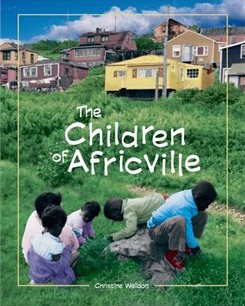
Children of Africville
Written by Christine Welldon
Nimbus
81 pp.
Ages 8-12
2009
Africville, racism, community

Five Thousand Years of Slavery
Written by Marjorie Gann and Janet Willen
Tundra
168 pp.
Ages 11-16
2011
Slavery

Harriet Tubman: Freedom Seeker, Freedom Leader (A Quest Biography)
Written by Rosemary Sadlier
Dundurn
190 pp.
2012
Biography, Harriet Tubman

How the Blacks Created Canada
Written by Fil Fraser
Dragon Hill
255 pp.
Ages 16+
2009
Achievement, Canada, settlement

Jailed for Being Black: The Story of Rubin "Hurricane" Carter (Real Justice)
Written by Bill Swan
Lorimer
144 pp.
Ages 13-17
2014
Biography, Rubin "Hurricane" Carter, injustice, racism

Jarome Iginla: How the NHL’s first black captain gives back
Written by Nicole Mortillaro
Lorimer
112 pp.
Ages 11-14
2010
Biography

The Kids Book of Black Canadian History
Written by Rosemary Sadlier
Illustrated by Wang Qijun
Kids Can Press
56 pp.
Ages 9-12
2003
Canada, history

Nelson Mandela: Champion of Freedom (Remarkable People series)
Written by Simon Rose
Weigl Publishers
24 pp.
Ages 8-12
2010
Nelson Mandela, South Africa

On an American Day: Story Voyages Through History, 1759-1899
Written by Rona Arato
Illustrated by Ben Shannon
Owlkids Books
96 pp.
Ages 9-13
2011


On a Canadian Day: Nine Story Voyages Through History
Written by Rona Arato
Illustrated by Peter Ferguson
Maple Tree Press/Owlkids Books
96 pp.
Ages 9-13
2009
Underground Railroad

Out of Slavery: The Journey to Amazing Grace
Written by Linda Granfield
Illustrated by Janet Wilson
Tundra Books
40 pp.
Ages 9+
2009
Slavery, John Newton

People Who Said No: Courage Against Oppression
Written by Laura Scandiffio
Annick Press
168 pp.
Ages 9-14
2012
Civil rights, Rosa Parks, NAACP, apartheid, South Africa

Season of Rage: Hugh Burnett and the Struggle for Civil Rights
Written by John Cooper
Tundra Books
71 pp.
Ages 10-15
2005
Racism, civil rights, Ontario

Singing Towards the Future: The Story of Portia White (Stories of Canada)
Written by Lian Goodall
Illustrated by Liz Milkau
Napoleon Publishing
63 pp.
Ages 9-11
2004
Biography, Portia White

Stay Strong: A Musician's Journey from Congo (Arrivals)
Written by Natalie Hyde
Clockwise Press
160 pp.
Ages 12-16
2015
Biography

Talking about Freedom: Celebrating Emancipation Day in Canada
Written by Natasha L. Henry
Dundurn
174 pp.
Ages 12+
2012
Slavery, emancipation

To Stand and Fight Together: Richard Pierpoint and the Coloured Corps of Upper Canada
Written by Steve Pitt
Dundurn
144 pp.
Ages 10+
2008
War of 1812, Richard Pierpoint, soldiers, Canada

To the Rescue! Garrett Morgan Underground
Written by Monica Kulling
Illustrated by David Parkins
Tundra Books
32 pp.
Ages 5-8
2016
Biography

Trials and Triumphs: The Story of African-Canadians
Written by Lawrence Hill
Umbrella Press
64 pp.
Ages 11+
1993
Settlement, slavery, racism, achievements

The Underground Railroad: The Long Journey to Freedom in Canada (Amazing Stories)
Written by L. D. Cross
James Lorimer
144 pp.
Ages 12+
2010
Slavery, Underground Railroad, freedom

When I Get Older: The Story Behind Wavin’ Flag
Written by K’NAAN with Sol Guy
Illustrated by Rudy Guttierez
Tundra Books
32 pp.
Ages 7-12
2012
Biography

Willie O'Ree: The Story of the First Black Player in the NHL (Recordbooks)
Written by Nicole Mortillaro
James Lorimer
140 pp.
Ages 11-13
2012
Biography, hockey, Willie O'Ree

Working for Freedom: The Story of Josiah Henson
Written by Rona Arato
Napoleon
78 pp.
Ages 10-13
2009
Biography, Josiah Henson, slavery, Underground Railroad


In the Freedom of Dreams: The Story of Nelson Mandela
Written by Michael A. Miller
Playwrights Canada Press
67 pp.
Ages 14+
2003
Biography, Nelson Mandela


Loyalties: A Trip Down Slavery Lane
Directed by Lesley Ann Patten
Produced by Kent Martin and Lesley Ann Patten
National Film Board of Canada
57 min., 3 sec.
Ages 11+
1999
Heritage, slavery, South Carolina, Halifax