February 09, 2022

Meet Mary Ann Shadd (Scholastic Canada Biography)

Written by Elizabeth MacLeod
Illustrated by Mike Deas
Scholastic Canada
978-1-4431-9130-2
32 pp.
Ages 6-10
March 2022
 
Although there are many Black historical figures, like Viola Desmond, whose accomplishment are celebrated regularly during Black History Month, Mary Ann Shadd should be one of them. This incredible woman, born in 1823 Delaware and immigrated to Canada in 1851 , was a teacher, a writer, an abolitionist, a lawyer, and the first female newspaper publisher in Canada. And all of that happened during the 1800s when slavery was still an issue and when women were disregarded and shoved into the background. Mary Ann Shadd was a Black woman whose conviction, determination and courage helped her to achieve great things, and this is her story, in words and pictures.
From Meet Mary Ann Shadd by Elizabeth MacLeod, illus. by Mike Deas
As a child, Mary Ann Shadd's family (who were not enslaved; her father was a successful shoemaker) were part of the Underground Railroad, helping freedom-seekers find safety. Mary Ann Shadd grew up understanding the need to abolish slavery and provide opportunities to Black people for learning. When the United States changed the law in 1851 to allow any Black person to be snatched and enslaved, Mary Ann and her brother moved to Canada from where she encouraged others to do the same. Eventually her whole family followed them.
From Meet Mary Ann Shadd by Elizabeth MacLeod, illus. by Mike Deas
Because there were few schools that allowed Black children to attend, she started an integrated school, though there were those who did not approve and she was forced to move onto other ventures, most notable starting the newspaper, the Provincial Freeman. However, even with this extraordinary achievement which included writing, editing and marketing, Mary Ann Shadd used M. J. Shadd to hide her gender. Still she spoke out about Black rights, returning to the US to encourage Black men to join the Union Army and help make slavery illegal.
From Meet Mary Ann Shadd by Elizabeth MacLeod, illus. by Mike Deas
But, even after the American Civil War and the abolish of slavery, racism was still rampant and Mary Ann Shadd's fight for equality compelled her to attend law school at Howard University and start "an organization for Black women to promote education, careers and the fight for the right to vote." (pg. 25)

Driven by her inherent desire for the rights of herself and others, Mary Ann Shadd pursued a variety of avenues both in Canada and the US to make people think and reconsider. She planted ideas about freedom and equal rights, education and suffrage, and she did so with perseverance and the strength of her convictions. Elizabeth MacLeod has introduced readers to an exceptional woman whose legacy is far-reaching, both across an international border and history, highlighting her story both anecdotally and with a timeline accompanied by several historic images. Moreover, with Mike Deas's illustrations, readers are treated to the visual of Mary Ann Shadd's life and story. We see times of racism, discrimination, tragedy and struggle. We also see triumphs and dedication, leadership and cooperation against a backdrop of the 1800s.

I've always appreciated the impact of Elizabeth MacLeod and Mike Deas's Scholastic Canada Biography series (there are now nine titles) in introducing young readers to important historical figures. But, with Meet Mary Ann Shadd, readers will get more than just a name and a story. From now on, whether it's Black History Month or not, young readers will remember a powerhouse of a woman who defied the times to make better the lives of Black people with herself as a shining example.

February 07, 2022

The Oracle of Avaris (Secrets of the Sands, Book 3)

Written by Alisha Sevigny
Dundurn
978-1-45974-435-6
368 pp.
Ages 8-13
January 2022
 
In Alisha Sevigny's earlier books in the Secrets of the Sands trilogy (The Lost Scroll of the Physician and The Desert Prince), Sesha, daughter of the Great Physician Ay, had kept herself and her young ailing brother Ky alive after the deaths of their parents and endeavoured to find the notable scroll believed to have the power of life over death and which was desired by all. This led her and her fellow scribes, Reb and Paser, along with the Hyksos spy Pepi away from Thebes to the desert to free Sesha's friend and the Pharaoh's daughter, Princess Merat, who'd been given in betrothal to the Hyksos chieftain, Yanassi. But their adventures are far from over and, with a copy of the scroll newly rescued, the foursome–Sesha, Reb, Paser and Pepi–are heading to the capital of Hyksos to help prevent a war between the Hyksos and the Thebans.

In Avaris, King Khyan is dying. His son, the chieftain Yanassi, believes himself to be his father's successor and is anxious to wage war and extend the Hyksos's power. Pepi, the king's nephew who believes that he may actually be the king's son, is determined to maintain peace between the nations and see that the prophecies, both contained in the scroll and as recounted to him by his priestess mother Kalali upon her death, be fulfilled. But there is a complication: Pepi believes that Sesha, one from the line of the physician as prophesized, should rule. Still the king is determined to wait to hear directly from the Oracle who is expected to attend solstice ceremonies. 

But the Oracle is missing. And so Sesha, Reb and Paser head out on their newest quest: to find the Oracle, confirm the prophecies that would determine the future of Hyksos, and bring her back to Avaris before the imminent death of the king.

For middle-grade readers looking for an extraordinary adventure in a historical setting, The Oracle of Avaris and the earlier books in the series deliver. There are dangerous vipers of the serpentine and human varieties, conflict between nations, enigmatic predictions and perilous journeys. There is discrimination between nations and peoples, illness and injuries that devastate, and familial discords that could be fatal. But Alisha Sevigny does more than tell a great story. She takes us to ancient Egypt to witness the struggles of its peoples, the foods, transportation, clothing and ceremonies of its cultures and a landscape of desert, temples, palaces and humble huts. Young readers will feel the heat, worry about a Nubian mercenary, cheer for some and sneer at others, and wonder about the true meaning of the prophecies. And, better yet, Alisha Sevigny leaves readers secure in the knowledge that Sesha and her compatriots will be remembered by their deeds and their hearts.
...to an Egyptian, there is nothing more important than being remembered.      (pg. 352)

The Oracle of Avaris (2022)

February 04, 2022

Valley of the Rats: Interview with author Mahtab Narsimhan

Valley of the Rats
Written by Mahtab Narsimhan
DCB
978-1-77086-628-7
232 pp.
Ages 9-12
September 2021 
Reviewed here
 
This week I had the privilege of interviewing 
author Mahtab Narsimhan about her 
most recent middle-grade novel, Valley of the Rats
for the Ontario Library Association's Superconference. 
Because that interview could only be attended 
by conference delegates, I am posting that essential Q & A here.  
Enjoy!
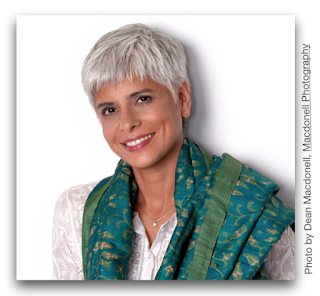
Author Mahtab Narsimhan
 

Helen Kubiw:   The setting of Valley of the Rats is both a little creepy and a whole lot of fascinating. Is the actual valley a myth, a reality or a figment of your imagination?

Mahtab Narsimhan:  The valley and village of Imdur is pure imagination but the roots of it lie in fact, as is often the case with storytellers. I saw a National Geographic documentary on YouTube about the Karni Mata temple in Rajasthan which houses 20,000 rats. They’re revered instead of reviled and that fascinated and horrified me.

I’ve lived in the city for most of my life and recently moved to a rural community. There’s a lot here that scares me. Grass snakes, geckos, frogs and mice…basically anything that creeps, crawls, or flies. The best stories are where you’ve channeled your fear into words and so was born…Valley of the Rats.


HK:  I think one of the strengths of your books is that you showcase cultures and places with which all young readers might not be familiar. You definitely do this in Valley of the Rats both with Krish’s family and the village of Imdur. What do you think the benefits are of exposing children to different cultures?

Mahtab Narsimhan:  Thank you, Helen, I try. It’s important for children to be exposed, at an early age, to literature which serves not only as a mirror but as a window or a sliding door. It creates empathy and acceptance of the Other. I can only hope that in the future this word (Other) is extinct and that no one notices differences between people and cultures, only similarities.   


HK:    Have you ever had to deal with rats, individually as a pet or on a larger scale, like an infestation. If so, when and where, and how did you cope?

Mahtab Narsimhan:  True Story: While I was editing Valley of the Rats, a tiny mouse found its way indoors. I discovered it, shivering with fright on the steps leading down to my office, at 5.30am which is when I write. I screamed for my husband to put it back outdoors. I wish I’d taken a picture to share with the students! My imagination is much larger (and braver!) than reality. I could never have lived through some of the stuff that I put my main character, Krish, through.

While growing up in Mumbai, I lived in an old neighbourhood which had rats the size of kittens. And during the monsoon season, they’d be out and about. If you recall, they even made an appearance in Mission Mumbai.


HK:   At its heart, Valley of the Rats is about survival: survival of a people abandoned by their government, and a young boy enduring challenging circumstances. What strategies of survival do you think kids could apply to their own lives to ease them through difficulties?

Mahtab Narsimhan:  Great question, Helen. I truly believe that each of us has the strength to deal with whatever comes our way. We need to believe in ourselves, dig deep for courage, and most important, ask for help when we need it. 

Krish is a germophobe but he’s trying to change and bond with his father, which is the reason he asked to go on this camping trip. Krish has always relied on his father to be the leader but when things go wrong, he knows it’s up to him to get them both out of this dangerous situation. By seeing the Other, more clearly, he learns to control his fear and take help from an unexpected source. (I’m being a bit vague here so as not to give spoilers for those who have yet to read the book).

What I hope readers will take away from this story is that no situation is hopeless. There is always a way out if you try hard enough and are willing to try something new. Don’t be afraid to ask for help. It’s not a sign of weakness but a sign of courage. You only fail if you stop trying.


HK:    Another theme of Valley of the Rats is conflict and all the kinds that kids learn about in school are present here: man vs. self, man vs. man, man vs. the environment, and even man vs. society. Which do you think drives the story most?

Mahtab Narsimhan:  Conflict is the engine that drives a story and one of the exercises I do when plotting is to list all the ways I can include conflict. I believe many types of conflict add depth and breadth to a story. They will work as long as they are well paced, and the reader has pockets of respite between the drama and the high-stakes action.


HK:   In addition to an action-filled plot, Valley of the Rats is very much a character study. First and foremost is Krish whose anxiety is almost crippling though he has found ways to cope, like using hand sanitizer constantly and chewing candies to calm. Why choose to have him deal with anxiety?

Mahtab Narsimhan:  These days, almost all of us have anxieties. Most of us have learned to cope with them and carry on. I’m a bit of a germophobe myself and always worry about bathroom doorknobs and grocery cart handles, among other things I have to touch in public spaces. When I’m anxious, I chew gum to calm down. So, there’s a little bit of me in Krish.
 
Most readers invest time in reading a story because they care about a character and by the end of the story a character must change, must grow and/or learn something new. If the character is the same at the beginning and at the end, it leaves the reader dissatisfied and feeling as if they’ve wasted their time.   
 
I wanted to show character change and how better to show it in a story than to have a character hate something in the beginning and then accept it in the end. Or a person deathly afraid of something and then accepting of it at the end.
 
This change is part of my plotting process using the seven-point story structure. My method is to plot backward and write forward. With Krish, I knew the change I wanted in him by the end of the story, and so, he had to be the exact opposite, in the beginning. Once I have the beginning and the end, I plot the incidents in the middle which lead to that change. 


HK:   Because of Krish’s anxiety and his relationship with his father, the boy’s self-confidence is sadly lacking. In fact, he is always comparing himself to his cousin Anjali–as does his father–whom he sees as brave, outgoing and optimistic. What would you say to kids who feel bad about themselves when they compare themselves to others?

Mahtab Narsimhan:  I would say don’t. It’s easier said than done because even as adults we suffer from “comparinitis.” Unfortunately, this also starts with adults who constantly compare their kids to others (family or neighbours or school friends), instead of focusing on what their kids are good at and nurturing those qualities. 
 
To kids who feel bad about this comparison, I would say:
  • Find the things you’re really good at and appreciate those qualities.
  • Write down a list of goals you’d like to achieve. This could be for a day, a week, a month or a year.
  • At the end of that period see how far along you’ve come. If you’ve achieved those goals, celebrate. If not, see what else you could have done to make them happen.
  • Above all, try. You only fail if you stop trying. (As you can tell, this is my own mantra).
It truly is a matter of mindset! I love this quote by Thomas Edison, one of the most successful innovators in American history. “I have not failed 10,000 times—I’ve successfully found 10,000 ways that will not work.”


HK:   Early in the book, Krish recalls a bit of wisdom from his dad: “Argue for your limitations and they’re yours.” How would you explain this to kids?

Mahtab Narsimhan:  If you constantly tell people why you cannot do something, or why you’re bad at it, you start believing it yourself and you will continue to be bad at that activity. It’s a self-fulfilling prophecy. You believe it and therefore you don’t try hard enough and hence you fail at it. 
 
Instead, if you tell yourself that you’ll get better at something with practice, that’s what you will do. You’re no longer making excuses for why you’re bad at something, you’re trying hard to get better at it. And practice always makes you better. 
 
Great example: I hate math and for the longest time I’ve told anyone who’ll listen that I get an allergy when I do math, I’m so bad at it, etc. Since I had a ready made excuse, I didn’t try to do well and I continued to do badly. 
 
Fast forward to the present when I have to run my own business and now I have to be good at numbers to make sure I’m doing it right. I stopped making excuses, learned what I had to, and asked for help when I needed it. I no longer say I’m bad at math or numbers. I just tell myself I’m getting better at it each day.


HK:    If there is one character whom I liked the least, it would have to be Krish’s dad. He’s willing to lie and be deceitful just to get what he needs and wants. Then he tells Krish he expects him to keep his word and doesn’t do so himself. Not only does he deceive his son, he is especially disrespectful of the people of Imdur who had rescued them. Worse yet, he acts like Krish is a disappointment to him. Though this is really his dad’s issue, Krish has to find a way to deal with a less than honourable dad whom he struggles to please. What advice do you have for kids on dealing with parents who are less than we expect of them? 

Mahtab Narsimhan:  In Indian culture we’re taught to always respect our elders. That they’re always right. In this particular instance, Krish’s Dad was a perfect character to showcase that sometimes adults make the wrong decisions too. That is the time to follow your own instincts and do what is right. If you believe it’s the right path, others will follow. When Krish finally took charge of the situation and told his Dad how the plan would go, his Dad not only followed but was proud of him. Krish managed to do all this without being disrespectful and standing his ground. This is what I hope readers can do too. Kids have very little agency in life, but they have their beliefs and a sense of right and wrong. If they hold on to it, others will have no choice but to follow. 


HK:    Though I don’t want to give too much away, there is a supernatural element to the story. Why did you add this? Also, do you believe in the supernatural?

Mahtab Narsimhan:  I love the fantasy genre. Adding a supernatural element was fun and it added another layer to the story.

I, personally, don’t believe in the supernatural though ghost stories, the occult, etc have always fascinated me and they’re great reads. In fact, I’ll be releasing a trilogy this spring which can best be described as Goosebumps meets Asian Mythology and the third novel in the series is called POSSESSED: The Ouija Board.


HK:    You’ve written picture books, early readers, middle-grade and young adult novels. I think your middle-grade novels, whether for younger readers (ages 8-12) or older ones (10-14), are especially well-received, as was The Third Eye which won the Silver Birch Award of the Forest of Reading. Do enjoy writing middle-grade fiction?

Mahtab Narsimhan:  It’s my absolute favourite age-group to write for. I'm currently working on another middle-grade trilogy set on Mars. Wish me luck because it’s one setting I will need to research online rather than visiting.

🐀🐀🐀

It was a wonderful interview 
and lovely to chat with Mahtab Narsimhan.
 
Many thanks to Mahtab Narsimhan 
for the pleasure of this interview 
 
and to Chantelle Cho, Sales & Marketing Assistant 
at Cormorant Books/DCB, for facilitating this event.

🐀🐀🐀

The video of this interview is now available at Mahtab Narsimhan's channel at https://youtu.be/Y_rIDTmiXDE.

February 02, 2022

Hat Cat

Written by Troy Wilson
Illustrated by Eve Coy
Candlewick Press
978-1-5362-1366-9
32 pp.
Ages 4-8
February 2022
 
In a charming little house with a garden rich in trees and plants lived an old man. He loved the squirrels that visited him. In fact, he liked to feed them by placing peanuts in his tweed bucket hat and welcoming the squirrels to sit upon it to feast.
From Hat Cat by Troy Wilson, illus. by Eve Coy
 One day, he'd laid his checked hat down on the bench beside him and a kitten found its way beneath. Appropriately he named the cat Hat. The old man loved Hat. He fed it, played with it and stroked it, welcoming it into his home completely. But the one thing he would not do was allow Hat to go outside. Between not wanting to lose the little cat and not wanting his beloved squirrels to be chased away or hurt, the old man would not allow himself to let Hat outside. And so, Hat stayed inside, longingly looking outside.
From Hat Cat by Troy Wilson, illus. by Eve Coy
Day after day, the old man and Hat and the squirrels had their routine. And then one day, the elderly man did not feed Hat or play with it. Days went by before other people came to feed Hat and talk to him. And on one of those days, Hat slips out. 
From Hat Cat by Troy Wilson, illus. by Eve Coy
What happens when Hat gets outside and when the old man happily returns is the true tale of Hat Cat and one that speaks of companionship and trust.

I've been captivated by multiple books by Troy Wilson (e.g., Goldibooks and the Wee Bear; Little Red Reading Hood and the Misread Wolf; Liam Takes a Stand) and Hat Cat has done the same. As a cat lover and a feeder of backyard red squirrels, I can empathize with the older man's desire to keep both safe and welcomed at his home. They enrich his life with the company they provide and he is given purpose with the care-giving he accords them. Those mutual relationships are so endearing but also tenuous, as seen when the elderly man is ostensibly taken ill and unavailable to both Hat and the squirrels. As a reader, I became anxious for the little cat when days went by without the older man tending to it and was relieved when first alternate caregivers attended the home and Hat and then the man returned. And with that, both Hat and the man have learned that taking a chance on something different is sometimes worth it.
 
Hat Cat is illustrated by England's Eve Coy who provides the charming landscapes of home and garden for the older man, Hat and the squirrels. The settings delight with colour and warmth, the house filled with homey plants, books, furniture and artwork, and the garden lush with planters, flowers and more. It's a place we'd all love to visit and where a man, a cat and some squirrels have made a home.
 
Young readers may recognize a grandparent or elderly neighbour in Hat Cat and the tender relationships between a man and the animals, both domestic and wild, for which he cares. I hope they also see the goodness of caring for others, furred or not, as worthwhile and enriching for all, and something to which we should all aspire. The rewards are certainly priceless.

February 01, 2022

On the Line: Cover and trailers reveal

 
🏀🏀🏀🏀🏀

Authors
 
 Paul Coccia 

and
 
 Eric Walters 

are set to release their first collaboration
and I'm pleased to reveal its cover here 
and a video about the book.
 
Voilá!
 
 
ON  THE  LINE

Written by Paul Coccia and Eric Walters
Orca Book Publishers
978-1-45982-713-4
312 pp.
Ages 9-13
March 15 2022

From my review of December 24, 2021:

What's on the line for thirteen-year-old Jordan Ryker? Everything. His parents can't stop arguing. The auto plant where his dad works, being the town's major employer, is shutting down. Even basketball, which is everything to Jordan and his best friend Junior, is somewhat tenuous with the school's new basketball coach who really doesn't know what he's doing. And now Jordan has to figure out how to work with new kids brother and sister Aaron and Tammy who are very different and both want on the boys' basketball team.  

...

This is the first writing collaboration between Paul Coccia and Eric Walters and, having reviewed books by both previously, I can attest to a new synergy to their writing as they bring their strengths in plotting, character development, and voice and meld them with LGBTQ+ issues and sports into something new and important. They've given us a story that challenges young readers to see beyond themselves and from different perspectives and with compassion for the struggles that others may be experiencing. With heart and intention, they've put themselves out there and helped us see from that angle what's really meaningful: friends, family, and fair play for all.

 🏀🏀🏀🏀🏀
 
I'd also like to share a couple of videos about the book. This first was prepared by author Paul Coccia and has been posted by publisher Orca at https://youtu.be/lHMFkieD4ZQ.
 
Posted by Orca Book Publishers on January 31, 2022 on YouTube.
 
 
This second book trailer, created by Daniel Rolo, has also been posted on the Orca YouTube channel at https://youtu.be/KjyDne1gJ7Q.

Posted by Orca Book Publishers on February 7, 2022 on YouTube.
 
🏀🏀🏀🏀🏀
 
March 15, the release date for On the Line, is just 6 weeks away 
so be sure to get your pre-orders in via Orca 
or your favourite book store.

January 28, 2022

The Groundwood Newsletters: New book resource

Any resource that encourages 
the use of Canadian children's books 
by educators and librarians is good. 

Most publishers provide teaching resources based on their books 
(do check out their websites) 
but Groundwood Books is setting up something a little different 
and I wanted to share that here.
 

Groundwood Books

has teamed up with 

educator, author and children's book advocate

Larry Swartz

for a series of newsletters for teachers and librarians

The Groundwood Newsletters are designed to provide educators, librarians and parents with strategies, tips and information about their fiction and non-fiction books. Each newsletter centres on a single topic, theme or genre with a list of recommended titles to encourage young readers to explore. The series will include lots of great resources such as reading, writing, arts and media responses; a spotlight feature on a Groundwood author/illustrator; a curated book list with annotations; and additional links to the website for more book information and/or teacher guides.

Newsletter #1:
 (set for release Monday)

Finding Friendships, Building Belonging 
and Creating Community Through Picture Books
 
for the Groundwood Newsletters
 

January 25, 2022

Eight Days

Written by Teresa Toten
Scholastic Canada
978-1-4431-9002-2
312 pp.
Ages 10-14
January 2022

A lot can happen in eight days. Death, love, journeys and change. And, like it or not, it is what it is.

At almost 14, Sami Stanic has lived through a lot. Since she was three, she has lived with her grandfather Carl in the White Towers apartment building at Thorncliffe Park in Toronto. Carl is a recovering alcoholic, having stopped drinking when he brought Sami to live with him, and Sami is determined to keep it that way. She works at ensuring he stays sober by attending AA meetings with him and by keeping herself apprised of all the programs and readings, and she is determined to prove herself useful. In her own way, she does not want to be abandoned again. But, without knowing it, Sami has become part of the community, regardless of Carl's intolerance to the diverse community that is the Towers now. Her best friends are Nilofer and Tarek (also her crush) and there are lots of people watching out for her, though she doesn't realize it. So when she learns that her mother has died, a woman she'd always thought of as gone already, Sami is both perplexed and ashamed.
 
Within days, Sami, Carl and their neighbour Aggie are heading to Chicago in Carl's '77 Olds, affectionately known as Sophie, to deal with Shannon's funeral arrangements. But the journey becomes an opportunity for truths to finally emerge about all their stories: Sami's first few years, Shannon's issues, and Carl's despair. And their return to Canada may just be a new pilgrimage for all.

Teresa Toten may be better known for her extraordinary young adult novels (e.g., Beware That Girl, Shattered Glass, and The Unlikely Hero of Room 13B) but her voice shines just as brightly in this middle-grade novel. Perhaps it's because Teresa Toten has still focused her story on the foundation of most children's lives: their relationships. For Sami, it's her many relationships that drive her. Her relationships with Carl, with Nilofer, with Tarek, with Aggie, with her mother, and with so many in her community offer some security and comfort, but also some worry and angst, while often leaving her questioning her memories and her feelings.
I'd been whiplashed by every possible human emotion in the past few hours. I liked me better before. Clamped down, in charge. (pg. 253)
Teresa Toten makes sure that Sami's journey does not start and stop with a road trip. It becomes one of self-discovery and tenacity in which Sami sees and hears more from those around her and allows herself to be more. As alone as she may feel, living with a dry alcoholic who could relapse at any time, Sami learns she's part of a big community and one so diverse in its cultures that there is more than enough offering to be the family she needs.

Eight Days may have a road trip story line at its core but the journey is more one of life. But, as with any journey, where you come from is just one part. Where you're heading and where you end up are just as meaningful.