October 24, 2018

Monsters: The Reckoner, Book Two

Written by David A. Robertson
HighWater Press
978-1-55379-748-7
246 pp.
Ages 14+
October 2018

Trust comes from truth. (pg. 199)

In Strangers, the first book in David A. Robertson's The Reckoner series, Cole Harper returned to the Cree community of Wounded Sky, a reserve constantly in recovery from tragedy. At that time, he'd been lured back by Coyote a.k.a. Choch with whom Cole had made a deal when the supernatural being helped save Cole's two friends, Eva and Brady, from a school fire ten years earlier that killed so many others. Though treated as a pariah, Cole helped stop a murder spree and provided a cure, with his unique blood, for a flu affecting the community. Now, in Monsters, that trickster Choch expects Cole to stick around and try to expose the truths about the mysterious experimentation that had taken place at the research facility and help heal a community.

Cole's first step is to recover the files he'd discovered in Strangers that revealed how he and others had been test subjects at the former Mihko Laboratories research facility. However, with Mihko returning to the community and quarantining all those who had been cured but now were looking worse, and Victor, a local resident, and Jayney, a spirit girl, talking about a monster or bogeyman or perhaps even Upayokwitigo, Cole's task becomes more complicated. Who is this creature? Why are the "flu" patients looking sick again? Why are guards posted at the clinic and the research facility? With the residents of Wounded Sky vacillating between acclaiming Cole as a hero and a criminal, Cole is finding it hard to learn anything. And did I mention how flummoxed he is about his feelings, particularly for best friend Eva, who has a boyfriend, and for another girl, Pam? Cole's probably feeling like it sucks to be him. No wonder his anxiety is out of control and he's struggling between choosing to take meds and trying to cope without. But can he quash that debilitating anxiety sufficiently to save himself and Wounded Sky from monsters of so many manifestations?
"...if there's somethin' that evil, there's gotta be somethin' that good." (pg. 236)
There is a lot of evil hanging around Wounded Sky and, at this time of year, many will think those monsters will all be vicious creatures that inspire fear. But, though there are a lot of monsters in Monsters, not all are physical beings. Some are inner demons, like Cole's overwhelming anxiety founded in his past but pervading his present and undoubtedly ready to affect his future. But they are also the community's fears that it will be unable to recover from its tragedies and that it's in danger of losing its identity. Those are monsters like no other. Fortunately, there is still much goodness and strength in Cole and the community, and readers will be hopeful that there are some happy endings for both.

David A. Robertson continues the thriller he began in Strangers by setting up new mysteries built on those established in Book One. However, although Monsters may answer a few questions, David A. Robertson leaves the reader still wondering about that research facility and what they did to Wounded Sky's inhabitants, past and present, and hoping that Cole will not lose himself in his struggle to find the answers.

Still, without spoiling the ending, readers need to be prepared for David A. Robertson's plot twist. A monster may be revealed, seemingly tying up a plot line, but Monsters closes out with a shock and a gasp that will have readers waiting for Book Three in the series, Ghosts, to learn how Cole, the Reckoner, is able to make peace for himself and Wounded Sky.  Spring 2019 can't come soon enough.
••••••••••••

Just a quick note that

MONSTERS

launches

Tuesday, October 30, 2018

7 p.m.

at

McNally Robinson
Grant Park in the Atrium
Winnipeg, MB

and

will be hosted by
Katherena Vermette

A portion of book sales from that night will be donated to
Anxiety Disorders Association of Manitoba

October 23, 2018

A World of Kindness

from the Editors and Illustrators of Pajama Press
(including Ann Featherstone, Brian Deines, Tara Anderson, Wallace Edwards, François Thisdale, Kim La Fave,      Manon Gauthier, Dean Griffiths, Suzanna Del Rizzo and Rebecca Bender)
Pajama Press
978-1-77278-050-5
32 pp.
Ages 3-7
October 2018 

Whether a child dealing with a mean classmate, nastiness on social media, or world leaders striking out at others, it's evident that our world needs more kindness. But being kind is not always inherent; sometimes, often, it needs to be taught or even inspired. As Aesop affirmed, "No act of kindness, no matter how small, is every wasted." Let us be kind.

In fourteen double-spreads of text and image, the editors and illustrators of Pajama Press spark discussions about how kindness can manifest and how we should examine our own actions for kindness. Starting with "Are you kind?", the book asks questions while suggesting ways of being kind. From "Do you wait your turn?" and "Will you help someone younger...or older?" to "Are you gentle with animals big...and small?" young readers are asked to look within for evidence of their own kindness.
From A World of Kindness, illustration by Kim La Fave

From A World of Kindness, illustration by Tara Anderson
Children see how to be kind while being asked about being kind. Ideas about saying "Please" and "Thank you" and "I'm sorry" are demonstrated as important, as are sharing, helping, being supportive and compassionate. A World of Kindness covers the simplest acts of thoughtfulness and yet makes the significant and critical point that "a little kindness grows into a world of kindness."
From A World of Kindness, illustration by Manon Gauthier
The text of A World of Kindness is endearing and straightforward, and will work well with young preschoolers and children in primary grades. But it's the illustrations, some from already published works and some original art, that will carry the message. Children will see kindness in the hugs, the sharing, and the love that seasons these pages. (There are different heart shapes throughout the book, reminding us what is at the heart of kindness.) The illustrations, like Suzanne Del Rizzo's amazing polymer clay book cover art, depict all children and are aimed at children's experiences with animals, peers, siblings, elders, and parents, and include those during all seasons in Canada and in other global locales including Sri Lanka (Kim La Fave's art from When the Rain Comes), Tanzania (Brian Deines's illustration from In a Cloud of Dust), and Jordan (Suzanne Del Rizzo's art from her My Beautiful Birds). A World of Kindness shows kindness in its own inclusivity.

A World of Kindness will undoubtedly be used as a tool for teaching and instilling kindness, especially as Pajama Press has provided a downloadable poster (https://pajamapress.ca/resource/a_world_of_kindness_extra_content/) and teaching guide (https://pajamapress.ca/resource/a_world_of_kindness_teaching_guides/) on its website. Moreover, with all royalties going to Think Kindness, a project that aspires to inspire kindness in schools and other communities, purchasing A World of Kindness is a win-win for all.  But, at its heart, A World of Kindness is a compendium of beautiful messages in words and art to help make our world, starting with our youngest readers, a place of graciousness and goodwill.  With such benevolence, this picture book will triumph with purpose.

October 19, 2018

Ottawa Public Library presents Teen Author Fest 2018 (Ottawa, ON)


On

 Saturday, October 27, 2018

12-5 p.m.

the Ottawa Public Library 

presents

Teen Author Fest 2018

a free event with 11 French- and English-language 
writers of stories for young adults

Lucile de Pesloüan 
Pourquoi les filles ont mal au ventre?

Émilie Rivard
1re avenue

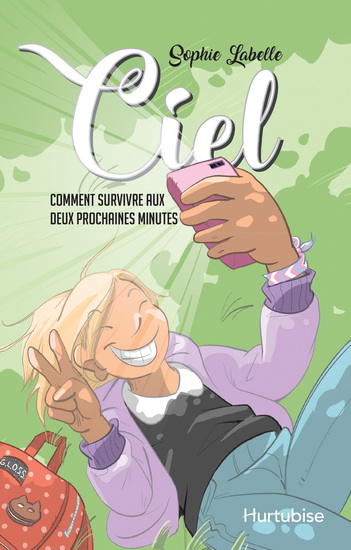
Sophie Labell
Ciel

Hadley Dyer
Here So Far Away

Susan Glickman
The Discovery of Flight

Tiffany D. Jackson
Monday’s Not Coming

E.K. Johnston
That Inevitable Victorian Thing

Sarah Raughley
Siege of Shadows

Justin Joschko
Yellow Locust

Star Spider
Past Tense
Danielle Younge-Ullman
Everything Beautiful Is Not Ruined


There will be workshops,
panel discussions, 
author signings, 
a meet-and-greet, 
and 
book sales (through Octopus Books).

••••••••••••••••••••••••

All events will take place at

Ottawa Public Library Sunnyside branch 
1049 Bank Street

and

across the street at 
Southminster United Church 
15 Aylmer Avenue

•••••••••••••••

This is a free event!


Details about the schedule and authors and their books are available on the Teen Author Fest pages at https://biblioottawalibrary.ca/en/content/teen-author-fest (English) or at https://biblioottawalibrary.ca/fr/content/festival-des-auteurs-pour-ados (French)

October 18, 2018

Growing Up in Wild Horse Canyon

Written by Karen Autio
Illustrated by Loraine Kemp
Crwth Press
978-1-7753319-0-2
48 pp.
Ages 7-10
October 2018

For lovers of trees, history, horses and British Columbia, Growing Up in Wild Horse Canyon will appeal to all.

Growing Up in Wild Horse Canyon is about the history of Wild Horse Canyon, a hidden canyon in British Columbia's Okanagan Valley, alongside the Okanagan River. The story, told as a series of dated vignettes in text and pictures, begins in 1780 with an Okanagan man communing with the natural world of the steep-walled canyon. Listening to the flora and fauna, he leaves behind a red-ochre and bear-grease paint pictograph.

Through the years, the Okanagan people find shelter and home in this valley, as do wild horses, alongside the growing ponderosa pines (also known as yellow pines) whose growth the reader observes in every illustration of this book. From seedling, as witness to the community of Okanagan people, and their taming of the horses for transport and carrying heavy loads, to saplings, the yellow pines and other flora give life and assistance to these first peoples. With the arrival of the first Europeans, the Okanagan people offer horses and temporary shelter and the Okanagan Brigade Trail becomes a route for fur traders, explorers and pack-trains.
From Growing Up in Wild Horse Canyon by Karen Autio, illus. by Loraine Kemp
Like the seedlings and saplings of yellow pine growing into majestic trees, the canyon is evolving, specifically from a wholly natural element to one impacted by human development. Settlers move into the Okanagan Valley, displacing the Syilx/Okanagan people who are shamelessly shoved onto reserves. Trees are cut, a railway is built and more settlers establish themselves. But, with the onset of World War I, horses are being trapped for military purposes and still more rounded up to be trained, sold or killed because they compete with ranchers' animals. "Soon few wild horses are left in the Okanagan." (pg. 22) Forests are cut, land is cleared, and Wild Horse Canyon is being changed forever.
From Growing Up in Wild Horse Canyon by Karen Autio, illus. by Loraine Kemp


Still the ponderosa pines grow and reproduce amidst Wild Horse Canyon.  As with any story in which humans begin to exert their will on the natural environment, Karen Autio recounts that critical time when development begins to be reined in, and the establishment of the Okanagan Mountain Provincial Park heralds the recovery of the area to its humblest beginnings. Even wildfires like the firestorm of 2003 that destroyed a 223-year-old ponderosa pine in Wild Horse Canyon is still a new beginning.
From Growing Up in Wild Horse Canyon by Karen Autio, illus. by Loraine Kemp
Don't misinterpret the story of Growing Up in Wild Horse Canyon from its title as I did. It is a historical account of a Canadian region unique in its heritage.  Karen Autio makes sure to tell the story of Wild Horse Canyon from all perspectives: First Nations, European settlers, and Mother Nature. By using a ponderosa pine as her focus for the unfolding of the canyon's history, both natural and human, Karen Autio keeps the story fundamental.  She could be critical of the canyon's evolution–I'm thinking of the treatment of the First Nations and wild horses–but she presents its history as simply a timeline of events, warts and all. That completeness of story is likewise achieved by Karen Autio's inclusion of additional details like maps, photos and notes about the Syilx People upon whose lands the story unfolds. With Okanagan Valley artist Loraine Kemp's accurate and appreciative paintings as illustrations for the story, Growing Up in Wild Horse Canyon becomes a history book that young readers will welcome and enjoy for its realism and truthfulness.

October 17, 2018

Swallow's Dance: Book launch (Toronto, ON)

Canadian-born Australian writer

Wendy Orr

author of
Dragonfly Song (Pajama Press, 2017)
and
Nim's Island (Allen & Unwin, 1999)
(among many others!)

launches her TD Children's Literature Award-nominated

middle-grade historical fiction novel


Swallow's Dance
Written by Wendy Orr
Pajama Press
978-1-77278-062-8
288 pp.
Ages 10-14
October 2018

 on

 Saturday, October 27, 2018

from

 2-3:30 p.m.

at

Queen Books
914 Queen St. East
Toronto, ON


From publisher Pajama Press's website:

In the myth-rich culture of Bronze Age Crete, a volcano cuts short the coming-of-age training of a young priestess. When her world is shattered and her future appears lost, she must find the strength within herself to ensure the survival of her family.

Leira is about to start her initiation as a priestess when her world is turned upside down. A violent earthquake leaves her home–and her family–in pieces. And the earth goddess hasn’t finished with the island yet.

With her family, Leira flees across the sea to Crete, expecting sanctuary. But a volcanic eruption throws the entire world into darkness. After the resulting tsunami, society descends into chaos; the status and privilege of being noble-born are reduced to nothing. With her injured mother and elderly nurse, Leira must find the strength and resourcefulness within herself to find safety.

Retrieved from https://pajamapress.ca/book/swallows_dance/ on October 17, 2018.


There will be:
• a reading
• book signing
and 
• light refreshments.


All are welcome!

October 16, 2018

The Zombie Prince

Written by Matt Beam
Illustrated by Luc Melanson
Groundwood Books
978-1-55498-997-3
24 pp.
Ages 4-7
September 2018

With Halloween around the corner, a zombie prince sounds like a great costume. It oozes power and fear and may be just the thing to help Brandon destroy his enemies. But Brandon's is not a costume. It's an imaginary coat of armour to help the boy fight off, virtually, a schoolyard bully. 

Three boys, Brandon, Oscar and our narrator, hang out on the grass of the school yard, problem-solving how to deal with a bully, Sam, who has called Brandon a fairy. And though Ms. Gomez has declared that fairies are fearless creatures, Brandon is devastated by the bully's evident malice. So, each of the boys imagines himself as powerful enough to fight off Sam's hurtful words. Brandon sees himself as "a zombie who will destroy his enemies with the tears falling down his face." Oscar sees himself as a ghost who will block the mean words hurled at Brandon.  Our narrator declares himself a vampire who will suck bad things from the air, including "pollution and Mrs. Clark's perfume clouds and Sam's mean words."
From The Zombie Prince by Matt Beam, illus. by Luc Melanson
Finally our narrator suggests that "Sam was wrong, Brandon," and that Brandon would "make an awesome fairy, but you actually looked more like a prince." That delights Brandon and the three boys while away the rest of recess imagining planes, yetis and lasers in themselves and their surroundings.
From The Zombie Prince by Matt Beam, illus. by Luc Melanson
Anxiety about bullying often comes from ruminating over words said and abuses inflicted, and anticipating the worst as a consequence of overthinking. But, what the boys learn is that that same busy brain can be used to fuel an imagination that can allay that anxiety and produce calm and joy instead. Matt Beam's The Zombie Prince applauds the solace that comes from applying creativity to distracting and comforting rather than worrying, and with friends to help bolster that creativity with emotional support, Brandon glows with the relief of being a zombie prince.
From The Zombie Prince by Matt Beam, illus. by Luc Melanson
There's a similar glow to Luc Melanson's quirky illustrations that have a lovely green tinge, though not quite like that of a zombie's skin. The green is soft like grass and warm like sunshine, and uplifting like the support the three boys give each other. Moreover, by making the three children so different in their features, Luc Melanson supports Matt Beam's story assertion that all boys can be sensitive and supportive and never less for feeling vulnerable.

While littlest ones might be enamoured with the idea of a zombie prince–creepy and powerful–Matt Beam and Luc Melanson's illustrated story approaches the idea that power comes from something within, not from external appearances, and strength is built upon compassion and awareness, enhanced with a healthy dose of imagination.

October 15, 2018

The Log Driver's Waltz

Words by Wade Hemsworth
Illustrated by Jennifer Phelan
Simon & Schuster Canada
978-1-5011-6195-1
40 pp.
All ages
September 2018

Whether you know the song "The Log Driver's Waltz" from the National Film Board short (John Weldon, 1979) or the version by the group Mountain City Four (with vocals by Kate and Anna McGarrigle) that accompanied the Canada Vignettes animated film, The Log Driver's Waltz is a piece of Canadiana which all will recognize. Written by folk singer-songwriter Wade Hemsworth of the agile log drivers he observed while he worked as a surveyor in remote areas of Canada, The Log Driver's Waltz is an iconic folk song of work and play and love in a northern landscape of trees and water.

Wade Hemsworth's lyrics may take readers and music listeners to a time when log driving, the work of moving cut trees from the forest to the mills downstream via river, was common and economically critical, but The Log Drive's Waltz is really a song about dancing, as a girl dreams to dancing with a lively and sure-footed log driver.
When the drive's nearly over
I like to go down
And watch all the lads
as they work on the river
I know that come evening
they'll be in the town
And we all like to waltz with a log driver. 
From The Log Driver's Waltz by Wade Hemsworth, illus. by Jennifer Phelan
Reading The Log Driver's Waltz has me singing aloud a song that should be sung at campfires and school concerts to celebrate a Canada of our past. But it's Toronto artist Jennifer Phelan's updated artwork that brings the song and its story to the present, without making it a contemporary tale, which it is not. Log driving is very rare anywhere in the world now but Jennifer Phelan's illustrations seem almost timeless. Though the log driver's appearance could be from the 1920s or the 2010s–a bearded fellow in a plaid shirt and toque–the dress of others reflects a variety of times.  There are the long dresses of the 1900s or the flapper girl dresses and the spats of the 1920s and even top hats. In fact, our T-shirt-wearing girl puts on a simple frock and pumps that could be from anytime between 1920 and 2018.

While she makes The Log Driver's Waltz about the log driver and a girl who yearns to dance with him above all others, Jennifer Phelan also makes the story a detailed homage to the task of the log drivers. She creates movement, integral to the work and the dancing, with line and shape that reflects the original animation of the film with astounding success. It's an organic take on the log driver's story.
From The Log Driver's Waltz by Wade Hemsworth, illus. by Jennifer Phelan
Moreover she honours those folk who brought history to life through music and art. In one image, the girl prepping for the dance is seen wearing a McGarrigle Sisters'1979 concert tour T-shirt. The flyer distributed to all announces the Weldon Waltz, recognizing the director of the NFB film. Even the endpapers show a darkened theatre with a small lit screen. And a stone statue outside the dance hall where the Weldon Waltz is held depicts the songwriter himself, Wade Hemsworth. Moreover, this is a Canadian story, though log driving was done throughout the world. Here we see pine trees reflective of Group of Seven styles, beavers, moose and the folk art traditions of our country.

The Log Driver's Waltz is a celebration of music and art, retelling a story from the past and giving it new life in the present. And we're delighted to be reminded of those who go "birling down and down white water..." and renew the earworm experience of that vintage song.