September 09, 2022

2022 Canadian Children's Book Centre: English-language Book Awards shortlists announced

Yesterday, the Canadian Children's Book Centre, our nationally-renowned authority on all things related to youngCanLit, announced the finalists for the 2022 English-language Canadian Children's Book Centre Awards. (See their website announcement here with pdf here and video of shortlists on Bibliovideo.)

This year, the children's book awards include eight awards, both long-established and newly founded:
  • TD Canadian Children’s Literature Award ($50,000), Sponsored by TD Bank Group;
  • Marilyn Baillie Picture Book Award ($20,000), Sponsored by A. Charles Baillie;
  • Norma Fleck Award For Canadian Children's Non-Fiction ($10,000), Sponsored by the Fleck Family Foundation;
  • Geoffrey Bilson Award for Historical Fiction for Young People ($5,000), Sponsored by the Canadian Children’s Book Centre’s Bilson Endowment Fund;
  • Amy Mathers Teen Book Award ($5,000), Sponsored by Amy Mathers' Marathon of Books;
  • Jean Little First-Novel Award ($5,000);
  • Arlene Barlin Award for Science Fiction and Fantasy ($5,000), Sponsored by Elly Barlin-Daniels; and
  • David Booth Children’s and Youth Poetry Award ($3,500), Sponsored by Shelly Stagg Peterson.
 (n.b. The French-language award short lists will be announced in October and winners celebrated in November.)


Here are the short lists for each award category, as announced by the Canadian Children's Book Centre:


TD Canadian Children's Literature Award


Borders
Written by Thomas King
Illustrated by Natasha Donovan
HarperCollins


The Fabulous Zed Watson!
Written by Basil Sylvester and Kevin Sylvester
Illustrated by Kevin Sylvester
HarperCollins


Growing Up Trans: In Our Own Words
Edited by Dr. Lindsay Herriot and Kate Fry
Orca Book Publishers


A Kid is a Kid is a Kid
Written by Sara O’Leary
Illustrated by Qin Leng
Groundwood Books
 

On the Trapline
Written by David A. Robertson
Illustrated by Julie Flett
Tundra Books


Marilyn Baillie Picture Book Award
 

Hare B&B
Written by Bill Richardson
Illustrated by Bill Pechet
Running the Goat Books & Broadsides
Reviewed here


Lala’s Words
Written and illustrated by Gracey Zhang
Orchard Books


On the Trapline
Written by David A. Robertson
Illustrated by Julie Flett
Tundra Books 


Time is a Flower
Written and illustrated by Julie Morstad
Tundra Books


We All Play / kimêtawânaw
Written and illustrated by Julie Flett
Greystone Kids


Norma Fleck Award For Canadian Children's Non-Fiction


Boy from Buchenwald: The True Story of a Holocaust Survivor
Written by Robbie Waisman with Susan McClelland
Bloomsbury Children’s Books


The Girl Who Loved Giraffes and Became the World’s First Giraffologist
Written by Kathy Stinson
Illustrated by François Thisdale
Fitzhenry & Whiteside
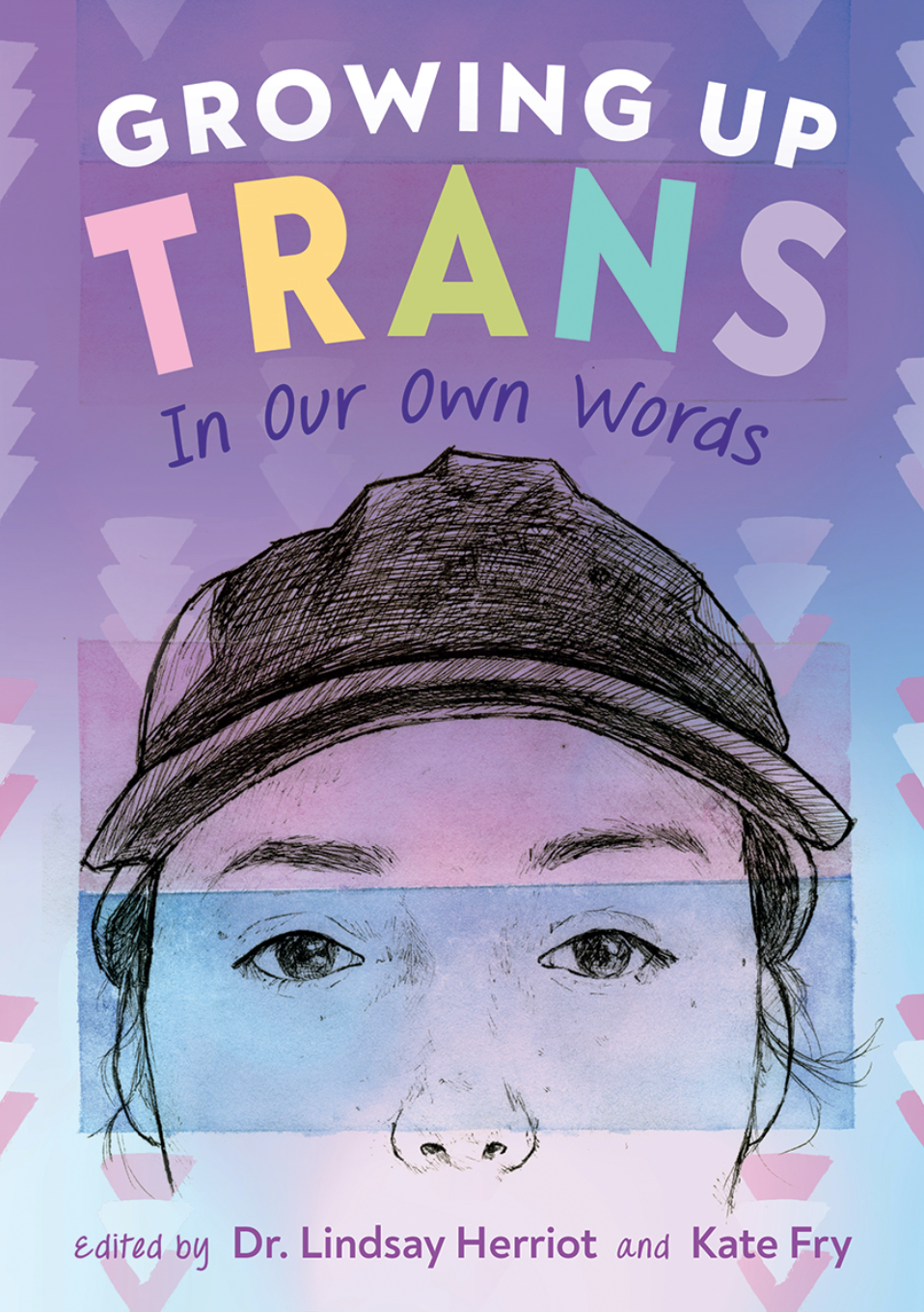

Growing Up Trans: In Our Own Words
Edited by Dr. Lindsay Herriot and Kate Fry
Orca Book Publishers
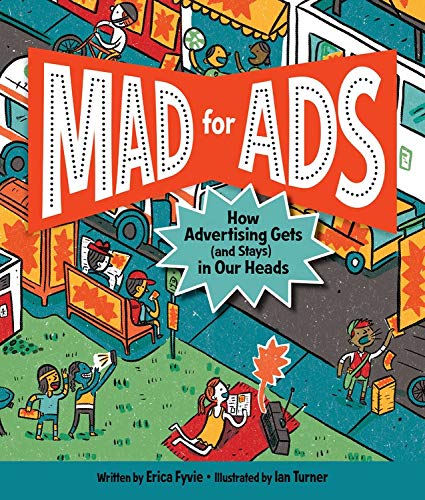

Mad for Ads: How Advertising Gets (and Stays) in Our Heads
Written by Erica Fyvie
Illustrated by Ian Turner
Kids Can Press


The Power of Style: How Fashion and Beauty Are Being Used to Reclaim Cultures
Written by Christian Allaire
Illustrated by Jacqueline Li
Annick Press


Geoffrey Bilson Award for Historical Fiction for Young People


Dear Peter, Dear Ulla
Written by Barbara Nickel
Thistledown Press


Elvis, Me, and the Lemonade Stand Summer
Written by Leslie Gentile
DCB


Second Chances
Written by Harriet Zaidman
Red Deer Press
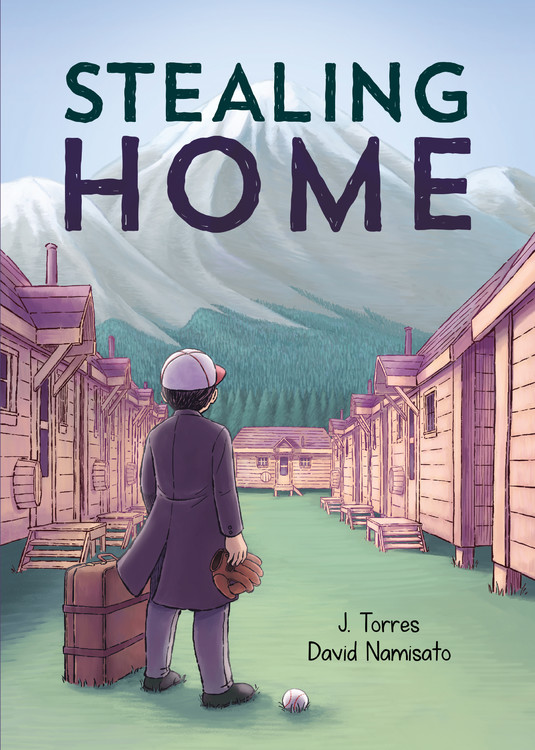

Stealing Home
Written by J. Torres
Illustrated by David Namisato
Kids Can Press


Traitors Among Us
Written by Marsha Forchuk Skrypuch
Scholastic
Reviewed here


Amy Mathers Teen Book Award


Blood Like Magic
Written by Liselle Sambury
Margaret K. McElderry Books


If I Tell You the Truth
Written by Jasmin Kaur
HarperCollins


Iron Widow
Written by Xiran Jay Zhao
Penguin Teen Canada


Misfit in Love
Written by S.K. Ali
Salaam Reads
 

The Project

Written by Courtney Summers
Wednesday Books


Jean Little First-Novel Award


Elvis, Me, and the Lemonade Stand Summer
Written by Leslie Gentile
DCB


Living with Viola
Written and illustrated by Rosena Fung
Annick Press
 

Thanks a Lot, Universe
Written by Chad Lucas
Amulet Books


Arlene Barlin Award for Science Fiction and Fantasy


Blood Like Magic
Written by Liselle Sambury
Margaret K. McElderry Books  
 

Hunting by Stars: A Marrow Thieves Novel

Written by Cherie Dimaline
Penguin Teen Canada
 

Iron Widow

Written by Xiran Jay Zhao
Penguin Teen Canada


Sisters of the Snake

Written by Sarena Nanua and Sasha Nanua
HarperTeen


Spell Sweeper

Written by Lee Edward Födi
HarperCollins


David Booth Children’s and Youth Poetry Award
 

The Book of Selkie

Written and illustrated by Briana Corr Scott
Nimbus Publishing


A Great Big Night

Written by Kate Inglis
Illustrated by Josée Bisaillon
Nimbus Publishing


I Talk Like a River

Written by Jordan Scott
Illustrated by Sydney Smith
Neal Porter Books


Our Corner Store

Written by Robert Heidbreder
Illustrated by Chelsea O’Byrne
Groundwood Books


Summer Feet

Written by Sheree Fitch
Illustrated by Carolyn Fisher
Nimbus Publishing


 📚📚📚

The winners of these awards will be announced on September 29, 2022 at a ticketed event at Harbourfront but also via a free streamed event (register at https://festivalofauthors.ca/event/ccbc-2022-awards-ceremony/) in partnership with the Toronto International Festival of Authors.


September 07, 2022

Do You Wonder?

Written and illustrated by Wallace Edwards
North Winds Press (Imprint of Scholastic Canada)
978-1-4431-8276-8
32 pp.
Ages 3-8
September 2022

We all wonder and ask questions. Sometimes it's about the small things like what we'll have for dinner that night or sometimes it's about bigger things like whether we're making the right decisions. And occasionally some of us ask the really monumental questions about the universe. Regardless, they are all important because these questions make us mindful of what we and others are experiencing which can only lead to greater compassion, understanding and creativity. Award-winning author and illustrator Wallace Edwards guides us through some important questions to reveal what it is we may be wondering about.
From Do You Wonder? by Wallace Edwards
In a series of single-page and double-page spreads, Wallace Edwards tells young readers some of the things he has wondered about. 
Sometimes I wonder about the mysteries of the sky. 
Sometimes I wonder why some songs make me happy.  
Sometimes I wonder how to join the conversation.
These ponderings are all ones that we have. But then Wallace Edwards takes on bigger inquiries.
Sometimes I wonder if I'm in the right puppet show. 
Sometimes I wonder who was here before me.  
Sometimes I wonder if I really see what I think I see.
The depth and breadth of his meditations run the gamut from the playful (e.g., Sometimes I wonder where the banana went) to those of self-awareness (e.g., Sometimes I wonder if I can finish what I've started) or global awareness (e.g., Sometimes I wonder who decides what is important). His thoughtfulness is profound and I stopped on many pages to ponder the answers. I often had none but the wondering was sufficient. It required a focus to the question and a mindfulness of all that it encompassed. The answer was not necessary; what was important was the curiosity and the inquiry.
From Do You Wonder? by Wallace Edwards
Ah, but this is Wallace Edwards, winner of the Governor General's Literary Award for Illustrations and numerous other picture book awards, so the text is married to extraordinary artwork, rendered here in pencil, watercolour and gouache. Even without the text, the art would be sublime, detailed in its depictions of animals that range from a barn owl, alligators, a rhino and elephants to a variety of bird species, as well as in the scenes filled with balloon animals, ice cream, vegetation and ornate furniture. There is so much to look at and to delve into. (Check out the faces in the forest on the cover of Do You Wonder? for a sampling.) But it's not "just" the art. It's the way Wallace Edwards's words are interpreted in his art. For example, the text "Sometimes I wonder why some things seem so difficult" is paired with a porcupine struggling to create balloon animals, having popped numerous balloons that hang off of his quills. Readers can think about challenges in their own lives, whether a struggle with school or with friends and family or even with health. But the artwork asks young readers to look beyond themselves and recognize that others too have challenges that may not be obvious until they are exposed. Of course a porcupine would struggle with balloons! But until I saw that illustration, it never occurred to me.
From Do You Wonder? by Wallace Edwards
Thank you, Wallace Edwards, for helping us see ourselves and others and beyond ourselves. Thank you for inviting us into your considerations and encouraging us to do the same. And thank you for reminding us that there are somethings, like love, that never need to be questioned.

September 05, 2022

Can You Believe It? How to Spot Fake News and Find the Facts

Written by Joyce Grant
Illustrated by Kathleen Marcotte
Kids Can Press
978-1-5253-0322-7
56 pp.
Ages 9-12
June 2022
 
With young people returning to schools soon here in Ontario, educators will be scrambling for great resources for teaching media literacy. Toronto's Joyce Grant has just that resource in Can You Believe It? How to Spot Fake News and Find the Facts.
From Can You Believe it? How to Spot Fake News and Find the Facts by Joyce Grant, illus. by Kathleen Marcotte
Using the best features of non-fiction texts, such as info boxes, labelled diagrams, a glossary, and important terms bolded, Joyce Grant covers everything from using critical thinking skills to search for clues of authenticity, looking for bias and understanding the importance of perspective, differentiating between facts, opinion, satire and ads, and clarifying new threats to credibility like clickbait, deepfakes and the proliferation of bots. First she introduces middle-graders to the concepts, giving them samples of news meant to sensationalize and draw in readers, before inviting them to practise their critical thinking skills. Can You Believe It? is a comprehensive examination of how to differentiate between the fake and the authentic, a tough endeavour with today's bombardment of news from all sources, including social media. To end, Joyce Grant offers lists of trustworthy sources, including websites and games, to help young people navigate the deluge of news offered on different platforms.
From Can You Believe it? How to Spot Fake News and Find the Facts by Joyce Grant, illus. by Kathleen Marcotte
The idea of fake news is a disheartening one as readers are manipulated or deceived for various purposes, especially for young people who have less experience with authenticating sources of information. (With the proliferation of fake news in recent years, we know how difficult it is for all adults to do the same.) But Joyce Grant adopts a positive take on this endeavour, encouraging young people that they can sieve through the detritus of fake news and highlight the real. She does it with a bit of humour–a few headlines like "Dog Lovers WAY Dumber than Cat Lovers: Study" or "Kids Are Better than Adults at Everything, New Study Shows" offer a chuckle or two–and thoroughness, and Kathleen Marcotte, an artist from Ohio, gives the text that added lift of colour, diversity, and scaffolding with her digital illustrations.
From Can You Believe it? How to Spot Fake News and Find the Facts by Joyce Grant, illus. by Kathleen Marcotte
Joyce Grant, co-founder of Teaching Kids News, has been talking to kids about the news for years, whether in the classroom or online. She offers links to legitimate sources and stories and proposes lessons to help build critical media literacy skills.  Can You Believe It? How to Spot Fake News and Find the Facts is just one more fine tool in her arsenal to help educators develop a foundation for teaching media literacy and for kids to be empowered to read the news with confidence.

September 01, 2022

Apartment 713

Written by Kevin Sylvester
HarperCollins
978-1-4434-6094-1
240 pp.
Ages 8-12
September 2022
 
That's what buildings do, Jake. They are like us, constrained by an arc. By time. They–and we–age and decay. They–and we–die. But how do we live while we live? That's the important question. (pg. 122) 
When Jake Simmons and his mom move into the Regency, it's because they've hit rock bottom. Mom has split from her partner Janice and lost her job as a legal secretary. To get back on their feet, the two move into the Regency, which Jake sees as a dump with its peeling paint, curling wallpaper, dust, grimy windows and worse. But, when he becomes acquainted with the original Regency, he recognizes that it is a true home.

Exploring the shambles that is the Regency, Jake makes the acquaintance of Danny, the superintendent, who knows all the residents and what they need. He introduces Jake to the elderly Lily in Apartment 405 whose cats are fed by Danny. Then there's the brilliant Professor who is so focused on her work that Danny cleans up her garbage and the elusive, baseball-loving Gus who won't leave his home. Danny is good about delivering and picking up Gus's mail as well as that of others like the piano-playing Theo in 501 and the enigmatic Delaney who lives somewhere on the seventh floor. These are just some of the odd assortment of residents of the Regency and Jake is happy to agree to be Danny's assistant and help with all his clients' needs. But then Danny gets a letter from a lawyer indicating that the long-term lease between the Regency and the city is set to expire and the residents will need to find another place to live. 
 
Soon after, the purportedly-broken call light for Apartment 713 goes off and Jake heads to the apartment he'd been told was off limits. Sure that someone inside is calling for help, Jake plunges into the apartment and into another world, one in which the Regency is in its infancy, hosting musicians, artists and other famous people while being a home to others. Believing that he was sent back to the 1920s to help save the Regency, Jake and his new-found friend, Beth, explore the mysteries that are hidden in the exclusive building, revealing more about its secrets, its history, and even its future.

Kevin Sylvester can illustrate (e.g., Super-Duper Monster Viewer), tell us sports stories (e.g., Hockey Super Six), entice us with food (e.g., Neil Flambé series) and inform with non-fiction (e.g., Gold Medal for Weird and Follow Your Money with Michael Hlinka) so it's no wonder that he can also write speculative fiction with a time-slip element.  Still Kevin Sylvester includes all those elements in Apartment 713. His artwork peppers the story and there are elements of baseball, food, and history that build on the basic premise of a child dealing with upheaval and trying to find home where it would appear there is none. While there is a very cool time-slip element to Apartment 713, the story is really about looking a little deeper: into a new place, into new friends, and into one's self. It's finding the wonders within and recognizing them for what they are. It's being the solution rather than complaining about the problem. It's finding home by making a home.

While Kevin Sylvester will always give us a good story, well-written and illustrated, often with humour and a light touch, there will always be more. He gently manifests important issues like LGBTQ (e.g., The Fabulous Zed Watson co-authored with Basil Sylvester) and resource monopolization (e.g., Minrs) and, with Apartment 713, there's a message about superficiality.  Hopefully young readers will see beyond the obvious, that old buildings may look like dumps and eccentric people appear to be odd but both are built on histories that make them unique and enrich lives with their presence.

August 29, 2022

Forever Truffle

Three Stories by Fanny Britt
Illustrated by Isabelle Arsenault
Translated by Susan Ouriou
Groundwood Books
978-1-77306-070-5
114 pp.
Ages 7-10
August 2022
 
In three stories, Fanny Britt introduces young readers to Truffle, a young red-haired wonder who adores music, falls in love and learns about figures of speech, and contemplates life in a very big and beautiful way. He is Forever Truffle, and occasionally Truffleletto.
From Forever Truffle by Fanny Britt, illus. by Isabelle Arsenault
In the first story, Truffle The Rock Star, Truffle explores his love of music. From childhood and listening to everything from Verdi to Joan Jett, the Beatles and Led Zeppelin, it's obvious that Truffle is a lover of music, especially rock, and he's thrilled when he gets a biker jacket for a birthday gift. Determined to be a rocker, Truffle gets together with best friends Flo and Riad to conceptualize their own rock band.
From Forever Truffle by Fanny Britt, illus. by Isabelle Arsenault
In the second story, Truffle Loves Nina, Truffle has fallen for little Nina. However, ever since he's asked her to be his girlfriend, he can't speak to her. When his father suggests he let his heart do the talking, Truffle tries to understand that figure of speech and many others so that he might express his love to Nina. 
From Forever Truffle by Fanny Britt, illus. by Isabelle Arsenault
The final story, Truffle Tackles Existence, has Truffle asking big questions when attending the funeral of his great-grandma Sybile. The visit brings up Truffle's thoughts on his parents' divorce, including his hope for reconciliation; on his love of dogs and missing their pup Rocket; and about growing old and dying. He's thoughtful and observant, kind and forever Truffle. 

Montreal's Fanny Britt does not do frivolous or cute but she does do real and that's what and who Truffle is. He's a real child who dreams and wishes and imagines, as well as loves, hopes and reflects. And he's got lots to think about, from his divorced parents, to his older brother, his loves and his good friends, to his aspirations and his life. His naiveté is authentic, not silly, and allows his inquisitive nature to learn lessons that all children will learn some time in their lives, some earlier, some later. 

Artist Isabelle Arsenault complements Fanny Britt's text, so expertly translated by Calgary's Susan Ouriou, with illustrations that emulate that sensibility of the story.  The artwork, rendered in pencil, ink and collage, are low key, tempered in doleful tones with splashes of yellow and orange and turquoise. After all, life is not all bright colours, bold in spirit and brash in tones. It's often just a plodding along of trying to understand and manage and find some brightness whenever and wherever possible. 
From Forever Truffle by Fanny Britt, illus. by Isabelle Arsenault
The collaboration between Fanny Britt and Isabelle Arsenault, as in Louis Undercover and Jane, the Fox and Me, has always been a powerful but subtle one of compelling stories of authenticity, told in words and pictures that depict children as they live. The complexity of their lives and their understandings are evident though not belaboured. Forever Truffle will forever be such a story.

August 24, 2022

It's My Body!

Written and illustrated by Elise Gravel
North Winds Press (Scholastic Canada)
978-1-4431-9650-5
32 pp.
Ages 3-8
September 2022

Elise Gravel has always used her quirky illustrative way to entertain while teaching STEM, from her Disgusting Critters series to The Mushroom Fan Club and even her early graphic novel series Arlo & Pips. But in recent years, Elise Gravel's picture books have shown a proclivity for encouraging young readers to be respectful of self and others by demonstrating that we are more alike than our differences might suggest. In It's My Body!, Elise Gravel reminds us that our bodies are our own, to love and appreciate, even as they are different in shape, colour, ability and how we feel about them.
From It's My Body! by Elise Gravel
If we're going to talk about our bodies, we first have to recognize all the different kinds there are. Brilliantly, Elise Gravel gives us dozens of bodies, all unrecognizable as people but all representative of the myriad of human body types. Some have two legs, some do not. Some have ears, and some do not. Some are tiny, some thin, some pear-shaped, and others stocky. Some move by wheels and some with canes. And they can all do stuff.
From It's My Body! by Elise Gravel

What we choose to do with our bodies is up to us but Elise Gravel recommends that we honour them by keeping them healthy and happy with good food, activity, cleanliness, fresh air and rest. And she reminds us that "Nobody should touch your body in ways that you don't like" and we should respect that for others as well.
From It's My Body! by Elise Gravel

Without belabouring any one issue like inappropriate touch or hygiene, illness or diversity, disability or body positivity, Elise Gravel gives it all to us. She reminds us to be kind to ourselves and others and to appreciate our differences as well as our similarities. With her one-of-a-kind monsters, Elise Gravel makes us feel worthy and included, no matter what we can do, feel or look like. That will help children with the ideation of self-esteem, while also shepherding them to good mental and physical health. After all, as Elise Gravel's green-and-yellow-spotted character reminds us:
Thank you, BODY. Without you, I would be a NO-BODY!

August 22, 2022

Room for More

Written by Michelle Kadarusman
Illustrated by Maggie Zeng
Pajama Press
978-1-77278-252-3
32 pp.
Ages 5-8
June 2022

With fire season upon us, Room for More reminds us of the fragility of habitats and the vulnerability of animals to destruction too often wrought by humans, whether by carelessness or climate change. Fortunately, animal species such as the Australian ones Michelle Kadarusman has highlighted here do better than we do at showing compassion, generosity, flexibility and reciprocity.

From Room for More by Michelle Kadarusman, illus. by Maggie Zeng
Two wombats, Dig and Scratch, know that when they smell the smoke of a bushfire that they will be safe in their deep burrows. But when they hear other animals scurrying for safety outside, Dig offers them shelter, though Scratch keeps reiterating that, "There is no room." Still, Dig tells a wallaby with a joey in her pouch who was already succumbing to the smoke that, "We have plenty of room."
From Room for More by Michelle Kadarusman, illus. by Maggie Zeng
When Dig spots a koala clinging to a tree, he again helps a stranded animal, against Scratch's grumblings of limited space. When a tiger snake is spotted, there is much trepidation about a venomous snake that might bite but Dig is convinced the snake will behave.
From Room for More by Michelle Kadarusman, illus. by Maggie Zeng
Though very snug in the wombats' burrow, the motley group of animals survive until a rain comes and puts out the bushfire. But, with that rain, comes a new worry for the wombats whose home is in danger of flooding. However, their new friends find a way to reciprocate the relief provided, showing a generosity of spirit all around.
 
Australian-born author Michelle Kadarusman's "Author's Note" reveals that Room for More is based on the science that animals other than wombats would find safety in their deep burrows during the horrific bushfires of 2019-2020. Perhaps there weren't discussions between wombats about helping out or animals uniting to engineer an embankment, but Michelle Kadarusman reminds us that all animals, even unlikely allies, can cooperate for greater good and without compulsion for mutual benefit, though in this case that is exactly what happens.  Though the consequences of bushfires are often devastating, Michelle Kadarusman has emphasized a gentler story, that of animals surviving and by unusual means. And that's the good story. But Michelle Kadarusman also gives us the science of Room for More, providing a glossary of the species involved in the story as well as explaining important issues like climate change, environmental disasters and Australian Indigenous land practices.
From Room for More by Michelle Kadarusman, illus. by Maggie Zeng
That gentle touch to what is a heartbreaking and devastating circumstance is emulated in artist Maggie Zeng's digital illustrations. While there is an orange hue of fires and a pall of grey haze to the landscape, Maggie Zeng does not overwhelm the art with angry flames or blackened scenes of destruction. Instead, she takes us to a dry and warm setting that is softened with the kindness of benevolence. In her colours and shapes, Maggie Zeng offers generosity and compassion.

I know teachers will love to share this story with their students whether for STEM lessons regarding habitat, characteristics of living things, different world biomes or climate change or for character education centered on empathy and goodwill but at its heart it is a sweet story that goes beyond teaching by captivating readers and transporting them to other worlds. It would seem there's always room for another fabulous picture book on the youngCanLit shelves.