May 09, 2022

The Tunnel

Written by Sarah Howden
Illustrated by Erika Rodriguez Medina
Owlkids Books
978-1-77147-427-6
32 pp.
Ages 4-8
March 2022

Something bad has happened. There is much concern for the child, with his mother offering hugs and his aunt asking him if he's okay. But the boy doesn't want to talk about. What he does want to do is dig a tunnel and crawl inside. So he does.
From The Tunnel by Sarah Howden, illus. by Erika Rodriguez Medina

Taking a small plastic shovel, the child starts digging into the floor of his bedroom. Deep, deep he digs, excavating a meandering tunnel that encounters worms and beetles and moles and more.  

From The Tunnel by Sarah Howden, illus. by Erika Rodriguez Medina
It's dark down there but I don't mind.

In fact, the boy realizes, after he comes up to the surface outside his home, that no one knows that he's out there.

I could just disappear.

From The Tunnel by Sarah Howden, illus. by Erika Rodriguez Medina
That empowering thought is enough for the boy. He doesn't have to disappear right now. 

I'll go home for now, I tell myself.
But I can always come back.

By returning home after his jaunt, the child can now take comfort in his room and his mother's presence.

I think she knows I need a secret place.
She might have secret places of her own.
 
I think she knows we sometimes travel far away. 
Alone, where we don't have to talk.
I'm glad Sarah Howden never reveals to young readers what nature of bad this boy experienced. By leaving it open, it could be anything and thus relevant to any child who has felt a trauma. His response, then, could be theirs. They might recognize the need for a parent or concerned adult to try to help but not knowing how. Fortunately, Sarah Howden gives this child the freedom to choose what he needs: to be silent or to escape, whether figuratively or literally. 
 
There is starkness in his situation and in Sarah Howden's words, so the bleakness of Vancouver's Erika Rodriguez Medina's artwork mirrors that atmosphere. There's not much colour in this child's life right now, nor are there in Erika Rodriguez Medina's illustrations. It's pretty much black and white, with some grey and only minimal red. I'm sure that's how this child feels. Whatever has happened to him, it has turned his world into monotones, gradations of badness. There is some colour, not unlike the goodness that is shadowed in his life, but it is so close to him that he might not be able to see it until he can look at it from a distance, perhaps outside his house or himself.
From The Tunnel by Sarah Howden, illus. by Erika Rodriguez Medina
Sarah Howden could've given her picture book a happy ending in which the boy's distress is erased with his tunnel and the love of family but, let's face, that's not very realistic. Trauma does not disappear because of good intentions or diversions. But, both Sarah Howden and Erika Rodriguez Medina show us that there is some light and colour in his life and they make sure he sees it too.

May 06, 2022

The Not-So-Uniform Life of Holly-Mei

Written by Christina Matula
Inkyard Press
978-1-335-42488-4
288 pp.
Ages 8-12
April 2022

Twelve-year-old Holly-Mei Jones knows she needs to filter more. After she costs her class a pizza party when she reveals cheaters–she also loves following rules–and loses her best friend, Holly-Mei might have despaired but she's still hopeful about turning things around. Then her mom announces that they are moving to Hong Kong and without Holly-Mei's dearest grandmother, Ah-ma. So off they go: her mom to a posting as chief operations officer for Asia-Pacific for Lo Holdings International; her dad, a prof, to a leave and an opportunity to write; and Holly-Mei and her eleven-year-old sister Millie to the prestigious and very expensive Tai Tam Prep. 
 
As they begin their new lives, Holly-Mei is confident that this fresh start will offer her unique opportunities, particularly in making friends. Fortunately the girls' cousins, Rosie and Rhys, and Aunt Helen and Uncle Charlie already live in the same building complex and the twins are in Grade 7 of the upper school along with Holly-Mei. Tai Tam Prep, with its own beach, sailing club, tennis courts, organic vegetable garden, swimming pool with retractable roof, and restaurant-quality caf–the food, oh, the food!–may be the school of the rich and famous but it's also where Holly-Mei hopes to find new friends. Among those she meets, there's queen bee Gemma Tsien, daughter of a toy factory magnate and a former film star; her sidekicks Rainbow Hsien and Snowy Wong, a YouTuber; Jinsae Kim; Henry Lo, of the Lo family of mom's company; his cousin Theo Fitzwilliam-Lo; and Dev Singh, a skilled field hockey player. But as she meets new people and works hard to fit in, she is reminded constantly by her mother that this is her opportunity to meet "the right people" and to always make a good impression. It's all about giving the family face i.e., honour and respectability.
"Guanxi, my darlings, is the Chinese word for connections, but it's so much deeper that that. It's not just knowing someone. It's about trust and loyalty. Opportunity." (pg. 113)
Of course, with her tendency to blurt things out and need to adhere the rules as she knows them, Holly-Mei has a few fumbles. Worse yet, they happen while she is working with a small group of her peers for a performance to celebrate the opening of the new Tsien Wing, named for its benefactors, Gemma's family. Holly-Mei is reminded of Ah-ma's Taiwanese saying ku jin gan lai which means bitterness finishes, sweetness begins, but she's starting to see that sometimes someone is "seemingly sweet like chocolate but bitter like raw cocoa." (pg. 125) Can Holly-Mei make some new friends, not alienate others with her unfiltered comments, and uphold her own family's standing in this new and very different society?
 
If you blended "Crazy Rich Asians" with "Mean Girls," you'd have The Not-So-Uniform Life of Holly-Mei. It's the opulence of a wildly wealthy community and the tricky family expectations experienced by a group of preteens trying to find their ways with each other and their families. The struggles of Holly-Mei and her peers may be familiar to young readers but set in the gloriously exotic Hong Kong, rich in architecture, history and culture, The Not-So-Uniform Life of Holly-Mei becomes an incomparable story. Many, nay most, young readers will not be familiar with affluence depicted but they will know about messing up, fitting in and pleasing their families. They'll know that things don't always go smoothly and sometimes they work out well and that how things turn out may or may not be up to them. But, like Holly-Mei, they have some of the means to make things right to move from bitterness to sweetness. 
 
This is Christina Matula's debut children's book and her "Author's Note" suggests she knows much about what Holly-Mei lives. Christina Matula's Chinese heritage comes from her mother's Taiwanese side while her father is European–Holly-Mei's is British, Christina Matula's Hungarian–and the opportunity to live abroad is part of her background. She brings that familiarity with being biracial and culturally diverse to Holly-Mei and several of her peers to help young readers understand the challenges of fitting in and being oneself while loving who you are as you are. Hopefully Holly-Mei will learn to grow into herself and be comfortable with who she is in possible later stories, as HarperCollins lists this book as A Holly-Mei Book: Volume Number 1, suggesting a sequel. Here's hoping we get to revisit Hong Kong and Holly-Mei and her family and friends soon to enjoy more tasty treats (two recipes append the story), take in a tourist attraction or two, and have some sensational fun.

May 04, 2022

As Glenn As Can Be

Written by Sarah Ellis
Illustrated by Nancy Vo
Groundwood Books
978-1-77306-468-0
40 pp.
Ages 4-8
April 2022

Who was Glenn Gould? To many adult Canadians, he was the classical pianist whose interpretation of Bach's Goldberg Variations is beyond comparison. For others, he is a bronze cast on a bench in front of Toronto's CBC building, where a studio is named for him. And to the world, he is a musical genius. But how did Glenn Gould become one of the world's finest musicians and also a man of some mystery? Now, with As Glenn As Can Be, young readers will know him as well.
From As Glenn As Can Be by Sarah Ellis, illus. by Nancy Vo

As a child and an adult, Glenn knew what he liked and didn't like. While these might seem incongruous at times, they made perfect sense to Glenn. He liked boats and being on the water but he didn't like fishing. He liked word play and pranks and humour but he didn't like when it was used to bully or humiliate. He liked the outdoors and nature but not the cold that came with it. (He might wear a coat, scarf, cap and gloves to the beach in summer to avoid it.) He liked reading and learning, but not school. And he had a love-hate relationship with rules. Rules that dictated math and puzzles and music were much appreciated. But rules that squashed him were not.
From As Glenn As Can Be by Sarah Ellis, illus. by Nancy Vo
But he loved playing the piano. 

Playing the piano is when Glenn gets to be totally and completely Glenn.

And everyone wanted to hear him play in concert. All over the world he was heralded as the virtuoso he was. Problem was that there were times when Glenn didn't want to perform. He didn't like the crowds who made noises, and coughed and sneezed. He didn't like cold concert halls. Finally Glenn found a way to make the music he and others loved while being true to his own likes and needs.
From As Glenn As Can Be by Sarah Ellis, illus. by Nancy Vo
Glenn Gould has always been a bit of an enigma to those who didn't know him well.  His passion for his music and playing of the piano were paramount to him but performance to large audiences did not support his needs for quiet, solitude and more. Instead of playing up his perceived eccentricities, Sarah Ellis lets us see Glenn Gould as a child and then an adult with likes and dislikes that direct his choices and preferences. She helps us all see him as human, and acknowledges that young children may feel different at times or be perceived as such but that doesn't mean they are less than others. Sarah Ellis demonstrates such a sensitivity to Glenn Gould's challenges of balancing what he likes and doesn't like that he only comes across as brilliant. Period. There is no "in spite of" anything or judgements. He was as Glenn Gould could be: exceptional in his art, individual in his likes and dislikes, and forthcoming in his needs. 

Vancouver's Nancy Vo's earlier picture books, The Outlaw and The Ranger, hinted at the greatness that she would bring to an picture book biography of Glenn Gould. Using pen and watercolour with acetone transfer, Nancy Vo has given gravitas to the story of Glenn Gould, not unlike the man himself. Emphasizing the earthy tones of browns, greys and blues, with only occasional splashes of gold, Nancy Vo gives Glenn Gould's life a weightiness–though not heaviness–that is occasionally brightened with light. It's easy to see Glenn as a child, listening to the radio during WWII, spending time with his many pets and engrossed in his piano playing. 
From As Glenn As Can Be by Sarah Ellis, illus. by Nancy Vo
As Glenn As Can Be cannot possibly tell us everything about Glenn Gould, though Sarah Ellis's afterward and notes to help kids and adults learn more about him bring us a little closer to understanding him better. It's easier to appreciate a great man when we can witness how he balanced his needs and wants against his dislikes and obligations. Though As Glenn As Can Be doesn't speak about the end of his life, it is reassuring to know that the music that he made and made him will live on for generations, and now this book will help do that too.

April 29, 2022

Love is for Roaring

Written by Mike Kerr
Illustrated by Renata Liwska
Bloomsbury
978-1-68119-124-9
32 pp.
Ages 4-8
January 2022

While I probably should have reviewed this lovely picture book in January when it came out so that it would be ready for Valentine's Day, I think that books about love in all its forms are important all year round, don't you think?

From Love is for Roaring by Mike Kerr, illus. by Renata Liwska
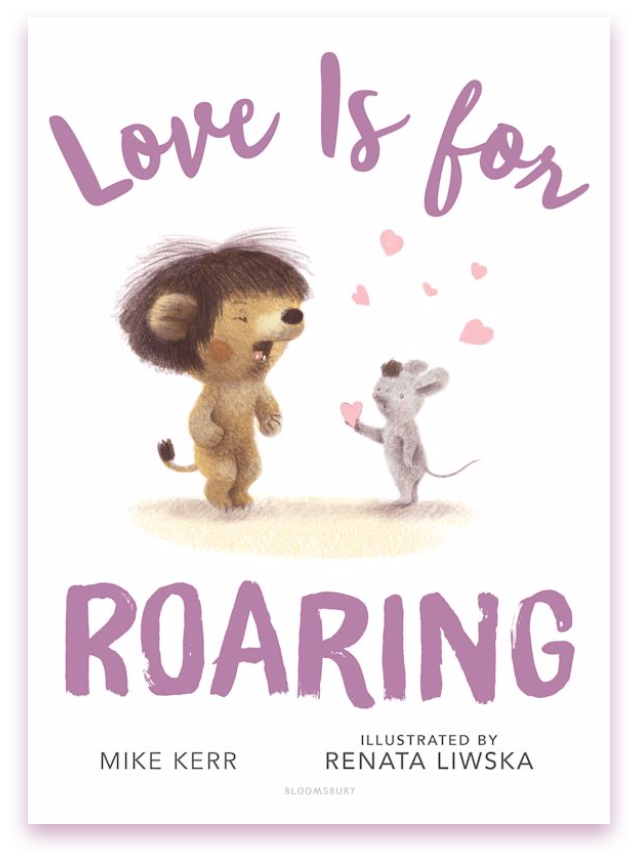
At school, the animals are given the assignment of showing their love as a crafty card. But this work distresses Lion who is perplexed by what is required.  Mouse can see the stress this causes Lion and tries to draw out of Lion what he understands love to be and what he might love. But that doesn't go well. Everything Mouse suggests, from hugs and kisses and sweet treats, are negated by Lion whose experiences with or perceptions of those are aggravating.
From Love is for Roaring by Mike Kerr, illus. by Renata Liwska
Finally when Mouse suggests activities like running and playing, roaring and chasing, Lion realizes that there are many things he loves doing, including being and having a friend.
From Love is for Roaring by Mike Kerr, illus. by Renata Liwska
As teachers, we know that understanding any assignment relies on both the teacher's ability to explain it and the student's ability to make connections with it. It's no wonder that Lion, a fearless creature, finds the homework assignment to "Show your Love" to be "impossible, the undoable, the unimaginable" and it causes him much anxiety. Thankfully Mike Kerr gives Lion a friend in Mouse, an animal with infinite wisdom and the patience to help Lion see that love is possible and even familiar. Mike Kerr may be an instructor of illustration at the Alberta University of the Arts but the text of Love is for Roaring suggests that he has the right words to tell a story beyond the artwork. Lion's distress is palpable as is Mouse's concern. And Renata Liwska's illustrations elevate the story with something special. It's a mixture of soft colours, cushioned textures and recognizable body language. From frustration to solemn introspection and playful exertions, Lion and Mouse and their classmates are the children who will read this book and see themselves within the digital artwork. They will know about frustration and wanting to help a friend. They will know distress and confusion and the relief of resolution. Love is for Roaring may be every child's story of uncertainty about school work and finding a connection where one might not have been evident initially.

April 27, 2022

Last Week

Written by Bill Richardson
Illustrated by Emilie Leduc
Afterword by Dr. Stephanie Green
Groundwood Books
978-1-77306-566-3
64 pp.
Ages 9-12
April 2022

Last Week is a sombre little book. It is based on the last week of a child's grandmother, affectionately called Flippa, as she with her family prepare for her death via Medical Assistance in Dying (MAiD). It is sombre because of a child's recognition of time passing swiftly before that death in a week of six hundred four thousand and eight hundred seconds or in the seven chapter days.
From Last Week by Bill Richardson, illus. by Emilie Leduc

This last week begins with Monday and with a child and their father flying across the country to be with the parent's mother during her last week. The child recalls how Flippa used to swim every day in the sea, walking in her wet suit, goggles and flippers the three blocks to the ocean. But no more. Because Flippa always felt it was important to make every second count, the child does that with the seconds they have left with her, chatting while she rests in bed, trying to make her laugh, and more.

From Last Week by Bill Richardson, illus. by Emilie Leduc

Visitors come and bring food and stay to chat and cry and reminisce. When Flippa feels well enough to come out of her room, she recalls being there for the child's birth. Now they will be there for her, "For when I'm set free," she declares. A visit from the green grocer, Mr. Bark, has the two ribbing each other about the tomato plants she'd bought from him having not produced any tomatoes. It's all very low-key with everyone knowing that Flippa's end is near but rarely really discussing it directly. With Flippa's doctor scheduled to come Sunday at 11 a.m. and administer the trio of medicines, the conclusion of that last week is imminent, and the child finds a way to be with Flippa, connect with her and even share a good-bye gift.

From Last Week by Bill Richardson, illus. by Emlie Leduc
Bill Richardson has written a story of such elegance in Last Week. The death of a grandparent can be one of the first significant deaths a child can experience, except for that of a pet, but a scheduled death is a whole different issue. With that last week, the child understands the momentousness of that juncture while preparing for a loss, appreciating every moment and witnessing others' responses. Bill Richardson keeps the story from the child's perspective and what they see, feel, hear, and know. By doing this, it becomes the child's story, not about the death. In fact, Flippa's death is never revealed though readers will know it was impending and unavoidable. That inevitability permeates the story and the child's narration of it but this child does not manifest the same grief as their father or the other visitors. After all, grief for the dying or the dead is different for all. For this child, it's making those seconds count with support and love, easing Flippa through that last week in their own way.
From Last Week by Bill Richardson, illus. by Emilie Leduc
While it is an illustrated chapter book, Last Week is not awash in the colour or boldness of art. Emilie Leduc's illustrations are stark and hushed. The black, grey and white palette keeps the tone of the story soft and quiet. Even though Flippa's last week is busy with visitors and family, those moments are important but fleeting, not unlike the art. Both Bill Richardson and Emilie Leduc can do bright and cheerful, humorous and busy. (Check out Bill Richardson's The Alphabet Thief or Hare B & B and Emilie Leduc's All Year Round.) But they set the tone of the book with their words and art, making Last Week important in its dignity of story message –which includes an Afterword by Dr. Stephanie Green about assisted dying–while taking the opportunity to introduce young people to an important end-of-life discussion.

April 26, 2022

Finding Moose

Written by Sue Farrell Holler
Illustrated by Jennifer Faria
Pajama Press
978-1-77278-244-8
32 pp.
Ages 3-6
April 2022

Sue Farrell Holler and Jennifer Faria first introduced us to this grandfather and grandson in their first picture book collaboration, Raven, Rabbit, Deer (2020). That winter walk, which demonstrated a solid and heartfelt inter-generational relationship, was the means for teaching Ojibwemowin vocabulary related to the natural world and for connecting between people and place. Finding Moose strengthens that mission but now the two companions venture out into the early spring when cold and ice give way to buds and awakenings and they can search for a moose (mooz).
From Finding Moose by Sue Farrell Holler, illus. by Jennifer Faria
As they walk, Grandpa instructs the child to be mindful of the noise he makes, the sounds in the forest, the evidence of life and more. 
Soft footsteps and gentle voices.
Quiet as mice and rabbits and deer.
With patience and attention, Grandpa points out moose droppings and nibbles on branches where the moose ate. As they walk and sit and watch and listen, the two are a study of differences and similarities. Old and young, still and active, teacher and student. And there is much to experience in the woods.
From Finding Moose by Sue Farrell Holler, illus. by Jennifer Faria
The child reasonably connects all that his grandfather points out with his own experiences. The chewings of the beaver (amik) reflect his biting of an apple. The softness of the pussy willows (ziisigobimizhiig) bring to mind kittens. And he notes that they are only finding only boy prints and Grandpa prints, not moose footprints. But after much scrutiny, including the spotting of chipmunks, geese, woodpeckers, tiny purple flowers and rosehips (oginiig), the two head home, accepting that today would not be a day to find moose. Or would it?
From Finding Moose by Sue Farrell Holler, illus. by Jennifer Faria
Finding Moose is as contemplative and instructive as Sue Farrell Holler and Jennifer Faria's earlier picture book. Sue Farrell Holler gives Grandpa the wisdom of age and experience and the boy that of fascination and connection. Together they experience nature fully but perhaps in different ways. A walk in the woods becomes a sensory adventure without the drama and high-octane action that can be tiresome and ephemeral. Instead, the two walk and look. They are one with each other and the world. That patience and calm is carried with Jennifer Faria's illustrations. Her acrylic paintings are often reflective of a Woodland Art style (see the flowers in the illustration above), emphasizing line and shape and keeping the story grounded in tranquility and reality. Even her choice of colour expresses that oneness with nature, playing the browns and blues with occasional flashes of red or a shamrock green.

From endpapers of Finding Moose by Sue Farrell Holler, illus. by Jennifer Faria
For a lovely early spring walk, learning about nature and being introduced to words in Ojibwemowin, join an Anishinaabe grandfather with his grandson to see how forest life reveals itself and search for an elusive mooz.

April 21, 2022

Martin and the River

Written by Jon-Erik Lappano
Illustrated by Josée Bisaillon
Groundwood Books
978-1-77306-444-4
36 pp.
Ages 3-6
March 2022
 
As Earth Day nears, we need to consider that the experiences of young people with the natural world will be quite different depending on where they live. But, if Martin and the River shows us anything, it's that it doesn't have to be that way.
From Martin and the River by Jon-Erik Lappano, illus. by Josée Bisaillon
Martin lives in a rural community where the river and its environs are more than just the landscape of his life: they are his companions. He watches the frogs, great blue herons and crayfish. He knows the behaviour of the otters and osprey. Countless hours are spent at the river that runs through the fields behind his house. Then a new job moves the family to the city.
From Martin and the River by Jon-Erik Lappano, illus. by Josée Bisaillon
As Martin prepares to leave the river and its life force, he seeks a plan to help. But it's not until his parents take him for a visit to the city, with its subway, museum, and its own natural area that Martin finds a way to bring the river to the city with him.
From Martin and the River by Jon-Erik Lappano, illus. by Josée Bisaillon
Story from Jon-Erik Lappano? Art by Josée Bisaillon? I was already sold on Martin and the River. I knew it would be impactful and it is because it touches on big ideas of adapting to change and of our relationships with nature. Every child will experience some change in their lives, especially the leaving behind of the familiar and going to the unknown, whether it be home, family or school. How they deal with that change is important in determining how disquieting the transition will or will not be. Martin may be a resilient child but change is still change and leaving behind his beloved river was going to be hard. Thankfully he and his parents knew enough to help make that transition smoother by finding another river for him to embrace.

Beyond the concept of change, Martin and the River is a big story because of the child's relationship with the river and its elements, hence my choice to review this book for our upcoming Earth Day. For Martin, Earth Day is everyday. It's appreciating the natural world and its plants and animals and water. It's acknowledging how nature sustains us, especially spiritually. He was fortunate to be able to spend time communing with the river and experiencing the life within. But these experiences helped him to bridge a difficult transition because he was able to appreciate that another natural environment had much to offer as well, just different. 

And don't Josée Bisaillon's illustrations, blends of coloured pencil, pastels, gouache and digital art, just burst with the life of that river and the scenes of the city? From the lush greenery, golden fields and busy indoor and outdoor city scapes, Josée Bisaillon has taken us into Martin's busy brain, imagining, appreciating and feeling. Everything is big and bold and wild.

Not every child is fortunate to have a river as a friend, but I hope that every child finds their own natural element, as Martin did with his rivers, to underscore their lives and guide them with reflection, resilience and imagination.