June 12, 2019

I'm Worried

Written by Michael Ian Black
Illustrated by Debbie Ridpath Ohi
Simon & Schuster Books for Young Readers
978-1-5344-1586-7
40 pp.
Ages 4-8
June 2019

While I am loathe to call any book bibliotherapeutic, there is something reassuring and healing about Michael Ian Black and Debbie Ridpath Ohi's books that offer children a comforting perspective on common emotions with which they may be dealing. Here, they tackle, with great sensitivity and much humour, the worry that comes from dwelling on the future and the possibility that bad things might happen.
From I'm Worried, illustrated by Debbie Ridpath Ohi, text by Michael Ian Black
When Potato shares with his friends that he is worried, he may say it could be anything but he's visualizing snakes, spiders, a meteorite crashing to earth, a marauding T-Rex, an alien reading about cooking with potatoes, an erupting volcano, a pop quiz, and even a circus clown. Though he'd like the little girl to reassure him that nothing bad will ever happen, the insightful child knows that she cannot do so "because nobody know what's going to happen."
From I'm Worried, illustrated by Debbie Ridpath Ohi, text by Michael Ian Black
That, regrettably, gets Flamingo worrying too. So the girl gives them examples of when bad things did happen, from bruising to a struggle with peanut butter and even a broken arm, and reminds them that they survived and some good even came from those experiences.
All of those things were bad at first...
...but over time they turned out okay.
From I'm Worried, illustrated by Debbie Ridpath Ohi, text by Michael Ian Black
Unfortunately Flamingo's solution is to protect them in bubble wrap. Fortunately, when that goes awry, the girl's suggestion that living in the moment might be preferable to worrying about the future seems to work.

In our stressful lives of competitive activities, intense social media and uncertainty about the future, it's not surprising that children are now far more anxious about life than in generations earlier. We might wish their lives to be filled with more play and for them to demonstrate more resilience but we're not giving them that kind of a world. So, without preaching mindfulness, Michael Ian Black proposes simply "enjoying the now" and it seems that, with a few friends, anything can be tolerated.

Just as she did in I'm Bored (2012) and I'm Sad (2018), Debbie Ridpath Ohi's illustrations give life to Michael Ian Black's text. From the perceptive little girl with her flower barrettes and striped tights, to the fuchsia flamingo and the potato with dramatic eyebrows and even worry lines, Debbie Ridpath Ohi makes the simple detailed, giving spirit and personality through her bold palette and wobbly edges. (I don't know what it is about those edges that I adore. Maybe it's the depth or dimensionality they create but they make me smile.)
From I'm Worried, illustrated by Debbie Ridpath Ohi, text by Michael Ian Black
There will be, of course, some children for whom I'm Worried will not be enough to allay their worries. However, for many, the lesson that living in the moment, enjoying the goodness of friends and the immediacy of the task at hand, will be enough to ground and hopefully help endure the unknowns of the future.


June 11, 2019

My Puppy Patch

Written by Theo Heras
Illustrated by Alice Carter
Pajama Press
978-1-77278-080-2
24 pp.
Ages 3-6
June 2019

Getting a new pet is a great responsibility and I am delighted that this bright child takes that responsibility seriously now that Patch has joined their household.  Patch, obviously so named for her intriguing dark spot around her left eye, is a clever puppy who has already learned the commands to sit, stay down, come, roll over and stay. But she is young and occasionally distracted.  Still the little girl knows it's a big day because today Patch will be taken outside the fence for a walk.
From My Puppy Patch, illustrations by Alice Carter, text by Theo Heras
The two friends go for a walk and, though Patch explores and plays with Benny's puppy Smallfry, she always comes when called. It becomes evident that the puppy has learned a lot, just as her girl has, knowing to be cautious of other dogs, giving the puppy love, water, a bed, treats and all the things that are right for a young dog.
From My Puppy Patch, illustrations by Alice Carter, text by Theo Heras
For families getting a new dog, Theo Heras gives some excellent advice about canine care, and this little girl is doing it all right, understanding that Patch has basic needs for health and well-being but also for learning and emotional care. Their relationship is certainly one of friendship but the learning goes both ways as the child shows flexibility in her expectations and as Patch's skills in following commands are reinforced.
From My Puppy Patch, illustrations by Alice Carter, text by Theo Heras
Ottawa artist Alice Carter preserves the lightness of Theo Heras's message about the interrelationship between child and puppy by keeping her illustrations bright and colourful and her characters effusive in their expressions. There's play in the artwork and it reflects the affection and enjoyment the two have for each other and in their outing. 
From My Puppy Patch, illustrations by Alice Carter, text by Theo Heras
For children taking on the responsibility of a puppy, My Puppy Patch emphasizes the joys and only occasional but natural missteps as part of the process of learning to cultivate a solid relationship between child and dog. It may be work, like any education, but it's worth it.

June 10, 2019

The Center of the Universe

Written by Ria Voros
KCP Loft (An imprint of Kids Can Press)
978-1-5253-0038-7
512 pp.
Ages 14-18
April 2019
...we slam into people around us, invisibly, all the time. Through things we say and don't say. What we do and don't do. That we are slowly changed by the constant bombardment. That we consume and are consumed, until we become products of our interactions, made of old and new parts, simultaneously broken and healing. (pg. 351)
When her mother, GG Carter, celebrity and news anchor, goes missing, seventeen-year-old Grace's world becomes warped, though not shattered. She'd already been arguing with her mother who is obsessed with her reputation and her work, often putting it before her family, even missing out on important events like Grace's astrophotography exhibit. (Grace is a budding astronomer, an active member of Star Club and a fan of Elizabeth Tasker.) Though Grace thinks her mother has been more stressed lately, it's evident that her mother has been keeping her cards close to her chest for awhile, and Dad even wonders if GG just needed some time away. But when Grace's dad gets a text from GG that reads "I'm not coming back. Don't look for me. Goodbye." (pg. 50), which he is convinced didn't come from her, Grace begins to pull memories and evidence together to learn what truly happened to her mother.

In tandem with her mother's disappearance, Grace is connecting with her crush, Mylo McLean, who has his own family issues including a powerful mother whose parenting causes him much stress. Together Grace and Mylo support each other knowing the struggle of having well-known mothers but, when Mylo admits that his father has been gone for five years and may be living on the street, the two realize that being in limbo puts them in a similarly unique place, the Perpetual Waiting Room (PWR).
He could sit in my PWR with me because we actually shared the waiting room. We were sitting against the same wall, staring at the same old magazines, waiting for different people to come through the door. (pg. 201)
The Center of the Universe may revolve around GG Carter's disappearance as her family struggles to learn what happened to her and then to reorganize upon her return home but she is not the center of Grace's universe. Her actions may impact her daughter but Grace exerts her own pull on those around her. While she may not realize her impact, she still draws others to her, including her young brother, her grandmother, her friends, her love interest and even her mother, and it's her story that Ria Voros has appropriately made the focal point. There is much discussion about perspectives and perceptions, especially with regards to GG Carter's back story, but Ria Voros makes Grace a compassionate and astute teen, especially as she attempts to process what she learns about her mother, while choosing what and whom she needs in her own life.

Ria Voros has written an extraordinary young adult novel about a mother-daughter relationship that is turned inside out but, first and foremost, The Center of the Universe is a coming of age for Grace as she learns who she is, with and without her mother, and that she is a star in her own universe.

June 06, 2019

Hello Humpback! and One Eagle Soaring

Hello Humpback!
Illustrated by Roy Henry Vickers
Text by Robert Budd
Harbour Publishing
978-1-55017-799-2
20 pp.
Ages 2-6
2017

One Eagle Soaring
Illustrated by Roy Henry Vickers
Text by Robert Budd
Harbour Publishing
978-1-55017-828-9
20 pp.
Ages 2-6
2018

After my last review in which I applauded the recently published Sockeye Silver, Saltchuck Blue, the third book in the A First West Coast Book series by Roy Henry Vickers and Robert Budd, I thought it imperative that I give some attention to the first two books. Published in 2017 and 2018 respectively, Hello Humpback! and One Eagle Soaring focus on their own concepts–these are concept books after all–but still with a Pacific Northwest flavour and honouring First Nations.
From Hello Humpback!, illustrated by Roy Henry Vickers, text by Robert Budd
Hello Humpback! celebrates a variety of West Coast features in Robert Budd's subtle rhyme and Roy Henry Vickers's illustrations. From animals such as the humpback whale, the salmon, the raven and a myriad of sea creatures such as the steelhead, ratfish and sea urchin, to plant life but also the land and the water, Hello Humpback! is a salute to the Pacific Northwest.
From Hello Humpback!, illustrated by Roy Henry Vickers, text by Robert Budd
Counting in One Eagle Soaring also becomes an homage to the wildlife of the British Columbia coast. In rhyming text, children can count one eagle, two moose, three orcas, four bees, five sea lions, six bears, seven swans, eight robins, nine frogs, and ten owls. But the text is far more sophisticated, emphasizing the actions undertaken by the wildlife and the development of vocabulary with words like pollinate, wander and serenade.
From One Eagle Soaring, illustrated by Roy Henry Vickers, text by Robert Budd
Robert Budd's text is as fluid as Roy Henry Vickers's art. One puts forth important ideas in understated rhyme and the other conveys it in rich colours and line that embed readers in a West Coast state of mind and heart. The effect is heartfelt but informative, with the stunning artwork both calming and still emotionally charged, incorporating both the traditional and the contemporary to full effect.

I urge all parents, grandparents and teachers of the very young to share the West Coast environs through Roy Henry Vickers and Robert Budd's trio of board books. There will be  learning about animals, numbers, colours and more but the discussions about place will teach even more.


June 05, 2019

Sockeye Silver, Saltchuck Blue

Illustrated by Roy Henry Vickers
Text by Robert Budd
Harbour Publishing
978-1-55017-870-8
20 pp.
Ages 2-6
May 2019

By their very nature, concept books i.e. those that teach concepts such as letters, numbers and colours must be simple in order for very young children to grasp the concept being highlighted. By simple, I mean straightforward and transparent, though some concept books embrace the idea of simplicity by being meagre and plain. Not Sockeye Silver, Saltchuck Blue.  It may focus on presenting a basic palette to children but it proclaims its artistry in a brilliance of sophistication and heritage.

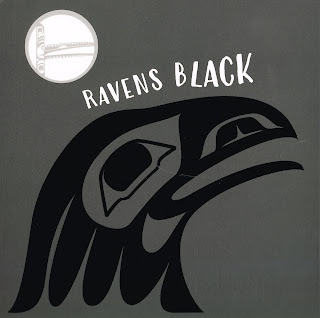
The colours of silver, blue, yellow, purple, red, orange, grey, black, white and green are clearly identified in each illustration but they are so much more than "just" a colour. They are part of the landscape of the Pacific Northwest. Its flora and fauna, its mountains and ocean, and its seasons become part of the art. From the "sockeye silver" of the adult salmon at sea, glorious under a silver moon, to the blue of the saltchuck waters flowing into a river and the yellow of the spring salmonberries, Sockeye Silver, Saltchuck Blue becomes a journey of place and seasons. Young readers will spot the purple sea stars resting on a rock, the red of the sunset, the sandhill cranes flying across an orange sky, and the whales in the grey mist of heavy rains. There are ravens black and a white ptarmigan in the snow, and the finale spread of "green lights aglow on a wintry night."
From Sockeye Silver, Saltchuck Blue, illustrated by Roy Henry Vickers, words by Robert Budd
 
The words are those of Robert Budd, accomplished author and champion of British Columbia's stories and history. They are concise but impactful, and any child living far from the BC coast will want to visit.

But the art makes Sockeye Silver, Saltchuck Blue the masterpiece it is. There is movement and richness in the colours, and the spot-gloss art is significant and memorable. Sometimes the glossy entity is bold and unmistakable, as in the black of the raven or the wolves howling beneath the northern lights. Other times, however, it almost can only be discerned by touch such as the thunderbird against the white snow or the totem poles hugging the coast of the saltchuck.

Roy Henry Vickers is a multi-talented Tsimshian artist who has excelled at printmaking, carving, music and leadership. His accomplishments have earned him many honours and even more accolades at home in British Columbia and around the world. With his gorgeous prints providing the art for Sockeye Silver, Saltchuck Blue, this concept book is elevated from teaching tool to showpiece.
From Sockeye Silver, Saltchuck Blue, illustrated by Roy Henry Vickers, words by Robert Budd
 ••••••••••••••••••

Look for my next post which will highlight the earlier two books in this series, Hello Humpback! and One Eagle Soaring.
First West Coast Books

June 04, 2019

The New Football Coach

Written by Dominique Demers
Illustrated by Tony Ross
Translated by Sander Berg
Alma Junior (Alma Books)
978-1-84688-435-1
96 pp.
Ages 6-9
May 2019

Miss Charlotte is back! The astounding woman who touched young lives with her unorthodox ways in The New Teacher (2016) and The Mysterious Librarian (2017) has returned and this time she has been recruited to coach the Black Duck Brook Football Club whose headmistress Paulette Pesky in in competition with her twin Yvette, headmistress at Blueberry Bay. In a turn of events, always the norm with Miss Charlotte, the question of "Who will win?" becomes "Does it matter as long as we're having fun as a team?"

The narrator of The New Football Coach is Jeremy who is hopeless at football, or soccer for North American fans, but whose father, owner of a Sports Plus store, is determined that his son will play. When Miss Charlotte comes along and begins her lessons with how to lose and talks to her football, whom she calls Anatole, top scorer Fred Ferocio ridicules her approach but, for the first time, Jeremy is enjoying himself. After she invites new team members, including Jeremy's non-athletic friend Billy Bungalow and others whom Fred classifies as rubbish, to join, Miss Charlotte's coaching involves the kids getting to know their own footballs and developing their own strategies as well as offering them a special and delicious drink called smalalamiam. Will it be enough for them to win their match against Blueberry Bay?

Miss Charlotte has the right idea about playing team sports.  She recognizes that
the best team is not the one which scores the most goals. It is the team that has the most passion, the most enthusiasm, the most positive energy. (pg. 51)
Any team could benefit from this wisdom and the Black Duck Football Club does as well. The other team may be all about the drive to win, even deliberately injuring a competitor, but they have nothing on Jeremy's team of have fun pushing forward with song, gymnastics and secret codes.

Dominique Demers's Miss Charlotte books, originally written in French, are filled with silliness and wisdom, lessons and heart. They are ideal for early readers, blending fun storytelling with positive messages. For young children trying to learn right from wrong, Dominique Demers's Miss Charlotte provides the right kind of guidance. It may be somewhat unconventional, not unlike Mary Poppins, but Miss Charlotte demonstrates that doing things differently may actually be better and, with the hype and intensity shown by some players, parents and coaches when it comes to sports, she seems to get it right.


⚽⚽⚽⚽⚽⚽⚽

n.b. For French-language readers, there are several editions of this series available, including one from Québec Amérique with seven volumes.

June 03, 2019

The Little Book of Big What-Ifs

Written and illustrated by Renata Liwska
Houghton Mifflin Harcourt
978-1-32876-701-1
32 pp.
Ages 4-7
May 2019

I like to think of Renata Liwska's new picture book as a consequential book of big ideas and hopeful opportunities. It's an opening to look at the world from different perspectives. In a world rife with dissension, isolation and fear-mongering, The Little Book of Big What-Ifs provides an opportunity for little ones to see the possibilities for turning that world inside out in a positive way.

Renata Liwska sees common worries that might plague children like What if you slept through your birthday? or What if you make a mistake? and turns them around into What if you're surprised? and What if we all work together? It would seem that, for every uncertainty, there is a possibility for goodness and hope and community.
From The Little Book of Big What-Ifs by Renata Liwska
Sometimes Renata Liwska presents the different perspectives in a double spread as in the example below in which What if you can't think of anything? could also be What if your imagination runs wild? Other times she addresses the two disparate perspectives separately, starting the book with more of the worries but ending it with the positives of What if everyone shared? and What if it spreads? before deviating from the questions and asserting What a difference it would make!
From The Little Book of Big What-Ifs by Renata Liwska
These big ideas, though, come through subtly and intimately, never preachy nor scarily. Renata Liwska's words pack meaning and consideration but at the right level for her audience. Similarly, her illustrations are profound in their quiet resolution of feeling. Perhaps it's because her pencil drawings, coloured via Photoshop, seem touchably soft, like pages of stuffies that include bears, lynx, elephant and mouse. Perhaps it's the emotion with which she infuses her characters, through expression and action. The reassurance the lynx feels from another after spilling milk, or the pleasure of the elephant sharing a radish sandwich with a mouse. Every illustration gives depth of feeling and sensitivity to children's unease about their world and daily events.  Fortunately, Renata Liwska's The Little Book of Big What-Ifs reassures, soothes and uplifts while still acknowledging those qualms as familiar and honest.
From The Little Book of Big What-Ifs by Renata Liwska