October 15, 2014

2015 Forest of Reading® nominees announced today


Young readers, their teachers, school-librarians, public librarians, authors, illustrators, and publishers have waited anxiously for this day, the day that the Ontario Library Association announces the nominees for the 2015 Forest of Reading® programs.  Now extending beyond Ontario, even more readers are enjoying new Canadian literature as part of the Forest of Reading® programs.

These readers' choice award programs invite teachers and librarians (school and public), as well as parents of home-schoolers, to sign up for these programs through the Ontario Library Association.  Once you've registered for the programs and purchase the books, young readers will be on their way to voting for their favourites in April.  

With over one hundred nominated titles, I have presented the nominees in multiple posts.   See the lists below for nominees for the different programs.


October 13, 2014

Gustave

by Rémy Simard
Illustrated by Pierre Pratt
Translated by Shelley Tanaka
Groundwood Books
978-1-55498-451-0
56 pp.
Ages 4-7
For release October, 2014

From the title page alone, Gustave evokes a rough darkness with its heavily-inked, coarse lettering and shades of colours with overlays of black.  There's black, black and more black. Sombre and fearful is how Gustave begins, with a little mouse overwhelmed by the loss of his dear friend Gustave when they venture too far from home and encounter a cat.  Gustave will not be returning home with the little mouse whose sorrow is well conveyed by the spare words of Rémy Simard's blunt text:
Gustave won't play with me anymore.
He won't tell me goodnight.
He won't look at me anymore.
(pg. 6)
But Pierre Pratt's illustrations, in ink and gouache, are the force by which the story of Gustave is told.  The double-page spreads of artwork, sometimes with few words, if any, overwhelm the story, just as the consequences of the little mouse's actions smother him with sorrow.  It is only in the last half-dozen pages of the story that the colours are able to seep through, ending with a single page of bright artwork opposite a white page of text. It is a bright, hopeful ending in both text and illustration.

Though I may describe Gustave as having a dirge-like quality, it is nothing but brilliant in its masterful picture book story-telling of a mouse grieving the loss of a friend.  I suspect that, even without the unexpected twist at the end, this story could not have been told any better than it has been by Rémy Simard and Pierre Pratt, thankfully translated by Shelley Tanaka so that so many more of us can appreciate it.

Gustave is currently nominated for a 2014 Governor General's Literary Award for Illustration in a French Children's Book. Bonne chance, Pierre Pratt!

October 12, 2014

The Gospel Truth: Book launch (Ottawa)


Governor General Literary Award-winning author
Caroline Pignat

is launching her latest book


The Gospel Truth

Red Deer Press
978-0889954939
328 pp.
Ages 12+
Released October 1, 2014

A novel in verse, The Gospel Truth takes the reader to a tobacco plantation in 1858 Virginia, and shares the interactions and perspectives of slaves, their masters and a visiting bird-watcher.


Visit 
Caroline Pignat

at

the All Saints Christmas Craft Fair
All Saints Catholic High School
5115 Kanata Avenue
Kanata (Ottawa), Ontario

from 9 a.m. to 4 p.m.


to purchase The Gospel Truth
do some Christmas shopping, and 
support a great cause.


Admission 
to the Christmas Craft Fair
with over 150 vendors
is 
$1 or a canned good


Proceeds from sales of The Gospel Truth
will be going towards
a school, Todo los Santos,
sponsored by All Saints DR Experience Team and the All Saints community. 


October 11, 2014

2014 Governor General's Literary Awards: Finalists announced

I know that I've created a blog just for book awards but I think that several major awards always bear mentioning on both blogs.  Here is an abbreviated posting about the recently-announced shortlists for the 2014 Governor General's Literary Awards. A full post is available at http://canlitforlittlecanadiansawards.blogspot.ca/2014/10/2014-governor-generals-literary-awards.html


The Governor General's Literary Awards are Canada's national book awards, honouring the best of our literature in seven categories, in both official languages.  On October 7, 2014, the finalists for the 2014 Governor General Literary Awards were announced on the Canada Council website. Below are the nominees for the children's literature awards for English and French texts and illustrations.


English Children’s Literature: Text 


Jonathan Auxier 
The Night Gardener 
(Penguin Canada)


Lesley Choyce 
Jeremy Stone 
(Red Deer Press)


Rachel and Sean Qitsualik-Tinsley 
Skraelings 
(Inhabit Media Inc.)


Raziel Reid
When Everything Feels like the Movies 
(Arsenal Pulp Press)


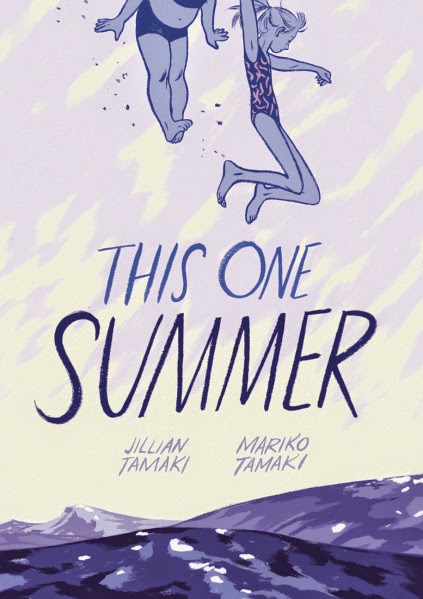
Mariko Tamaki 
This One Summer 
(Groundwood Books/House of Anansi Press)


English Children’s Literature: Illustration 


Marie-Louise Gay
Any Questions?
(Groundwood Books/House of Anansi Press)


Qin Leng
Hana Hashimoto, Sixth Violin
Text by Chieri Uegaki
(Kids Can Press)


Renata Liwska
Once Upon a Memory
Text by Nina Laden
(Little, Brown and Company)


Julie Morstad
Julia, Child
Text by Kyo Maclear
(Tundra Books)


Jillian Tamaki
This One Summer
Text by Mariko Tamaki
(Groundwood Books/House of Anansi Press)


French Children's Literature: Text 


Linda Amyot
Le jardin d'Amsterdam 
(Leméac Éditeur)


India Desjardins
Le Noël de Marguerite 
(Les Éditions de la Pastèque)


Patrick Isabelle
Eux 
(Leméac Éditeur)


Jean-François Sénéchal
Feu 
(Leméac Éditeur)


Mélanie Tellier
Fiona 
(Marchand de feuilles)


French Children's Literature: Illustration


Pascal Blanchet
Le Noël de Marguerite
Écrit par India Desjardins
(Les Éditions de la Pastèque)


Marianne Dubuc
Le lion et l'oiseau
(Les Éditions de la Pastèque)


Manon Gauthier
Grand-mère, elle et moi
Écrit par Yves Nadon
(Éditions Les 400 coups)


Isabelle Malenfant
Pablo trouve un trésor
Écrit par Andrée Poulin
(Éditions Les 400 coups)


Pierre Pratt
Gustave
Écrit par Rémy Simard
(Les Éditions de la Pastèque)


The winners will be announced on Tuesday, November 18, 2014 at http://ggbooks.ca/ 

October 10, 2014

Villains: Guest post by author Catherine Egan


I am quite thrilled to be helping author Catherine Egan launch Bone, Fog, Ash & Star, the final book of The Last Days of Tian Di series, with a review yesterday and a guest post today. Today's post, Isn't he scary? Isn't he beautiful? will be the first in her blog-series about villains. Check in at her blog for more details about these posts, including a giveaway that will accompany each.

Catherine Egan grew up in Vancouver, Canada, and wrote her first novel at age 6. It was about a group of kids on a farm who ran races. Each chapter ended with “Cathy won the race again!” Since then, she has lived in Oxford, Tokyo, Kyoto, a volcanic Japanese island that erupted and sent her hurtling straight into the arms of her now-husband, Beijing, an oil rig in China’s Bohai Bay, and now Connecticut, where she is still writing books (but Cathy doesn’t win every race anymore). Her first novel, Shade & Sorceress, won a 2013 Moonbean Children’s Book Award (Gold) and was named an Ontario Library Association Best Bet for 2012 in the Young Adult Fiction category.

You can connect with Catherine Egan through these social media links:

Website: www.catherineegan.com
Blog: bycatherineegan.wordpress.com
Twitter: @bycatherineegan
Facebook: https://www.facebook.com/byCatherineEgan


Now, I welcome author Catherine Egan


Isn't he scary? Isn't he beautiful?
by Catherine Egan

I was sitting at the big kitchen table writing, because that’s what I like to do, and my three-year-old was sitting next to me sticking toothpicks in a lump of play-doh, because that’s what he likes to do. He showed me his creation and said, “Look, it’s a spiky monster!” Of course it was a monster. He is all about monsters. Looking over his toothpick-spiked play-doh monster with immense satisfaction, he said: “Isn’t he scary? Isn’t he beautiful?” Yes, I said, yes, he is both of those things.

The first germ of an idea for the Tian Di books began with Eliza (my beloved heroine) and Nia (my beloved villain) in conversation and in conflict. I knew that they were in some kind of prison, but I didn’t yet know how they got there or even really who they were. Still, much of the scene I wrote is right there, barely changed, near the end of the the first book:

“Look at you,” said Nia with an affectionate little smile, not putting down her teacup. “Adorable! A child with the barest smidgen of Magic and the sad delusion that you could last five seconds against me.” She stood up and bent close to Eliza. Eliza could smell the sugary tea on her breath. “Well, little smidgen, you’ve come running straight into the only place left where I still have power, eager as anything, and now that you’re here, what fun we’re going to have!”

Nia was wonderfully freeing to write. Every scene she was in came so easily. She could say or do anything. I wanted her to be sympathetic but monstrous at the same time, and whether or not I succeeded for the reader I can’t say, but for myself, she was pure joy to write. I felt about her just as my little boy felt about his spiky play-doh monster. Isn’t she terrible? Isn’t she wonderful?

The best villains terrify us, yes, but they beguile us too. In the ultimate Good vs. Evil story, Milton’s Paradise Lost, Satan is so charismatic – his rage, rebelliousness and pride providing all the best poetry – that William Blake claimed Milton was “of the Devil’s party without knowing it.” While the Emperor in the original Star Wars trilogy is perhaps the truer villain, the movies are dominated by the terrifying figure of Darth Vader, who represents not only a physical threat but a spiritual one – the dark, seductive power Luke must resist, the evil good men fall may fall prey to. Volde… sorry, He-Who-Shall-Not-Be-Named is and will remain the uber-villain for generations of young readers – and he is all the more horrifying because he is so deeply connected to our beloved hero Harry. They may be complex, comic, or simply terrifying, but they captivate us, these villains. Think of Lady MacBeth, unable to scrub the blood from her hands; the murderous Captain Hook, smoking two cigars at once; Dracula, the bloodthirsty (sorry) seducer, setting off a love affair with vampire literature that has lasted more than a hundred years; Bluebeard with his roomful of murdered wives; the wicked witches and vicious stepmothers that make fairytales such dark fare; the Big Bad Wolf – as primal as it gets – all those teeth! The mad, the miserable, the megalomaniacal and the vengeful – villains have a way of swaggering onto the page (or the screen) and taking over.

The villain comes along and says to the hero: OK, now you have to be the hero, because here I am. Or maybe the villain whispers in the hero’s ear: You think you are the hero, but are you, really? Deep down, aren’t you just like me? Maybe the villain says, suddenly, at some crucial point in the story: Actually I am your father / mother / sister / lover – surprise! And then you (the hero) have to figure out what to do with that tangle of love and fear, of loathing and longing. Maybe the villain just thinks you look tasty and wants to gobble you up or drink your blood, and maybe some part of you actually takes that as a compliment, which is weird, but people are  weird. Maybe the villain is so unrepressed, so powerful, gleeful and sexy and leaving destruction in his or her wake, that you wish… I mean not really but you sort of wish that you could be like that too. That you didn’t care so much. That you didn’t feel so much.

It can be simpler than all that, of course. Maybe when the Big Bad Wolf opens his jaws and you see those rows of teeth, it is like staring at death, but at a remove – because this is a book, or a movie, or maybe your grandma is telling you the story, but anyway, it’s not real. That’s what you keep telling yourself under the covers at bedtime – it’snotrealit’snotrealit’snotreal – but you see this shadow move across the wall and you think you can hear something breathing.

I don’t have any grand philosophy about villains. I just love to write them, and I love to read them, and I recognize the same shivery pleasure in my children when we read some horrible tale and they huddle saucer-eyed on either side of me. Sometimes I’ll think, hmm, maybe this is a little too much, but we get to the end and I look at them and they look at me and they whisper: Read it again.

So I do.

 * * * * * 
This is the first in a blog-series about villains – you can follow along by checking my blog http://bycatherineegan.wordpress.com next week. Each post will include a giveaway. Let me know in the comments: who are your favorite fictional villains? Choose villains from books / movies / comic books / TV – just not real life! A winner will be selected by random number generator (I’ll post a screenshot) and I will send you a book bundle – all three books in The Last Days of Tian Di series – chock-a-block with villains and their villainy.
-Catherine Egan

October 09, 2014

Bone, Fog, Ash & Star: The Last Days of Tian Di, Book Three

Written by Catherine Egan
Coteau Books
978-1-55050-593-1 (pbk)
978-1-55050-594-8 (pdf)
312 pp.
Ages 9+
For release October 2014

When Catherine Egan began her high fantasy series The Last Days of Tian Di with Shade &Sorceress (Coteau, 2012), everything was new to twelve-year-old Eliza Tok: who: learns she is the Shang Sorceress, as were her mother and grandmother; discovers her Magic; clashes with the Nia, the entrapped Xia Sorceress; befriends Charlie, the shape-shifting Shade; and connects with Faeries, Mancers, Witches, Cra, Dragons,and other assorted characters.

Now turning 16, Eliza continues to study Magic with the Mancer Foss in the Great Sand Sea, the home of her father's people, the Sorma. After The Unmaking (Coteau, 2013), Eliza is loathe to have any part of the Mancers at the Citadel, most especially Kyreth whose aim has been to control her and her powers. Unfortunately, Kyreth has other plans, including sending fog-like assassins, the Thanatosi, to murder Charlie and force Eliza back to the Citadel, where he would orchestrate her marriage to a Mancer and ensure an heir, a new Shang Sorceress.

To keep Charlie safe (though he has now lost his ability to shape shift), Foss and Eliza take him and Nell to the Realm of the Faeries where Jalo, a Faery smitten with Nell, gives them sanctuary. Too bad Jalo's mother, Tariro, hates humans and is determined to murder Nell to keep her son away from her.

Foss and Eliza return to the Citadel, with Eliza ready to take on the war they've chosen with her.  Even with a new Supreme Mancer, Aysu, Eliza realizes that Kyreth is still at work.  Exploring, she discovers her grandmother and Kyreth's wife, Selva, alive but under a Curse. Granddaughter and grandmother help each other and Eliza is sent to gather the Four Gifts of the Ancients, the Gehemmis, one of which Selva had been stealing when cursed.

So begins Eliza's newest quest, to retrieve the four Gehemmis and learn of the Magic contained within, and to find her future, wherever or with whomever it may rest.

If Shade and Sorceress is all about newness, and The Unmaking looking deeper into those that appear to be good or evil, then Bone, Fog, Ash & Star is about loss.  It's about making choices that may cause pain to others or heartbreak to one's self, that may confuse or antagonize those who are your allies, and may result in turning one's back on the innocence and trust of youth.  While Eliza grows into herself as a Shang Sorceress, finally recognizing the Magic she can accomplish and the hard choices she must make, she has lost some of the wonder of her youth, the wonder that allowed her to share in new worlds wholeheartedly, regardless of the possible dangers.
"You don't remember the loss, not exactly, but you cling to those you love with such ferocity, you would die for them, because the memory of the first loss is buried within you, and it defines you." (pg. 240)
Nia may be pointing out Eliza's loss but others in Bone, Fog, Ash & Star will undergo similar experiences, ranging from small sacrifices and mishaps to life-altering ruin and the ultimate loss, death.  Nell, who'd been amazed at the grandeur of the Faery Realm's Illusions, begins to lose some of her wonder of the supernatural. Charlie, who loses that which defined him as a Shade, must find a way to reconcile that loss with what is left for him to be.  There's the Blind Enchanter who gave up his sight and song for seeing the Sparkling Deluder. And Rea, Eliza's mother, who gave up and still gives something important up to be with her husband.  Loss is the substance of life. It is only luck that keeps it at bay as long as possible. Or the pen of a true spellbinder, like Catherine Egan.

Though Catherine Egan does provide a short epilogue with a joyous scene to close The Last Days of Tian Di, the reader will also feel a great loss. It's inevitable. We've followed and cheered for Eliza, afraid for her goodness and choices, and longing for the love she feels to be realized.  After travelling alongside this young Shang Sorceress and woman through three epic volumes, we can only hope that her unwritten life is as prodigious as this written one has been.  For that, we can only thank Catherine Egan for the courtesy she has extended to us in sharing it.

*  *  *  *  * *  *
Check in tomorrow when CanLit for LittleCanadians welcomes author Catherine Egan for a guest post about villains titled, "Isn't he scary?  Isn't he beautiful?"

Now you have to read the whole series, don't you think?


October 06, 2014

The Wolf and Me: The Seven Sequels

by Richard Scrimger
Orca Book Publishers
9781459805316
256 pp.
Ages 10-16
For release October 1, 2014

Poor Bunny.  He's such a great guy but, often through no fault of his own, he gets himself immersed in the most unusual, even dangerous, situations.  In Ink Me (Scrimger, 2012), the prequel to The Wolf and Me, Bunny (Bernard, as only his grandfather called him) ended up with a tattoo indicating he was part of the 15 Street gang and that he had killed someone, all untrue.  Sadly he did get mixed up in some dangerous situations and is currently at Creekside, a young offender facility just outside of Toronto.  While Bunny is finding his time at Creekside useful, especially with the lessons he has with Mr. Wing to help him with his literacy (especially his spelling), he's not a troublemaker, and he's happy to have the holidays until New Year's with his family. Too bad he gets kidnapped while out skating with his brother Spencer at Toronto's City Hall.  See what I mean?  This kid has no luck.

While his hostage-takers demand to know about his grandfather, David McLean (though Bunny initially believes they're asking about "Mr. Clean"), the woman named Vi attempts to gain his confidence, offering to help him get a note to the police.  But Bunny learns of her deceit and manages to escape, setting off on an amazing skating adventure on the icy landscape, in search of Creekside, home, or just help.

Bunny may call himself "dumb" and "stupid" but he's very smart about putting all the little pieces of the puzzle together to make a comprehensive big picture.  He just doesn't have a lot of luck.  Sure that he's found Creekside, Bunny breaks into a juvenile detention centre for females!  As unfortunate as that may seem, that mistake puts him in a position to help others, even if it does complicate things.
"Here I am in my little life trying to deal with my troubles.  Some people are worrying about me and some are heping me and some are making it hard for me and all the time theres this–this–this gigantic ALL all around me.  It make me feel small but also grate full." (pg. 122)
Like the detention centre, there are many obstacles that impede Bunny's journey.  But he always finds a way to turn them into something positive, including an encounter with a wolf that allows him to connect with his grandfather.  And if anyone deserves a break in life, it's Bunny.

I'm delighted that Richard Scrimger was able to parlay Bunny's Ink Me fiasco into a second adventure that shows the teen's growth after incarceration at Creekside while providing both him and the reader the evidence that he's one of the good guys.  Bunny makes the best of that which life tosses at him, whether they're rocks or candies. Who else could manage to enjoy a hockey game with his captors and take advantage of his only footwear–a pair of hockey skates–to escape?  Bunny.  And I'm so glad Richard Scrimger gave him life.  He makes life better for all who meet him, fictional characters and readers alike.
"Life isnt about making sense.  Its a gift and you do your best with it." (pg. 190)