December 08, 2015

Delicate


by C. K. Kelly Martin
Dancing Cat Books
978-1-77086-452-8
230 pp.
Ages 14+
November 2015


Who wants to be called “delicate”? Porcelain dolls, maybe.  But the teens in C. K. Kelly Martin’s Delicate would be loathe to be called delicate, regardless of the challenges, physical and emotional, they have to endure.

Delicate is told in the alternate voices of second cousins, Ivy and Lucan, who haven’t seen each other in seven years since Lucan’s mother Sheri told her cousin Lisette, Ivy’s mom, about seeing Ivy’s dad with another woman at a hotel.  The two teens will become reacquainted at a 75th brithday party for a relative, but first they are involved in their own dramas.  Life is drama after all, isn't it?  Ivy is devastated by her boyfriend Jeremy’s break-up with her after 18 months together and learning that he’s hooked up with her best friend Betina.  And Lucan is dealing with his divorced mother’s embarrassingly physical relationship with Julian, a man much younger than her, as well as trying to negotiate his best friend Des’s volatile relationship with girlfriend McKenna.  After the family get-together, Sheri helps Ivy get a summer job at her merchandising firm which is just around the corner from the Mill Street Café where Lucan gets a job,  and soon the two teens are comparing and sharing their lives with each other and declaring themselves absurdly delicate, though they both have tremendous strengths that they still have not recognized.

Fortunately, they enjoy each other’s company (how much is surprising) and the fresh perspectives on their respective issues.  Ivy vacillates between longing, anger and vengeance with regards to Betina and Jeremy, by whom she has been infected with an STI, even getting Lucan involved in a dog-napping scheme, while Lucan begins to see the abusive nature of Des and McKenna’s relationship, enlisting Ivy’s help to defuse its volatility.

The tenuous nature of relationships is made very clear from the plethora within Delicate: Des and McKenna, Ivy and Jeremy, Ivy and Betina, cousins Sheri and Lisette, Lucan and Des, and so many others.  The relationships between boyfriend and girlfriend, friends, husband and wife, parents and children and other relatives are all so delicate in that any incident or series of circumstances could destroy or alter them, shattering them to shards that may or may not be reconfigured.  I spent most of the book worried that Lucan’s peanut allergy–which I incorrectly assessed as his delicacy–would be his downfall but I was mistaken.  That would’ve been too obvious and C. K. Kelly Martin is never obvious.  Her other books (My Beating Teenage Heart, 2011; Yesterday, 2012; Tomorrow, 2013; The Sweetest Thing You Can Sing, 2014) have always fascinated me by her analysis of the complexity of the human condition and Delicate takes that one step further by examining both the obvious and the unseen and showing the immensity of both in affecting our lives and the way we see ourselves.  More importantly, C. K. Kelly Martin exposes the ways we hurt each other, sometimes deliberately, some accidentally, and some through negligence, and provides an upfront perspective on dealing.  Maybe that's all you can hope for.  Thankfully C. K. Kelly Martin does reassure the readers that being Delicate is not an indictment, just human.

December 07, 2015

Mouse Pet

by Philip Roy
Illustrated by Andrea Torrey Balsara
Ronsdale Press
978-1-5530-443-7
32 pp.
Ages 4-8
September 2015

Happy the Pocket Mouse, introduced in Mouse Tales (2014) and revisited in Jellybean Mouse (2014), is back in his third adventure and this time he wants to share his happiness with a pet that he and his human John could take for walks and pat.

John listens to the little mouse’s wish and all the fun Happy is sure will be theirs but helps him to understand the significant responsibilities required of pet care.  In fact, Happy decides they should get a goat–even naming it Lola–and has an answer to every objection John makes. Fortunately, and with much affection, John suggests an alternative and one that makes everyone happy!

Happy the Pocket Mouse has a heart full of love and he shares it so completely with John that it only makes sense that he extend that love to another and maybe even another.  The dialogue that Philip Roy has created between Happy and John is so endearing and honest that the reader will feel privileged to eavesdrop on their affection and tender conversation.  With so much caring and compassion, you know that the resolution to their pet discussion will be a sweet one.


The text is so appealing and yet concise and emotive, and the illustrations by Andrea Torrey Balsara are just as charming.  It’s like drinking hot cocoa and eating sweet treats.  The anticipation is just as wonderful as the consumption and you’re left with a warm feeling of goodness and sweetness and look forward to another helping soon enough.

December 03, 2015

Dearest readers...: A Letters in youngCanLit book list

(Updated August 2023)

December 7 marks Letter-Writing Day.  And, in each of the following titles, one significant letter or many letters or emails are the basis for the book's plot.  Letters, missives, epistles, memos, post-its, emails, texts and such are communications that figure prominently in each of these tomes, whether the  very essence of the book's format or the impetus by which the story is told.  So, whether you are a teacher wanting to introduce young students to writing letters, or you enjoy the snappiness of short texts, or just love the personal nature of letter communications, these books of youngCanLit have something for everyone.


PICTURE BOOKS

The Gardener
Written by Sarah Stewart
Illustrated by David Small
Farrar, Straus, Giroux
32 pp.
Ages 5–11
1997


The Stamp Collector
Written by Jennifer Lanthier
Illustrations by François Thisdale
Fitzhenry & Whiteside
32 pp.
Ages 8+
2012
Reviewed here

Wolf Wanted
Written by Ana Maria Machado
Illustrated by Laurent Cardon
Translated by Elisa Amado
Groundwood Books
40 pp.
Ages 8-9
2010


FICTION


Dear Elsa
Written by Marco Fraticelli
Red Deer Press
240 pp.
Ages 8-12
2023
Dear Sylvia
Written by Alan Cumyn
Groundwood Books
181 pp.
Ages 8-12
2008

Dear Toni
Written by Cyndi Sand-Eveland
Tundra Books
112 pp.
Ages 8-12
2008


Finding Grace (A Gutsy Girl Book)
Written by Becky Citra
Second Story Press
195 pp.
Ages 9-12
2014

Finding Ruby Starling
Written by Karen Rivers
Alfred A. Levine Books/Scholastic
304 pp.
Ages 10-14
2014
Reviewed here
Fred and the Mysterious Letter
Written by Marie-Danielle Croteau
Illustrated by Bruno St-Aubin
Translated by Sarah Cummins
Formac
61 pp.
Ages 6-8
2005


A Hole in My Heart
Written by Rie Charles
Dundurn
155 pp.
Ages 11-12
2014


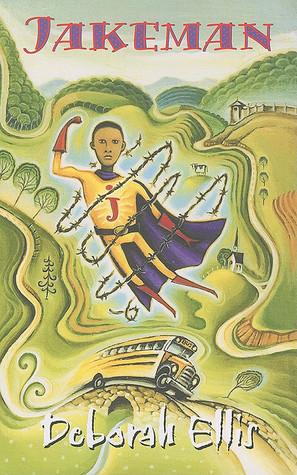
Jakeman
Written by Deborah Ellis
Fitzhenry & Whiteside
201 pp.
Ages 8-13
2007


Peggy’s Letters
Written by Jacqueline Halsey
Orca Book Publishers
116 pp.
Ages 6-11
2005

The Whole Truth
Written by Kit Pearson
HarperCollins Canada
261 pp.
Ages 9+
2011
Reviewed here


YOUNG ADULT
Apart
Written by R. P. MacIntyre & Wendy MacIntyre
Groundwood Books
176 pp.
Ages 13-16
2007

Calvin
Written by Martine Leavitt
Groundwood Books
192 pp.
Ages 12+
2015
Reviewed here
Creeps
Written by Darren Hynes
Razorbill/Penguin Canada
309 pp.
Age 13+
2013
Reviewed here

Dance of the Banished
Written by Marsha Forchuk Skrypuch
Pajama Press
288 pp.
Ages 12+
2014
Reviewed here

Dear Bruce Springstreen
Written by Kevin Major
Doubleday
144 pp.
Ages 10-14
1987

Dear George Clooney, Please Marry My Mom
Written by Susin Nielsen
Tundra Books
240 pp.
Ages 11-14
2010

Dear Jo: The Story of Losing Leah
Written by Christina Kilbourne
Lobster Press
190 pp.
Ages 10-15
2007


The Farmerettes
Written by Gisela Tobien Sherman
Second Story Press
348 pp.
Ages 13-18
2015


A Foreign Field
Written by Gillian Chan
Kids Can Press
192 pp.
Ages 10-14
2002

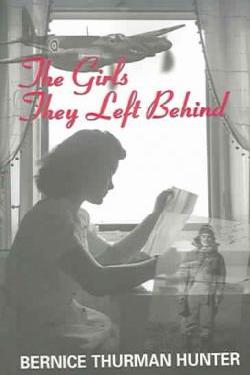
The Girls They Left Behind
Written by Bernice Thurman Hunter
Fitzhenry & Whiteside
191 pp.
Ages 13-15
2005

I’ll be Watching
Written by Pamela Porter
Groundwood Books
280 pp.
Ages 12+
2011
Reviewed here

Last December
Written by Matt Beam
Puffin
161 pp.
Ages 12+
2009

Letters to Julia
Written by Barbara Ware Holmes
HarperCollins Canada
234 pp.
Ages 11-14
1997


Life on the Refrigerator Door: Notes Between a Mother and Daughter
Written by Alice Kuipers
HarperCollins Canada
240 pp.
Ages 12+
2007

Little Red Lies
Written by Julie Johnston
Tundra Books
352 pp.
Ages 10+
2013

An Order of Amelie, Hold the Fries
Written by Nina Schindler
Annick Press
112 pp.
Ages 13+
2004

Rebel’s Tag
Written by K. L. Denman
Orca Book Publishers
128 pp.
Ages 10-14
2007


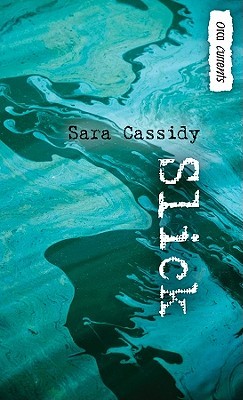
Slick
Written by Sara Cassidy
Orca Book Publishers
116 pp.
Ages 10-14
2010


The Way We Fall
Written by Megan Crewe
Hyperion Disney Group
308 pp.
Ages 12+
2011
Reviewed here


We Contain Multitudes
Written by Sarah Henstra
Penguin Teen
384 pp.
Ages 14+
2019 


When Kacey Left
Written by Dawn Green
Red Deer Press
228 pp.
Ages 12+
April 2015
Reviewed here


NON-FICTION
Anastasia's Album
Written by Hugh Brewster
Madison Press Books
63 pp.
Ages 10+
1996

Camp Fossil Eyes: Digging for the Origins of Words
Written by Mark Abley
Annick Press
131 pp.
Ages 9-13
2009

Hold the Oxo!: A Teenage Soldier Writes Home
Written by Marion Fargey Brooker
Dundurn
141 pp.
Ages 12-15
2011

December 02, 2015

A Year of Borrowed Men

by Michelle Barker
Illustrated by Renné Benoit
Pajama Press
978-1-927485-83-5
40 pp.
Ages 6-9
November 2015

Of course young readers will always hear of the brutality of war.  It's in the news, in video games, in the movies.  But picture books can illustrate the kindnesses shown during war, the ones that keep people from truly becoming barbarians.  A Year of Borrowed Men is one such enlightening and enlightened read that will touch young readers and the adults fortunate to find this book and share it with them, whether it be in classrooms or home.

Based on Michelle Barker’s mother’s childhood memories of Germany in the final year of World War II, A Year of Borrowed Men recounts the time when three French prisoners of war–Gabriel, Fermaine and Albert–come to live and help on the family farm.  Seven-year-old Gerda sees them as “borrowed men”, on loan just until the ones the German government borrowed from their community to aid in the war effort, including her Papi, are returned.

The family which includes Gerda, her mother, one brother and three sisters knows that they are supposed to treat the men like prisoners, forcing them to sleep in the area off the animals’ barn.  But Gerda comes to see the men as “our French family: gentle Gabriel, prickly Fermaine, and cheerful Albert, who loved games” (pg. 9).  Though trouble arises when the local police are notified by a neighbour of a simple kindness the family shows the men, Gerda and her mother continue to  interact with them in a familial way, seeking ways  to make their lives a little more pleasant, a kindness which they extend back to the Schottke family.

The story in A Year of Borrowed Men ends with the liberation of the “borrowed men” and their departure for home but the message that generosity of spirit goes on forever is a meaningful one at this time of year.  Released on Remembrance Day, A Year of Borrowed Men will be a valuable and touching read for years to come in classrooms commemorating those whose lives were touched by war.  But on the cusp of Christmas–also a memorable event in the story–A Year of Borrowed Men will speak to inherent kind-heartedness and be a reminder to demonstrate our humanity even in the most challenging of circumstances.   The potential, unspoken, that the Schottke family’s adherence to the golden rule of “Do unto others as you would have them do unto you” might extend to their own family members away at war, is undeniable.  But their charity to strangers in a time of war, when others only demonstrate anger and suspicion, is a worthwhile lesson in empathy.  Michelle Barker gets the tone right for this message, telling her mother’s story simply and forthrightly, as a child might see the circumstances.  The fear and confusion is there but it is superseded by a fundamental goodness to do what is right.  Look at Renné Benoit’s unassuming illustrations of this child, this farm, the men and relive a simple though still harsh time, when war was horrific but there was a gentleness that could still be found. Thank goodness.

November 29, 2015

Today is the Day

Written by Eric Walters
Illustrated by Eugenie Fernandes
Tundra Books
978-1-77049-648-4
32 pp.
Ages 6-9
October, 2015 

That's Mutanu on the cover of Today is the Day, and she is bursting with joy because today really is the day.  It's the day that has been designated as her birthday and those of other orphans since their arrival at the orphanage in Kikima.  Like many children in rural Kenya, Mutanu's birthday was never noted or written down or celebrated.  But everything in her life has changed since she came to live at the orphanage, a real institution created by the Creation of Hope project.  Now that she has been there almost a year, she will be able to partake in the glorious celebration of their births.

Eric Walters and illustrator Eugenie Fernandes take the reader through Mutanu's regular day of chores–sweeping the yard, feeding the orphanage dog Rafiki, a new mother–and acknowledging the birth days of the new puppies and the new baby calf.  New lives at the orphanage–puppies, calves, kittens, kids, and lambs–are joyfully acknowledged by the girl whose new life began when her own grandmother had grown too old and frail to care for her after the child's parents died. But today, her grandmother and the numerous relatives of the children who live at the orphanage come to help the 150 children celebrate.  There are bags with gifts for each child, and party hats, and, most importantly for Mutanu, there is cake, many cakes, and the singing of the birthday song to themselves.  Mutanu's joy is boundless.

From Today is the Day, written by Eric Walters, illustrated by Eugenie Fernandes
Just like the celebration in which all revel, Today is the Day is a celebration itself.  It celebrates the children who deserve to be recognized with a birthday and a birth certificate. It celebrates the Creation of Hope project for the good work it does.  And it celebrates the hope and joy that Eric Walters and Eugenie Fernandes bring forth in their writing and artistic talents respectively.  Today is the Day is to be celebrated in so many ways.

November 28, 2015

Upside-Down Magic

by Sarah Mlynowski, Lauren Myracle and Emily Jenkins
Scholastic Press
978-0-545-80045-7
208 pp.
Ages 8-12
October, 2015

Self-acceptance has always been an important theme in picture books, middle grade and YA, as it is an issue so many of us grapple with, no matter what age.  But, while Upside-Down Magic does take on this common issue, the book’s quirky take on it is wholly uncommon and delightfully light-hearted.  

Elinor Boxwood Horace, called Nory, is ready for Grade 5 but not sure whether she is quite ready for Sage Academy where her father is headmaster and her older siblings, Hawthorn (16) and Dalia (13), study magic.  She attends the compulsory Big Test, the entrance exam, in which she is tested for being a Flare (those gifted with fire magic), a Flicker (those who control invisibility), a Flyer (as you might expect) and a Fuzzy (those conversant with animals), gifts she knows she does not have, as well as for a Fluxer.  Nory knows she is a Fluxer, one who can transform herself, but her magic often goes wonky.  Sadly but not surprising, Nory’s black kitten transformation actually becomes a dragon-kitten, or dritten as she calls it, and she is denied admission to Sage.

Without her knowledge, her father makes arrangements for her to go and live with her Aunt Margo, a Flyer who works as a taxi (!), and attend the Dunwiddle Magic School, a public magic school with a new program for kids who struggle with magic.  Special education for magic?  It’s called the Upside-Down Magic class or UDM, and it is sneered at by the other students in the school.  Her classmates include Elliott, a neighbourhood Flare whose fire often turns into freezing ice; Andres, a Flyer who would just float away if not tethered or held back by a ceiling; Pepper, an Upside-Down Fuzzy known as a Fierce who terrifies animals rather than communing with them; Sebastian, a Flicker who can’t become invisible but can see invisible sound waves; Willa who can make it rain inside; Marigold who shrinks things; and Bax who Fluxes but only into a rock from which he cannot change back.  Under the tutelage of the inspiring Ms. Starr, who encourages them to understand their feelings, not control them–“Helping you be normal isn’t my job” (pg. 129)–Nory tries to be positive about learning, but the prejudice she and the others endure because of their UDM has her determined to get control of her animal selves and get tested out of the UDM class.

Though her father refuses to contact her and her siblings are convinced she just needs to work harder, Nory is determined to become the child they want her to be, regardless of the warm welcome and acceptance she feels from her aunt, her aunt’s boyfriend and her UDM classmates.  It takes a bit of effort and some unusual situations to help Nory release the notion that she is imperfect and recognize her own giftedness as it is.

Montreal-born Sarah Mlynowski, whose Whatever After and Magic in Manhattan series are wildly popular, has collaborated with Americans Lauren Myracle and Emily Jenkins (a.k.a. E. Lockhart) to produce another series that is sure to enchant and humour young readers.  It’s delightful escapism for middle-grade readers who want to enjoy a very visual (see Nory’s dritten as imagined on the book cover) story with a completely impossible (improbable?) plot that can still teach about enduring the day-to-day challenges of being different and of family expectations, as well as of prejudice, and learning to accept oneself.  Upside-Down Magic is like a pretty package of life lessons wrapped up in a sparkly plot and decorated with bright characters of magical personalities. 

November 26, 2015

Lesson for the Wolf

by Rachel and Sean Qitsualik-Tinsley
Illustrated by Alan Cook
Inhabit Media
978-1-77227-005-1
32 pp.
Ages 4-7
May 2015

Any book that can teach self-acceptance in a succinct but non-preachy manner is a keeper.  But, coupled with an appreciation for the Arctic and its innate beauty, Lesson for the Wolf is all the more poignant.

The story begins with the wolf “who disliked all the things that wolves enjoy” like running and playing and hunting and hanging with other wolves.  He’s a bit of a loner, preferring to study other animals including the wolverine and the snowy owl.  So overwhelmed by the beauty of the Land and compelled to feel part of it, not be “just a wolf”, he gathers some fallen caribou antlers, some wolverine hair and a feather from an angry owl and sings to the Land until “his own life moved with the life of the Land.”  Imbued with power, he is transformed into a wolf with an antlered head, a feathered body and a bushy orange and black tail.

Problem is that the wolf is no longer a wolf and not even a caribou, a wolverine or a snowy owl.  He is embarrassed and starving, and runs from the other wolves.  But they are his salvation.  They help him recognize “the greatest beauty that a wolf can know” and return him to his former beautiful self.

The wolf of Lesson for the Wolf is truly a creature of the Land, so filled with love for its beauty and creatures.  But, like so many of us, he cannot see the beauty within, not realizing until it is too late what he has lost by coveting the attributes of the other animals.  Lesson for the Wolf provides an Arctic-themed story for the idiom of “The grass is always greener” and it works so well because of the partnership of Rachel and Sean Qitsualik-Tinsley.  Rachel Qitsualik-Tinsley speaks from one who knows the Arctic, born in a wilderness camp and being of Inuit ancestry. Sean Qitsualik-Tinsley comes at the story from the folklorist side.  Together they make Lesson for the Wolf a story resplendent in a valuable lesson about self-acceptance and in the beauty of the Arctic Land and Sky and its creatures.  Alan Cook, who studied animation at Sheridan College, uses subtle colour and line to evoke an Arctic of contrasts: delicate and bold, elusive and obvious, precarious and inviting.  An amazing accomplishment with a limited palette of whites, browns and turquoises (except for the single spread in which the wolf transforms).  Still, the wolf and the other creatures and the landscape in Lesson for the Wolf are truly characteristic of the tundra and complement Rachel and Sean Qitsualik-Tinsley’s newest foray into wisdom-sharing stories.