October 06, 2021

The Wolf Mother (Mothers of Xsan)


Written by Hetxw'ms Gyetxw (Brett D. Huson)
Illustrated by Natasha Donovan
HighWater Press
978-1-55379-978-8
32 pp.
Ages 9-12
September 2021

The Mothers of Xsan series from Hetxw'ms Gyetxw (Brett D. Huson) and Natasha Donovan are a series of illustrated non-fiction books for middle-grade readers that examine one animal species in depth and with an Indigenous perspective. The Wolf Mother is the fifth volume in the series and focuses on the life of one wolf pup as she grows into a wolf mother and on the communities and ecosystem in which she thrives.
From The Wolf Mother by Hetxw'ms Gyetxw, illus. by Natasha Donovan

Beginning in the Gitxsan Moon of Lasa'Yan'tsa, The Wolf Mother's story opens with a description of the young wolf pups' capabilities and needs, focusing on a small charcoal black female.

The smallest of the pups is a charcoal black female, who has a tiny strip of white fur above her left eye. The black wolf already has a sense of smell 100 times better than any human, and even domesticated dogs cannot compare to her ability. Right now, she only has a nose for mother’s milk. Her ears grow larger every day, her eyesight gets sharper, and her legs stretch farther, and she is beginning to desire to explore beyond their cozy den among the pines.

From The Wolf Mother by Hetxw'ms Gyetxw, illus. by Natasha Donovan
With each new lunar cycle (the list of Gitxsan Moons is appended to the story), the grey wolves develop new skills, hunting prey like gax, the rabbit, and venturing further and further into their habitat.
From The Wolf Mother by Hetxw'ms Gyetxw, illus. by Natasha Donovan
After two years, the small black pup is now ready to become Nox Gibuu, the Wolf Mother. She sets out alone, eventually welcomed by another pack and bonding with a young male, ready to grow her own family.
From The Wolf Mother by Hetxw'ms Gyetxw, illus. by Natasha Donovan
As she grows that family, the Wolf Mother along with her pack become a community of caregivers, each with a role to play with respect to the young and their environment, keeping all in balance and thriving.

From The Wolf Mother by Hetxw'ms Gyetxw, illus. by Natasha Donovan
Though the text of The Wolf Mother reads as a story, rather than organized as much children's non-fiction, the wealth of its information about the grey wolf's biology and behaviour cannot be disputed. By telling it as a natural history story, Hetxw'ms Gyetxw invites us to witness the wonders of these animals and their communities and place in the world. There are still several non-fiction features, like the purple-boxed footnotes to identify new words like "natal" and "domesticated" and a map of the Gitxsan Nation of their unceded territories of the Northwest Interior of British Columbia, but that information sweetens the story rather than impedes it. There is no distraction from the Wolf Mother's story from pup to mother and leader.

Natasha Donovan's artwork continues that gentle storytelling, giving us the real depictions of the animals and the land, appropriate for a non-fiction book, but also embedding elements of West Coast art. From a stylized moon or a wolf, Natasha Donovan reminds young readers of the First Nations' framework for the story, brightening that realism with a sense of connection between the grey wolves and the land and its people.

The Mothers of Xsan series is a popular one for children, especially for those who love non-fiction and are too often told they're not reading if they're not reading fiction. With this series, they are reading, they're learning about an animal and its place in a bigger world and they're gaining an appreciation for the richness of a First Nation in terms of its community and customs. As the newest addition to that series, The Wolf Mother echoes that storytelling, taking the book beyond information book, and treating readers to textual and graphic art that is dramatic both in its content and heart.

The Sockeye Mother (2018)
The Grizzly Mother (2019)
The Eagle Mother (2020)
The Frog Mother (2021)
The Wolf Mother (2021)

October 04, 2021

Sorry For Your Loss

Written by Joanne Levy
Orca Book Publishers
978-1-4598-2707-3
250 pp.
Ages 8-13
October 2021 

Yes, Sorry For Your Loss is about death and grief. But it's also about respect and honour, life and support, and friendship and family. It's about being there for people, both the living and the dead.
"...being there for people in their time of need is an honor." (pg. 32)
During the summer between her Grade 7 and Grade 8 school years, 12-year-old Evie Walman is working part-time at her family's funeral home, Walman Memorial Chapel. She replenishes supplies like toilet paper and paper towels, ensures visitors have a ready supply of tissues, and does general tidying and vacuuming. She doesn't mind. She wants to be a funeral director like her dad and intends to learn all she can from him and her mother whose counselling background makes her a full partner in the family business. Evie has learned much about the Jewish funeral traditions and how to be respectful but sometimes her chattiness gets the better of her. However, that talkativeness may be just what is needed when she meets Oren Katzman.

After a terrible car accident which killed his parents and left him with bruises and in stitches, as well as an arm cast, Oren no longer speaks. Evie meets Oren while his uncle, Jared Silver, makes arrangements at Walman's, but, though she tries to help, she ends up feeling like she says all the wrong things. She does put her craft skills to work creating a paper quilling project for Oren to represent him and his parents but it's not until a chance meeting at the cemetery has Oren spending days at the Walman's house with Evie while his uncle is at work that the two really learn about each other. They're not going to become friends–Evie is determined not to have friends–but they form a seemingly tenuous bond based on grief, compassion, and their common need for support.

Though I know author Joanne Levy is no longer of middle-grade age, she easily gets into the head of any twelve-year-old who wants to fit in and be liked, and who experiences loss and doesn't know how to ask for help. At first glance, the silent Oren and talkative Evie might seem like complete opposites with Oren having lost his parents and Evie's family still intact. But the two kids are more complementary of each other, giving what the other needs, even if they don't know it. Their relationship is crafted on small things like watching TV, eating ice cream and paper quilling, but founded in loss and hurt that both are experiencing. Through the exploration of the Jewish traditions, from the tahara to the shiva, Oren and Evie search for understanding with the help of the other, and create something new for themselves and those around them, easing the grief a little bit at a time.

October 01, 2021

Ga's / The Train

Written by Jodie Callaghan
Illustrated by Georgia Lesley
Interpreted/translated by Joe Wilmot
Second Story Press
978-1-77260-200-5
36 pp.
Ages 6-9
September 2021

With National Day for Truth and Reconciliation being recognized yesterday, there has been an important push for greater understanding about the impact of residential schools on Indigenous people. Jodie Callaghan and Georgia Lesley's book The Train, first winner of the Second Story Press Indigenous Writing Contest, was on the book list I prepared to help educators and parents address the topic of residential schools. However, with a new dual-language edition–Mi'gmaw and English–released recently, I thought it was appropriate to review this meaningful book now.

From Ga's / The Train by Jodie Callaghan, illus. by Georgia Lesley, interpreted/translated by Joe Wilmot

A young Ashley is walking home from school through fields and weed-covered train tracks along the dirt road that leads to the old train station when she is surprised to be met by her uncle. She is perplexed when, in answer to her question about what he is doing there, he claims that he is waiting for the train. They both know that the train no longer runs here, but he explains that he's sad that their people have forgotten about this place.

From Ga's / The Train by Jodie Callaghan, illus. by Georgia Lesley, interpreted/translated by Joe Wilmot
Uncle remembers when the train would come infrequently and bring supplies. Then one day, he and his three eldest siblings were sent to the train with other children from the village and taken to a school where their clothes and baskets were taken away and their hair cut off. 
We weren't allowed to speak our language. We weren't allowed to be Nnu.

From Ga's / The Train by Jodie Callaghan, illus. by Georgia Lesley, interpreted/translated by Joe Wilmot

Uncle tells his niece how that train changed everything. But, he is hopeful that things will be okay some day, as he hears and sees the joy in her and her sister's play.

"I wanted you to know where your family has come from, Ashley. So you can be proud of where you are going."
Still he comes to remember and to wait for what was lost to come back. Now, Ashley offers to wait with him.
 
As with all stories of residential school survivors, there is heartbreak. It's for the loss of lives, of language, of family, of culture. It's also a bone deep legacy. Ashley's uncle needs to revisit this scene of tragedy, hopeful that slowly it will become something different for him. And now Ashley can help him in his waiting and remembering and grief. By matching the then and now with a significant intergenerational relationship, Jodie Callaghan of Listuguj Mi'gmaq First Nation demonstrates the long-lasting tragedy of the residential schools while suggesting that healing will come from younger generations. They are still impacted by what their elders experienced but they want to help in going forward, as they can. Jodie Callaghan's text is both rooted in the past and the future, much like a train moving from there to here, and is both anguished and expectant. The tragedy is acknowledged and healing awaited.
From Ga's / The Train by Jodie Callaghan, illus. by Georgia Lesley, interpreted/translated by Joe Wilmot
Georgia Lesley's artwork similarly depicts the contrast of the then and now, differentiating between the starkness and dullness of a wretched past in a residential school with the brightness and promise of a niece's company in a lively meadow in sunshine. Georgia Lesley's paintings have an organic feel to them, very much a grass-roots atmosphere, reflecting Uncle's candour and Ashley's readiness to learn and help.

In Ga's / The Train's powerful preface, it is revealed that Joe Wilmot, also of Listuguj First Nation, interpreted/translated The Train into Mi'gmaw in response to his own mother's loss of language with her subjection to residential school. He hoped "that this book will be a reminder of all that was left behind at the residential school." Sadly there was far too much left behind. Still, the telling of these stories helps bring them from the shadows into the light of now, offering opportunities for better.

September 29, 2021

My City Speaks

Written by Darren Lebeuf
Illustrated by Ashley Barron
Kids Can Press
978-1-5253-0414-9
32 pp.
Ages 3-7
September 2021

When a young girl and her father head to her outdoor violin recital, the city becomes their companion, sensory-rich and amazingly diverse in its scope. This visually-impaired child, as evidenced by her white cane, listens as her city speaks and she hears, as well as smells and tastes and feels. Her city is alive.
From My City Speaks by Darren Lebeuf, illus. by Ashley Barron

As she and her father walk to the park, she "sees" everything but her seeing is with all her senses except her eyes. The reader will see the neighbour pruning his shrubs and the lady walking her terrier and her father locking the door but the child will know them in her own way. We see them reach the tactile paving at the busy intersection while she hears the city moving.
It rushes and stops and waits and goes.
From dropping a letter off in the post box to watering plants in the raised garden beds near a construction site, the child hears the city growing in different ways. But the city is really a spectacle of contrasts: busy and relaxed, playful and working. And she hears it all.
From My City Speaks by Darren Lebeuf, illus. by Ashley Barron

After stops at a playground, ice-cream shop and grocer's, filled with their own sensory experiences, the weather changes.
It pitters and patters and drips and drains.
From My City Speaks by Darren Lebeuf, illus. by Ashley Barron
Finally after a subway ride, alive with "whispers and giggles and sometimes meows," the girl and her father reach the outdoor venue where she and other children are to perform. Then, her city not only speaks, it listens.

Vancouver's Darren Lebeuf may take us to his neighbourhood–though maybe not–to experience it through the senses of a child whose eyesight is impaired but this could be any city. There are roads and parks, stores and playgrounds. There are quiet areas and busy ones, and the girl notices everything around her. By choosing to make his character less dependent on her eyesight, the sense that most of us rely on as we navigate our neighbourhoods, Darren Lebeuf helps us hear and occasionally smell and taste, reminding us of everything we undoubtedly miss when we use only our eyes. Moreover by giving a rhythm to his words, like the "hasty honks, impatient beeps, distant chimes, reliable rumbles, speedy sirens and urgent clangs," Darren Lebeuf has found the city's heartbeats, those that come from its people, its infrastructure, and more.

But while Darren Lebeuf's character cannot rely on her eyesight, readers will get the full visual experience from Ashley Barron's cut-paper collages of the most vibrant colours and the most intricate details. There's a hot pink Vespa, a raccoon peeking out from a trash container, and the family's cats playing with a toy mouse. On the subway, the child may not see the hijab-wearing woman sharing earbuds with a wheelchair-bound young man or the pink-haired person beside another with pencil-skewered hair, but we do. And so the child's amazing sense of what is going on around her is all the more impressive. 
 
Darren Lebeuf and Ashley Barron's My City Speaks certainly speaks to an awareness for one's environment but it also celebrates the richness of an urban landscape in stimulating all our senses and the importance of being ever present in its distinct quality.

September 27, 2021

Jigging for Halibut with Tsinii (Sk'ad'a Stories)

Written by Sara Florence Davidson and Robert Davidson
Illustrated by Janine Gibbons
HighWater Press
978-1-55379-981-8
40 pp.
Ages 6-9
September 2021
 
Jigging is a type of fishing in which a lure called a jig is used to attract and catch fish. Of course, successful jigging requires skill. Co-authoring with his daughter Sara Florence Davidson, Robert Davidson honours the knowledge that his tsinii (grandfather) shared with him about jigging as well as about life principles in this first picture book of the Sk'ad'a Stories series from HighWater Press.

From Jigging for Halibut with Tsinii by Sara Florence Davidson and Robert Davidson, illus. by Janine Gibbons
When his tsinii knows that the weather is right for jigging, the boy and his grandfather head out in his dinghy. From the onset, they do things as is best. From how they sit in the boat and work with the tide, to following Tsinii's instincts and nominal talk, the measures of their excursion are sacrosanct.
From Jigging for Halibut with Tsinii by Sara Florence Davidson and Robert Davidson, illus. by Janine Gibbons
From their waiting for hours to their lunches and most importantly to their catching of the fish, there is ritual here. Tsinii shows respect for the halibut by speaking to it, even as the fish is flung onto the boat. When his grandson catches one, he shows that same respect, though he does so as his knowledge permits.

Eventually, the halibut breaks through the surface of the ocean. I need to club it before bringing it onto the boat, but I do not know the words that my tsinii says. Instead, I think about how grateful I am to have caught this halibut to share with my family, and I pull the halibut onto the boat with the gaff.
Following the old ways, they return to shore and clean their fish in silence–There is no need to talk–anticipating the halibut stew that the boy's naanii (grandmother) will undoubtedly be preparing that night.

From Jigging for Halibut with Tsinii by Sara Florence Davidson and Robert Davidson, illus. by Janine Gibbons
I was so taken by the solemnity of Jigging for Halibut with Tsinii. The note appended to the story describes it as based on Robert Davidson's own experiences with his tsinii and the story's merit is undoubtedly a reflection of the co-author's respect and admiration for his grandfather. With his daughter, Sara Florence Davidson, Robert Davidson has made us observers of a significant relationship and the knowledge that is passed on through it. The boy of the story has learned much, from how to be with his tsinii, when to speak, how to jig, and what is important. The traditions of the Haida are honoured both by child and grandfather and story.

Art that is rich in textures, whether through multi-media or skilled application of medium, always draws me in, and Janine Gibbons's artwork does this easily. From the textured wood on the beach to the cool waves of water and the strength of Tsinii's hands, Janine Gibbons, a Haida Raven of the Double-Fin Killer Whale Clan, Brown Bear House, took me to the West Coast and onto Tsinii's hand-crafted dinghy. I could sense the coolness of the air, feel the wind that laps waves across the hull, and smell the freshness of the fish. And still there is always a softness to Janine Gibbons's art that matches the heart of Sara Florence Davidson and Robert Davidson's text. Strength and softness together defines the story and permeates the illustrations, reflecting the solemn relationship between child and his tsinii

Educator Sara Florence Davidson and artists Robert Davidson and Janine Gibbons have given young readers a story about a special relationship but, by basing it in the Haida traditions and the distinction of the West Coast, Jigging for Halibut with Tsinii becomes more than a lovely story. It becomes an important one that honours the people and the teachings that prevail.

•  •  •  •  •  •  •

Though I won't be able to review it, a second book in the Sk'ad'a Stories releases tomorrow as well. Learning to Carve Argillite, written and illustrated by the same team that created Jigging for Halibut with Tsinii, is another picture book that brings together a traditional skill with a significant relationship with an elder. I encourage young readers and their teachers to invest in both to discover more about sk'ad'a, the nine teaching principles of the Haida.

Learning to Carve Argillite
Written by Sara Florence Davidson and Robert Davidson
Illustrated by Janine Gibbons
HighWater Press
978-1-55379-984-9
40 pp.
Ages 6-9
September 2021

September 24, 2021

National Day for Truth and Reconciliation (Orange Shirt Day): September 30


September 30th is National Day for Truth and Reconciliation. Also known as Orange Shirt Day since 2013 when residential school survivor Phyllis Jack Webstad recounted having her gifted orange shirt taken away when she was placed in residential school, National Day of Truth and Reconciliation is a day of remembrance for the Indigenous victims of the Canadian residential school system.

For those who want to learn more, through fiction or non-fiction, or who want to introduce the significance of the day to their students or children, this short list of picture books, fiction, graphic novels, young adult novels and non-fiction offers a wide perspective and content for all young readers.


Aggie and Mudgy: The Journey of Two Kaska Dena Children 
Written by Wendy Proverbs
Heritage House
144 pp.
Ages 9-12
2021
As Long As the Rivers Flow
Written by Larry Loyie with Constance Brissenden
Illustrated by Heather D. Holmlund
Groundwood Books
48 pp.
Ages 7-11
2002
 
 
These are My Words: The Residential School Diary of Violet Pesheens, Northern Ontario, 1966 (Dear Canada)
Written by Ruby Slipperjack 
Scholastic Canada
192 pp.
Ages 8-13
2016

Fatty Legs
Written by Christy Jordan-Fenton and Margaret Pokiak-Fenton
Annick Press
104 pp.
Ages 7-11
2010
 
I Am Not a Number 
Written by Jenny Kay Dupuis and Kathy Kacer
Illustrated by Gillian Newland
Second Story Press
32 pp.
Ages 7+
2016 
 
I'm Finding My Talk
Written by Rebecca Thomas
Illustrated by Pauline Young
Nimbus Publishing
32 pp.
Ages 4-9
2021
 
I Lost My Talk
Written by Rita Joe
Illustrated by Pauline Young
Nimbus Publishing
32 pp.
Ages 4-9
2021 
 
Looks Like Daylight: Voices of Indigenous Kids

Written by Deborah Ellis
Groundwood Books
256 pp.
Ages 12+
2013 

No Time to Say Goodbye: Children's Stories of Kuper Island Residential School
Written by Sylvia Olsen with Rita Morris and Ann Sam
Soni Nis Press
189 pp.
Ages10-14
2001

Not My Girl
Written by Christy Jordan-Fenton and Margaret Pokiak-Fenton
Illustrated by Gabrielle Grimard
Annick Press
36 pp.
Ages 6-9
2014 
 
The Orange Shirt Story
Written by Phyllis Webstad
Illustrated by Brock Nicol
Medicine Wheel Education
44 pp.
Ages 6-9
2018
 
The Outside Circle
Written by Patti LaBoucane-Benson
Illustrated by Kelly Mellings
House of Anansi Press
128 pp.
Ages 16+
2019
 
Phyllis's Orange Shirt

Written by Phyllis Webstad
Illustrated by Brock Nicol
Medicine Wheel Education
28 pp.
Ages 3-5
2019
Red Wolf
Written by Jennifer Dance 
Dundurn
256 pp.
Ages 12-15
2014

Residential Schools
(Indigenous Life in Canada: Past, Present, Future)
Written by Heather Hudak
Beechstreet Books
32 pp.
Ages 10-13
2020
 
Residential Schools: With the Words and Images of Survivors, A National History 
Written by Larry Loyie with Wayne K. Spear and Constance Brissenden
Indigenous Education Press
112 pp.
Ages 13+
2014
 
Righting Canada's Wrongs: Residential Schools
Written by Melanie Florence
Lorimer
128 pp.
Ages 9-13
2015
 
Secret Path
Written by Gord Downie
Illustrated by Jeff Lemire
Simon & Schuster
96 pp.
Ages 13+
2016 


Shin-Chi's Canoe
Written by Nicola I. Campbell
Illustrated by Kim LaFave
Groundwood Books
40 pp.
Ages 4-8
2008 


 Shi-shi-etko
Written by Nicola I. Campbell
Illustrated by Kim LaFave
Groundwood Books
32 pp.
Ages 4-8
2005
 
Speaking Our Truth: A Journey of Reconciliation
Written by Monique Gray Smith
Orca Book Publishers
160 pp.
Ages 9+
2017

Spirit Bear: Fishing for Knowledge, Catching Dreams
Written by Cindy Blackstock 
Illustrated by Amanda Strong 
First Nations Child & Family Caring Society of Canada
52 pp.
Ages 6-12
2018
 
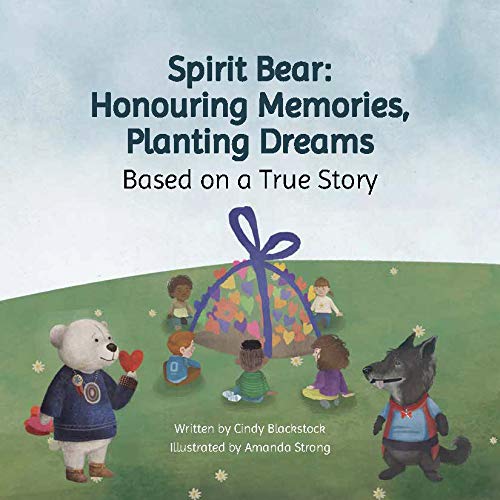
Spirit Bear: Honouring Memories, Planting Dreams
Written by Cindy Blackstock 
Illustrated by Amanda Strong  
First Nations Child & Family Caring Society of Canada
66 pp.
Ages 6-12
2019

Stolen Words 
Written by Melanie Florence
Illustrated by Gabrielle Grimard
Second Story Press
24 pp.
Ages 6-9
2017 

A Stranger at Home
Written by Christy Jordan-Fenton and Margaret Pokiak-Fenton
Annick Press
120 pp.
Ages 8-13
2011
 
Sugar Falls: A Residential School Story
(10th anniversary edition)
Written by David A. Robertson
Illustrated by Scott B. Henderson
Colours by Donovan Yaciuk
HighWater Press
48 pp.
Ages 14-18
2021
 
The Train
Written by Jodie Callaghan
Illustrated by Georgia Lesley
Second Story Press
32 pp.
Ages 6-9
2020
 
 Truth and Reconciliation (Indigenous Life in Canada: Past, Present, Future)
Written by Simon Rose
Beechstreet Books
32 pp.
Ages 10-13
20217

When I Was Eight 
Written by Christy Jordan-Fenton and Margaret Pokiak-Fenton
Illustrated by Gabrielle Grimard
Annick Press
32 pp.
Ages 6-9
2013
 
When We Play Our Drums, They Sing!
/ Lucy & Lo
(The Journey Forward, Novellas on Reconciliation)
Written by Richard Van Camp / Written by Monique Gray Smith, Illustrated by Julie Flett
McKellar & Martin
160 pp.
Ages 19-13
2018
(n.b. this is a "flipbook" with two stories)
 
When We Were Alone 
Written by David A. Alexander
Illustrated by Julie Flett
HighWater Press
32 pp.
Ages 6-8
2016

White Raven
Written by Teoni Spathelfer
Illustrated by Natassia Davies
Heritage House
32 pp.
Ages 4-8
2021 

You Hold Me Up

Written by Monique Gray Smith
Illustrated by Danielle Daniel
Orca Book Publishers
32 pp.
Ages 4-7
2017


Many of these books are available in other languages, including French, Plains Cree and Anishinaabemowin. I would recommend GoodMinds as an excellent source for most, if not all, of these books.

• • • • • • •