Showing posts sorted by date for query Watch it grow. Sort by relevance Show all posts

July 06, 2026

Wait Like a Seed

Book cover of "Wait Like a Seed" by Erin Alladin and illustrated by Tara Anderson shows a girl holding an open milkweed po
Written by Erin Alladin
Illustrated by Tara Anderson
Pajama Press 
978-1-77278-359-9
32 pp.
Ages 4–8 
March 2026  
 
Understanding life cycles, particularly of plants, can be a challenge for young children because of the extended time needed for a seed to progress through its stages. Kids may get the idea of a flower but knowing how a flower came to be and what it can produce is far more difficult. Using simple rhyming verses, bold words, and additional info pages, Erin Alladin leads young readers through the parts of a plant and how that plant can produce a new plant or hundreds.
A little boy gardens seeds germinating in the soil
From Wait Like a Seed, written by Erin Alladin, illustrated by Tara Anderson
The story is set up with text and a drawing of the seed or plant as it is developing opposite an illustration of the children, and occasional orange tabby, watching the plant grow. From a seed waiting for the spring rains to fall, through rooting, sprouting, and growing leaves, buds, flowers, and pods, the milkweed plant goes through its life cycle. 
Smile like a flower,
Giving and grand.
Smile like a flower
'Til the butterflies land. (pg. 14)

The children wait and watch and delight in what they get to witness over the seasons, from spring rains to winter dormancy. And because the monarch butterfly is tied to milkweed plants, children can also witness the development of eggs to larvae, to caterpillars and further. 

A girl looks at the milkweed plant and flowers as well as a monarch butterfly and caterpillar
From Wait Like a Seed, written by Erin Alladin, illustrated by Tara Anderson
While I don't usually review paperback releases of previously published hard copy books, I never got to see Wait Like a Seed when it was released last year. And seeing this new edition, I really wanted to share Erin Alladin's latest. She has a lovely talent of telling stories, particularly those related to the natural world. (See her Outside You Notice, 2021.) By blending the life cycles of the milkweed and the monarch butterfly with the experiences of two young children, Erin Alladin gives us a personal story with which young children may be familiar. And with her rhyming text, she makes an educational book into a charming read with a tempo that balances with the pace of the plant's development.
The life cycle of the monarch butterfly
From Wait Like a Seed, written by Erin Alladin, illustrated by Tara Anderson
But without Tara Anderson 's coloured pencil illustrations, Wait Like a Seed would not have the colour and shape to carry readers effortlessly through the milkweed's life stages. Instead of a book of non-fiction, Wait Like a Seed is the story of two playful children as they swing, pop milkweed pods, build a snowman, and play with their cat. She gives them joy and curiosity.
A girl touches the pods of a milkweed plant
From Wait Like a Seed, written by Erin Alladin, illustrated by Tara Anderson
I know that teachers and parents will want to use Wait Like a Seed as a teaching tool for life cycles and the seasons, but don't forget the soft poetry that sweeps through the book. It tells its own story of imaginative and educational play, helping children to grow in their own way.

February 17, 2026

The Story Hunter

Written and illustrated by Barbara Reid
North Winds Press (An imprint of Scholastic Canada)
978-1-0397-1033-7
32 pp.
Ages 3–8
February 2026 
 
 I am a story hunter. I carry stories. (pg. 33)
 
The Story Hunter is like nothing I've read from Barbara Reid. Her stories are treasures of brightness and joy, often of everyday life, whether it be gardening (Watch It Grow: Backyard Life Cycles, 2019), the weather (Picture the Sky, 2017), bedtime songs (Sing a Song of Bedtime, 2015), trees (Picture a Tree, 2013), or playing in the snow (Perfect Snow, 2009). But The Story Hunter, inspired by Barbara Reid's visit to see the cave art in the Vézère Valley, is a story from tens of thousands of years ago. It may be fiction, but it is rich in history of people and place and storytelling.
From The Story Hunter, written and illustrated by Barbara Reid
This child is part of a community of hunters and gatherers. They follow the animals across valleys in the shadows of mountains, camping when the animals stop. And when they stop, they work together to make shelter, to prepare food, to gather wood, and to care for children.
From The Story Hunter, written and illustrated by Barbara Reid
But when the hunters pack up to go, they are led by Grandmother because she knows where to look. They are not hunting animals for food; they are looking for the stories. Using lamps made of stone with depressions to carry fire, the hunting party enters into the blackness of caves in their search.
We are swallowed.
Our feet find smooth places, 
rough places, slippery places. 
Our lamps find marks that 
jump and hide. (pg. 14)
From The Story Hunter, written and illustrated by Barbara Reid
There are stalactites and stalagmites, dripping water and pools in openings, until they reach a cavern where the walls are covered in animals that play in their light. (pg. 19) The hunting party revels in the paintings they find, with the child especially enamoured with that of a mammoth, before adding their own story marks, with their preparation of red ochre. There is gratitude and revelry for the stories that were told and would be told.
 
I think that we forget that stories have been told for thousands of years and in a multitude of forms. And just because they are in form with which we are generally unfamiliar to interpret fully, they are stories that impart meaning just the same. Whether they are records of hunts or wishes for good ones, places of ceremony, or spiritual narratives, these pictographs tell much about the people who put them there. This child and his people are hunters, but more than just those of animals.
From The Story Hunter, written and illustrated by Barbara Reid
Barbara Reid's text is one of reverence and community. The togetherness of all members, from the child to his grandmother, is what makes the community work, whether hunting for stories or looking for food. Her text depicts that admiration for people, past and present, and what they have done and are still doing. That honour is portrayed in their words ("Our home holds all we need," says Grandmother. "If we look."; pg. 2) and in Barbara Reid's art. The world is far greater and more important than the individual people. The vastness of the sky, the land, and all who live there is evident. Even when they enter the confined space of the caves, the walls are the focus, lit with an orange glow from their lanterns or torches. Barbara Reid knows where we should look, and she directs us there.
 
While the artwork was "made with modelling clay that was shaped and pressed onto illustration board" with acrylic paint used for special effects, it has a very different feel from the majority of Barbara Reid's books. In fact, I was very surprised to read this art credit on the copyright page, convinced Barbara Reid had employed a different art technique. But, though appearing more two-dimensional that other picture book illustrations of Barbara Reid's that I have reviewed, it works for a story about pictographs which are painted onto rock surfaces, not carved. It's in keeping with the story, just as her use of colour emphasizes the natural tones of an outdoor world and the darkness of an indoor cave. Always perfect, Barbara Reid knows how to take us to a place, whether now or 15,000 years ago. The stories will be told and found and told again, no matter their form.

January 28, 2026

Planting Sunshine

Written by Andrée Poulin
Illustrated by Enzo (Enzo Lord Mariano)
Groundwood Books
978-1-77946-095-0
116 pp.
Ages 9–12
February 2026 
 
As is often the case, Theo's day is normal enough until it isn't. And what changes everything is watching the news coverage of war breaking out far, far away.
Theo's father
turns on the TV— 
     and war arrives
in their living room. (pg. 9)
Theo cannot believe what he is hearing and seeing. Horrified by the sights and sounds of bombs and guns, tanks and drones, and most of all the destruction of people and place, Theo is troubled. He wants to know why this happens, whether they are safe, and asks why humans are so cruel.
From Planting Sunshine, written by Andrée Poulin, illustrated by Enzo
Though the countries involved are never identified, readers might recognize some of the images described as those from the attack on Ukraine by Russia, such as the elderly woman who confronts a Russian soldier with sunflower seeds and suggests that if he puts them in his pocket. . .
At least when you die here
     on the soil of my country
     the sunflowers will grow 
                    around you. (pg. 20)
Theo asks his neighbour Mrs. Lena, an elderly woman who grew up in "the country now caught in this terrible war" (pg. 21), about the war and this incident, and she tells him of the sunflower—soniashnyk, in Ukrainian—being the "flower that feeds hope." (pg. 22) Seeing Theo's continued distress, day after day, she gives him sunflower seeds to plant.
From Planting Sunshine, written by Andrée Poulin, illustrated by Enzo
Each day there is more horrific news from the war, and the details stay with Theo. He thinks about the numbers, about the images, about the losses, and all he can do is wonder why no one is stopping it. 
Each day Theo asks, "Will the war end today?" (pg. 38) The war may be very far away but it's impacting Theo in the way he sees life. The word "bomb" no longer reminds him of diving board cannonballs. His friends playing war angers him. His dad refuses to let Theo watch the news anymore, so Theo hides his tablet and watches at night. And then the nightmares start, a mix of anger, fear, hatred and more.
 
When he meets a girl drawing doves on a wall as protest, Theo is finally able to share what he's feeling–never wanting to burden Mrs. Lena or his teacher or his father—and feels a little less alone. And he finds his own way to express his anger and his grief. 
From Planting Sunshine, written by Andrée Poulin, illustrated by Enzo
Still, he is unconvinced that the war will end or that things would change, until Mrs. Lena offers him the idea of hope. She tells him, "Hope lives in the after." (pg. 91) And, with a little help from those around him, Theo finds a way to settle his anger, remember what should never be forgotten, work to help a cause, and find "a small way to start building peace." (pg. 110)

I could quote page after page of eloquent text that clutches at the heart of Theo's bewilderment and trauma. Andrée Poulin has always had a knack for telling tough stories lightly—not lightheartedly—for a young audience. Whether it's sanitation (Burying the Moon, 2021), diversity and tolerance (Tickled Pink, 2020), or abandonment (The Biggest Poutine in the World, 2016), Andrée Poulin recognizes that her audience is young, and will be impacted differently about important issues. Theo is just such a child, significantly impacted by a war thousands of kilometres away, and not understanding fully what is happening. He's feeling a lot and needs help understanding those emotions and directing them into activities that help. Andrée Poulin takes Theo full circle, from unfamiliarity with war, to an introduction by media, to immersion in images and sensory overload, to impact and trauma, and finally purposeful attention. And she does so eloquently in words and in verse form. This book will become an exemplar of telling a story with sensitivity and compassion, and awareness of how world events can impact children in powerful ways. 
From Planting Sunshine, written by Andrée Poulin, illustrated by Enzo
Enzo (a.k.a. Enzo Lord Mariano), a Montreal-based illustrator, provides the artwork that frames Andrée Poulin's story. Using Procreate with watercolour textures, Enzo gives us some war images—the ones of a blue tractor in a field of sunflowers that is later devastated by bombs is especially heartrending—but generally it's all about Theo because this is his story. It is not a story of war. It is a story of a boy who struggles with the concept of war and his emotions with the senseless destruction it perpetuates. Enzo helps us see Theo's anguish and his anger, the trauma of his sleepless nights, and his despondency. But Enzo also shows us family, friendship, and community, and how those can soften the suffering.
 
I don't think I can say enough about Planting Sunshine. (A French-language version, Semer des soleils, was published in 2024 by La courte echelle.) Not only does it remind all that there is an ongoing conflict in Ukraine, but that there are children beyond the borders of that war that are struggling with it. Highly sensitive children like Theo can be impacted by what they see and hear in the news and cannot always articulate what they are feeling or recognize how to grapple with those emotions. In a world of strife and public media, children will continue to be exposed to all manner of frightening news. Awareness of their potential struggles and attention to their needs might help them find ways to plant sunshine and to unearth hope.

August 15, 2024

The Weedflower

Written by Elizabeth Davaze
Illustrated by Marianne Ferrer
Owlkids Books
978-1771475884
32 pp.
Ages 4-8
August 2024


In a busy schoolyard, with children jumping and climbing, sliding and clapping, one child sees a plant with a yellow flower growing in the crack between the cement and rubber turf. Only Sam sees it and watches it and sings to it and admires it.
From The Weedflower, written by Elizabeth Davaze, illustrated by Marianne Ferrer
But, as with most living things, the "alien bud" grows. It grows into a tall, bright yellow flower and then it catches the attention of the other children who join Sam to admire the flower. (Or is it a weed?) Not only do they admire it, but they also protect it and nurture it. They stop balls from hitting it and squirrels from nibbling at it. And the flower thrives. "Before long, the entire blossom had changed into one perfect, dreamy fluffball."

From The Weedflower, written by Elizabeth Davaze, illustrated by Marianne Ferrer
But when the adults at the school finally notice the "fluffball flower," they do not appreciate it the way that the children do.

    "They did not see the magic."

From The Weedflower, written by Elizabeth Davaze, illustrated by Marianne Ferrer
After much tugging by many adults, including the large principal, "the weedflower’s roots broke free, the stem came loose, and all the fluff floated away with all the students’ wishes in the breeze." It is only with time that Sam and the other children will see the weedflower has not gone because that fluff was actually filled with the promise of new life.
From The Weedflower, written by Elizabeth Davaze, illustrated by Marianne Ferrer
 
Adults may see a plant that is growing where they don't want it whether it be a dandelion in a lawn, or volunteer trees that grow to close to a house's foundation. But children don't see that. Ralph Waldo Emerson, who had much to say about nature, is quoted as saying, "A weed is simply a plant whose virtues we haven't yet discovered” and many children have no problem finding the virtues in the dandelion. They bring home bouquets for their mothers, and blow the dandelion fluff and watch it travel like fairies on wind currents. They delight in their spread on lawns to become fields of green dotted with yellow brightness. (We used to braid the stem and flowers into crowns.) To nurture any plant and have it destroyed for its inconvenience to another would be devastating. Kincardine author Elizabeth Davaze takes the perspective of children seeing the dandelion as a flower, a thing of beauty and wonder, and makes us realize the loss they feel when the weed, according to the adults, is eradicated. It's all about perspective, isn't it? Too bad the adults aren't enlightened enough to realize that the dandelion would not be stopped by pulling one out.
 
Montreal's Marianne Ferrer, whose illustrations I have long admired (e.g., Carmen and the House That Gaudí Built, Racines, and Le Jardin Invisible), knows where to put the emphasis on her illustrations. Green and gold, the dandelion's only colours, along with the brown of the dirt, are the basis of all Marianne Ferrer's artwork in The Weedflower, regardless of whether she's drawing the dandelion or the children. The attention is on the plant, just as the children want it to be. Moreover, her use of watercolour and gouache give The Weedflower its organic texture, prioritizing the natural world. 
 
I know some teachers will use The Weedflower as an introductory story to teach the life cycle of a plant–too many kids don't know that seeds come from flowers–but I think it's a wonderful exploration of perspective and seeing things through a child's eyes to appreciate all living things as extraordinary, even the seemingly lowly dandelion.

April 02, 2020

Weather, Seasons and Life Cycles in YoungCanLit


Many teachers and parents of primary children look for great resources to help little ones understand the four seasons, weather and the life cycles associated with them. These 50+ picture books and non-fiction titles from Canadian authors and illustrators should fit the bill nicely.

Bear's Winter Party   
Written by Deborah Hodge
Illustrated by Lisa Cinar
Groundwood Books
32 pp.
Ages 4-7
2016
Reviewed here

Ben's Snow Song: A Winter Picnic
Written by Hazel Hutchins
Illustrated by Lisa Smith
Annick Press
24 pp.n
Ages 4-7
1987

Capelin Weather
Written and illustrated by Lori Doody
Running the Goat Books & Broadsides
32 pp.
Ages 3-7
2017
Reviewed here

Changing Seasons (Nature's Changes)
Written by Bobbie Kalman and Kathryn Smithyman
Crabtree
32 pp.
Ages 6-10
2005

Counting on Fall (Math in Nature)
Written by Lizann Flatt
Illustrated by Ashley Barron
Owlkids Books
32 pp.
Ages 4-8
2012

Emma's Cold Day 
Written by Margriet Ruurs
Illustrated by Barbara Spurll
Fitzhenry & Whiteside
24 pp.
Ages 3-7
2001

Hat On, Hat Off 
Written by Theo Heras
Illustrated by Renné Benoit
Pajama Press
24 pp.
Ages 1-3
2016
Reviewed here

If You Hold a Seed
Written and illustrated by Elly MacKay
Running Press Kids
32 pp.
Ages 3-7
2013

Is This Panama?: A Migration Story 
Written by Jan Thornhill
Illustrated by Soyeon Kim
Owlkids Books
40 pp.
Ages 5-8
2013

It's Moving Day 
Written by Pamela Hickman
Illustrated by Geraldo Valério
Kids Can Press
32 pp.
Ages 7-9
2008

Kitten's Autumn
Written and illustrated by Eugenie Fernandes
Kids Can Press
24 pp.
Ages 1-4
2012

Kitten's Spring  
Written and illustrated by Eugenie Fernandes
Kids Can Press
24 pp.
Ages 1-4
2010

Kitten's Summer 
Written and illustrated by Eugenie Fernandes
Kids Can Press
24 pp.
Ages 1-4
2013

Kitten's Winter 
Written and illustrated by Eugenie Fernandes
Kids Can Press
24 pp.
Ages 1-4
2013

Last Leaf First Snowflake to Fall  
Written and illustrated by Leo Yerxa
Groundwood Books
32 pp.
Ages 4-8
2012

The Life Cycle of a Mosquito
Written by Bobbie Kalman
Crabtree
32 pp.
Ages 7-10
2003
Crabtree has almost two dozen life cycle books including for the raccoon, whale, bat, honeybee, and sea horse.
Lily and the Paper Man
Written by Rebecca Upjohn
Illustrated by Renné Benoit
Second Story Press
24 pp.
Ages 4-7
2007

Making Grizzle Grow
Written by Rachna Gilmore
Illustrated by Leslie Elizabeth Watts
Fitzhenry & Whiteside
32 pp.
Ages 4-7
2009

Morning on the Lake  
Written by Jan Bourdeau Waboose
Illustrated by Karen Reczuch
Kids Can Press
32 pp.
Ages 5-8
1997

My Forest is Green
Written by Darren Lebeuf
Illustrated by Ashley Barron
Kids Can Press
32 pp.
Ages 3-7
2019
Reviewed here

Nana's Cold Days
Written by Adwoa Badoe
Illustrated by Bushra Junaid
Groundwood Books
32 pp.
Ages 3-7
2002

A New Duck
Written by Pamela Hickman
Illustrated by Heather Collins
Kids Can Press
20 pp.
Ages 3-7
1999

Once Upon a Northern Night 
Written by Jean E. Pendziwol
Illustrated by Isabelle Arsenault
Groundwood Books
36 pp.
Ages 4-7
2013
Reviewed here
Perfect Snow
Written and illustrated by Barbara Reid
North Winds Press (Scholastic Canada)
32 pp.
Ages 4-7
2009


Picture a Tree
Written and illustrated by Barbara Reid
North Winds Press (Scholastic Canada)
32 pp.
Ages 3-8
2013

Poetree
Written by Caroline Pignat
Illustrated by François Thisdale
Red Deer Press
32 pp.
All ages
2018
Reviewed here


Rosario's Fig Tree  
Written by Charis Wahl
Illustrated by Luc Melanson
Groundwood Books
32 pp.
Ages 4-7
2015
Reviewed here

Run Salmon Run
Written by Bobs & LoLo (Robyn Hardy and Lorraine Pond)
Illustrated by Lori Joy Smith
Bobs & LoLo Books
36 pp.
Ages 3-7
2018
Seasons Before the War
Written by Bernice Morgan
Illustrated by Brita Granström
Running the Goat, Books & Broadsides, Inc.
44 pp.
Ages 7+
2018
Reviewed here

Shaping Up Summer (Math in Nature)
Written by Lizann Flatt
Illustrated by Ashley Barron
Owlkids Books
32 pp.
Ages 4-8
2014

Sizing Up Winter (Math in Nature)
Written by Lizann Flatt
Illustrated by Ashley Barron
Owlkids Books
32 pp.
Ages 4-8
2013

SkySisters
Written by Jan Bourdeau Waboose
Illustrated by Brian Deines
Kids Can Press
32 pp.
Ages 5-8
2000

The Snow Knows
Written by Jennifer McGrath
Illustrated by Josée Bisaillon
Nimbus Publishing
32 pp.
Ages 4-8
2016
Reviewed here

Snowy Sports: Ready, Set, Play! 
Written by Yvette Ghione
Illustrated by Per-Henrik Gürth
Kid Can Press
24 pp.
Ages 3-6
2009

Sockeye Silver, Saltchuck Blue
Illustrated by Roy Henry Vickers
Text by Robert Budd
Harbour Publishing
20 pp.
Ages 2-6
2019
Reviewed here

Sorting Through Spring (Math in Nature)
Written by Lizann Flatt
Illustrated by Ashley Barron
Owlkids Books
32 pp.
Ages 4-8
2013

Stella, Queen of the Snow 
Written and illustrated by Marie-Louise Gay
Groundwood Books
32 pp.
Ages 3-7
2010

Summer North Coming
Written by Dorothy Bentley
Illustrated by Jessica Bartram
Fitzhenry & Whiteside
32 pp.
Ages 5-9
2019
Reviewed here 

A Tree in a Forest
Written and illustrated by Jan Thornhill
Simon & Schuster
32 pp.
Ages 7-11
1991

Tree Song 
Written by Tiffany Stone
Illustrated by Holly Hatam
Annick Press
32 pp.
Ages 4-7
2018

Watch It Grow: Backyard Life Cycles
Written and illustrated by Barbara Reid
North Winds Press (Scholastic Canada)
32 pp.
Ages 4-8
2019
Reviewed here

When the Trees Crackle with Cold: a Cree Calendar: PĪSIMWASINAHIKAN
Written by Bernice Johnson-Laxdal and Miriam Körner
Illustrated by Miriam Körner
Your Nickel's Worth Publishing
32 pp.
Ages 5-10
2016

Which Season Is It? (My World)
Written by Bobbie Kalman
Crabtree
16 pp.
Ages 1-5
2011

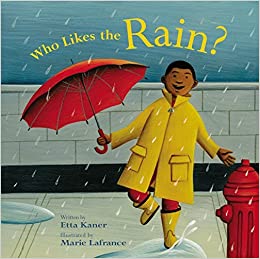
Who Likes the Rain? (Exploring the Elements)
Written by Etta Kaner
Illustrated by Marie Lafrance
Kids Can Press
32 pp.
Ages 4-7
2007

Who Likes the Snow? (Exploring the Elements)
Written by Etta Kaner
Illustrated by Marie Lafrance
Kids Can Press
32 pp.
Ages 4-7
2006

Who Likes the Sun? (Exploring the Elements)
Written by Etta Kaner
Illustrated by Marie Lafrance
Kids Can Press
32 pp.
Ages 4-7
2007


Who Likes the Wind? (Exploring the Elements)
Written by Etta Kaner
Illustrated by Marie Lafrance
Kids Can Press
32 pp.
Ages 4-7
2006

Winter Moon Song 
Written by Martha Brooks
Illustrated by Leticia Ruifernández
Groundwood Books
32 pp.
Ages 4-7
2014
Reviewed here

Winter's Coming: A story of seasonal change
Written by Jan Thornhill
Illustrated by Josée Bisaillon
Owlkids Books
32 pp.
Ages 5-8
2014
Reviewed here

A Winter's Tale  
Written and illustrated by Ian Wallace
Groundwood Books
32 pp.
Ages 4-8
1997

The Wolf-Birds  
Written and illustrated by Willow Dawson
Owlkids Books
40 pp.
Ages 5-8
2015
Reviewed here