September 25, 2023

My Baba's Garden

Written by Jordan Scott
Illustrated by Sydney Smith
Neal Porter Books (Holiday House)
978-0-8234-5083-1
32 pp.
Ages 4-8
March 2023
 
When writer Jordan Scott and artist Sydney Smith collaborated on their first picture book, I Talk Like a River (2020), a powerful storytelling partnership was created. In a subtle and nuanced story of a child who stuttered, Jordan Scott and Sydney Smith gave us a beautiful and unusual perspective. Much the same way, they take a grandmother (Baba)-grandson relationship with elements that some may see as peculiar and make them heartfelt and moving and fully synergistic.
From My Baba's Garden, written by Jordan Scott, illus. by Sydney Smith
Based on his own experiences with his Baba, his grandmother who emigrated from Poland after World War II, Jordan Scott speaks of a boy who was driven daily in the early morning to her renovated chicken coop home. There she feeds him, takes him to school, and then picks him up to babysit him. But it's more than babysitting. She is his Baba, a woman who speaks little English, suffered greatly during the war, and who shows him love with her food, her caring, and her teachings.
From My Baba's Garden, written by Jordan Scott, illus. by Sydney Smith
Her home is filled with food: preserves, dried, stored from the harvest, and cooking. Her wartime experiences compel her to ensure there is plenty for those she loves and to not waste anything. Even a drop of food that slips from his spoon is picked up, kissed, and returned to the bowl. And, when they walk in the West Coast rain, she gathers worms and places them in a jar of soil she keeps in her pocket. After school, she and her grandson deliver those worms to her garden.
From My Baba's Garden, written by Jordan Scott, illus. by Sydney Smith
Then his Baba must leave her home and move in with the child and his family. Things change, but the child has learned well.

I must admit that I cried with the telling of My Baba's Garden. I met my own Ukrainian Baba only once when she came for a visit, but I know the importance of food from my father who immigrated to Canada after the war. Food was significant to him, and he was determined to ensure that there was always enough and that those he loved, family and friends, never went hungry. His garden was extensive, and he grew tomatoes, garlic, onions, potatoes, carrots, beets, cucumbers (for pickling), and we visited friends' orchards and farms to ensure a wealth of preserves for the year. With her food, her garden, and her actions, this child's Baba showed love too. And she does so with little spoken language but great communication, teaching her grandson an appreciation for food that is grown, food that is offered, and a garden that provides. (Jordan Scott's note "My Baba" mentions that he and his children still pick up worms.) Their relationship is based on caring and compassion, and, whether at her chicken coop house or at his family's home, that relationship was solid. Jordan Scott's words are so emotive, as a child speaks of his grandmother, recognizing that she gives him everything and with few words.
There's so much to see, so much to smell, too much to eat.
That little boy and Jordan Scott honour their Babas.

Sydney Smith, award-winning illustrator of Sidewalk Flowers, Small in the City and Town by the Sea, consistently tells the story from a child's perspective. This boy sees his grandmother and appreciates what she does in a greater context, including one of love for him. He does not ridicule her for her life, her intentions, or her actions, understanding far more than many would. Sydney Smith shows us a child in a bright yellow rain slicker who brings her a picture he has drawn of them. He shows a Baba taking pleasure in that artwork, in that child: she strokes his cheek, she kisses his food, and she holds his hand as they walk. Sydney Smith makes sure that we see them. His watercolour and gouache illustrations take us into that garden and house, to sit with that child as he eats breakfast, to return worms to the soil, and to trudge through the rain to school. The art is filled with love and quiet understanding.

His Baba's garden and her home were places of love and learning. Under her watchful eye, this child learned to see and to feel beyond the obvious, and to appreciate love given through food and actions. Like his Baba's, Jordan Scott's words say much, even if limited, and with great heart, and Sydney Smith brings the colour, the context, and even more feeling to them. It was a pleasure to visit My Baba's Garden and partake in this repast of intergenerational tenderness.

September 22, 2023

Benjamin's Thunderstorm

Written by Melanie Florence
Illustrated by Hawlii Pichette
Kids Can Press
978-1-5253-0320-3
23 pp.
Ages 3-7
September 2023
 
Kids often love the rain, putting on rubber boots, splashing in puddles, and more. But Benjamin has a special connection to many elements of a storm that make thunderstorms all the more special for him.
From Benjamin's Thunderstorm, written by Melanie Florence, illustrated by Hawlii Pichette
For Benjamin, the sound of thunder, which resonated like the beating of his grandfather's drum, was the sound of the thunderbirds, piyêsiwak, beating their wings. Though Benjamin also loved the puddles, kâ-wâyipêyâsiki, and the rainbows, pîsimoyâpiya, with all their colours, he loved the beat of the thunder, the same that he experienced as a powwow dancer. And even when he gets called inside by his mother–there is lightning as well as thunder–he finds a creative way to reconnect with that outside storm.
From Benjamin's Thunderstorm, written by Melanie Florence, illustrated by Hawlii Pichette
Melanie Florence may be known for her profound stories based in experiences of Indigenous Peoples, most notably her award-winning picture books Stolen Words (2017) and Missing Nimâmâ (2015), but she takes a more whimsical approach in Benjamin's Thunderstorm. She still embeds her story in Cree language by peppering the story with Cree words for weather events and colours and offers a "Pronunciation Guide" from Dr. Arok Wolvengrey of First Nations University of Canada. But Melanie Florence's story is more about a child enjoying the sensory experience of a thunderstorm, and most notably for the cultural connections he has because of it. 

Hawlii Pichette, a Mushkego Cree urban mixed-blood artist, balances her illustrations with both the playfulness of the story and a depth of culture. The story is one of a child at play and Hawlii Pichette gives us that high spiritedness as Benjamin splashes and dances and delights in the rain. Moreover, Hawlii Pichette's Woodland style of art speaks to her own background, and that of Melanie Florence and Benjamin, giving us landscapes of heavily outlined trees and structures while her lines speak to movement and life. 

The next time there's a rainstorm Benjamin will undoubtedly be revelling in the textures of that weather event, playing outside when safe and inside when not, and appreciating it all the more for the connection he makes with his culture and his family.
From Benjamin's Thunderstorm, written by Melanie Florence, illustrated by Hawlii Pichette

September 19, 2023

Garden of Lost Socks

Written by Esi Edugyan
Illustrated by Amélie Dubois
HarperCollins
978-1-443464734
32 pp.
Ages 4-7
September 2023 

Sometimes when you go looking for something that's lost, you find something else. And what's better than finding a friendship for one who looks for things with one who writes about things he finds.

Akosua calls herslef an exquirologist because she can find anything, though her family might think that what she often finds is trouble. When Akosua meets Max, he is struggling, having lost one of his favourite socks, a yellow, green, and red sock with black stars. Though Max loves finding stories from around his neighbourhood and recording them in his notebook, whether it's discovering a dog allergic to humans or a girl who would perform as a waterspout in a play, finding that missing sock has been a challenge. Fortunately, exquirologist Akosua offers to help.
From Garden of Lost Socks, written by Esi Edugyan, illus. by Amélie Dubois
The two children go in search of the AWOL sock, starting at Max's home and then venturing out to the laundromat, the barbershop, and even to the park. They find a variety of socks, some as decorations, as on a hot air balloon, and some in different versions, like as wrapping around trees. But nowhere do they find Max's missing sock.
From Garden of Lost Socks, written by Esi Edugyan, illus. by Amélie Dubois
They do find other amazing things which Max records enthusiastically. Ultimately, Akosua uses her keen observational skills to follow a clue and discover the location of the lost sock, only to realize that Max needs it less than someone else.

The convergence of Akosua and Max in Garden of Lost Socks demonstrates that sometimes things and people that appear very different are actually meant to be together. Akosua seems like a bit of a dynamo, an extrovert who puts herself out there. Max, on the other hand, seems more inside his thoughts and his words, sitting quietly on his stoop, considering his options and his stories. By questioning him, Akosua begins a conversation that brings the two together, as unlikely as that might have been originally. (And to think Akosua's brothers suggest she has difficulties finding friends.) Finding that lost sock may have been their original mission, but they find so much more in their search, from new stories to new friends.
From Garden of Lost Socks, written by Esi Edugyan, illus. by Amélie Dubois
Though many fans of CanLit will know Esi Edugyan as a two-time Giller winner, Garden of Lost Socks is her first children's picture book. But, if Esi Edugyan shows a comparable curiosity to that shown by her young characters–illustrated by Quebec's Amélie Dubois–then I foresee more heartfelt literary explorations for young readers. Esi Edugyan's story on its surface is a simple one with two children of different strengths coming together for one purpose and finding more than expected. But like the two children whose eyes see well but differently, whether with analytic or artistic sight, Garden of Lost Socks is more than a story of looking for a sock. It's a story of finding friends without looking and working with your own strengths. It's cheering for diversity in personality and in purpose.

Amélie Dubois, whose art was first seen by this reviewer in A World of Mindfulness (2020), has an incredibly light touch. Searching for a lost sock might not seem a big deal but, to a child, missing a favourite anything is a very big deal. Still Amélie Dubois does not emphasize the angst or the frantic nature of a search for a missing object but keeps it more exploratory than hunt. They walk, they look, they ask, and they delve, but they do not panic, and they are not intrusive. Instead Amélie Dubois takes us on our own journey of discovery, from a laundry where a tutu shares a line to dry with an astronaut suit and a safety suit of orange and yellow, to a doorstep where dozens of shoes rest, and to a park of flowers, knitted tree protectors, and animals. Her lines produced by the strokes of her coloured pencils emulate the movement of the kids in their own quest while giving the story an airy texture.
 
The world is a garden of lost socks, from a laundry to a drawer, to a park or a nest, but Esi Edugyan reminds us that finding one sock may just be the start of something far greater.

September 14, 2023

The Imaginary Alphabet

Written and illustrated by Sylvie Daigneault
Pajama Press
978-1-77278-299-8
64 pp.
Ages 5-10
September 2023
 
Though Sylvie Daigneault describes The Imaginary Alphabet in her preface as a work that started during the pandemic lockdown, she recognizes that it is a book of playfulness and unbounded imagination. It might have been a gift to have this luscious picture book to entertain children during that tenuous time, but its joyful art and interactive nature will be a welcome read anytime.
From The Imaginary Alphabet by Sylvie Daigneault
Based on the 26 letters of the alphabet, Sylvie Daigneault has created a book of hidden pictures within. For each letter, all works of art themselves, there is a fantastical illustration filled with items that begin with that letter, as well as a quirky phrase that alludes to some of those hidden items. For example, A, a botanical piece of acorns, is accompanied with the phrase Agile Alligators Attempting an Arabesque, pointing at the alligators and the arabesque they are performing. But there are more A words to be found, like the accordion, an albatross or two, an anchor, apples, and an axe. There are even more A items and Sylvie Daigneault generously provides lists for each letter at the conclusion of her book.
From The Imaginary Alphabet by Sylvie Daigneault
The text, like the art, is sophisticated, and children may need some adult participation to help them find all the items depicted for that letter. For example, the cover art, taken from the letter F, may have little ones finding the frog, the ferrets, the fan, the fairies, and the fire but I suspect the fascinator, fern and the flounce might be more challenging for them to pick out. For that reason, I think The Imaginary Alphabet shouldn't be limited to five- to ten-year-olds, as indicated, but a gorgeous and captivating book for all ages. (For art lovers, I could see keeping The Imaginary Alphabet on a coffee table for guests to peruse, which they will be drawn to do, when it's spotted.)
From The Imaginary Alphabet by Sylvie Daigneault
The Imaginary Alphabet is extraordinary in its art and its premise. Sylvie Daigneault, originally from Montreal and now of Toronto, has gone beyond the illustrations she created for books like The Good Garden: How One Family Went from Hunger to Having Enough and C is for Canada, and exploded into a new realm of art for children's books. Very reminiscent of Wallace Edwards's fanciful and extravagant art, Sylvie Daigneault goes all out in her pencil illustrations, giving textures and form to the incredible, and making The Imaginary Alphabet a literary feast of everything, from animals and plants to foods and landscapes. It's beyond a concept book and a search-and-find book. It's an art book that will inspire discussions, inquiry, and exploration of Sylvie Daigneault's craft, and make readers smile for lemurs with lollipops, the overdramatic ocelots, and the unicycle-riding unicorn, and that's only L, O, and U.

September 12, 2023

The 2023 Canadian Children's Book Centre Awards: Finalists announced

Today, the Canadian Children's Book Centre, our nationally-renowned authority on all things related to youngCanLit, announced the finalists for the 2023 English-language Canadian Children's Book Centre Awards. (See their website announcement here with pdf here and video of shortlists on Bibliovideo.)

This year, the children's book awards include seven awards, both long-established and newly founded:
  • TD Canadian Children’s Literature Award ($50,000), Sponsored by TD Bank Group;
  • Marilyn Baillie Picture Book Award ($20,000), Sponsored by A. Charles Baillie;
  • Norma Fleck Award For Canadian Children's Non-Fiction ($10,000), Sponsored by the Fleck Family Foundation;
  • Geoffrey Bilson Award for Historical Fiction for Young People ($5,000), Sponsored by the Canadian Children’s Book Centre’s Bilson Endowment Fund;
  • Amy Mathers Teen Book Award ($5,000), Sponsored by Amy Mathers' Marathon of Books;
  • Jean Little First-Novel Award ($5,000);
  • Arlene Barlin Award for Science Fiction and Fantasy ($5,000), Sponsored by Elly Barlin-Daniels;
 (n.b. The French-language award short lists will be announced on October 18th and winners celebrated on November 8.)
• • • • • • •
 
Here are the short lists for each award category, as announced by the Canadian Children's Book Centre:

TD Canadian Children's Literature Award


Berani

Written by Michelle Kadarusman
Pajama Press


Kunoichi Bunny
Written by Sara Cassidy
Illustrated by Brayden Sato
Orca Book Publishers 


Sitting Shiva

Written by Erin Silver
Illustrated by Michelle Theodore
Orca Book Publishers


Weird Rules to Follow

Written by Kim Spencer
Orca Book Publishers


The Witness Blanket: Truth, Art and Reconciliation

Written by Carey Newman and Kirstie Hudson
Orca Book Publishers


Marilyn Baillie Picture Book Award
 

Boobies
Written and illustrated by Nancy Vo
Groundwood Books


Fox and Bear

Written and illustrated by Miriam Körner
Red Deer Press


I'm Not Sydney!

Written and illustrated by Marie-Louise Gay
Groundwood Books


Lizzy and the Cloud

Written and illustrated by the Fan Brothers
Simon & Schuster Canada


Mina

Written and illustrated by Matthew Forsythe
Simon & Schuster Canada


Norma Fleck Award For Canadian Children's Non-Fiction


Better Connected: How Girls Are Using Social Media for Good
(Orca Think)
Written by Tanya Lloyd Kyi and Julia Kyi
Illustrated by Vivian Rosas
Orca Book Publishers


Pink, Blue, and You! Questions for Kids About Gender Stereotypes

Written by Elise Gravel with Mykaell Blais
Illustrated by Elise Gravel
Anne Schwartz Books


Sun in My Tummy

Written by Laura Alary
Illustrated by Andrea Blinick
Pajama Press


Why Humans Build Up: The Rise of Towers, Temples and Skyscrapers
(Orca Timeline)
Written by Gregor Craigie
Illustrated by Kathleen Fu
Orca Book Publishers


The Witness Blanket: Truth, Art and Reconciliation

Written by Carey Newman and Kirstie Hudson
Orca Book Publishers


Geoffrey Bilson Award for Historical Fiction for Young People


Hidden on the High Wire
(A Holocaust Remembrance Book for Young Readers)
Written by Kathy Kacer
Second Story Press


How to Be a Goldfish

Written by Jane Baird Warren
Scholastic Canada


The Ribbon Leaf

Written by Lori Weber
Red Deer Press


The Secret Diary of Mona Hasan
Written by Salma Hussain
Tundra Books


Weird Rules to Follow

Written by Kim Spencer
Orca Book Publishers


Amy Mathers Teen Book Award


As Long as the Lemon Trees Grow

Written by Zoulfa Katouh
Little, Brown Books for Young Readers


The Red Palace

Written by June Hur
Feiwel and Friends


Road of the Lost

Written by Nafiza Azad
Margaret K. McElderry Books


TJ Powar Has Something to Prove

Written by Jesmeen Kaur Deo
Viking Books for Young Readers


Wrong Side of the Court
Written by H.N. Khan
Penguin Teen Canada


Jean Little First-Novel Award


The Grave Thief

Written by Dee Hahn
Puffin Canada
 

How to Be a Goldfish

Written by Jane Baird Warren
Scholastic Canada 


Scout Is Not a Band Kid

Written and illustrated by Jade Armstrong
RH Graphic


Weird Rules to Follow

Written by Kim Spencer
Orca Book Publishers


The Wolf Suit

Written and illustrated by Sid Sharp
Annick Press


Arlene Barlin Award for Science Fiction and Fantasy


Blood Scion

Written by Deborah Falaye
HarperTeen
 

Ghostlight

Written by Kenneth Oppel
Puffin Canada
 

The Limitless Sky

Written by Christina Kilbourne
Dundurn Press 


A Magic Steeped in Poison
(The Book of Tea, Book 1)
Written by Judy I. Lin
Feiwel and Friends


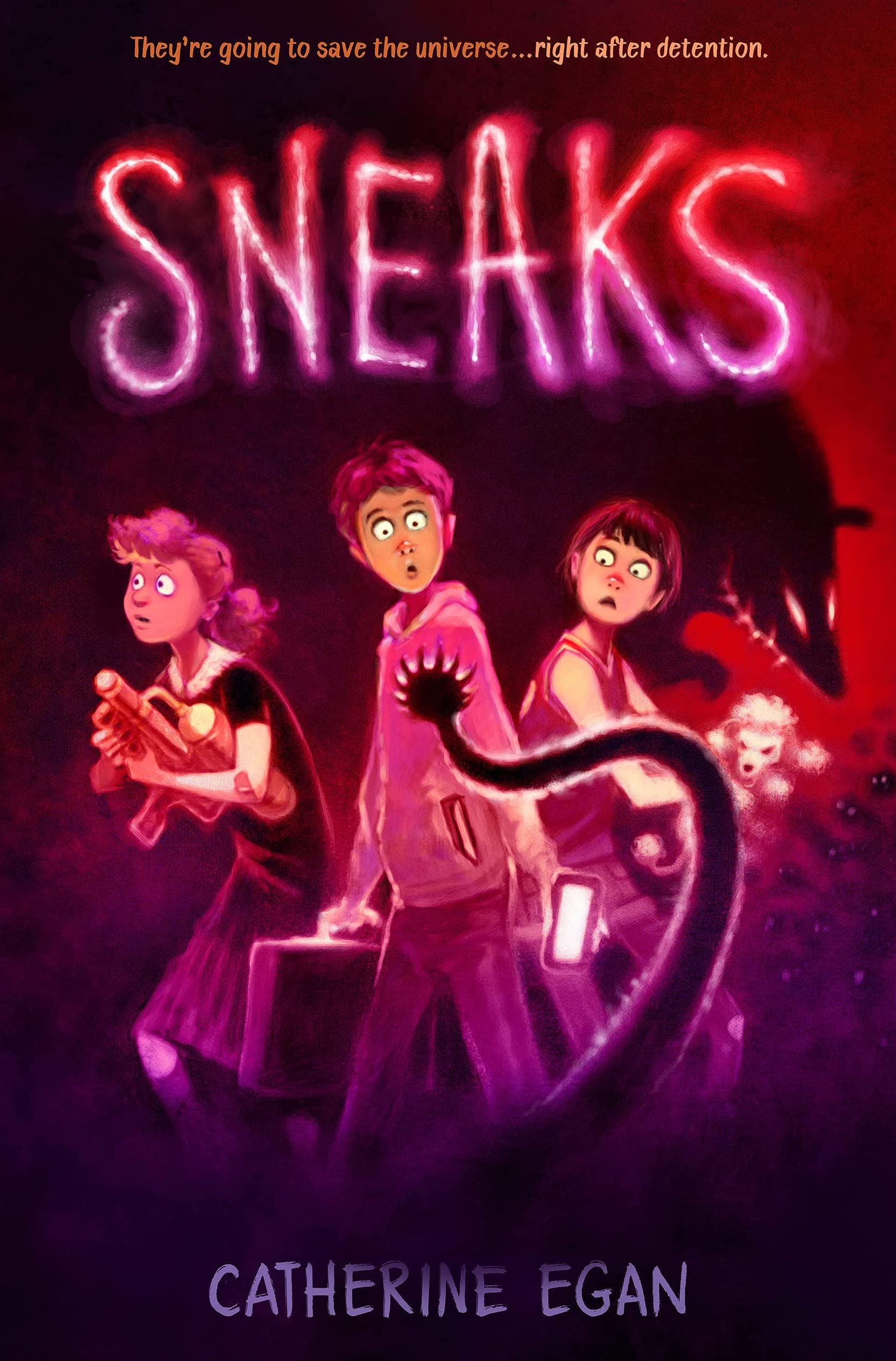
Sneaks

Written by Catherine Egan
Knopf Books for Young Readers


 📚📚📚

The winners of these awards will be announced on October 23, 2023 at a ticketed event in Toronto. (Tickets go on sale September 25.)